
Accelerate Discovery: Unlock the Power of Automated Platforms

The quest for novel bioactive molecules stands as biology's grandest challenge, a monumental undertaking that traditionally demands immense time, resources, and often, serendipity. However, the paradigm is shifting. We stand at the precipice of a new era, where the relentless march of technological innovation converges with biological exploration.
Automated discovery platforms are not merely tools; they are transformative engines, fundamentally reshaping how we approach drug and target identification. These systems supercharge research, offering unprecedented speed, precision, and scalability previously unimaginable in manual workflows. They empower us to dissect complex biological systems, explore vast chemical spaces, and pinpoint therapeutic candidates with surgical accuracy. This article will dissect the core advantages, demonstrating how these platforms are essential to conquering the intricate challenges of modern drug discovery. We will forge a path towards a future where innovation is accelerated, costs are contained, and breakthroughs become more predictable, critical for mastering the entire end-to-end process of discovering novel bioactive molecules. Prepare to revolutionize your approach to biological innovation.
The Strategic Imperative for Automated Discovery
The landscape of new molecule discovery is increasingly complex, demanding solutions that transcend traditional manual limitations. Manual processes, inherently slow and prone to variability, simply cannot keep pace with the exponential growth of biological data and the vastness of chemical space. We confront mounting pressures to accelerate discovery timelines, reduce astronomical R&D costs, and enhance the success rates of new therapeutic entities.
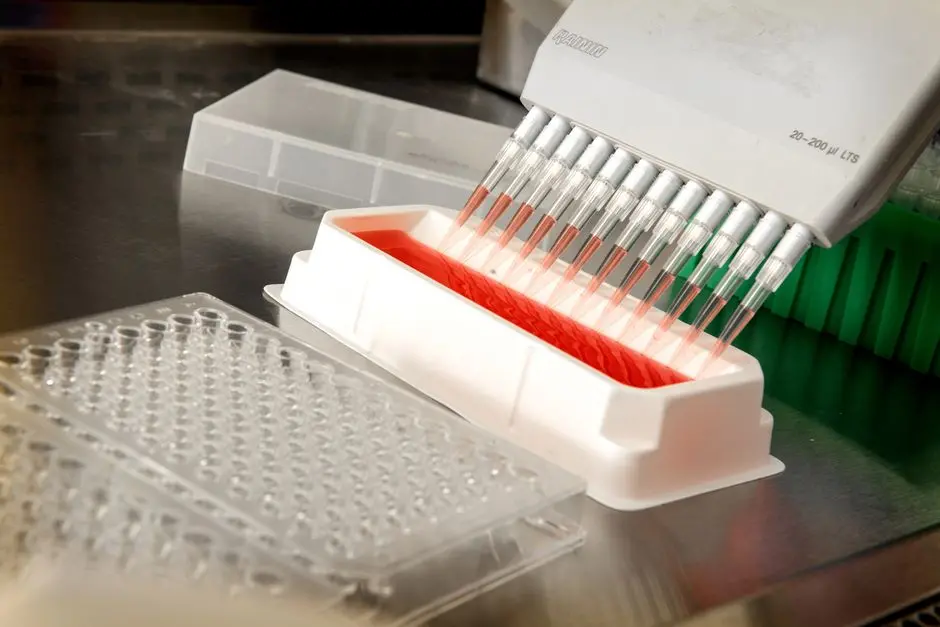
Automated discovery platforms emerge not as a luxury, but as a strategic imperative. They address critical bottlenecks by enabling high-throughput screening (HTS), where millions of compounds can be assayed in a fraction of the time required by human intervention. This capability is pivotal for exploring diverse chemical libraries, identifying novel leads, and navigating the intricate dose-response relationships with unparalleled efficiency. Furthermore, the ability to automate repetitive tasks frees highly skilled researchers to focus on hypothesis generation, experimental design, and critical data interpretation, thus amplifying intellectual capital.
We observe a clear trajectory: organizations embracing automation gain a significant competitive edge. They are better equipped to respond to emerging health crises, exploit novel biological targets, and bring life-changing therapies to patients faster. This foundational shift empowers us to move beyond incremental improvements, enabling truly disruptive innovations in drug discovery. We must seize this opportunity to redefine our operational frameworks, embedding automation as a core principle of our discovery strategy. Ignoring this evolution risks stagnation in a rapidly advancing field.
Unleashing Unprecedented Efficiency and Throughput
One of the most compelling advantages of automated platforms lies in their capacity to drastically enhance efficiency and throughput, fundamentally altering the economics and timelines of molecule discovery. Where manual screening might process hundreds or thousands of samples per week, automated systems routinely handle hundreds of thousands, even millions, of assays daily. This represents a leap of several orders of magnitude in screening capacity, enabling comprehensive exploration of chemical diversity previously unattainable.
Consider the impact on timelines: early-stage drug discovery phases, often spanning years, can be condensed significantly. We estimate that automated platforms can reduce the time taken for lead identification and optimization by 20-50%, translating directly into faster progression to preclinical and clinical trials. This acceleration is not merely about speed; it's about optimizing resource allocation. Fewer reagents are wasted, human labor is re-prioritized, and experimental parameters are meticulously controlled, leading to substantial cost savings—potentially 15-30% in operational expenditures for high-volume screening operations.
Moreover, the parallelization capabilities of automated systems allow for the simultaneous execution of multiple experiments, further compressing project timelines. This allows for rapid iteration and optimization cycles, where hypotheses can be tested and refined with unparalleled agility. We forge a discovery pipeline that is not only faster but also more robust, capable of processing more data points per unit of time and cost. This strategic advantage enables us to bring promising candidates to market more swiftly, delivering tangible value to both our organizations and patient populations.

Elevating Precision, Reproducibility, and Data Integrity
Beyond sheer speed, automated discovery platforms fundamentally elevate the quality of our scientific endeavors by ensuring unparalleled precision, reproducibility, and data integrity. Human error, a persistent challenge in manual laboratory work, is virtually eliminated in automated workflows. Robotic systems execute protocols with meticulous consistency, eradicating inconsistencies in pipetting volumes, incubation times, and environmental conditions that can plague manual experiments.
This consistency translates directly into highly reproducible results, a cornerstone of robust scientific discovery. When experiments are consistently performed, the data generated is inherently more reliable and trustworthy. This reliability is crucial for subsequent computational analyses, including machine learning and artificial intelligence applications, which thrive on clean, unbiased datasets. Automated platforms generate vast quantities of such high-quality data, providing the foundational bedrock for predictive modeling and rational drug design.
A common error in non-automated settings is the generation of noisy or inconsistent data, which can lead to false positives, false negatives, and wasted resources chasing unviable leads. Automated systems, through their precise control and standardized operations, mitigate this risk dramatically. They allow us to establish robust quality control measures at every step, ensuring that every data point contributes meaningfully to our understanding. We thus build a discovery process anchored in verifiable evidence, enabling more confident decision-making and a higher probability of identifying truly novel and effective molecules. We optimize for scientific rigor, forging a path where data integrity is paramount.

Cultivating Innovation and Strategic Competitive Advantage
Automated discovery platforms serve as powerful catalysts for innovation, extending our reach beyond the limitations of traditional research and fostering a significant competitive advantage. By automating routine tasks, we liberate our scientists to engage in higher-level, creative thinking—designing more complex experiments, exploring unconventional hypotheses, and delving into previously inaccessible biological or chemical spaces. This shift empowers radical innovation rather than incremental advancements.
These platforms facilitate rapid iteration cycles, allowing for swift testing and refinement of new ideas. This agility is crucial in a competitive landscape where time to market is a key differentiator. Organizations that can iterate faster, explore more diverse compound libraries, and quickly validate new target interactions will naturally outpace their rivals. Furthermore, the rich, consistent datasets generated by automation are ideal for training sophisticated AI/ML models, which can then predict molecular properties, optimize synthetic routes, and even suggest novel chemical scaffolds, opening entirely new avenues for discovery.
From a strategic perspective, integrating automated workflows attracts top scientific talent, as cutting-edge technology enhances research capabilities and intellectual stimulation. It also bolsters intellectual property portfolios by accelerating the identification and characterization of novel compounds and their applications. We forge an ecosystem where collaboration thrives, where interdisciplinary teams can leverage shared data and standardized processes to accelerate breakthroughs. We commit to a future where our strategic investments in automation translate into a sustained leadership position in the global race for new molecular discoveries, consistently delivering groundbreaking solutions to pressing health challenges.
Key Takeaways
Strategic Imperative
Automated platforms are essential for navigating the complexities of modern molecule discovery, overcoming limitations of manual processes, and enabling high-throughput screening for competitive advantage.
Unleashed Efficiency
These systems offer unprecedented speed and throughput, processing millions of assays daily, significantly reducing discovery timelines (20-50%) and operational costs (15-30%), optimizing resource allocation.
Elevated Precision
Automation ensures superior precision, reproducibility, and data integrity by eliminating human error. This generates reliable datasets crucial for predictive modeling and rational drug design, minimizing false positives and negatives.
Innovation & Advantage
Automated platforms act as catalysts for innovation, freeing scientists for creative tasks, enabling rapid iteration, supporting AI/ML integration, attracting talent, and securing intellectual property for a strategic competitive edge.
FAQ
-
What is the initial investment hurdle for adopting automated discovery platforms?
The initial investment for automated discovery platforms can indeed be substantial, ranging from hundreds of thousands to several millions of dollars, depending on the scale and sophistication of the system. However, we must view this as a strategic capital expenditure rather than a mere cost. The rapid returns on investment come from significant reductions in operational costs, accelerated discovery timelines, reduced human error, and the ability to pursue more ambitious research programs. Many organizations now opt for modular systems, allowing phased integration and scaling up as needs evolve and budgets permit, optimizing the entry point for automation.
-
How do automated platforms integrate with existing human expertise and traditional lab workflows?
Integration is key. Automated platforms are designed to augment, not replace, human expertise. We position these systems as powerful extensions of a scientist's capabilities. Best practices involve a phased integration strategy: initially automating high-volume, repetitive tasks, then gradually expanding to more complex workflows. This allows researchers to maintain oversight, validate results, and focus on experimental design and critical analysis. Effective integration relies on robust software interfaces, clear data exchange protocols, and continuous training for personnel. We foster a collaborative environment where human intuition guides the automated process, and automation, in turn, amplifies human ingenuity.
-
Are there specific therapeutic areas where automated discovery platforms demonstrate the most impact?
Automated discovery platforms offer broad utility across various therapeutic areas, but their impact is particularly pronounced in fields requiring extensive screening and lead optimization. This includes oncology, infectious diseases, neurology, and rare diseases, where the sheer number of potential targets and compounds demands high-throughput approaches. Furthermore, areas focused on biomarker discovery, diagnostics development, and personalized medicine also greatly benefit from the precision and data generation capabilities of automation. We optimize for applications where the combinatorial complexity is high and the need for rigorous, reproducible data is paramount, accelerating breakthroughs across the spectrum of biological research.