
> Applied Bioinformatics > Bioinformatics Pipelines and Workflows > Achieve Reproducibility: Essential Practices for Bioinformatics Research
Achieve Reproducibility: Essential Practices for Bioinformatics Research

In the high-stakes arena of modern biology, the integrity and trustworthiness of research findings are paramount. Bioinformatics, at the intersection of data and discovery, faces a unique challenge: ensuring that complex analytical processes can be consistently replicated, validated, and extended by anyone, anywhere. The proliferation of diverse tools, massive datasets, and intricate pipelines often introduces a variability that can undermine scientific credibility.
We confront this challenge head-on. This comprehensive guide unravels the critical strategies and robust methodologies required to master reproducible bioinformatics research. We delve into the core tenets that transform ambiguous analyses into transparent, verifiable scientific contributions. Discover how proactive measures, from environment standardization to meticulous data provenance, are not merely best practices but fundamental imperatives for accelerating discovery and fostering trust.
Forge a future where every computational experiment stands on an unshakable foundation. We empower you to navigate the complexities of data analysis with confidence, ensuring your contributions resonate with unwavering scientific rigor. Learn how strategic approaches to designing reproducible bioinformatics pipelines become your strongest ally in validating hypotheses and propelling biological innovation.

Forge a Foundation: The Imperative of Reproducibility in Bioinformatics
We embark on a mission to cement reproducibility as the cornerstone of bioinformatics research. Understanding its non-negotiable value clarifies our strategic direction. Reproducibility ensures that independent researchers, using the same data and methods, arrive at congruent conclusions. Its absence corrodes scientific trust, stalls progress, and squanders resources. Consider the staggering implications: a 2016 study in PLOS Biology estimated that over 50% of preclinical research findings are not reproducible, costing approximately $28 billion annually in the US alone. This economic burden, coupled with the ethical imperative to deliver reliable science, compels us to act decisively.
We distinguish between key terms: reproducibility (obtaining the same results with the same input data and code), replicability (obtaining the same results with new data but the same methods), and robustness (sensitivity of results to minor changes in methods, parameters, or data). Our focus here is primarily on reproducibility, establishing a bedrock for the other two. Achieving it demands transparency across the entire analytical workflow: from raw data acquisition to final report generation. This necessitates a cultural shift, embracing deliberate practices that eliminate ambiguity and facilitate verification. We champion a proactive mindset, integrating reproducibility from the project's inception, rather than retrofitting it as an afterthought. This initial investment in meticulous planning and tool selection yields substantial long-term dividends in scientific integrity and research efficiency. Let us build a scientific ecosystem where every discovery can be confirmed, challenged, and built upon with unwavering confidence.
Sculpt Your Environment: Mastering Version Control and Containerization
We dissect the critical role of environment management in achieving unwavering reproducibility. The computational environment—comprising operating systems, libraries, and specific software versions—is often the unseen culprit behind irreproducible results. Differences in these components, even subtle ones, can dramatically alter outputs. To combat this, we champion two indispensable tools: version control systems and containerization technologies.
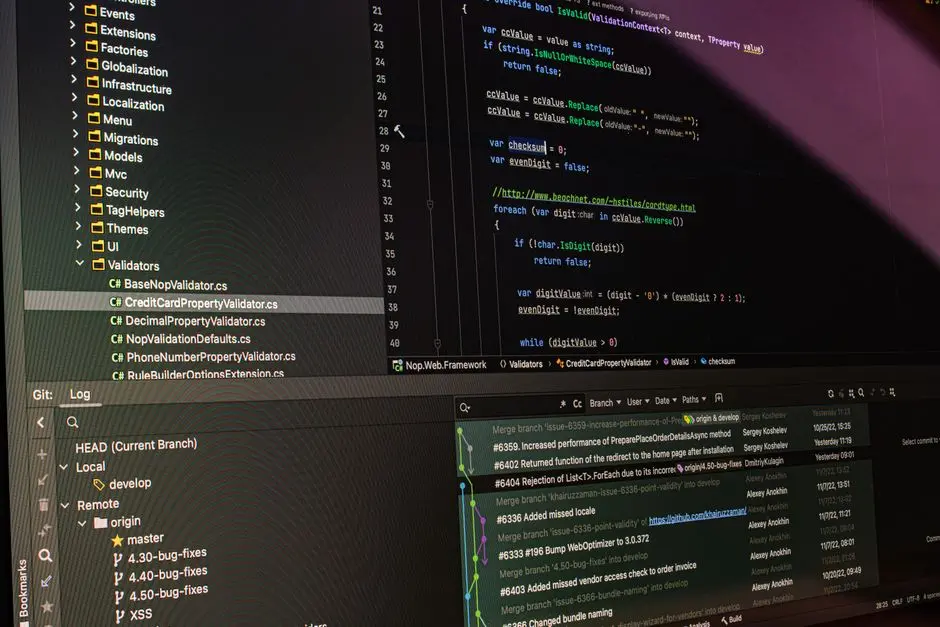
Version Control (Git): We mandate Git for tracking every line of code, script, configuration file, and even documentation. It is not merely a backup tool; it is an immutable ledger of your project's evolution. Utilize branches for developing new features or analyses, merge them strategically, and create tagged releases for stable versions of your code. Commit messages must be clear, concise, and descriptive, detailing *what* changes were made and *why*. This practice provides a complete audit trail, indispensable for debugging and understanding past decisions.
Containerization (Docker, Singularity): We deploy container technologies like Docker and Singularity to encapsulate your entire computational environment. A Docker image, for instance, bundles all dependencies—code, runtime, system tools, libraries—into a self-contained unit. This ensures that your analysis runs identically on any machine equipped with Docker, regardless of its underlying configuration. Singularity extends this benefit, offering robust security and seamless integration with high-performance computing (HPC) environments. By creating immutable computational environments, we eliminate the 'works on my machine' syndrome, guaranteeing that your pipeline functions identically for all collaborators and reviewers. We leverage these tools to construct portable, self-sufficient analytical units, fortifying the reproducibility of every bioinformatics experiment.
Engineer Robust Pipelines: Design Principles for Clarity and Automation
We architect bioinformatics pipelines not merely as sequences of commands, but as robust, self-documenting engines of discovery. Effective pipeline design is paramount for both automation and reproducibility. We advocate for workflow management systems such as Nextflow or Snakemake, which intrinsically promote modularity, fault tolerance, and scalable execution. These systems decouple the scientific logic from the computational infrastructure, enabling seamless execution across diverse environments—from local workstations to cloud platforms or HPC clusters.
Modularity and Parameterization: We deconstruct complex analyses into smaller, independent modules, each performing a specific task. Each module should be a self-contained script or containerized tool, accepting clearly defined inputs and producing predictable outputs. Avoid hardcoding parameters; instead, expose them as configurable options. This allows researchers to easily test different settings, explore sensitivity, and adapt the pipeline to varying datasets without altering the core code. Implement robust error handling within each module, providing informative messages that guide debugging efforts.
Structured Directories and Data Provenance: We enforce a standardized project directory structure. Raw data, configuration files, scripts, intermediate outputs, and final results must reside in logically organized, distinct locations. Document every data transformation: what was the input, what tool was used, with what parameters, and what was the output? Workflow managers often capture this provenance automatically, but we augment it with explicit metadata files. This rigorous organization ensures that any step in the analysis can be traced back to its origin, providing unparalleled transparency and facilitating rapid investigation of results. We transform our pipelines into transparent, verifiable narratives of data transformation, bolstering scientific rigor at every stage.
Secure Data Integrity: Proactive Management and Archiving Strategies
We solidify the foundation of reproducibility by meticulously managing our data assets. Raw data is irreplaceable; its integrity and accessibility are non-negotiable. Proactive data management begins at acquisition. We implement checksums (e.g., MD5, SHA256) for all raw data files immediately upon download or generation, providing an immutable fingerprint to detect any subsequent corruption. Store these checksums alongside the data. Prioritize secure, redundant storage solutions, adhering to institutional policies and best practices for data backup and recovery.
Metadata and FAIR Principles: We elevate metadata to its rightful place as critical project data. Every dataset requires comprehensive descriptive metadata: who generated it, when, how, and under what conditions? Which experimental design was used? What are the units of measurement? We embed metadata directly into data files (e.g., VCF headers, BAM read groups) or maintain structured separate files (e.g., TSV, YAML) linked to the data. Adherence to the FAIR (Findable, Accessible, Interoperable, Reusable) principles guides our data management strategy. Make data Findable by assigning persistent identifiers and rich metadata. Make it Accessible through standard protocols and clear access conditions. Ensure it is Interoperable by using common formats and vocabularies. Finally, make it Reusable with detailed provenance and clear licenses.
Archiving and Versioning Data: We establish clear protocols for archiving. Distinguish between active project data and immutable archived versions. Version critical intermediate datasets, especially those that are expensive to re-generate. Utilize established public repositories (e.g., NCBI SRA, GEO, EMBL-EBI ENA) for sharing raw and processed data, ensuring long-term accessibility and compliance with journal requirements. These strategic data practices transform our biological insights into enduring, verifiable scientific assets.

Validate and Share: Cultivating Trust and Collaborative Excellence
We culminate our reproducibility strategy with rigorous validation and transparent sharing, fortifying trust in our bioinformatics research. Code is fallible; therefore, systematic testing is paramount. We implement unit tests for individual functions and scripts, ensuring they perform as expected under various conditions. Beyond unit tests, integrate validation steps into the pipeline itself. This might involve statistical checks on intermediate outputs, comparing results against known benchmarks, or applying orthogonal methods to confirm key findings. Automate these tests within your workflow manager to run with every execution.
Comprehensive Documentation: We craft living documentation that evolves with the project. A high-quality README.md is indispensable, detailing project scope, setup instructions, dependencies, execution commands, and expected outputs. Include a LICENSE file. Generate detailed reports summarizing the analysis, including versions of all tools, parameters used, and key figures. Consider using literate programming tools (e.g., Jupyter Notebooks, R Markdown) for exploratory analyses, ensuring code, results, and narrative are intertwined. This fosters complete transparency and reduces the barrier for others to understand and reproduce your work.
Collaborative Tools and Dissemination: We leverage collaborative platforms like GitHub or GitLab for code sharing and peer review. Encourage code review among team members, identifying potential issues early. For publication, choose journals and repositories that support and encourage reproducible research artifacts. Deposit your code, processed data, and container images in stable repositories (e.g., Zenodo, Figshare) and cite them with Digital Object Identifiers (DOIs). By embracing these validation and sharing practices, we transcend individual efforts, cultivating a culture of collective excellence and pushing the boundaries of biological understanding through verifiable, open science.
Key Takeaways
The Unwavering Imperative of Reproducibility
Reproducibility is fundamental to scientific credibility, preventing resource waste and ensuring verifiable research. It allows independent researchers to confirm findings, demanding transparency and proactive integration into all project phases. Distinguish it from replicability and robustness; our focus secures the foundation for all three.
Mastering Environment Control: Git and Containerization
Eliminate environmental variability using Git for comprehensive code version control, logging every change with clear messages. Deploy Docker or Singularity to encapsulate your entire computational environment, guaranteeing identical execution across any system. These tools ensure portability and stability.
Engineering Robust and Automated Pipelines
Design pipelines using workflow managers like Nextflow or Snakemake, prioritizing modularity, parameterization, and robust error handling. Structure directories logically, and capture data provenance rigorously. This creates transparent, traceable, and adaptable analytical engines.
Securing Data Integrity and Accessibility
Protect raw data with checksums and secure, redundant storage. Implement rich metadata following FAIR principles (Findable, Accessible, Interoperable, Reusable). Establish clear archiving protocols and utilize public repositories for long-term data accessibility and versioning. This transforms data into a persistent, verifiable asset.
Validating and Disseminating Research with Trust
Integrate systematic testing (unit, integration) into pipelines. Maintain comprehensive, living documentation including READMEs and detailed reports. Leverage collaborative platforms (GitHub) for peer review and publish code/data with DOIs in trusted repositories (Zenodo), fostering open and verifiable scientific contributions.
FAQ
-
Why is reproducibility so critical in bioinformatics research?
Reproducibility is critical because it underpins scientific credibility, enables validation of findings by independent researchers, facilitates collaborative progress, and prevents the waste of resources on non-reproducible results. Without it, scientific claims cannot be reliably verified or built upon. -
What are the primary tools for ensuring code and environment reproducibility?
The primary tools are Git for version control of code and scripts, and containerization technologies like Docker or Singularity for encapsulating the entire computational environment (including operating system, libraries, and software versions), ensuring consistent execution across different machines. -
How do workflow management systems like Nextflow or Snakemake contribute to reproducibility?
These systems enforce modularity, manage dependencies, track data provenance, and handle execution across various computing environments. They automate the workflow, reduce human error, and record parameters and versions, making the entire analysis transparent and repeatable. -
What role do metadata and FAIR principles play in reproducible data management?
Metadata provides essential context for datasets (who, what, when, how). Adhering to FAIR principles (Findable, Accessible, Interoperable, Reusable) ensures that data is well-described, can be discovered and accessed using standard protocols, is compatible with other datasets, and can be reused by others with proper attribution and understanding. -
Beyond technical tools, what cultural shifts support reproducible bioinformatics?
Culturally, it demands transparency, meticulous documentation, collaborative practices (e.g., code review), and a proactive mindset to integrate reproducibility from project inception. It emphasizes sharing code, data, and methods openly to foster collective verification and progress.