
> Applied Bioinformatics > Bioinformatics Pipelines and Workflows > Unleash Bio-Pipelines: Nextflow vs. Snakemake Showdown
Unleash Bio-Pipelines: Nextflow vs. Snakemake Showdown

In the relentless pursuit of discovery within biology, the efficiency and reproducibility of our computational pipelines dictate the pace of innovation. Applied bioinformatics stands at the forefront of this revolution, transforming raw data into actionable insights at an unprecedented scale. However, managing the complexity of modern genomic, proteomic, and transcriptomic analyses demands robust, scalable, and user-friendly workflow management systems. The choice between powerful contenders like Nextflow and Snakemake is not merely technical; it’s a strategic decision that shapes research velocity, resource utilization, and collaborative potential.
We embark on a surgical exploration of these two titans, dissecting their architectures, evaluating their strengths, and pinpointing their optimal applications. This comprehensive resource empowers you to make an informed decision, ensuring your bioinformatics endeavors are not just productive but exceptionally reproducible. Mastering the nuances of workflow management is a cornerstone of modern biological research, critical for designing reproducible bioinformatics pipelines, and we will forge the path to elevate your operational excellence.
The Imperative of Workflow Management in Applied Bioinformatics
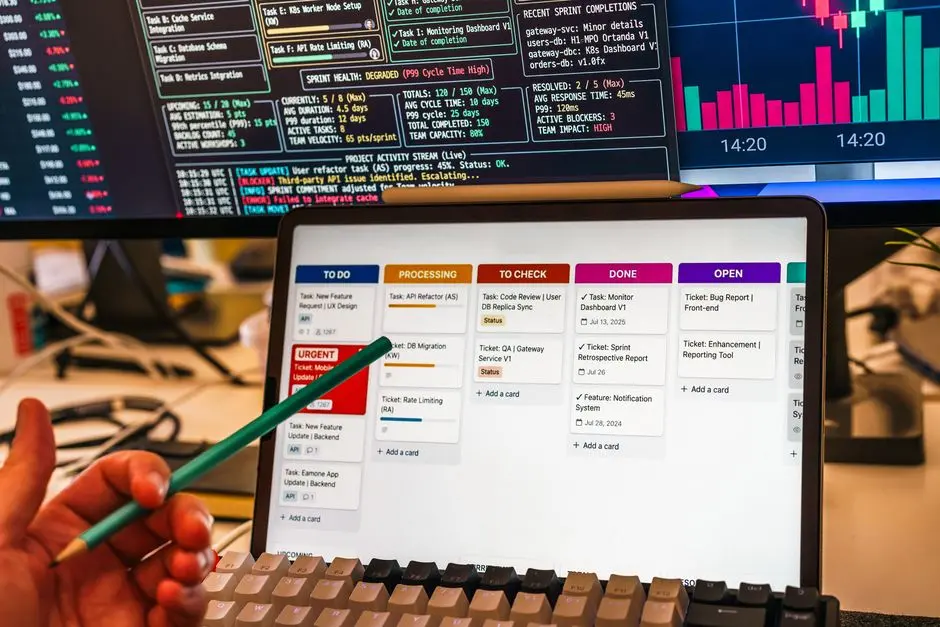
The biological data explosion mandates a paradigm shift in how we process and analyze information. From single-cell RNA sequencing to large-scale genome-wide association studies, bioinformatics pipelines have grown exponentially in complexity, demanding sophisticated orchestration. Without robust workflow management systems, researchers grapple with an array of challenges:
- Reproducibility Crisis: Inconsistent environments, manual command execution, and poorly documented steps lead to non-reproducible results, undermining scientific credibility.
- Scalability Bottlenecks: Local machine limitations quickly become apparent when processing terabytes of data, necessitating seamless transitions to high-performance computing (HPC) clusters or cloud environments.
- Maintainability Burden: Complex, monolithic scripts are notoriously difficult to update, debug, and share, impeding collaboration and introducing errors.
- Resource Inefficiency: Suboptimal job scheduling and lack of parallelization waste valuable computational resources and prolong analysis times.
Workflow management systems like Nextflow and Snakemake emerge as indispensable tools, architected to confront these challenges head-on. They transform ad-hoc scripts into organized, automated, and scalable workflows, ensuring every analytical step is tracked, every dependency is met, and every result can be precisely replicated. We forge ahead to unravel their unique philosophies and capabilities, enabling you to select the optimal engine for your bio-analytical conquests.

Nextflow: Architecting Cloud-Native and Reactive Pipelines
Nextflow revolutionizes bioinformatics workflow design with its unique blend of reactive programming and cloud-native architecture. Conceived to handle massive datasets with unparalleled flexibility, Nextflow leverages a Groovy-based Domain Specific Language (DSL) that is both powerful and intuitive. Its core strength lies in its ability to abstract away the complexities of parallel and distributed computing, allowing researchers to focus solely on the computational steps.
Key architectural features include:
- Channels: Data flows through asynchronous channels, enabling a reactive data-driven paradigm. This ensures tasks execute as soon as their inputs are available, maximizing parallelism.
- Processes: Individual computational steps are defined as isolated processes, each encapsulating commands, inputs, outputs, and resources. This modularity promotes reusability and simplifies debugging.
- Executors: Nextflow seamlessly integrates with a vast array of execution platforms, from local machines to HPC schedulers (SLURM, LSF, SGE) and major cloud providers (AWS Batch, Google Cloud Life Sciences, Azure Batch). This platform agnosticism is a game-changer for portability.
- Containerization Integration: Native support for Docker, Singularity, and Conda ensures absolute reproducibility by packaging dependencies alongside the code.
The nf-core ecosystem further amplifies Nextflow's power, offering a curated collection of standardized, peer-reviewed, and highly optimized pipelines for diverse applications. We harness Nextflow to forge resilient, scalable, and portable analytical engines.
<code>
// A simple Nextflow process for fastq quality check
process fastqc {
    tag "${sample_id}"
    input:
        tuple val(sample_id), path(fastq_file) from channel
    output:
        path "${sample_id}_fastqc.zip", emit: zip
        path "${sample_id}_fastqc/", emit: html_dir
    script:
        """
        fastqc ${fastq_file} -o .
        """
}
</code>
Snakemake: Crafting Pythonic and Reproducible Data Analysis Workflows
Snakemake offers a robust, Python-based framework for creating reproducible and scalable data analysis workflows. Its design philosophy centers around a rule-based approach, where each rule defines how a specific output file is generated from input files. This declarative style makes workflows highly explicit and easy to understand, even for complex dependencies.
Core components of Snakemake include:
- Rules: The fundamental building blocks, specifying inputs, outputs, parameters, and the shell commands or Python code to execute. Rules automatically infer dependencies, constructing a Directed Acyclic Graph (DAG) of tasks.
- Wildcards: A powerful feature allowing rules to generalize to multiple files (e.g., different samples), reducing redundancy and simplifying workflow definition for large datasets.
- Execution Environments: Comprehensive support for Conda, Docker, and Singularity ensures that all software dependencies are isolated and managed, guaranteeing environment reproducibility across different systems.
- Flexible Execution: Snakemake supports execution on local machines, HPC clusters (via various schedulers like SLURM, PBS, SGE), and cloud platforms, providing excellent flexibility.
- Python Integration: As a Python-native tool, Snakemake seamlessly integrates with the vast Python data science ecosystem, allowing researchers to embed complex analytical scripts directly within rules.
The emphasis on a declarative, rule-based approach, coupled with its Pythonic nature, makes Snakemake particularly appealing for researchers deeply integrated into the Python data science landscape. We trigger the power of Snakemake to architect precise, adaptable, and fully auditable analytical pipelines.
<code>
# A simple Snakemake rule for fastq quality check
rule fastqc:
    input:
        fastq="data/{sample}.fastq"
    output:
        zip="results/fastqc/{sample}_fastqc.zip",
        html_dir="results/fastqc/{sample}_fastqc"
    shell:
        "fastqc {input.fastq} -o results/fastqc"
</code>
Direct Comparison: Design Philosophy, Learning Curve, and Ecosystems
Choosing between Nextflow and Snakemake necessitates a deep dive into their distinct design philosophies, impacts on the learning curve, and the breadth of their respective ecosystems. While both aim for reproducible and scalable bioinformatics, their approaches diverge significantly.
- Design Philosophy:
Nextflow: Embraces a reactive, data-flow paradigm. Processes consume data from channels, triggering execution when data becomes available. This is ideal for highly parallelized, asynchronous tasks and naturally scales to cloud environments.
Snakemake: Adopts a rule-based, declarative approach. It defines how outputs are generated from inputs, constructing a DAG. This is intuitive for data scientists who think in terms of file dependencies and transformations. - Language and DSL:
Nextflow: Uses a Groovy-based DSL. While powerful, Groovy can be a new language for many biologists and bioinformaticians.
Snakemake: Leverages Python. Its integration with the extensive Python data science ecosystem is a major advantage for users already proficient in Python. - Learning Curve:
Nextflow: Initially, understanding channels, operators, and the reactive paradigm can be steeper. However, once mastered, it offers immense flexibility for complex data flows. Thenf-coreproject significantly lowers the entry barrier by providing readily available, well-structured pipelines.
Snakemake: Generally perceived as having a shallower learning curve for those familiar with Python. Its rule-based structure often mirrors traditional makefiles, making the logic easier to grasp. - Ecosystem and Community:
Nextflow: Thenf-coreinitiative is a colossal asset, offering a vast collection of high-quality, standardized pipelines, actively maintained and supported. This fosters rapid deployment and shared best practices.
Snakemake: Benefits from the broader Python community and specific projects likesnakemake-wrappers, which provide common rule implementations. While less centralized thannf-core, its extensibility within Python is unmatched.
We dissect these distinctions to optimize your strategic deployment.
Strategic Deployment: When to Choose Which and Best Practices
The optimal choice between Nextflow and Snakemake hinges on your specific project requirements, team's skill set, and computational infrastructure. We delineate scenarios where each system truly excels and illuminate common pitfalls to avoid.
- Nextflow's Sweet Spot:
- Cloud-First Initiatives: Its native cloud integration (AWS Batch, Google Cloud Life Sciences, Azure Batch) makes it the prime choice for cloud-native pipelines.
- High-Throughput Genomics: Ideal for large-scale sequencing projects requiring massive parallelism and dynamic resource allocation.
- Collaborative Consortia: The
nf-coreframework provides standardized, well-documented pipelines, fostering reproducibility and easy sharing across large research groups. - Complex, Branching Workflows: Its reactive nature excels in managing intricate data flows where different branches of analysis are triggered by data availability.
- Snakemake's Advantage:
- Python-Centric Labs: Perfect for teams with strong Python proficiency, integrating seamlessly with data science libraries.
- Local-to-HPC Transitions: Offers excellent flexibility for developing pipelines locally and scaling them to HPC clusters with minimal changes.
- Reproducible Data Science: Its declarative nature and strong emphasis on environment management (Conda, Docker) ensure high fidelity reproducibility for complex analytical notebooks and scripts.
- Flexible File Transformations: Ideal for workflows involving diverse data formats and custom intermediate processing steps where file dependencies are paramount.
- Common Pitfalls & Best Practices:
- Over-Complicating Rules/Processes: Keep individual rules/processes focused. Break down complex tasks.
- Inadequate Containerization: Always use containers (Docker, Singularity) or Conda environments to isolate dependencies. This is non-negotiable for reproducibility.
- Poor Testing: Implement automated tests for critical workflow steps to catch errors early.
- Lack of Documentation: Clearly document inputs, outputs, parameters, and workflow logic.
- Ignoring Resource Requests: Precisely define CPU, memory, and time limits for tasks to optimize resource utilization and avoid job failures.
We optimize these choices to propel your research forward.

Evolving Horizons: Future Trends and Hybrid Approaches
The landscape of bioinformatics workflow management is dynamic, constantly evolving to meet the demands of ever-increasing data volumes and analytical complexities. Both Nextflow and Snakemake continue to push boundaries, integrating new features and expanding their capabilities. As we peer into the future, several trends emerge that will shape the next generation of bio-analytical pipelines.
- Increased Interoperability: We observe a growing push towards standards that enable easier exchange of workflow components and data between different systems. Efforts like Common Workflow Language (CWL) and Workflow Description Language (WDL) aim to achieve this, offering potential avenues for integration or translation between Nextflow and Snakemake-defined tasks.
- Enhanced Cloud-Native Features: Expect deeper integration with cloud-specific services, including serverless computing, managed databases, and advanced monitoring tools, further optimizing cost and performance in cloud environments.
- AI/ML Integration: The seamless embedding of machine learning models and AI-driven analytical steps directly within workflows will become standard, accelerating discovery and enabling more sophisticated pattern recognition in biological data.
- Improved User Experience: Both platforms are continuously refining their user interfaces, error reporting, and debugging tools to make workflow development and maintenance more accessible to a broader audience, including those with less computational expertise.
- Hybrid Strategies: For highly specialized needs, we might witness the emergence of hybrid approaches, where specific stages of a pipeline are orchestrated by Nextflow for its cloud scalability, while other Python-heavy analytical stages are managed by Snakemake for its deep data science integration. This could involve using one system to call the other as a sub-workflow, exploiting their individual strengths.
We drive the evolution of health by mastering these adaptive strategies. The ultimate goal remains constant: to forge an ecosystem where biological insights are generated efficiently, reproducibly, and without computational impediment.
Key Takeaways
Nextflow: Cloud-Native & Reactive Powerhouse
Nextflow excels in cloud environments and high-throughput scenarios. Its reactive data-flow model and Groovy-based DSL facilitate massive parallelism and dynamic resource allocation. The nf-core ecosystem provides standardized, production-ready pipelines, ideal for large collaborations and rapid deployment. It's the go-to for scalable, portable workflows.
Snakemake: Pythonic & Rule-Based Precision
Snakemake shines for Python-centric labs and projects requiring deep integration with the Python data science stack. Its rule-based, declarative approach simplifies complex file dependencies and offers explicit control over data transformations. It's highly adaptable for local development transitioning to HPC clusters, ensuring robust reproducibility through comprehensive environment management (Conda, Docker).
Strategic Selection & Best Practices
The choice depends on project scale, team expertise, and infrastructure. Nextflow for cloud, large consortia, and reactive data streams. Snakemake for Python integration, local-to-HPC, and explicit file-based dependencies. Crucial best practices include rigorous containerization, modular design, thorough testing, clear documentation, and precise resource allocation to optimize any workflow system.
FAQ
-
When should I definitively choose Nextflow over Snakemake?
Choose Nextflow when your primary need is scaling to cloud infrastructure (AWS Batch, Google Cloud Life Sciences) with massive parallelism, or when joining large collaborative projects that leverage the standardized, high-quality pipelines of thenf-coreecosystem. Its reactive, data-flow model is exceptionally well-suited for high-throughput genomics and dynamic resource allocation. -
When is Snakemake the superior choice for a bioinformatics pipeline?
Snakemake is the superior choice for teams deeply rooted in the Python data science ecosystem, seeking seamless integration with Python libraries for data manipulation and analysis. It excels when developing pipelines locally and scaling them to HPC clusters, or when emphasizing explicit file dependencies and detailed control over each step of data transformation. Its clear, rule-based structure simplifies reproducibility for complex analytical scripts. -
Can I use both Nextflow and Snakemake within the same project or organization?
Absolutely. It's common for organizations to leverage both, depending on the specific project and team expertise. You might use Nextflow for initial raw data processing and alignment due to its cloud scalability, and then transition the processed data to a Snakemake workflow for downstream, Python-heavy statistical analysis or machine learning tasks. Strategic modularity dictates choosing the best tool for each component. -
What is the biggest challenge when adopting either workflow system?
The biggest challenge often lies in the initial learning curve associated with the new DSL (Nextflow's Groovy-based language) or adapting to a declarative, rule-based paradigm (Snakemake). Beyond syntax, mastering concepts like containerization, dependency management, and efficient resource allocation for different executors requires dedicated effort. However, the long-term gains in reproducibility and scalability far outweigh this initial investment.