
> Applied Bioinformatics > Computational Tools for Bioinformatics > Accelerate Discovery: Scripting Bioinformatics Workflows
Accelerate Discovery: Scripting Bioinformatics Workflows

In the relentless pursuit of biological insight, data generation has exploded, often outpacing our capacity for manual analysis. High-throughput technologies now routinely produce terabytes of raw data, transforming what was once a laborious, artisanal process into a formidable data management and analysis challenge. Without robust automation, laboratories risk being buried under data, their scientific endeavors hobbled by repetitive, error-prone tasks and significant time sinks. We stand at a critical juncture where the ability to efficiently process and interpret this deluge defines the pace of discovery.
This article empowers you to transcend these limitations. We shall forge a pathway to mastering the art of automating bioinformatics tasks through scripting, transforming tedious workflows into streamlined, reproducible pipelines. Discover how leveraging specialized software and programming tools for bioinformatics applications is no longer an advantage, but an absolute necessity for competitive research. We unlock the secrets to boosting throughput, minimizing human error, and reclaiming invaluable research time. Prepare to revolutionize your approach to biological data, propelling your projects forward with surgical precision and exhilarating speed.
The Strategic Imperative: Why Automate Bioinformatics?
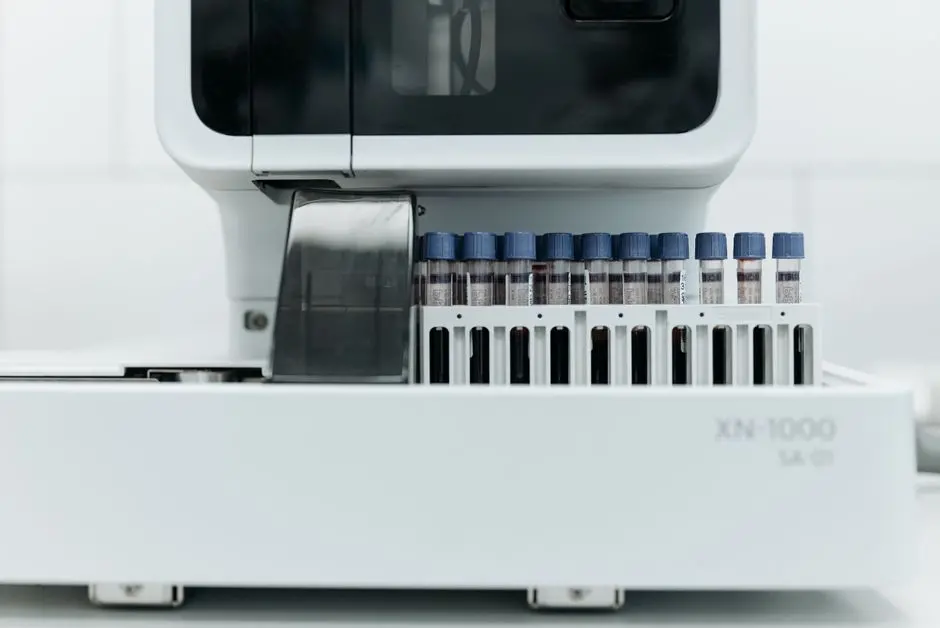
The era of manual bioinformatics is rapidly receding. As genomic, transcriptomic, and proteomic data scales exponentially, the sheer volume and complexity demand a radical shift in our operational paradigms. Consider the sheer audacity of processing millions of short reads from next-generation sequencing, or integrating data across diverse platforms – each step laden with potential for human error and consuming precious hours. Automation is not merely a convenience; it is a strategic imperative that dictates the viability and velocity of modern biological research. We are not just saving time; we are fundamentally altering our capacity for discovery.
Without automation, we face critical bottlenecks: first, the daunting prospect of human error during repetitive manual data manipulations, which can subtly corrupt results and invalidate entire experiments. Second, the sheer inefficiency of manual execution, draining research budgets in personnel hours and delaying scientific breakthroughs. A single RNA-Seq experiment can involve dozens of steps, from quality control and alignment to quantification and differential expression analysis. Manually executing these steps for multiple samples introduces immense variability and drastically impedes throughput. By embracing scripting, we empower researchers to execute complex workflows with unwavering consistency, achieve unparalleled reproducibility, and significantly compress project timelines. We must conquer data mountains, not be buried by them.
Mastering the Toolkit: Scripting Languages and Foundational Concepts
To automate, we must first master the tools. The cornerstone of bioinformatics automation rests upon a select few scripting languages, each offering unique strengths for specific tasks. Python stands as the titan of general-purpose scripting, renowned for its readability, vast ecosystem of scientific libraries (e.g., Biopython, NumPy, Pandas), and robust capabilities for data parsing, manipulation, and integration. It is the language of choice for complex data pipelines and custom tool development. R, conversely, dominates statistical computing and data visualization. Its rich array of packages (e.g., Bioconductor, ggplot2) makes it indispensable for exploratory data analysis, advanced statistical modeling, and generating publication-quality figures directly from analysis outputs. Finally, Bash (or other shell scripting) remains vital for orchestrating command-line tools, file system operations, and managing execution flow within servers or clusters. It is the glue that binds disparate components of a pipeline together.
Beyond language syntax, core programming concepts form the bedrock of effective automation. We must internalize principles such as variables for storing data, conditional statements (if/else) for decision-making, and loops (for/while) for repetitive tasks. Functions are critical for modularizing code, promoting reusability, and enhancing readability – breaking down complex problems into manageable, testable units. Understanding data structures like lists, dictionaries, and arrays allows us to efficiently organize and access biological information. By surgically applying these concepts, we transform raw code into elegant, efficient, and extensible solutions. We don't just write scripts; we engineer intelligent systems.
Blueprint Automation: Designing Robust Workflows
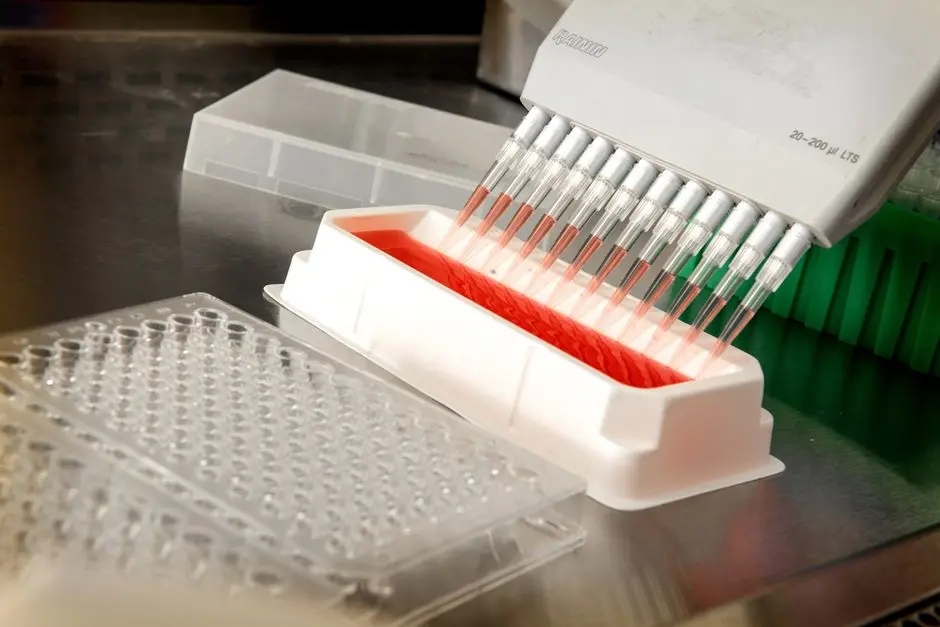
Effective automation begins long before writing the first line of code; it commences with a meticulous blueprint. A common pitfall is to dive directly into scripting without a clear, modular design. This often leads to monolithic, unmanageable scripts that are fragile, difficult to debug, and impossible to adapt. We must instead adopt a modular design philosophy. Break down complex bioinformatics tasks into distinct, smaller, independent modules, each performing a specific function (e.g., quality trimming, alignment, read counting). This approach mirrors the physiological segmentation of biological processes, where each organ performs its dedicated role.
For instance, instead of one script handling all RNA-Seq steps, forge separate modules for:
Raw data validation and metadata extraction.
Quality control and adapter trimming (e.g., using FastQC and Trimmomatic).
Read alignment to a reference genome (e.g., using STAR or HISAT2).
Quantification of gene expression (e.g., using featureCounts or Salmon).
Differential expression analysis (e.g., using DESeq2 or edgeR in R).
Each module should accept defined inputs and produce predictable outputs, allowing seamless chaining. Consider the entire workflow as a series of connected conduits, where data flows efficiently from one processing unit to the next. This modularity not only simplifies development and debugging but also enhances the reusability of individual components across different projects. We are not just automating a task; we are engineering a resilient, adaptable analytical engine.

Practical Code Forge: Automating Core Bioinformatics Tasks
Now, we move from strategy to surgical execution. Let us forge practical scripts to automate common bioinformatics bottlenecks. Data parsing and validation represent the first line of defense against corrupted downstream analyses. Python, with libraries like Biopython, excels here. We can script functions to read various file formats (FASTA, FASTQ, VCF), check for data integrity, and extract crucial metadata. Imagine a script that automatically parses sequencing reports, extracts read counts, and flags samples below a quality threshold – a critical early warning system.
Next, quality control and preprocessing are non-negotiable for reliable results. Bash scripting, combined with tools like FastQC and Trimmomatic, becomes our scalpel. We craft loops to iteratively process dozens or hundreds of raw FASTQ files, executing quality assessments, adapter trimming, and low-quality base removal in an unyielding, standardized manner. This ensures every sample enters the alignment phase with optimal integrity. For tasks like sequence alignment, scripts can orchestrate the execution of STAR, Bowtie2, or BWA, dynamically setting parameters based on project requirements and managing output files. Finally, data integration and aggregation benefit immensely from scripting. Python's Pandas library allows us to merge expression matrices, clinical data, and metadata from disparate sources into unified dataframes, ready for statistical analysis in R. Each script, a biological opportunity uncovered; each automated step, a conquest against data entropy.
# Python example: Parsing a FASTA file and counting sequences
from Bio import SeqIO

def count_fasta_sequences(fasta_file_path):
    """Counts the number of sequences in a FASTA file."""
    count = 0
    try:
        for record in SeqIO.parse(fasta_file_path, "fasta"):
            count += 1
        print(f"Successfully parsed {fasta_file_path}. Total sequences: {count}")
        return count
    except FileNotFoundError:
        print(f"Error: File not found at {fasta_file_path}")
        return -1
    except Exception as e:
        print(f"An error occurred: {e}")
        return -1

# Example usage:
# my_fasta_file = "path/to/your/sequences.fasta"
# num_seqs = count_fasta_sequences(my_fasta_file)

# Bash example: Automating FastQC and Trimmomatic for multiple samples
# Define variables
RAW_DATA_DIR="raw_reads"
PROCESSED_DATA_DIR="processed_reads"
ADAPTERS="adapters.fa"

# Create output directory if it doesn't exist
mkdir -p ${PROCESSED_DATA_DIR}/fastqc_reports
mkdir -p ${PROCESSED_DATA_DIR}/trimmed_reads

# Loop through each FASTQ file in the raw data directory
for R1_FILE in ${RAW_DATA_DIR}/*_R1.fastq.gz; do
    # Extract sample name (e.g., SampleA_R1.fastq.gz -> SampleA)
    SAMPLE_NAME=$(basename ${R1_FILE} _R1.fastq.gz)
    R2_FILE=${RAW_DATA_DIR}/${SAMPLE_NAME}_R2.fastq.gz

    echo "Processing sample: ${SAMPLE_NAME}"

    # Run FastQC on raw reads
    fastqc ${R1_FILE} ${R2_FILE} -o ${PROCESSED_DATA_DIR}/fastqc_reports

    # Run Trimmomatic for quality and adapter trimming
    java -jar /path/to/trimmomatic.jar PE \
        ${R1_FILE} ${R2_FILE} \
        ${PROCESSED_DATA_DIR}/trimmed_reads/${SAMPLE_NAME}_R1_paired.fastq.gz ${PROCESSED_DATA_DIR}/trimmed_reads/${SAMPLE_NAME}_R1_unpaired.fastq.gz \
        ${PROCESSED_DATA_DIR}/trimmed_reads/${SAMPLE_NAME}_R2_paired.fastq.gz ${PROCESSED_DATA_DIR}/trimmed_reads/${SAMPLE_NAME}_R2_unpaired.fastq.gz \
        ILLUMINACLIP:${ADAPTERS}:2:30:10 LEADING:3 TRAILING:3 SLIDINGWINDOW:4:15 MINLEN:36

    echo "Finished processing ${SAMPLE_NAME}\n"
done

echo "All samples processed successfully!"
Fortifying Workflows: Best Practices for Reliability and Reproducibility
Automation is only truly powerful if it is reliable and reproducible. A script that produces inconsistent results or breaks under minor variations is a liability, not an asset. We must infuse our automated workflows with resilience and scientific rigor. First, implement robust error handling. Anticipate common failures – missing files, incorrect permissions, unexpected data formats – and programmatically handle them. A well-designed script should not crash; it should gracefully report errors and, where possible, suggest corrective actions or log issues for later review. We empower our scripts to self-diagnose, minimizing human intervention.
Second, version control is non-negotiable. Tools like Git allow us to track every modification to our scripts, revert to previous stable versions, and collaborate seamlessly with colleagues. This ensures that the exact code used for a specific analysis can always be retrieved and audited, a cornerstone of scientific reproducibility. Third, comprehensive logging: every significant action, parameter, and outcome should be recorded. A detailed log file transforms a black box into a transparent audit trail, invaluable for debugging and validating results. Finally, documentation. Clear comments within the code, alongside external README files, are crucial for future maintenance and for enabling others (or your future self) to understand, modify, and extend your automated solutions. We build not just scripts, but enduring scientific infrastructure.

Scaling and Sustaining Automation: Advanced Strategies and Future Outlook
As our automated workflows grow in complexity and data volumes escalate, simple shell scripts often reach their limits. This necessitates advanced strategies for pipeline management. Specialized workflow management systems like Snakemake and Nextflow are game-changers. These tools enable us to define complex pipelines in a declarative manner, manage dependencies, automatically parallelize tasks across computing cores or clusters, and ensure that only necessary steps are re-executed when inputs change. They provide robust error recovery, making large-scale computational experiments far more robust and efficient. We graduate from individual scripts to orchestrated computational symphonies.
Furthermore, consider cloud computing integration. Platforms like AWS, Google Cloud, and Azure offer scalable compute resources and storage, allowing us to process truly massive datasets without local hardware constraints. Scripts can be adapted to leverage cloud APIs for dynamic resource allocation, making our workflows elastic and globally accessible. The future of bioinformatics automation also lies in continuous integration/continuous deployment (CI/CD) practices, ensuring that changes to our scripts are automatically tested and deployed. We must also foster a culture of community and knowledge sharing, contributing to open-source projects and adopting standardized best practices. By embracing these advanced strategies, we move beyond mere task automation to truly scalable, sustainable, and collaborative bioinformatics, driving biological discovery into uncharted territories with unprecedented velocity and precision.
Key Takeaways
The Strategic Imperative of Automation
Automation is crucial for modern bioinformatics due to exponential data growth. It combats human error, boosts throughput, ensures reproducibility, and accelerates scientific discovery by streamlining repetitive, complex tasks.
Essential Scripting Toolkit
Mastering Python (general-purpose, data manipulation, Biopython), R (statistical analysis, visualization, Bioconductor), and Bash (orchestration, file operations) is fundamental. Core programming concepts like variables, conditionals, loops, functions, and data structures are indispensable for effective scripting.
Blueprint for Robust Workflows
Design modular workflows, breaking complex tasks into independent units (e.g., QC, alignment, quantification). This enhances reusability, simplifies debugging, and ensures a clear, logical data flow, transforming analysis into an engineered system.
Practical Automation Techniques
Apply scripting to practical tasks: parsing/validating data (Python), quality control/preprocessing (Bash with tools like FastQC/Trimmomatic), orchestrating alignment, and integrating diverse datasets (Python's Pandas). Each script is a step toward greater efficiency and insight.
Fortifying Reproducibility and Reliability
Crucial practices include: robust error handling to prevent crashes, rigorous version control (Git) for traceability, comprehensive logging for audit trails, and thorough documentation for maintainability and collaboration. These build enduring scientific infrastructure.
Scaling and Sustaining Automation
For advanced workflows, adopt pipeline management systems (Snakemake, Nextflow) for dependency handling and parallelization. Leverage cloud computing for scalability. Embrace CI/CD practices and foster community sharing to sustain and evolve automated bioinformatics solutions.
FAQ
-
Which scripting language is best for bioinformatics automation?
There isn't a single 'best' language; rather, each excels in different domains. Python is highly versatile for general data manipulation, parsing, and integration, with extensive scientific libraries like Biopython and Pandas. R is unparalleled for statistical analysis and data visualization, particularly with Bioconductor. Bash is essential for orchestrating command-line tools and file operations. A robust bioinformatics workflow often integrates all three, leveraging their individual strengths.
-
How do I ensure my automated scripts are reproducible?
Reproducibility hinges on several key practices. Firstly, use version control (e.g., Git) to track all changes to your scripts. Secondly, meticulously document every step, parameter, and external tool used. Thirdly, ensure robust error handling and comprehensive logging. Finally, consider using workflow management systems (like Snakemake or Nextflow) which inherently promote reproducibility by explicitly defining dependencies and execution environments.
-
What are common pitfalls to avoid when automating bioinformatics tasks?
Common pitfalls include starting without a clear workflow design, leading to monolithic and unmanageable scripts. Neglecting error handling can cause workflows to crash unpredictably. Overlooking version control makes reproducibility nearly impossible. Failing to document code and processes makes maintenance and collaboration difficult. Additionally, not adequately testing scripts with diverse input data can lead to subtle, undetected errors.
-
Can I automate tasks that require specialized bioinformatics software?
Absolutely. Most specialized bioinformatics software (e.g., aligners like Bowtie2, assemblers like SPAdes, variant callers like GATK) are designed with a command-line interface (CLI). This allows them to be seamlessly integrated into scripts (Bash, Python) by executing their commands programmatically. Workflow management systems like Snakemake or Nextflow are particularly adept at orchestrating the execution of multiple such tools in a dependency-aware manner.