
Forge Discovery: Integrating Computational Screening with Lab Testing

We stand at the precipice of a new era in molecule discovery, where the traditional boundaries between in silico prediction and in vitro validation blur into a powerful, integrated workflow. The quest for novel bioactive molecules—be it for therapeutics, diagnostics, or materials science—demands unprecedented efficiency, accuracy, and speed. Relying solely on laborious wet-lab experimentation or isolated computational predictions is no longer sufficient to navigate the vast chemical space and address complex biological challenges. The true frontier lies in the symbiotic relationship between advanced computational screening and rigorous laboratory testing.
This article unveils the strategic imperative and tactical advantages of unifying these two potent methodologies. We explore how computational tools act as intelligent scouts, rapidly sifting through millions of potential candidates, while experimental validation serves as the ultimate arbiter, confirming or refuting these digital prophecies. Mastering this integration is not merely an optimization; it is a fundamental shift that redefines our capacity for innovation. It's about building bridges between bytes and beakers, accelerating discovery timelines, and maximizing resource allocation. This strategic approach is paramount to unlocking the full potential of comprehensive end-to-end processes for discovering novel bioactive molecules, transforming speculative ideas into tangible breakthroughs. Prepare to optimize your discovery pipeline, mitigate risks, and amplify success rates through a meticulously crafted fusion of digital precision and empirical verification.
The Strategic Imperative: Bridging In Silico and In Vitro
The landscape of new molecule discovery is increasingly complex, driven by the need for more specific, potent, and safer compounds. Historically, discovery has been a sequential, often serendipitous, and resource-intensive process. Traditional high-throughput screening (HTS) in the lab, while powerful, can be prohibitively expensive and time-consuming, generating vast amounts of data that require significant post-processing. Conversely, computational screening offers rapid, cost-effective initial assessments, but its predictions require empirical validation to translate into biological reality. The strategic imperative, therefore, is to create a seamless bridge between these two worlds, transforming a linear pipeline into an agile, iterative feedback loop.
We must recognize that computational methods excel at hypothesis generation and prioritization. They illuminate promising chemical scaffolds and predict their interactions with biological targets. However, these are models based on approximations and algorithms; real-world biological systems introduce variables—such as cellular permeability, metabolic stability, or off-target effects—that even the most sophisticated simulations struggle to capture fully. This is precisely where laboratory testing becomes indispensable. It provides the empirical truth, validating or refuting computational hypotheses, quantifying actual biological activity, and revealing unforeseen complexities. Our aim is to leverage the speed and breadth of computational screening to narrow down the vast chemical space, directing precious lab resources only towards the most promising candidates. This synergy radically enhances efficiency, reduces false positives, and accelerates the journey from concept to candidate, making every scientific endeavor more impactful.

Computational Screening: Unleashing the Digital Scout
We initiate the discovery journey with computational screening, employing a suite of powerful in silico techniques designed to act as an intelligent digital scout. This phase systematically explores vast chemical libraries, often comprising millions of compounds, identifying potential binders or modulators for a specific biological target. Key methodologies include:
- Molecular Docking: We predict the binding affinity and orientation of small molecules within a target's binding site. Advanced algorithms score these interactions, prioritizing compounds with strong, stable associations. This technique is invaluable for target-based drug design, allowing us to virtually screen millions of compounds against a known protein structure.
- Pharmacophore Modeling: We identify the essential steric and electronic features required for a molecule to interact optimally with a receptor. By defining these 'pharmacophoric' features, we can screen databases for molecules possessing similar characteristics, even if their overall structures are diverse.
- Quantitative Structure-Activity Relationship (QSAR) & Machine Learning (ML): We build predictive models linking chemical structure to biological activity. By training algorithms on existing activity data, we can forecast the properties of new, unsynthesized compounds. Modern ML approaches, including deep learning, revolutionize QSAR by identifying subtle, non-linear relationships, enabling more accurate predictions of potency, ADMET (Absorption, Distribution, Metabolism, Excretion, Toxicity) properties, and selectivity.
- Molecular Dynamics (MD) Simulations: We analyze the dynamic behavior of molecules and their interactions over time. While computationally intensive, MD provides critical insights into induced fit, conformational changes, and the stability of ligand-protein complexes, refining our understanding beyond static docking poses.
The output of this phase is a ranked list of top-scoring candidates, significantly smaller and more manageable than the initial chemical library. These computational hits serve as focused hypotheses, poised for rigorous experimental validation, thereby optimizing the subsequent, more resource-intensive lab work.
Experimental Validation: The Empirical Crucible of Truth
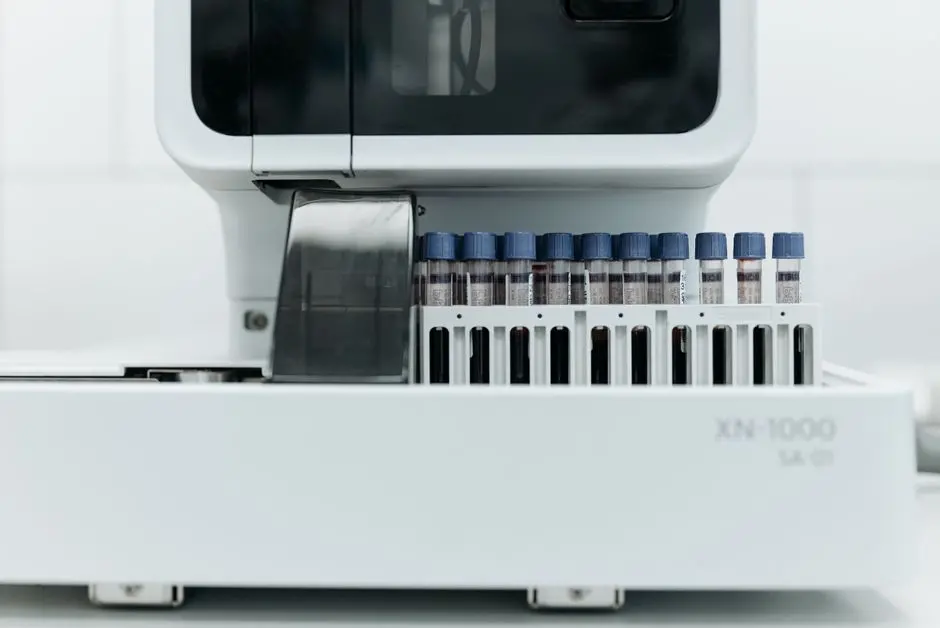
Following computational prioritization, we transition to the empirical crucible: rigorous laboratory testing. This phase is critical for transforming digital predictions into verifiable biological realities. We subject the computationally identified 'hits' to a battery of in vitro and sometimes in vivo assays, systematically evaluating their actual activity, selectivity, and drug-like properties. This process typically unfolds in several stages:
- Primary Biochemical or Biophysical Assays: We initially confirm direct interaction with the target. Techniques like surface plasmon resonance (SPR), isothermal titration calorimetry (ITC), or enzyme inhibition assays directly measure binding affinity and kinetic parameters. These assays provide quantitative data to validate the computational docking scores and binding predictions.
- Cell-Based Functional Assays: We assess the compound's ability to elicit a desired biological response within a cellular context. These assays address cellular permeability, uptake, and downstream signaling, providing a more physiologically relevant measure of activity. Examples include reporter gene assays, proliferation assays, or calcium flux measurements.
- ADMET (Absorption, Distribution, Metabolism, Excretion, Toxicity) Profiling: We investigate how the body handles the compound. This includes assays for metabolic stability (e.g., liver microsomes), membrane permeability (e.g., Caco-2 cells), plasma protein binding, and early toxicity screening (e.g., cytotoxicity assays, hERG channel inhibition). These critical insights predict potential challenges in later development.
- Confirmatory Synthesis and Structure-Activity Relationship (SAR) Studies: We synthesize chosen hits and their close analogs to explore the relationship between chemical structure and biological activity. This iterative process refines the initial hits into potent and selective lead compounds, guided by the feedback loop between computational insights and experimental data.
Each experimental result provides invaluable feedback, either affirming the computational prediction or guiding refinement of the in silico models. This iterative validation ensures that only robust, biologically active molecules progress, minimizing late-stage attrition.
Designing Integrated Workflows: A Blueprint for Iterative Discovery
The true power emerges not from isolated computational screening or lab testing, but from their seamless, iterative integration. We forge an integrated workflow that operates as a continuous feedback loop, where each stage informs and optimizes the next. Here is a blueprint for designing such a synergistic process:
- Phase 1: Target Identification & Initial Computational Prioritization:
We commence by rigorously defining the biological target and its relevance. Initial computational screens (e.g., molecular docking against a large virtual library) rapidly identify a preliminary set of diverse hits based on predicted binding. - Phase 2: Focused Experimental Validation & Hit Confirmation:
The top computational hits proceed to a cascade of in vitro assays. We confirm target engagement (biochemical), assess functional activity (cell-based), and conduct early ADMET profiling. Only compounds demonstrating confirmed activity and acceptable initial properties advance. - Phase 3: Computational Refinement & Lead Optimization:
Experimental data from Phase 2 becomes invaluable input for refining computational models. We use this data to build more accurate QSAR models, identify new pharmacophores, or perform focused virtual screening of analogs around confirmed hits. This guides the medicinal chemistry efforts, optimizing potency, selectivity, and ADMET profiles. For example, if an experimental hit shows poor solubility, we might computationally explore analogs with increased polarity. - Phase 4: Iterative Synthesis & Advanced Testing:
Based on computational predictions, new compounds are synthesized and subjected to more comprehensive experimental assays, including advanced cell models and potentially early in vivo studies. This iterative cycle of design, synthesis, and test, informed by both computational and experimental data, systematically refines leads towards preclinical candidates.
This dynamic interaction ensures that discovery is not a linear march but a strategic navigation, constantly recalibrating our course with fresh insights from both digital and empirical realms. We actively manage data flow, employing robust informatics platforms to ensure seamless data exchange and analysis between computational and experimental teams.

Optimizing Integration: Best Practices, Pitfalls, and Future Frontiers
To truly optimize the integration of computational screening and lab testing, we must adhere to best practices, proactively mitigate common pitfalls, and embrace emerging frontiers. Our success hinges on meticulous planning and continuous refinement.
Best Practices:
- Multidisciplinary Team Synergy: We foster close collaboration between computational chemists, medicinal chemists, biologists, and pharmacologists. Regular cross-functional meetings are essential to interpret data, refine hypotheses, and make informed decisions.
- Data Standards and Management: We establish rigorous data standards and utilize integrated informatics platforms. This ensures data consistency, accessibility, and traceability across all computational and experimental outputs. Poor data hygiene cripples iterative discovery.
- Realistic Expectations: We approach computational predictions with a critical eye, understanding their inherent limitations. They are tools for prioritization, not infallible prophecies. Experimental validation always remains the ultimate arbiter.
- Early ADMET Integration: We incorporate ADMET prediction and testing early in the workflow. Addressing potential liabilities upfront saves significant time and resources downstream.
- Iterative Learning: We treat every experimental result, whether positive or negative, as valuable input to refine our computational models. This continuous learning cycle is paramount for improving predictive accuracy over time.
Common Pitfalls:
- Siloed Operations: Failing to integrate teams and data leads to disjointed efforts and missed opportunities for synergy.
- Over-reliance on In Silico: Uncritically accepting computational predictions without sufficient experimental validation.
- Poor Quality Data: Inaccurate or inconsistent experimental data contaminates computational models, leading to flawed predictions.
- Lack of Feedback Loops: Failing to use experimental results to inform and refine subsequent computational screens.
Future Frontiers:
We look towards advanced Artificial Intelligence (AI) and Machine Learning (ML) techniques, particularly generative models, to design novel molecules directly. Automated robotic platforms for high-throughput synthesis and testing will further accelerate the experimental arm, creating truly closed-loop, autonomous discovery systems. The convergence of quantum computing promises to revolutionize computational chemistry, enabling even more accurate simulations of molecular interactions. Our path forward involves embracing these innovations, continually optimizing our integrated workflows to navigate increasingly complex biological landscapes with unprecedented precision and speed.
Key Takeaways
Integrated Discovery: The Core Principle
We strategically combine computational screening and lab testing to accelerate new molecule discovery. Computational methods efficiently filter vast chemical spaces, while experimental validation provides empirical proof and refines predictions. This synergistic approach drastically improves efficiency, reduces costs, and enhances the success rate compared to isolated methodologies.
Computational Screening: Digital Exploration
We leverage molecular docking, pharmacophore modeling, QSAR, and machine learning to virtually screen compounds. These tools predict binding affinities, identify critical structural features, and forecast biological activities, providing a prioritized list of potential candidates for focused experimental investigation.
Experimental Validation: Empirical Confirmation
We employ a cascade of in vitro assays, including biochemical, biophysical, and cell-based functional assays, to empirically confirm target engagement and desired biological responses. Critical ADMET profiling assesses drug-like properties early, ensuring that only robust, biologically active molecules progress.
Workflow Integration: Iterative Feedback Loop
We design an iterative workflow where experimental results continually refine computational models, and computational insights guide subsequent experimental designs. This creates a dynamic, learning-driven process, optimizing lead compounds towards preclinical candidates and minimizing late-stage attrition.
Strategic Optimization: Best Practices & Future
We ensure success through multidisciplinary team collaboration, rigorous data management, and realistic expectations for computational predictions. We actively mitigate pitfalls like siloed operations. Future advancements in AI, automated synthesis, and quantum computing promise to further enhance these integrated discovery platforms, pushing the boundaries of what's possible.
FAQ
-
What is the primary benefit of combining computational screening with lab testing?
The primary benefit lies in significantly accelerating the molecule discovery process while enhancing its efficiency and success rate. Computational screening rapidly filters millions of compounds, directing valuable lab resources only towards the most promising candidates. This reduces costs, saves time, and minimizes false positives, allowing us to focus empirical efforts where they matter most.
-
How do computational tools help in the early stages of discovery?
Computational tools act as intelligent scouts in the early stages. They predict molecular interactions, binding affinities, and potential ADMET properties using techniques like molecular docking, QSAR, and pharmacophore modeling. This allows us to rapidly prioritize compounds from vast virtual libraries, generating a focused list of hypotheses for experimental validation.
-
What types of lab tests are crucial for validating computational predictions?
Crucial lab tests include primary biochemical or biophysical assays (e.g., SPR, ITC) to confirm direct target binding, cell-based functional assays to assess biological response in a cellular context, and comprehensive ADMET profiling to evaluate drug-like properties. These empirical validations provide critical feedback on the accuracy and relevance of computational predictions.
-
What is a common pitfall to avoid in an integrated discovery workflow?
A common pitfall is operating in silos, where computational and experimental teams do not communicate or share data effectively. This leads to disjointed efforts, redundant work, and missed opportunities for iterative learning. We must foster strong interdisciplinary collaboration and ensure seamless data exchange to avoid this.
-
How does data management impact the success of integrated discovery?
Robust data management is paramount. Inconsistent, poorly organized, or inaccessible data cripples the feedback loop between computational and experimental stages. Establishing rigorous data standards and utilizing integrated informatics platforms ensures data quality, traceability, and seamless exchange, which are essential for informing subsequent predictions and experiments accurately.