
Unleash AI: Accelerate Protein Structure Prediction Breakthroughs
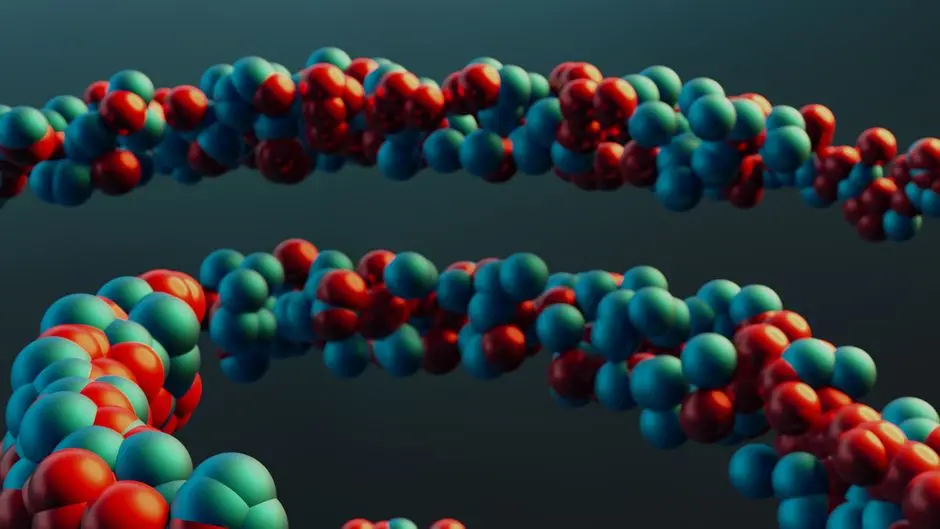
The quest to decipher protein structures, the molecular machines of life, has historically presented one of biology's most formidable challenges. Unraveling these intricate 3D arrangements is paramount for understanding biological functions, disease mechanisms, and forging novel therapeutic interventions. For decades, experimental methods, while invaluable, proved labor-intensive, time-consuming, and often prohibitive for high-throughput analysis. We now stand at the precipice of a revolutionary shift, where artificial intelligence is not merely augmenting, but fundamentally transforming our capabilities. This article plunges into the profound benefits AI bestows upon protein structure prediction, from unparalleled accuracy and speed to the democratization of structural biology data. We will meticulously dissect how AI surmounts previous limitations, propels drug discovery cycles, and unlocks entirely new frontiers in biochemical engineering. Prepare to discover how leveraging the power of AI in molecular structure prediction is not just an advantage, but an imperative for shaping the future of biological science.
Revolutionizing Accuracy and Speed in Protein Folding
We embark on a new era where artificial intelligence dramatically redefines the benchmarks for protein structure prediction, primarily through breakthroughs in deep learning. Historically, experimental techniques like X-ray crystallography, NMR spectroscopy, and cryo-electron microscopy (cryo-EM) are gold standards, yet they are resource-intensive, require significant expertise, and often struggle with certain protein types. AI models, spearheaded by achievements like DeepMind's AlphaFold, have fundamentally shifted this paradigm. These neural networks, trained on vast datasets of known protein structures, learn the complex physicochemical principles governing protein folding. They rapidly infer the most probable 3D conformation from an amino acid sequence with an accuracy that often rivals low-resolution experimental data and, in many cases, approaches atomic precision for soluble proteins.
The speed advantage is monumental. Where traditional methods can take months or even years to yield a single structure, AI algorithms can predict hundreds or thousands of structures in mere minutes to hours. This incredible acceleration allows researchers to explore vast swathes of the protein landscape previously inaccessible due to time constraints. We can now rapidly hypothesize and test structural models for entire proteomes, identify potential drug targets with unprecedented efficiency, and accelerate the validation of computationally derived insights. This capability is not just an incremental improvement; it is a catalytic force propelling biological discovery forward, turning previously intractable problems into solvable challenges. We unlock a new dimension of throughput, driving hypotheses generation and validation at a pace previously unimaginable in structural biology.
Unlocking Novel and Complex Protein Architectures
The biological world is replete with proteins that defy easy characterization by traditional experimental means. Intrinsically Disordered Proteins (IDPs), which lack a stable 3D structure under physiological conditions, play crucial roles in cell signaling and regulation, yet their dynamic nature makes them notoriously difficult to crystallize or image. Similarly, membrane proteins, embedded within lipid bilayers, are essential for transport and communication but are challenging to extract and stabilize for structural determination. Multi-protein complexes, formed by the intricate assembly of several protein subunits, further compound these difficulties due to their size and conformational flexibility.
AI offers a powerful solution to these long-standing bottlenecks. Advanced neural networks are demonstrating remarkable proficiency in predicting the structures of IDPs, understanding their ensembles and functional dynamics. They are also making significant strides in modeling membrane proteins, providing crucial insights into their architecture and how they interact with their environment. Furthermore, AI is increasingly capable of predicting the quaternary structures of protein complexes, deciphering how individual subunits come together to form functional molecular machines. This ability to tackle previously 'undruggable' or 'unfoldable' targets expands the scope of structural biology immensely. We gain access to an entire hidden layer of biological complexity, empowering us to understand disease mechanisms governed by these challenging proteins and design therapies that specifically target their unique structural features. This transformative capacity is a game-changer for drug discovery, opening new avenues for therapeutic intervention.

Accelerating Drug Discovery and Rational Design
The impact of AI in protein structure prediction resonates profoundly within the pharmaceutical industry, fundamentally reshaping the drug discovery pipeline. Traditional drug development is a costly, time-consuming endeavor with a high attrition rate, often limited by the availability of high-resolution protein structures for rational design. AI-driven structure prediction drastically mitigates this bottleneck. With rapid access to accurate 3D models of target proteins – disease-causing enzymes, receptors, or signaling molecules – researchers can conduct virtual screening of vast chemical libraries with unparalleled efficiency. This process identifies potential drug candidates (ligands) that are predicted to bind effectively to the target's active site or allosteric pockets.
Beyond initial hit identification, AI accelerates lead optimization. We can rapidly generate and evaluate structural variations of lead compounds, predicting their binding affinity, specificity, and potential off-target effects. This iterative process, guided by AI, significantly reduces the number of compounds synthesized and tested experimentally, saving immense time and resources. For example, understanding protein-ligand interactions at an atomic level allows for targeted modifications to improve efficacy and reduce toxicity. Moreover, AI facilitates the design of novel proteins and antibodies with tailored functionalities, paving the way for advanced biologics and personalized medicine. We are not just accelerating existing processes; we are enabling entirely new strategies for discovering and developing life-saving therapies, moving from brute-force experimentation to informed, AI-driven design.

Democratizing Structural Biology and Research Accessibility
One of the most profound, yet often underestimated, advantages of AI in protein structure prediction is its capacity to democratize structural biology research. Historically, acquiring high-resolution protein structures demanded access to expensive, specialized equipment (like synchrotron facilities for X-ray crystallography or high-field NMR spectrometers), substantial funding, and highly specialized expertise. This created a significant barrier to entry, largely confining cutting-edge structural research to well-funded institutions and large pharmaceutical companies.
AI tools, particularly those available as open-source resources or via cloud platforms, dramatically lower these barriers. A researcher with a standard computer and an internet connection can now predict the structure of a protein sequence in minutes, a task that would have previously required extensive experimental setup and potentially years of work. This newfound accessibility empowers smaller laboratories, researchers in developing countries, and interdisciplinary teams to integrate structural insights into their work without the prohibitive costs and logistical complexities. We witness a proliferation of structural data, fostering collaborative research and accelerating discovery across the global scientific community. This democratization is not merely about cost reduction; it's about fostering innovation, enabling a broader range of scientific inquiries, and unlocking the potential of diverse research perspectives that can collectively propel our understanding of biology further than ever before. We are expanding the frontiers of who can contribute to structural biology.
Forging Future Trajectories: Beyond Static Predictions
The current prowess of AI in protein structure prediction is merely the foundational layer for even more revolutionary advancements. While predicting static 3D structures is transformative, proteins are dynamic entities, constantly undergoing conformational changes critical for their function. The next frontier involves AI models that can accurately predict these dynamic behaviors, modeling protein folding pathways, large-scale domain motions, and transient interactions. This capability will unlock deeper insights into allosteric regulation, protein-protein interaction networks, and enzyme catalysis, where subtle structural shifts dictate biological outcomes.
Furthermore, AI is increasingly integrating multimodal data. By combining sequence information with experimental data – such as limited proteomics, cross-linking mass spectrometry, or low-resolution cryo-EM data – AI can refine predictions, especially for challenging cases or when modeling protein complexes. We are also witnessing the emergence of AI for predicting protein-ligand binding dynamics, protein design (generating novel sequences with desired structures or functions), and even predicting the impact of mutations on protein stability and function. This fusion of predictive power with advanced experimental techniques creates a synergistic loop, where AI guides experiments and experimental data refines AI models. We are moving beyond static snapshots to a comprehensive, dynamic understanding of the proteome, laying the groundwork for unprecedented control over biological systems and ushering in an era of precision bioengineering and therapeutic development.
Key Takeaways
Unprecedented Accuracy and Speed
AI models, leveraging deep learning, provide highly accurate protein structure predictions in minutes to hours, drastically accelerating biological discovery compared to traditional experimental methods which can take months or years. This enables high-throughput structural analysis across entire proteomes.
Access to Complex Biological Systems
AI overcomes limitations in characterizing challenging protein types such as Intrinsically Disordered Proteins (IDPs), membrane proteins, and large multi-protein complexes. This unlocks critical insights into disease mechanisms and broadens the scope for targeted therapeutic interventions, previously inaccessible.
Revolutionizing Drug Discovery and Research Accessibility
AI accelerates drug discovery by enabling rapid virtual screening and optimized lead design, significantly reducing R&D costs and timelines. Furthermore, AI tools democratize structural biology, making advanced structural insights accessible to a wider research community globally, fostering broader innovation.
FAQ
-
How do AI predictions compare to experimental methods in terms of accuracy?
AI models like AlphaFold have achieved accuracy levels that rival or even surpass low-resolution experimental data, particularly for soluble proteins. For many protein types, AI predictions are now considered highly reliable for downstream applications like drug design and functional annotation. While high-resolution experimental methods (e.g., X-ray crystallography at < 2Å resolution) still offer the most precise atomic details, AI significantly reduces the need for experimental verification for every single structure, allowing experimental efforts to focus on the most challenging or critical cases, or to validate complex dynamic behaviors that AI is still developing to predict.
-
Can AI predict the structure of any protein, including those never seen before?
Yes, one of the most powerful advantages of AI is its ability to generalize from known structures to predict the structures of novel proteins, even those with no homologous structures in existing databases. This capability stems from AI's deep understanding of physicochemical principles and evolutionary relationships embedded in amino acid sequences. While accuracy might slightly decrease for entirely novel protein folds or highly unusual sequences, AI performs remarkably well. This opens up research into previously uncharacterized proteins from diverse organisms and computationally designed proteins, expanding our biological knowledge base exponentially.
-
What are the primary limitations or challenges AI still faces in protein structure prediction?
Despite its remarkable success, AI still faces several challenges. Predicting protein dynamics and conformational changes remains a complex area, as most current models provide a single static snapshot. Modeling large multi-protein complexes and interactions, especially those involving many partners or transient associations, can still be difficult. Accurately predicting structures within complex cellular environments, considering post-translational modifications, and understanding protein-ligand binding at high precision for all possible scenarios are ongoing research frontiers. Furthermore, the reliance on high-quality training data means that predicting structures for entirely novel protein families with no evolutionary relatives can still be less accurate, though improvements are constant.
-
How does AI impact the cost and time involved in structural biology research?
AI dramatically reduces both the financial cost and time commitment in structural biology. By providing accurate predictions rapidly, AI minimizes the need for costly and time-consuming experimental structure determination. This allows researchers to prioritize experimental resources, focusing on proteins that absolutely require empirical validation or for understanding dynamic processes beyond current AI capabilities. For drug discovery, AI-driven virtual screening significantly cuts down the number of compounds that need to be synthesized and tested, leading to substantial savings in R&D budgets and accelerating drug candidates from concept to clinic.
-
Beyond static structures, how is AI being developed to predict protein function?
The integration of AI in protein structure prediction is a critical step towards predicting protein function. By accurately modeling 3D structures, AI provides the essential framework for inferring how a protein interacts with other molecules, its binding sites, enzymatic active sites, and potential regulatory mechanisms. Future AI developments are focusing on predicting dynamic structural changes, which are often directly linked to function, and integrating these structural insights with sequence motifs, phylogenetic information, and cellular context. This holistic approach aims to directly predict protein function, pathway involvement, and disease associations, transforming our understanding from 'what it looks like' to 'what it does' within the complex biological system.