
Unleashing AI to Model Protein Folding Dynamics
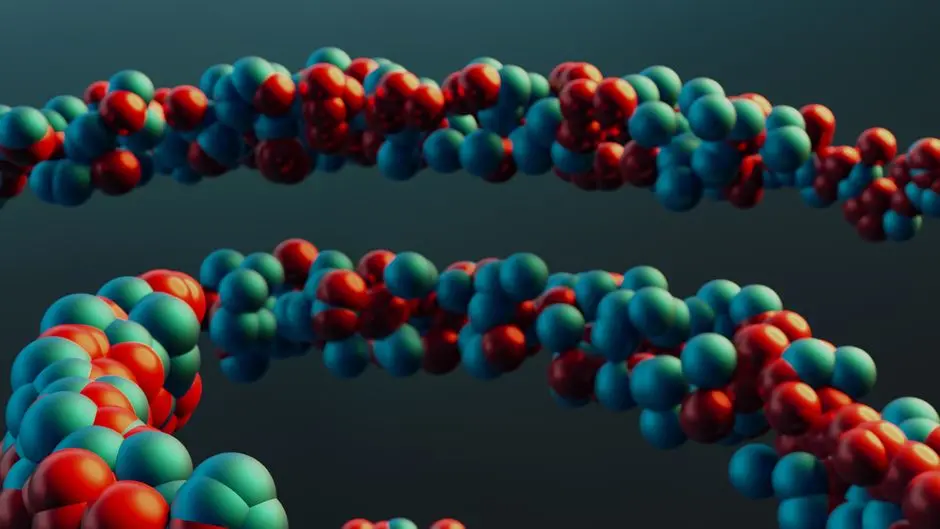
The intricate dance of protein folding, a fundamental biological process, dictates cellular function and underpins all life. Yet, its inherent complexity—governed by countless atomic interactions across vast timescales—has long presented a formidable challenge to scientific understanding. Traditional computational methods, while foundational, often struggle to capture the full spectrum of dynamic behaviors, leaving critical gaps in our knowledge.
In this era of unprecedented technological convergence, artificial intelligence emerges as the definitive catalyst, offering revolutionary tools to decipher this biological enigma. We are witnessing a profound paradigm shift, where AI is not merely assisting but actively transforming our capacity to model and predict the dynamic pathways proteins traverse to achieve their functional three-dimensional structures. This journey into AI-driven protein dynamics is paramount for drug discovery, disease understanding, and advanced biomaterials design.
Prepare to explore the cutting-edge methodologies and strategic insights that are redefining our approach to molecular modeling. This article charts the course for deploying AI with surgical precision, unlocking new frontiers in biological understanding, and building upon the foundational advancements in
Artificial Intelligence for Predicting Molecular Structures. Join us as we forge the future of biological research, optimizing our predictive capabilities to decode the very language of life itself.

Deciphering the Protein Folding Enigma: The AI Imperative
Proteins, the workhorses of life, execute their diverse functions through precise three-dimensional structures. The journey from a linear amino acid sequence to this intricate architecture is known as protein folding, a process critical for every biological activity. Errors in folding are implicated in numerous debilitating diseases, including Alzheimer's, Parkinson's, and cystic fibrosis. Traditional approaches to modeling this dynamic process, such as brute-force molecular dynamics (MD) simulations, are computationally exorbitant. They often fail to capture the rare, yet functionally significant, conformational transitions that occur over microseconds to seconds, far beyond the reach of typical nanosecond-scale simulations.
The imperative for AI in this domain is clear: to transcend these limitations. AI systems, particularly deep learning architectures, possess an unparalleled ability to identify complex patterns within vast datasets—a skill perfectly suited to the high-dimensional, non-linear energy landscapes of protein folding. We leverage AI not just to predict a static final structure, but to model the entire dynamic trajectory, mapping the intermediate states and transition pathways. This shift from static prediction to dynamic understanding unlocks unprecedented opportunities for rational drug design, where interventions can target specific conformational states or modulate folding pathways to correct misfolding. This fusion of biology and AI is not a luxury; it is the strategic cornerstone for accelerating discovery and engineering biological solutions.
Foundational AI Architectures for Dynamic Modeling
To effectively model protein folding dynamics, we deploy a suite of sophisticated AI architectures tailored to capture both sequential and spatial information inherent in protein structures and movements. Deep learning, in particular, has emerged as a powerhouse. Recurrent Neural Networks (RNNs), especially their advanced variants like Long Short-Term Memory (LSTM) networks and Gated Recurrent Units (GRUs), excel at processing sequential data, making them apt for modeling the time-dependent evolution of protein conformations. They learn dependencies across varying time steps, predicting how one state transitions to the next.
Convolutional Neural Networks (CNNs), traditionally used for image processing, are ingeniously adapted to process protein structures by treating them as 3D 'images' or graphs. They extract local structural features, such as secondary structure elements or interaction motifs, which are crucial for dynamic transitions. More recently, Graph Neural Networks (GNNs) have gained prominence, directly representing proteins as graphs where amino acids are nodes and interactions are edges. GNNs inherently capture the complex, non-local relationships that drive folding and unfolding events. We strategically combine these architectures, for instance, using GNNs to represent structural context at each time step, fed into an RNN to predict dynamic evolution. This multi-modal approach ensures a holistic capture of the molecular information, from local interactions to global conformational changes, driving robust dynamic predictions.
Augmenting Molecular Dynamics with AI: Accelerated Trajectories
Molecular Dynamics (MD) simulations remain the gold standard for atomistic descriptions of protein motion. However, their inherent computational cost restricts their reach to microseconds, severely limiting the observation of slower biological processes. AI acts as a potent enhancer, not a replacement, for MD, revolutionizing its efficiency and scope. We are forging new hybrid methodologies where AI models learn from short, traditional MD runs to extrapolate and accelerate longer trajectories, effectively breaking through timescale barriers.
Enhanced sampling techniques, a critical area, are being supercharged by AI. For instance, variational autoencoders (VAEs) and other dimensionality reduction methods help identify the 'collective variables' that best describe the slowest, most important motions in protein folding. Once these essential coordinates are identified, AI can guide MD simulations towards unexplored regions of the conformational landscape, facilitating the discovery of rare events like unfolding or ligand binding. Generative Adversarial Networks (GANs) are also being employed to generate plausible protein conformations and transition pathways, effectively 'filling in' the gaps between sparse MD observations. By leveraging AI to predict optimal sampling directions or to generate realistic conformational transitions, we dramatically reduce the computational burden, unlocking biologically relevant timescales previously inaccessible. This strategic integration is crucial for deep mechanistic understanding.
Predictive Power: Exploring Conformational Landscapes with Reinforcement Learning
The protein folding process navigates a complex, rugged energy landscape, where a multitude of stable and metastable conformations exist alongside transient transition states. AI's true predictive power lies in its ability to not only identify these states but also to chart the pathways between them, mapping the entire conformational landscape. Reinforcement Learning (RL) presents a particularly compelling approach for this challenge. We frame the protein folding problem as a sequential decision-making process, where an 'agent' (the AI) interacts with its 'environment' (the protein and its energy landscape).
The RL agent learns optimal sequences of structural changes (actions) to reach lower energy states or to transition between different functional conformations. By rewarding biologically relevant movements and penalizing high-energy clashes, RL algorithms can autonomously explore the vast conformational space, uncovering novel folding pathways and intermediate structures that might be missed by conventional simulations. This allows us to predict not just the most stable folded state, but a distribution of accessible states and their dynamic interconversions. A key advantage of RL is its ability to operate without explicit knowledge of the energy function, instead learning directly from simulated or experimental outcomes. However, validating these dynamic predictions remains a significant challenge, often requiring integration with experimental data from techniques like Cryo-EM or NMR spectroscopy to confirm the predicted states and transitions.
Navigating the Future: Best Practices and Emerging Frontiers
To fully capitalize on AI's potential in modeling protein folding dynamics, we must adhere to rigorous best practices and aggressively explore emerging frontiers. First, data quality and curation are paramount. High-fidelity experimental data (e.g., from Cryo-EM, NMR, X-ray crystallography) is indispensable for training robust AI models and validating their predictions. Establishing benchmark datasets that include dynamic information is critical for standardized model development and comparison. We must invest in creating diverse datasets encompassing various protein types, sizes, and folding mechanisms.
Second, the development of hybrid AI/physics-based models represents a promising frontier. Pure AI models can sometimes lack the physical realism of atomistic simulations, while pure physics models struggle with efficiency. Blending these approaches, where AI guides physics-based simulations or refines their outputs, offers the best of both worlds—physical accuracy coupled with computational speed. We also strategically focus on model interpretability; understanding 'why' an AI predicts a certain dynamic pathway is as crucial as the prediction itself, fostering trust and providing biological insights. Finally, embracing multiscale modeling, integrating AI from atomic to cellular levels, will enable us to bridge the gap between molecular dynamics and physiological function. These combined strategies will forge a future where AI not only predicts but also illuminates the fundamental mechanisms governing life’s molecular machinery, propelling us toward unprecedented discoveries in biological engineering and medicine.
Key Takeaways
AI's Role in Protein Folding Dynamics
AI is critical for overcoming the computational limitations of traditional methods like Molecular Dynamics (MD) in modeling protein folding, allowing us to understand dynamic pathways over biologically relevant timescales, which are crucial for drug discovery and disease understanding.
Key AI Architectures
- Recurrent Neural Networks (RNNs) for time-dependent sequence analysis.
- Convolutional Neural Networks (CNNs) for structural feature extraction.
- Graph Neural Networks (GNNs) for complex non-local interactions in protein structures.
AI-Enhanced MD
AI augments MD by enhancing sampling, accelerating simulations, and predicting rare events. Techniques like Variational Autoencoders (VAEs) identify collective variables, and Generative Adversarial Networks (GANs) generate plausible conformations, effectively extending MD's reach.
Reinforcement Learning for Landscape Exploration
Reinforcement Learning (RL) models protein folding as a sequential decision-making process, allowing AI agents to explore complex energy landscapes, uncover novel folding pathways, and predict distributions of accessible conformational states, even without explicit energy function knowledge.
Future Directions and Best Practices
Success hinges on:
- High-quality data curation and benchmark datasets.
- Development of hybrid AI/physics-based models.
- Focus on model interpretability for biological insights.
- Embracing multiscale modeling to link molecular events to cellular function.
FAQ
-
Why are traditional molecular dynamics simulations insufficient for protein folding dynamics?
Traditional molecular dynamics simulations, while atomistically detailed, are computationally intensive. They are typically limited to timescales of nanoseconds to a few microseconds. Protein folding, however, involves complex conformational changes and rare events that often occur over much longer timescales, from microseconds to seconds, making it impossible to observe the complete folding process with conventional MD within reasonable computational budgets. AI aims to bridge this timescale gap.
-
How does AI enhance molecular dynamics simulations for protein folding?
AI enhances MD in several ways:
- Accelerated Sampling: AI models can identify critical collective variables and guide MD simulations towards unexplored regions of the energy landscape, accelerating the discovery of rare events.
- Extrapolation: Learning from short MD trajectories, AI can predict and generate longer, physically plausible dynamic pathways.
- Reduced Dimensionality: Techniques like VAEs help reduce the high-dimensional protein motion data to a few key variables, simplifying analysis and accelerating simulations.
- Generative Models: GANs can generate novel, realistic protein conformations and transition states that are consistent with known physics but extend beyond sampled data.
-
What are the biggest challenges in applying AI to protein folding dynamics?
Key challenges include:
- Data Scarcity: High-quality experimental data on protein folding pathways and intermediate states is limited, which can constrain AI model training.
- Validation: Validating AI-generated dynamic predictions against experimental reality remains complex, especially for rare events.
- Interpretability: Understanding the 'why' behind an AI's prediction can be difficult, hindering biological insight.
- Generalizability: Ensuring AI models trained on one set of proteins can effectively predict the dynamics of novel proteins is an ongoing area of research.
- Integration Complexity: Seamlessly integrating AI with physics-based models requires sophisticated algorithm design and computational infrastructure.