
Validate Protein Structures: AI's Precision Unveiled
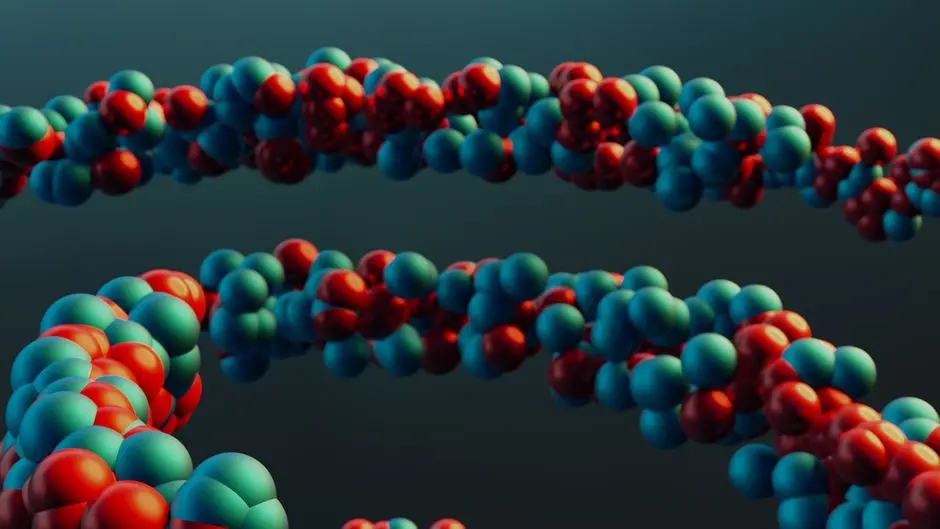
We are navigating an era where artificial intelligence has revolutionized protein structure prediction, opening unprecedented horizons for biology and medicine. However, the power of these predictions, however promising, is only as valuable as their validation's reliability. This is where AI deploys a new facet of its genius: it not only predicts, but it validates with unprecedented rigor.
This article forges a surgical understanding of how AI confirms and refines the accuracy of protein models. We will delve into the underlying mechanisms, from the intrinsic confidence scores generated by the predictive models themselves to external quality assessment systems powered by deep neural networks. Let's explore together how AI is transforming molecular structure prediction, establishing a new standard of trust and efficiency. Prepare to decipher the advanced strategies that allow us to unlock the therapeutic and research potential inherent in every precisely validated protein fold.
The Critical Imperative of Protein Structure Validation
We enter the arena of structural biology, where a protein's shape is its destiny. Every atom, every fold, every loop dictates its function, whether it is a catalytic enzyme, a cellular receptor, or a vital structural component. The ability to predict these structures with accuracy has been a centuries-old pursuit, and the advent of artificial intelligence, notably with pioneering models like AlphaFold and RoseTTAFold, has transformed this field, delivering predictions of previously unimaginable fidelity.
Yet, a prediction, however brilliant, is merely a hypothesis. The validation of these protein models is not a mere optional step; it is an absolute necessity, the bedrock upon which all scientific trust is built. An incorrect structure can mislead years of drug discovery research, lead to erroneous biological interpretations, and waste precious resources. Traditional validation methods, whether experimental (X-ray crystallography, NMR, cryo-electron microscopy) or computational (molecular dynamics simulation, energy minimization), are often time- and resource-intensive, creating a bottleneck.
AI has certainly solved part of the prediction problem, but it has simultaneously amplified the need for robust validation. How can we trust a prediction generated by a 'black box' if we cannot objectively and reproducibly assess its quality? We must, therefore, forge mechanisms that distinguish structural masterpieces from intricate illusions. It is here that we differentiate between global model quality—its overall topological arrangement—and local quality, which focuses on residue-by-residue accuracy, crucial for interacting with other molecules. Validation ensures we are operating with reliable maps to explore the uncharted territory of biology.
Intrinsic AI Confidence Metrics and Self-Validation
We now dive into the heart of the internal mechanics of advanced predictive AI models, exploring how they integrate validation mechanisms directly within their structural generation process. State-of-the-art deep learning architectures don't just produce a structure; they also emit confidence scores that inform us about the reliability of their own predictions, thus transforming validation into an intrinsic process.
The pLDDT (predicted Local Distance Difference Test) score is a crucial indicator. It quantifies the model's confidence in the local positioning of each individual residue. Expressed on a scale of 0 to 100, a high pLDDT (e.g., >90) indicates a highly reliable fold, comparable to experimental data. Conversely, low scores (<50) suggest disordered or poorly modeled regions, often a sign of biological flexibility or model uncertainty. We don't stop at pLDDT. The pTM (predicted TM-score) and IPTM (interface predicted TM-score) scores evaluate the overall quality of the model's topology and, for complexes, the accuracy of their interfaces, respectively. These metrics measure structural similarity to a hypothetical experimental structure, providing a macroscopic assessment of the entire model's fidelity.
AI also leverages self-validation mechanisms through ensemble predictions. By generating multiple plausible structures or analyzing the variance between different predictions, the model quantifies its own level of uncertainty. Attention mechanisms within neural networks, which focus the AI on key interactions, also implicitly contribute to validating identified connections. An insider tip: don't solely rely on high pLDDT regions. Low pLDDT areas can be equally informative, revealing intrinsically disordered regions that play a vital functional role, as in molecular recognition or cellular signaling. We must interpret these scores with a nuanced understanding of the biological context.

External AI-Driven Quality Assessment Tools
Beyond the inherent self-assessments of predictive models, we deploy a suite of external AI tools specifically designed to validate the quality of protein structures after their prediction. These systems act as independent auditors, capable of assessing a model's fidelity regardless of its origin, whether it stems from an AI prediction or an experimental determination.
These tools initially rely on the integration of fundamental biophysical rules. AI learns to identify blatant violations of the chemical and physical principles governing proteins: inconsistent dihedral angles (Ramachandran plots), abnormal bond lengths or torsion angles, or steric atomic clashes. Models like QMEANDisCo or VoroMQA are trained on vast databases of high-resolution experimental structures. They thus develop an 'intuition' for what constitutes a physically plausible structure, enabling them to predict an overall quality score or identify problematic regions within the model.
Another powerful strategy lies in leveraging knowledge-based potentials. AI learns the statistical preferences of residues in different structural environments (e.g., a hydrophobic amino acid inside a protein, a polar one on the outside). Scores like DOPE or QMEAN assess how much a given model deviates from these statistical preferences observed in natural proteins, highlighting anomalies. Furthermore, AI can assist in comparison with experimental data when available. For instance, AI algorithms can help fit a predicted model into a cryo-EM density map, optimizing the fit and validating consistency with physical data. A good practice is to always cross-reference the results from multiple validation tools; each captures different facets of structural quality, offering a more comprehensive and robust view.
Operationalizing AI Validation in Structural Biology Workflows
We are now forging the logical steps to strategically integrate AI validation into our structural biology workflows. It is not enough to have powerful tools; we need to know how to deploy them optimally to maximize their impact, from drug discovery to understanding diseases.
One of the most effective uses is iterative refinement. AI validation scores identify weak points in a predicted model. We use this information to guide targeted molecular dynamics simulations, energy minimizations, or even to inform future experiments. If a region has a low pLDDT, it may warrant further analysis by NMR or directed mutagenesis. We are establishing decision frameworks where automated thresholds, based on multiple validation scores, determine if a model is reliable enough for downstream studies, such as virtual screening or rational drug design. This minimizes false positives and steers us toward more promising leads.
The impact on drug discovery is transformative. By providing high-confidence structures, AI accelerates virtual screening, enabling faster identification of potential ligands and more accurate optimization of drug candidates. We avoid wasting resources on low-quality structures. Early error identification is a crucial best practice. Detecting a fundamental flaw in a structural model early in the research process saves us costly and time-consuming analyses that would be based on erroneous premises.
A common pitfall to avoid is blind reliance on automated scores. AI is a sophisticated tool, but it does not replace human expertise. Biological context, specific knowledge about the protein being studied, and critical interpretation of the data remain indispensable. We must maintain a loop between AI and the expert to optimize the robustness of our discoveries.
The Evolving Frontier: Explainable AI and Uncertainty Quantification
We are projecting towards the future horizons of AI-driven validation, where current challenges are transforming into opportunities for even deeper understanding and more reliable applications. The next wave of innovation focuses on transparency and uncertainty quantification, pushing us beyond simple scoring.
Explainable AI (XAI) is a major field of conquest. It is no longer enough for AI to tell us that a region is problematic; we demand to understand why. XAI techniques, such as saliency maps or feature importance analysis, help us visualize which model elements or specific interactions the AI deemed most critical to its decision. This provides structural biologists with invaluable insights for refining their hypotheses or targeting complementary experiments.
Concurrently, Uncertainty Quantification (UQ) is essential. Rather than providing a single point estimate of confidence, we are developing robust statistical frameworks to associate confidence intervals with each prediction and validation score. This allows us to assess not only accuracy but also the degree of reliability of that accuracy, which is crucial for high-stakes decisions like drug design.
The integration of multi-modal data represents another significant advancement. By combining AI-validated structural predictions with genomic, proteomic, and other 'omics' data, we are building a holistic understanding of protein function and its validation. This enables us to correlate genetic variations with structural changes, for instance, and further refine the confidence in our models.
Finally, we address ethical considerations and biases. Like any AI model, validation tools can inherit biases present in their training data, potentially leading to the over-representation or under-evaluation of certain protein families. We must actively work to develop robust, fair, and transparent models. The 'human-in-the-loop' paradigm remains fundamental: even with the most sophisticated advancements, the expert eye of the structural biologist remains indispensable for interpreting, contextualizing, and ultimately validating AI outputs, thereby ensuring the enduring conquest of the protein world.
Key Takeaways
The Imperative of Validation
The validation of protein structures is crucial to ensure the reliability of AI predictions. An incorrect structure can compromise scientific research and drug development. AI offers solutions to overcome the limitations of traditional methods, but requires equally robust validation to build trust.
AI-Powered Built-in Self-Validation
Advanced AI models like AlphaFold incorporate intrinsic validation mechanisms. Metrics such as pLDDT (per-residue local confidence) and pTM/IPTM (global/interface confidence) are generated simultaneously with the prediction, providing an initial layer of quality assessment directly by the model.
AI-Powered External Evaluation Tools
External AI tools are trained specifically to evaluate the quality of predicted structures. They check compliance with biophysical rules (Ramachandran, clashes) and leverage potentials based on knowledge from experimental structure databases (e.g., QMEAN, VoroMQA). These tools complement self-validation with independent analyses.
Strategic Integration into Workflows
AI validates structures by integrating into iterative workflows. It enables targeted model refinement, establishes decision frameworks for structure acceptance, and accelerates drug discovery by providing high-confidence models. Vigilance is paramount to avoid blind reliance on automated scores.
The Future: XAI and Uncertainty Quantification
The future of AI validation is moving towards Explainable AI (XAI) to understand the 'reasons' behind scores, and Uncertainty Quantification (UQ) to provide confidence intervals. The integration of multi-modal data and bias management will be crucial. Human expertise will remain indispensable for contextual interpretation and final validation.
FAQ
-
Why is the validation of protein structures so crucial?
Validation is crucial because a protein's shape dictates its function. An incorrect structure, even slightly, can lead to erroneous scientific conclusions, drug development failures, or a misunderstanding of biological processes, with costly R&D consequences. -
How does AI contribute to the 'intrinsic' validation of structures?
Advanced AI models integrate confidence scores directly into their prediction process. For instance, pLDDT assesses local residue-by-residue accuracy, while pTM evaluates overall folding quality. These scores provide a direct estimation of the AI model's reliability by the AI itself, enabling simultaneous self-assessment alongside prediction. -
What types of external AI tools exist for validating protein structures?
External AI tools are trained to assess the quality of post-prediction structures. They use neural networks to detect violations of biophysical rules (Ramachandran angles, atomic clashes) and compare the model against statistical preferences observed in experimental structure databases (e.g., QMEAN, VoroMQA). These tools act as independent auditors. -
Can AI validation scores be blindly trusted?
No, it is essential to avoid blind reliance. AI scores are powerful indicators, but they must always be interpreted within the biological context and with a critical expert eye. AI is a tool to enhance efficiency, not a substitute for human expertise, particularly for ambiguous or novel cases. -
What does Explainable AI (XAI) bring to structure validation?
Explainable AI (XAI) aims to make AI model decisions transparent. For structural validation, it not only allows for the identification of a problematic region but also for understanding *why* the AI considers it as such (e.g., by showing the interactions or features that influenced its score). This provides deeper insights and better guides biologists.