
> Applied Bioinformatics > Comparative Genomics and Evolutionary Analysis > Decipher Orthologs and Paralogs: Genomic Evolution Unlocked
Decipher Orthologs and Paralogs: Genomic Evolution Unlocked
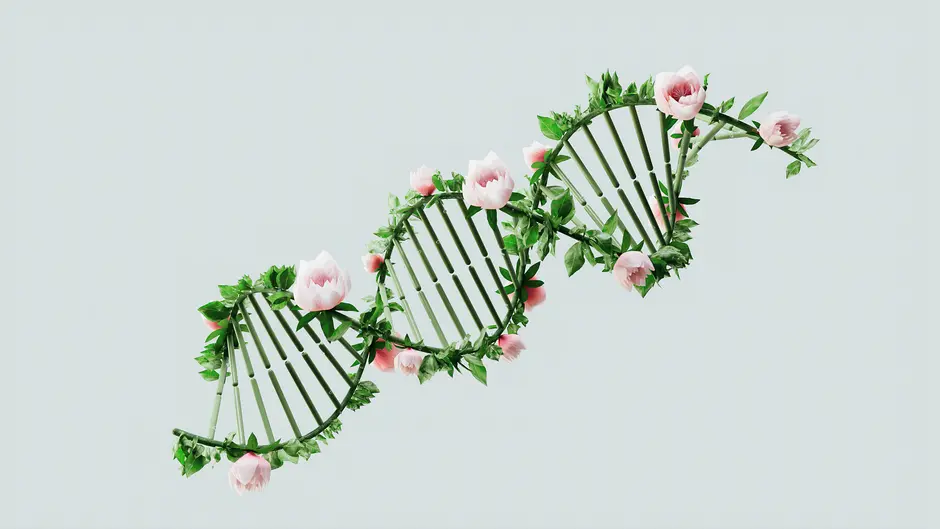
The genomic landscape is a testament to life's intricate evolutionary journey, a narrative etched in DNA over billions of years. Unraveling the relationships between genes across species is not merely an academic exercise; it unlocks profound insights into biology's most fundamental mechanisms, from disease susceptibility to evolutionary innovation. We confront the foundational concepts of orthologs and paralogs, two distinct categories of homologous genes that illuminate the twin forces of speciation and gene duplication. This exploration is crucial for anyone navigating the vast seas of genetic data, from predicting gene function in newly sequenced organisms to reconstructing the tree of life itself. Prepare to master these distinctions, for they are the bedrock upon which all sophisticated comparative genomics stands. We shall dissect their origins, decipher their roles, and equip ourselves with the strategic understanding necessary to leverage their power in applied bioinformatics. To truly excel in this field, we must also grasp the nuances of the methodologies, specifically the computational methods that empower their precise identification, which are indispensable for accurate genomic analysis. Forge ahead with us, as we unlock the evolutionary secrets encoded within our genomes.
Grasping Genomic Kinship: Homology, Orthology, and Paralogy Defined
In the vast ocean of genomic data, establishing relationships between genes is paramount. Our journey begins with the overarching concept of homology. Homologous genes are those that share a common ancestral gene. This shared ancestry implies a degree of sequence similarity, though functional conservation can diverge over evolutionary time. Crucially, homology is a binary concept: genes are either homologous or they are not. The degree of similarity we observe today is a consequence of their evolutionary distance from that common ancestor.
From this foundational principle, we carve out two distinct yet interconnected categories: orthologs and paralogs. These terms precisely delineate the evolutionary events that led to their current states. Understanding this distinction is not merely an academic exercise; it underpins all efforts to predict gene function across species, unravel disease mechanisms, and accurately reconstruct phylogenetic trees. Misinterpreting these relationships can lead to erroneous conclusions and misdirected research efforts, a common pitfall we must actively avoid.
Orthologs emerge from a speciation event. Imagine a gene in an ancestral species. When that ancestral species splits into two distinct species, the gene copies in each new species become orthologs. These genes typically retain the same or highly similar functions across species, because their divergence is solely due to the splitting of the species lineage. For example, the insulin gene in humans and mice are orthologs; they arose from the same ancestral insulin gene after the divergence of mammalian lineages. We exploit this functional conservation relentlessly in bioinformatics, transferring knowledge from well-studied model organisms to less-characterized species.
In stark contrast, paralogs arise from a gene duplication event within a single genome. Here, an existing gene is duplicated, resulting in two copies within the same species. These duplicate copies are free to evolve independently. Initially, they might be redundant, but over time, one copy can acquire new functions (neofunctionalization), or both copies can specialize into sub-functions (subfunctionalization). This process is a primary driver of evolutionary innovation, giving rise to gene families with diverse roles. The globin gene family, including myoglobin and various hemoglobin subunits, serves as a classic example of paralogous genes evolving specialized oxygen-binding functions within vertebrates.
Orthologs: Tracing Functional Conservation Across Species
Orthologs are the cornerstone of comparative genomics, representing genes in different species that originated from a single gene in their last common ancestor. Their divergence traces back to a speciation event. This direct lineage often implies strong conservation of function, making orthologs invaluable for functional annotation and evolutionary studies. When we identify an ortholog in a human genome for a gene well-characterized in yeast, we confidently infer similar biological roles. This principle accelerates biological discovery and informs drug target identification.
However, the orthology landscape is not always straightforward. We recognize different types of relationships: one-to-one orthologs (single gene in one species corresponds to a single gene in another), one-to-many orthologs (gene duplication after speciation in one lineage), and many-to-many orthologs (duplications in both lineages). Disentangling these complexities is critical for accurate genomic analysis. Misinterpretations can lead to flawed inferences about gene evolution and function, compromising downstream analyses.
The practical applications of ortholog identification are profound. By mapping orthologs, we reconstruct accurate phylogenetic trees, delineating species' evolutionary history. In medical genomics, identifying human orthologs of disease-associated genes in model organisms allows us to study disease mechanisms and test therapies. For instance, understanding the human cystic fibrosis transmembrane conductance regulator (CFTR) gene's orthologs in mouse models has been pivotal for research. In agricultural biotechnology, orthologs help us understand traits like disease resistance in crop plants. We actively leverage orthology to infer function, predict gene interactions, and identify conserved regulatory elements, propelling our understanding of diverse biological systems.
Precise ortholog identification demands sophisticated computational methods. Simple sequence similarity can be misleading. We must employ algorithms that consider synteny, gene order, and robust phylogenetic tree reconstruction techniques to accurately distinguish orthologs from paralogs. This systematic approach ensures the integrity of our comparative analyses and strengthens the predictive power of our bioinformatics pipelines, forming the bedrock of reliable evolutionary insights and robust functional predictions across the tree of life.
Paralogs: Drivers of Genomic Diversification and Novelty
Paralogs, distinct from orthologs, represent genes that originated from a gene duplication event within the same genome. This duplication creates two copies of a gene where there was previously one. Initially, these two copies are nearly identical. However, because they are redundant, one copy is released from strong purifying selection. This evolutionary freedom is a potent engine for biological innovation and complexity, enabling the evolution of new gene functions and the expansion of gene families.
The fates of duplicated genes typically follow several evolutionary paths. Neofunctionalization occurs when one paralog retains the original function, while the other acquires a completely new function. An iconic example is the evolution of antifreeze glycoproteins in Antarctic fish from an ancestral trypsinogen gene. Another pathway is subfunctionalization, where the ancestral gene had multiple functions, and after duplication, each paralog loses a subset, effectively dividing the ancestral functions. Both paralogs are then necessary. Lastly, a duplicated gene might accumulate deleterious mutations, becoming a non-functional pseudogene.
Paralogs explain the expansion and diversification of gene families, groups of genes sharing sequence similarity and often related functions, all derived from a common ancestral gene through successive duplications. The globin gene family in vertebrates provides a striking illustration: different alpha and beta globin chains, along with myoglobin, arose through ancient gene duplications. These paralogs specialized to bind oxygen with varying affinities, optimized for different tissues or developmental stages, profoundly impacting physiological efficiency. Similarly, the extensive family of Hox genes, crucial for body plan development, are paralogs that have diversified to specify different segments.
Understanding paralogous relationships is critical for interpreting genome evolution and gene function. While orthologs often maintain function, paralogs highlight instances of functional divergence. Researchers harness this knowledge to trace the origins of complex traits, identify genes that have acquired specialized roles, and explore mechanisms by which genetic novelty arises. We must meticulously analyze sequence divergence patterns and structural changes to discern the specific evolutionary trajectory of each paralog, avoiding the pitfall of assuming functional equivalence where divergence has occurred.
Master Ortholog and Paralog Detection: Essential Methodologies
Accurately identifying orthologs and paralogs is a cornerstone of applied bioinformatics, yet it presents significant computational challenges. The fundamental approach often begins with sequence similarity searches, typically employing tools like BLAST. By comparing a gene sequence against a database, we identify potential homologs. However, high sequence similarity alone is insufficient to distinguish orthologs from paralogs, especially recent paralogs. We recognize this as a critical initial step, but not the definitive answer for precise classification.
The most robust methods integrate phylogenetic analysis. The "phylogenetic tree reconciliation" approach constructs gene trees for candidate homologous genes and reconciles them with a known species tree. When a gene tree branches at the same point as the species tree, it suggests a speciation event (orthology). Conversely, if a gene tree branches earlier, it suggests a duplication event (paralogy). This method, while computationally intensive, offers high confidence. Tools like OrthoFinder automate this, clustering genes into orthogroups and inferring trees to resolve relationships, crucial for large-scale genomic projects.
Another powerful strategy leverages synteny, or the conservation of gene order on chromosomes. If two genes from different species are orthologous, they are often flanked by orthologous genes in similar chromosomal regions. This conserved genomic context provides strong evidence for orthology, particularly for ancient genes. Synteny analysis helps resolve ambiguous cases where sequence similarity is equivocal. Databases like Ensembl Compara integrate phylogenetic analysis with synteny mapping, offering curated predictions across hundreds of species, a valuable resource.
Best practices in ortholog/paralog detection demand a multi-pronged approach. We never rely solely on pairwise sequence similarity. Instead, we combine it with phylogenetic tree construction, syntenic evidence, and domain architecture analysis. Rigorous statistical validation and careful interpretation are paramount. Common pitfalls include overlooking lineage-specific duplications, misidentifying recent paralogs as orthologs, and dealing with incomplete genome assemblies. Always scrutinize evidence and cross-reference predictions. Forge a methodology that is robust, iterative, and informed by evolutionary principles to unlock reliable insights into gene evolution and function.
Strategic Insights: Complexities and Applications in Bioinformatics
Navigating the genomic landscape with precision requires embracing complexities beyond simple speciation and duplication. Whole-genome duplication (WGD) events, prevalent in plants and some vertebrates, create vast numbers of paralogs ('ohnologs') simultaneously, leading to intricate relationships. Distinguishing these from other duplication types is crucial. Furthermore, horizontal gene transfer (HGT), where genetic material moves between distantly related organisms, introduces genes that did not descend vertically, complicating homology inference and necessitating careful phylogenetic investigation.
We also encounter nuanced classifications such as co-orthologs and in-paralogs. Co-orthologs refer to genes in one species orthologous to a single gene in another, but duplicated in the first species after divergence. In-paralogs are paralogs that arose from a duplication event more recent than the speciation event separating the two species. These distinctions are not pedantic; they provide finer resolution to evolutionary events, impacting our understanding of gene dosage, functional redundancy, and adaptive evolution. A robust bioinformatics pipeline must discern these subtle yet significant relationships.
The strategic implications of precise ortholog and paralog identification extend across diverse fields. In drug discovery, understanding gene families helps us pinpoint conserved drug targets (orthologs) across species, facilitating preclinical testing. Conversely, identifying paralogous genes with subtly different functions can inform the development of highly specific drugs that target only a particular isoform, minimizing off-target effects. For example, understanding paralogous kinase families allows for designing inhibitors specific to disease-driving kinases while sparing essential housekeeping ones.
In disease modeling, tracing orthologous disease genes in model organisms empowers researchers to engineer precise genetic models for human conditions. Identifying functionally divergent paralogs can also explain variations in disease susceptibility. Furthermore, in synthetic biology and metabolic engineering, understanding the functional roles of orthologs and paralogs from diverse organisms allows us to select and assemble genetic parts for novel pathways, optimizing industrial production or engineering bioremediation. We wield these evolutionary insights as powerful tools, accelerating discovery and innovation across biomedical and biotechnological landscapes.
Future of Genomics: Overcoming Challenges in Evolutionary Analysis
The evolutionary narrative embedded within genomes is dynamic, constantly shaped by events beyond simple speciation and duplication. Gene loss can obscure ancient orthologous relationships, as can gene fusion and fission events, where genes either combine or split, altering their structural integrity. Such events necessitate sophisticated algorithms that track gene fragments or domains, inferring ancestral states even when the complete gene sequence is not conserved. We push the boundaries of current methodologies to accurately reconstruct these complex evolutionary histories.
One of the most promising future directions involves deeper integration of functional genomics data. While sequence homology and synteny provide structural evidence, integrating data from gene expression (RNA-seq), protein-protein interaction networks, and epigenomic profiles (ChIP-seq) offers a functional dimension. Orthologous genes are often co-expressed or interact with orthologous partners, even with significant sequence divergence. This functional evidence can bolster confidence in predictions, especially for rapidly evolving genes. We envision a future where computational frameworks seamlessly merge genomic and functional data to refine our understanding of evolutionary relationships.
The advent of machine learning and artificial intelligence is poised to revolutionize ortholog and paralog detection. Algorithms can learn complex patterns from large, annotated datasets, incorporating multiple features—sequence similarity, synteny, phylogenetic context, expression profiles, and protein structure—to make highly accurate predictions. Deep learning models, in particular, hold the potential to identify subtle evolutionary signals that traditional methods might miss, leading to more comprehensive and nuanced classifications. These advanced tools will enable us to analyze ever-increasing volumes of genomic data with unprecedented speed and precision, moving beyond purely sequence-based homology inferences.
Ultimately, understanding orthologs and paralogs is about comprehending the dynamic nature of gene families. Genes are not static entities; they constantly evolve through birth, death, duplication, and functional diversification. The strategic researcher views this not as a problem, but as an opportunity to trace adaptive evolution, identify the genetic basis of novel traits, and decipher the intricate mechanisms that generate biological diversity. We are moving towards comprehensive, pan-genomic analyses that consider populations and entire clades, capturing the full spectrum of evolutionary events. We forge ahead, leveraging cutting-edge bioinformatics to unlock the complete evolutionary saga encoded within the blueprint of life.
Key Takeaways
Orthologs vs. Paralogs: Fundamental Distinctions
Orthologs arise from speciation events, representing genes in different species derived from a common ancestral gene, typically retaining similar functions. Paralogs originate from gene duplication events within a single genome, often leading to functional divergence and contributing significantly to evolutionary innovation.
Evolutionary Impact and Biological Roles
Orthologs are critical for inferring gene function across species and for reconstructing accurate phylogenetic trees, providing a stable backbone for comparative genomics. Paralogs, through processes like neofunctionalization and subfunctionalization, drive the expansion of gene families and introduce novel biological functions, fueling genetic complexity and adaptation.
Advanced Detection Methodologies
Accurate identification necessitates sophisticated bioinformatics approaches beyond simple sequence similarity. Key methods include phylogenetic tree reconciliation, which aligns gene trees with species trees, and synteny analysis, which leverages conserved gene order. Tools like OrthoFinder integrate these techniques for robust predictions.
Navigating Complexities in Genomic Analysis
The genomic landscape presents challenges such as whole-genome duplications, horizontal gene transfer, gene loss, and nuanced relationships like co-orthologs and in-paralogs. Addressing these requires a multi-faceted approach, often integrating structural and functional genomics data.
Strategic Applications and Future Directions
Understanding orthologs and paralogs is paramount for applications in drug discovery, disease modeling, and synthetic biology. Future advancements will integrate functional genomics data with machine learning and AI to enhance detection accuracy, providing a more dynamic and comprehensive view of gene evolution.
FAQ
-
How does horizontal gene transfer (HGT) complicate ortholog-paralog distinction?
HGT introduces genes from distantly related species, bypassing vertical inheritance. This means a gene in one species might appear similar to one in another, not due to common ancestry through speciation or duplication within the lineage, but because it was directly transferred. This can lead to misidentification if not carefully resolved via detailed phylogenetic analysis, which determines if the gene's evolutionary history aligns with the species tree or suggests an external origin.
-
Can orthologs ever have different functions across species?
While orthologs generally retain similar functions due to their origin from a common ancestral gene via speciation, minor functional divergence or specialization can occur over long evolutionary times, especially in non-essential roles or through changes in regulatory regions. However, a complete shift to a drastically different function is rare for true orthologs; such cases often hint at misidentification or rapid neofunctionalization after cryptic duplication.
-
Why is synteny important for ortholog detection beyond sequence similarity?
Synteny, the conservation of gene order on chromosomes, provides independent and robust evidence for orthology. Even if two orthologous genes have diverged significantly at the sequence level, their surrounding genomic context (i.e., neighboring genes) might remain conserved across species. This conserved gene order acts as a strong indicator of shared ancestry and can help resolve ambiguous cases where sequence similarity is borderline or when dealing with ancient duplications where sequences have highly diverged.