
> Bio-engineering & bioinformatics pipelines > Vector Search and Similarity Systems > Engineer Vector Search Microservices for Bio-Pipelines
Engineer Vector Search Microservices for Bio-Pipelines
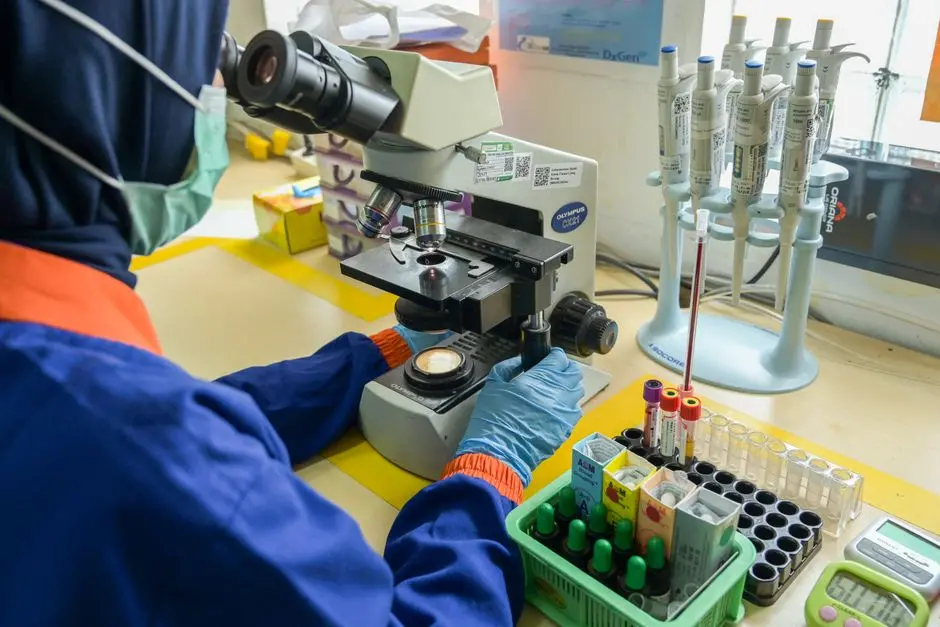
The explosion of biological data, from omics sequences to molecular structures, mandates rapid, intelligent search capabilities. Traditional keyword searches falter when confronted with the nuanced, high-dimensional nature of biological features. We confront this challenge by leveraging vector search, transforming complex biological entities into numerical representations that enable the discovery of subtle similarities and underlying patterns.
This frontier demands robust, scalable solutions. We activate Java Spring Boot to deploy similarity search algorithms as production-ready microservices, unlocking unprecedented potential for bio-engineering and bioinformatics pipelines. Discover how to forge highly performant, resilient systems that drive innovation. This resource illuminates the critical steps, from architectural design to deployment best practices, ensuring your bio-pipelines gain a powerful analytical edge. Master the methodologies to efficiently implement large-scale vector search for molecular and protein embeddings, driving forward your biological discoveries with surgical precision. Prepare to transform raw biological data into actionable insights, propelling your research and development into new dimensions of discovery.

Forge Foundational Architectures for Bio-Similarity Search
We initiate the journey by forging a robust architectural foundation. Effective bio-similarity search hinges on two core components: embedding generation and efficient vector indexing. First, we transform complex biological data – protein sequences, gene expression profiles, molecular fingerprints – into dense numerical vectors. This transformation, often powered by deep learning models like BERT for proteins or specialized graph neural networks for molecules, captures semantic and structural relationships within a high-dimensional space. The quality of these embeddings directly dictates the relevance of search results.
Once embeddings are generated, we require a mechanism to store and query them at scale. Traditional relational databases falter here; they cannot efficiently handle high-dimensional nearest neighbor queries. We pivot to specialized vector indexing techniques. These include Approximate Nearest Neighbor (ANN) algorithms like Hierarchical Navigable Small Worlds (HNSW), Annoy, or Facebook AI Similarity Search (Faiss), which dramatically reduce search time by sacrificing a tiny fraction of accuracy. Choosing the right algorithm depends on dataset size, dimensionality, latency requirements, and the acceptable recall rate.
For Java environments, we typically integrate with these powerful C++ libraries via JNI (Java Native Interface) or dedicated Java wrappers. This foundational layer defines how biological similarity is numerically represented and how it becomes queryable, setting the stage for microservice deployment.
/*
 * Representing a generic biological entity with its vector embedding.
 * In a real-world scenario, 'data' might be a protein sequence, a gene expression profile,
 * or a molecular structure representation.
 */
package com.biopipeline.search.model;

import java.util.UUID;

public class BioVectorEntity {

    private String id;
    private String entityType; // e.g., "protein", "gene", "molecule"
    private double[] embedding; // The high-dimensional vector representation
    private String metadata; // Additional information (e.g., protein name, PDB ID)

    public BioVectorEntity(String entityType, double[] embedding, String metadata) {
        this.id = UUID.randomUUID().toString();
        this.entityType = entityType;
        this.embedding = embedding;
        this.metadata = metadata;
    }

    // Getters and Setters
    public String getId() {
        return id;
    }

    public void setId(String id) {
        this.id = id;
    }

    public String getEntityType() {
        return entityType;
    }

    public void setEntityType(String entityType) {
        this.entityType = entityType;
    }

    public double[] getEmbedding() {
        return embedding;
    }

    public void setEmbedding(double[] embedding) {
        this.embedding = embedding;
    }

    public String getMetadata() {
        return metadata;
    }

    public void setMetadata(String metadata) {
        this.metadata = metadata;
    }
}

Activate the Similarity Search Engine in Java
We activate the core similarity search engine within a Java context. This involves selecting and implementing the specific algorithm that performs the vector comparisons. For smaller datasets or simpler pipelines, an in-memory brute-force approach with metrics like Cosine Similarity or Euclidean Distance might suffice. However, for real-world bio-pipelines dealing with millions or billions of vectors, we must integrate with high-performance ANN libraries. Java offers several avenues: leveraging existing Java ports of ANN algorithms (e.g., Lucene's HNSW implementation), utilizing JNI to call native Faiss or Annoy libraries, or integrating with dedicated vector databases that provide Java SDKs (e.g., Milvus, Pinecone, Weaviate).
A critical decision point surfaces: should the vector index reside in-memory with the microservice, or should we offload it to an external vector database? In-memory solutions offer peak latency for smaller datasets but present challenges for persistence, scalability, and memory footprint with massive indices. External vector databases provide robust persistence, horizontal scalability, and often superior performance for petabyte-scale datasets, albeit with added network latency. Our Java service will encapsulate this choice, providing a clean API regardless of the underlying index technology. We engineer interfaces that abstract the indexing and search operations, allowing for interchangeable implementations.
/*
 * Defines a service interface for performing similarity searches.
 * Implementations will vary based on the underlying vector search library or custom algorithm.
 */
package com.biopipeline.search.service;

import com.biopipeline.search.model.BioVectorEntity;
import java.util.List;

public interface SimilaritySearchService {

    /**
     * Adds a single biological entity (with its embedding) to the index.
     * @param entity The BioVectorEntity to add.
     */
    void addEntity(BioVectorEntity entity);

    /**
     * Adds a collection of biological entities to the index.
     * @param entities A list of BioVectorEntity objects to add.
     */
    void addEntities(List<BioVectorEntity> entities);

    /**
     * Performs a similarity search for a given query vector.
     * @param queryEmbedding The vector embedding representing the query.
     * @param k The number of nearest neighbors to retrieve.
     * @return A list of BioVectorEntity objects similar to the query.
     */
    List<BioVectorEntity> searchSimilar(double[] queryEmbedding, int k);

    /**
     * Initializes or reloads the vector index. Useful for persistent indices.
     */
    void initializeIndex();

    /**
     * Saves the current index to a persistent storage.
     */
    void saveIndex();
}

/*
 * Basic Cosine Similarity implementation for demonstration.
 * In production, this would likely wrap an ANN library (Faiss, HNSW).
 */
package com.biopipeline.search.service.impl;

import com.biopipeline.search.model.BioVectorEntity;
import com.biopipeline.search.service.SimilaritySearchService;
import org.springframework.stereotype.Service;

import java.util.ArrayList;
import java.util.Arrays;
import java.util.Comparator;
import java.util.List;
import java.util.concurrent.ConcurrentHashMap;
import java.util.stream.Collectors;

@Service
public class InMemoryCosineSimilarityService implements SimilaritySearchService {

    private final ConcurrentHashMap<String, BioVectorEntity> index = new ConcurrentHashMap<>();

    @Override
    public void addEntity(BioVectorEntity entity) {
        index.put(entity.getId(), entity);
    }

    @Override
    public void addEntities(List<BioVectorEntity> entities) {
        entities.forEach(this::addEntity);
    }

    @Override
    public List<BioVectorEntity> searchSimilar(double[] queryEmbedding, int k) {
        if (queryEmbedding == null || queryEmbedding.length == 0) {
            throw new IllegalArgumentException("Query embedding cannot be null or empty.");
        }

        return index.values().stream()
                .map(entity -> {
                    double similarity = calculateCosineSimilarity(queryEmbedding, entity.getEmbedding());
                    return new SimilarityResult(entity, similarity);
                })
                .sorted(Comparator.comparingDouble(SimilarityResult::getSimilarity).reversed())
                .limit(k)
                .map(SimilarityResult::getEntity)
                .collect(Collectors.toList());
    }

    private double calculateCosineSimilarity(double[] vec1, double[] vec2) {
        if (vec1.length != vec2.length) {
            throw new IllegalArgumentException("Vectors must have the same dimension.");
        }

        double dotProduct = 0.0;
        double norm1 = 0.0;
        double norm2 = 0.0;

        for (int i = 0; i < vec1.length; i++) {
            dotProduct += vec1[i] * vec2[i];
            norm1 += vec1[i] * vec1[i];
            norm2 += vec2[i] * vec2[i];
        }

        if (norm1 == 0.0 || norm2 == 0.0) {
            return 0.0; // Avoid division by zero, handle zero vectors gracefully
        }

        return dotProduct / (Math.sqrt(norm1) * Math.sqrt(norm2));
    }

    @Override
    public void initializeIndex() {
        // For in-memory, this might involve loading from a file or external source.
        System.out.println("In-memory index initialized.");
    }

    @Override
    public void saveIndex() {
        // For in-memory, this might involve serializing the index to disk.
        System.out.println("In-memory index saved (no-op in this demo).");
    }

    private static class SimilarityResult {
        private final BioVectorEntity entity;
        private final double similarity;

        public SimilarityResult(BioVectorEntity entity, double similarity) {
            this.entity = entity;
            this.similarity = similarity;
        }

        public BioVectorEntity getEntity() {
            return entity;
        }

        public double getSimilarity() {
            return similarity;
        }
    }
}

Engineer Microservices with Spring Boot for Bio-Pipelines
We engineer our vector search functionality into robust microservices using Spring Boot. Spring Boot simplifies the creation of stand-alone, production-grade Spring applications, making it an ideal choice for deploying specialized services in a complex bioinformatics ecosystem. We construct RESTful APIs to expose our similarity search capabilities, allowing other services, web applications, or data pipelines to consume them seamlessly. Key components include:
- Controllers: We define
@RestControllerclasses that handle incoming HTTP requests (e.g.,/search,/add). These endpoints receive query vectors and parameters, delegate the search logic to service layers, and return structured results. - Service Layer: This layer encapsulates the business logic, interacting with the chosen similarity search engine (e.g., our
InMemoryCosineSimilarityServiceor a Faiss/HNSW wrapper). It processes requests, performs the search, and formats the output. - Data Transfer Objects (DTOs): We define specific DTOs for request and response payloads to ensure clear contract boundaries and efficient data serialization (e.g.,
SearchRequest,AddEntityRequest). This promotes maintainability and interoperability. - Configuration: Spring Boot's externalized configuration capabilities allow us to manage parameters like index location, memory limits, and service ports without redeploying the application, crucial for production environments.
This microservice architecture ensures high cohesion and loose coupling, enabling independent deployment, scaling, and technology choices for different parts of our biological data processing pipeline. We forge dedicated endpoints for vector indexing and similarity querying, providing clear access points for biological discovery.
/*
 * DTO for incoming search requests.
 */
package com.biopipeline.search.controller;

import java.util.Arrays;

public class SearchRequest {
    private double[] queryVector;
    private int k;

    // Getters and Setters
    public double[] getQueryVector() {
        return queryVector;
    }

    public void setQueryVector(double[] queryVector) {
        this.queryVector = queryVector;
    }

    public int getK() {
        return k;
    }

    public void setK(int k) {
        this.k = k;
    }

    @Override
    public String toString() {
        return "SearchRequest{" +
               "queryVector=" + Arrays.toString(queryVector) +
               ", k=" + k +
               '}';
    }
}

/*
 * DTO for adding new bio-entities.
 */
package com.biopipeline.search.controller;

public class AddEntityRequest {
    private String entityType;
    private double[] embedding;
    private String metadata;

    // Getters and Setters
    public String getEntityType() {
        return entityType;
    }

    public void setEntityType(String entityType) {
        this.entityType = entityType;
    }

    public double[] getEmbedding() {
        return embedding;
    }

    public void setEmbedding(double[] embedding) {
        this.embedding = embedding;
    }

    public String getMetadata() {
        return metadata;
    }

    public void setMetadata(String metadata) {
        this.metadata = metadata;
    }
}

/*
 * Spring Boot REST Controller to expose similarity search functionality.
 */
package com.biopipeline.search.controller;

import com.biopipeline.search.model.BioVectorEntity;
import com.biopipeline.search.service.SimilaritySearchService;
import org.springframework.beans.factory.annotation.Autowired;
import org.springframework.http.HttpStatus;
import org.springframework.http.ResponseEntity;
import org.springframework.web.bind.annotation.*;

import java.util.List;

@RestController
@RequestMapping("/api/v1/similarity")
public class SimilaritySearchController {

    private final SimilaritySearchService similaritySearchService;

    @Autowired
    public SimilaritySearchController(SimilaritySearchService similaritySearchService) {
        this.similaritySearchService = similaritySearchService;
    }

    @PostMapping("/search")
    public ResponseEntity<List<BioVectorEntity>> search(@RequestBody SearchRequest request) {
        try {
            List<BioVectorEntity> results = similaritySearchService.searchSimilar(request.getQueryVector(), request.getK());
            return new ResponseEntity<>(results, HttpStatus.OK);
        } catch (IllegalArgumentException e) {
            return new ResponseEntity<>(null, HttpStatus.BAD_REQUEST);
        } catch (Exception e) {
            return new ResponseEntity<>(null, HttpStatus.INTERNAL_SERVER_ERROR);
        }
    }

    @PostMapping("/add")
    public ResponseEntity<String> addEntity(@RequestBody AddEntityRequest request) {
        try {
            BioVectorEntity entity = new BioVectorEntity(
                request.getEntityType(), request.getEmbedding(), request.getMetadata()
            );
            similaritySearchService.addEntity(entity);
            return new ResponseEntity<>("Entity added successfully", HttpStatus.CREATED);
        } catch (Exception e) {
            return new ResponseEntity<>("Failed to add entity: " + e.getMessage(), HttpStatus.INTERNAL_SERVER_ERROR);
        }
    }

    @PostMapping("/bulk-add")
    public ResponseEntity<String> addEntities(@RequestBody List<AddEntityRequest> requests) {
        try {
            List<BioVectorEntity> entities = requests.stream()
                .map(req -> new BioVectorEntity(req.getEntityType(), req.getEmbedding(), req.getMetadata()))
                .collect(Collectors.toList());
            similaritySearchService.addEntities(entities);
            return new ResponseEntity<>("Entities added successfully", HttpStatus.CREATED);
        } catch (Exception e) {
            return new ResponseEntity<>("Failed to add entities: " + e.getMessage(), HttpStatus.INTERNAL_SERVER_ERROR);
        }
    }
}

/*
 * Main Spring Boot application class.
 */
package com.biopipeline.search;

import org.springframework.boot.SpringApplication;
import org.springframework.boot.autoconfigure.SpringBootApplication;

@SpringBootApplication
public class BioSimilaritySearchApplication {

    public static void main(String[] args) {
        SpringApplication.run(BioSimilaritySearchApplication.class, args);
    }
}
Optimize for Production & Integrate into Bio-Pipelines
We move beyond development into optimizing and integrating our microservice into production-grade bio-pipelines. This final stage activates scalability, resilience, and operational excellence. Scalability is paramount: as biological datasets grow, our service must handle increased query loads and index sizes. We achieve this through horizontal scaling of Spring Boot instances, often managed by container orchestration platforms like Kubernetes. If an external vector database is used, its native scaling capabilities become critical. We also investigate distributed caching strategies for frequently accessed data or metadata.
Resilience ensures uninterrupted operation. Implement robust error handling, circuit breakers, and retry mechanisms. Employ health checks (Spring Boot Actuator) to monitor service availability and performance. Crucially, integrate comprehensive logging and monitoring (e.g., Prometheus, Grafana) to gain visibility into latency, throughput, and error rates. These metrics empower proactive issue detection and resolution. For production readiness, configure Spring Boot applications for optimal memory usage, garbage collection tuning, and thread pool management, especially for CPU-intensive vector operations.
Integration means our service becomes a seamless component of the larger bioinformatics ecosystem. We define clear API contracts, implement security measures (e.g., OAuth2, API keys), and ensure compatibility with existing data ingestion and processing pipelines. Common pitfalls include neglecting proper index serialization/deserialization, leading to slow startup times or data loss; failing to manage memory efficiently, causing OOM errors; and overlooking performance bottlenecks in the embedding generation step. We engineer our solution to avoid these, ensuring a robust, performant, and reliable bio-similarity search microservice.
/*
 * Example application.properties for a Spring Boot microservice.
 * This file configures various aspects of the application.
 */
# Server port for the microservice
server.port=8080

# Spring Boot application name (for monitoring/discovery)
spring.application.name=bio-similarity-search-service

# Logging configuration (e.g., output to console and file)
logging.level.root=INFO
logging.file.name=logs/similarity-service.log
logging.pattern.console=%d{yyyy-MM-dd HH:mm:ss} %-5p %c{1}:%L - %m%n
logging.pattern.file=%d{yyyy-MM-dd HH:mm:ss.SSS} [%thread] %-5level %logger{36} - %msg%n

# Example for a hypothetical external vector database connection
# (Replace with actual connection details for Milvus, Pinecone, etc.)
# vector.database.type=milvus
# vector.database.host=localhost
# vector.database.port=19530
# vector.database.collection=protein_embeddings

# Index configuration (if using an in-memory or file-based index)
# similarity.index.path=/data/similarity_index/bio_embeddings.bin
# similarity.index.auto-load=true

# Thread pool settings for asynchronous operations or concurrent search requests
# spring.task.execution.pool.core-size=10
# spring.task.execution.pool.max-size=50
# spring.task.execution.pool.queue-capacity=100
Key Takeaways
Architectural Foundation for Bio-Similarity
Transform biological data into high-dimensional vectors. Select and integrate efficient Approximate Nearest Neighbor (ANN) algorithms (HNSW, Annoy, Faiss) for scalable indexing and querying. Decide between in-memory indexing for speed or external vector databases for persistence and horizontal scalability based on dataset size and performance needs.
Implementing the Search Engine in Java
Utilize Java to wrap or implement similarity search logic. For large-scale data, integrate with performant ANN libraries via JNI or dedicated SDKs. Abstract the search mechanism with clean service interfaces to allow for interchangeable underlying technologies (e.g., in-memory brute force vs. external vector DB).
Spring Boot Microservice Deployment
Engineer RESTful APIs using Spring Boot controllers to expose similarity search functionalities. Employ a dedicated service layer for business logic and DTOs for clear API contracts. Leverage Spring Boot's configuration capabilities for easy management and deployment in production environments.
Production Optimization & Pipeline Integration
Optimize for scalability via horizontal scaling with container orchestration (Kubernetes). Ensure resilience with robust error handling, health checks (Actuator), and comprehensive logging/monitoring. Secure the API and integrate seamlessly into existing bioinformatics data ingestion and processing pipelines, avoiding common pitfalls like memory leaks or slow index loads.
FAQ
-
Why use microservices for similarity search in bioinformatics?
Microservices offer modularity, allowing independent development, deployment, and scaling of the similarity search functionality. This is crucial in bioinformatics where analytical components often evolve independently. It decouples the specialized vector search logic from other parts of a complex bio-pipeline, enhancing resilience and maintainability.
-
What are the common challenges when deploying vector search in Java?
Common challenges include efficient integration with native high-performance ANN libraries (Faiss, HNSW) via JNI, managing large in-memory indices within JVM memory constraints, ensuring data consistency between the vector index and source data, and optimizing latency for high-throughput query loads. Careful resource management and choice of vector database are key.
-
How do we handle dynamic updates or additions to the vector index?
For dynamic updates, if using an in-memory index, a refresh mechanism is required, potentially involving periodic re-indexing or incremental updates. For external vector databases, they typically offer robust APIs for adding, deleting, and updating vectors in real-time or near real-time, handling index reconstruction transparently. The microservice would expose endpoints to trigger these operations.
-
What is the typical latency for similarity search queries in a production environment?
Latency varies significantly based on dataset size, dimensionality, chosen ANN algorithm, hardware, and network overhead if using an external vector database. For millions of vectors, optimized ANN implementations can achieve single-digit to tens of milliseconds. We aim to minimize latency to enable interactive biological data exploration and real-time pipeline decisions.