
> Biological Data Analysis > Phenotype and Genotype Analysis > Analyze Population Genetic Diversity: Strategies & Data Mastery
Analyze Population Genetic Diversity: Strategies & Data Mastery
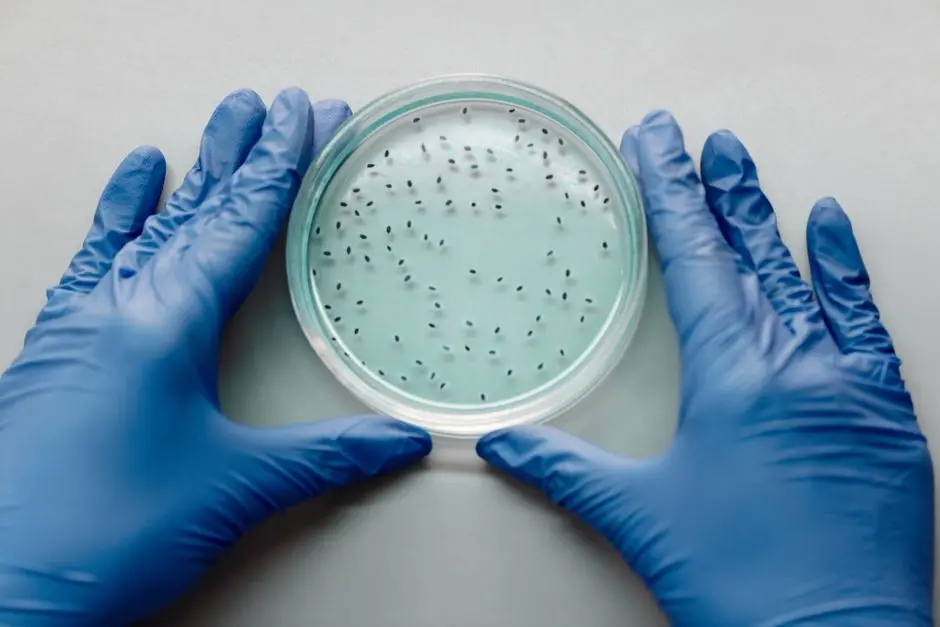
Embark on a critical exploration of genetic diversity within populations. This article dismantles the complexities of genetic variation, offering a precise blueprint for its analysis. Understanding population genetic diversity is not merely an academic exercise; it is the bedrock for conservation efforts, disease resistance strategies, and evolutionary insights. We forge a path through the most advanced methodologies and analytical frameworks, revealing how to accurately measure and interpret the genetic landscape of any population.
Prepare to command the tools and strategies that empower robust scientific discovery, transcending theoretical knowledge to practical application. This journey will equip you to make data-driven decisions crucial for safeguarding biodiversity and advancing our comprehension of life's intricate tapestry, particularly when analyzing the intricate relationships between genetic and phenotypic data. We arm you with actionable insights, transforming raw data into profound biological understanding.

Foundation of Genetic Diversity: Concepts and Imperatives
We initiate our exploration by establishing a robust understanding of genetic diversity—the cornerstone of population resilience and evolutionary potential. Genetic diversity encapsulates the total genetic variation within a population, encompassing differences at the nucleotide, gene, and chromosomal levels. This variation is the raw material upon which evolutionary forces act, dictating a population's capacity to adapt to environmental changes, resist pathogens, and maintain long-term viability.
Key metrics for quantifying genetic diversity include:
- Allele Frequencies: The proportion of each allele at a specific locus within a population.
- Heterozygosity: A measure of genetic variation at a given locus within an individual (observed heterozygosity) or across a population (expected heterozygosity), reflecting the probability that two randomly chosen alleles from the population are different.
- Nucleotide Diversity (π): The average number of nucleotide differences per site between two randomly chosen DNA sequences from a population.
- F-statistics (FST, FIS, FIT): These indices quantify the genetic differentiation among populations (FST), the departure from Hardy-Weinberg equilibrium within populations (FIS), and the overall deviation of heterozygosity in an individual relative to the total population (FIT). Understanding their interpretation is critical for inferring population structure and inbreeding levels.
The imperative to analyze genetic diversity extends beyond academic curiosity. In conservation biology, it informs strategies for managing endangered species, preventing inbreeding depression, and identifying evolutionarily significant units. In agriculture, genetic diversity underpins breeding programs to enhance crop yield, disease resistance, and adaptation to climate change. Neglecting this foundational analysis risks misinformed interventions, leading to potential population declines or inefficient resource allocation. We forge ahead, leveraging precise measurements to unlock actionable insights, ensuring a data-driven approach to biological stewardship.
Unearthing Variation: Methodologies for Genetic Data Acquisition
To rigorously analyze genetic diversity, we must first master the art of data acquisition. The selection of appropriate methodologies is paramount, directly influencing the resolution and scope of our genetic insights. We deploy a spectrum of techniques, each tailored to specific research questions, budget constraints, and species characteristics.
Molecular Marker Technologies:
- Microsatellites (Short Tandem Repeats - SSRs): Highly polymorphic, co-dominant markers ideal for identifying individuals, assessing parentage, and resolving recent population structure. Their strength lies in their high mutation rate, making them sensitive to recent demographic changes.
- Single Nucleotide Polymorphisms (SNPs): Ubiquitous, bi-allelic markers suitable for high-throughput genotyping. SNPs offer a robust, stable, and cost-effective approach for broad-scale population studies, linkage mapping, and genome-wide association studies.
- Amplified Fragment Length Polymorphisms (AFLPs) & Restriction Fragment Length Polymorphisms (RFLPs): Historically significant, these markers detect variation based on restriction enzyme digestion and subsequent amplification/detection. While less common now, they still hold utility in specific contexts.
Next-Generation Sequencing (NGS) Approaches:
- Whole-Genome Sequencing (WGS): Provides the most comprehensive view of genetic variation, capturing all SNPs, indels, and structural variants across the entire genome. While data-rich, it demands substantial computational resources.
- Reduced Representation Sequencing (e.g., RAD-seq, GBS): Cost-effective alternatives that sequence a consistent subset of the genome, generating thousands to millions of SNPs. These methods are excellent for non-model organisms and large population studies where WGS is prohibitive.
- Exome Sequencing: Focuses specifically on protein-coding regions, highly relevant for studies linking genetic variation to phenotypic traits, especially in human health and disease.
Our strategic choice hinges on the depth of genetic resolution required. For fine-scale structure or recent bottlenecks, microsatellites may offer advantages. For broad population genomics and evolutionary history, SNPs generated via NGS are indispensable. Crucial to this phase is rigorous Quality Control (QC) of raw data, involving read trimming, adapter removal, alignment to a reference genome, and stringent variant calling to filter out sequencing errors and artifacts. This foundational data integrity is non-negotiable for robust downstream analysis. We champion an integrated approach, ensuring our data acquisition methods align seamlessly with our analytical goals.
Deciphering the Code: Advanced Data Analysis and Interpretation
With high-quality genetic data in hand, we now pivot to the sophisticated analytical frameworks that transform raw information into profound biological insights. This phase demands both computational prowess and a deep understanding of population genetic principles.
Software Ecosystem: We leverage a suite of powerful software and R packages designed for genetic data analysis:
- GenAlEx: An Excel-based program for basic population genetic analyses, including allele frequencies, heterozygosity, AMOVA, and principal coordinate analysis (PCoA). User-friendly for initial explorations.
- Arlequin: A comprehensive package for population genetics, strong in AMOVA, various F-statistics, and demographic analyses (e.g., mismatch distributions).
- STRUCTURE: Employs a Bayesian clustering algorithm to infer population structure and identify genetic admixture without prior knowledge of population boundaries. It assigns individuals to inferred populations (K) and estimates their admixture proportions.
- adegenet (R package): Offers a versatile framework within R for multivariate analysis (PCA, DAPC), genetic distance calculation, and population assignment, emphasizing visualization.
- PLINK/VCFtools: Essential for handling large-scale SNP data, performing quality control, filtering variants, and calculating metrics like linkage disequilibrium (LD) and FST from VCF files.
Statistical Approaches:
- Analysis of Molecular Variance (AMOVA): Partitions genetic variation within and among populations and higher hierarchical levels, providing F-statistic analogs.
- Principal Component Analysis (PCA) / Discriminant Analysis of Principal Components (DAPC): Visualizes genetic relationships among individuals and populations by reducing data dimensionality, effectively revealing population structure and identifying genetic clusters or outliers.
- Admixture Analysis: Using tools like STRUCTURE or ADMIXTURE, we quantify the proportion of an individual's genome originating from different ancestral populations, revealing historical gene flow and population mixing.
- Linkage Disequilibrium (LD) Analysis: Measures non-random association of alleles at different loci, providing insights into recombination rates, selection, and population history.
Common Pitfalls & Best Practices: A critical error is misinterpreting FST values without considering factors like mutation rate, gene flow, and demographic history. Another pitfall is inadequate handling of multiple testing in genome-wide scans, leading to false positives. We advocate for rigorous statistical validation (e.g., permutation tests, bootstrapping), integrating biological context, and testing sensitivity to different parameter settings. Our approach prioritizes robustness and interpretability, transforming complex datasets into clear, actionable biological narratives. We must ensure our analytical choices align with the biological realities of the populations under study, driving discovery with precision.

Strategic Impact: Applications, Challenges, and Future Frontiers
The power of analyzing genetic diversity resonates across diverse scientific domains, forging a future where biological insights drive tangible progress. We apply this mastery to tackle some of the most pressing biological and societal challenges.
Key Applications:
- Conservation Genetics: We identify populations at risk, design effective captive breeding programs, manage translocations to restore genetic health, and define conservation units (e.g., distinct population segments for endangered species). For instance, understanding genetic bottlenecks in cheetahs informs strategies to mitigate inbreeding depression.
- Agriculture and Aquaculture: Our analyses guide precision breeding programs, accelerating the development of crops and livestock with enhanced disease resistance, yield, and adaptability to changing climates. Marker-assisted selection, leveraging SNP data, revolutionizes the efficiency of breeding cycles.
- Human Health and Disease: Population genetic studies are pivotal in identifying disease susceptibility genes, understanding drug responses (pharmacogenomics), and tracing human migration patterns that shaped current genetic variation. This informs personalized medicine and public health strategies.
- Evolutionary Biology: We reconstruct evolutionary histories, infer demographic events (e.g., population expansions, bottlenecks), and detect signatures of natural selection across genomes, unveiling the adaptive processes that shape life on Earth.
Challenges and Overcoming Them: The explosion of genomic data presents significant hurdles. Managing and processing petabytes of information demands robust computational infrastructure, often leveraging cloud computing and High-Performance Computing (HPC) clusters. Data standardization across studies remains a challenge, yet initiatives like the Global Alliance for Genomics and Health (GA4GH) forge paths towards interoperability. Ethical considerations, particularly with human genomic data, necessitate stringent privacy protocols and informed consent, requiring transparent data governance frameworks. We navigate these complexities by embracing open science, collaborative platforms, and continuous upskilling in computational methodologies.
Future Frontiers: The horizon of genetic diversity analysis is expansive. We anticipate breakthroughs from integrated Pan-genomics, capturing the full spectrum of genes within a species, not just a reference genome. Single-cell sequencing will unveil genetic variation at unprecedented individual cellular resolution. The synergy of Artificial Intelligence (AI) and Machine Learning (ML) will unlock new predictive models for complex trait evolution and disease susceptibility. Furthermore, integrating genetic data with environmental information via Landscape Genomics will reveal how adaptation unfolds across heterogeneous landscapes. We are not merely observers; we are architects of a biologically optimized future, continually pushing the boundaries of what is possible in understanding life's intricate genetic tapestry.
Key Takeaways
Unlocking Genetic Diversity: Core Concepts
Genetic diversity is the foundation of a population's resilience and evolutionary capacity. Key metrics include allele frequencies, heterozygosity, nucleotide diversity (π), and F-statistics (FST, FIS, FIT). These metrics quantify variation within individuals, within populations, and differentiation among populations. Understanding these concepts is critical for addressing challenges in conservation, agriculture, and human health, driving data-informed decisions for biological stewardship.
Strategic Methodologies for Data Acquisition
Selecting the right genetic marker and technology is crucial. Microsatellites excel in fine-scale population structure and kinship due to their high polymorphism. SNPs are ideal for broad, genome-wide studies, offering high-throughput and stability. Next-Generation Sequencing (NGS) technologies like WGS or reduced representation methods (RAD-seq, GBS) provide comprehensive genomic data. Rigorous Quality Control (QC) of raw data is non-negotiable, ensuring accuracy from trimming and alignment to variant calling. The choice must align with research questions, budget, and the biological characteristics of the study organism.
Mastering Advanced Data Analysis
Advanced data analysis transforms raw genetic data into meaningful insights. Essential software and R packages include GenAlEx, Arlequin, STRUCTURE, adegenet, and PLINK/VCFtools. Key statistical approaches are AMOVA, PCA/DAPC for visualizing relationships, admixture analysis for population origins, and Linkage Disequilibrium (LD) analysis for historical insights. Critical best practices include rigorous statistical validation, integrating biological context, and avoiding common pitfalls like misinterpreting F-statistics or inadequate multiple testing corrections. This phase demands both computational skill and deep biological understanding.
Impact and Future of Genetic Diversity Analysis
Analyzing genetic diversity has profound impacts across conservation genetics, agriculture (precision breeding), human health (disease susceptibility, pharmacogenomics), and evolutionary biology. We face challenges like managing massive datasets, computational demands (requiring HPC/cloud), and ethical considerations (data privacy). Future frontiers include Pan-genomics, single-cell sequencing, the integration of AI/Machine Learning, and Landscape Genomics to understand adaptation in complex environments. These advancements will continue to optimize our understanding and management of biological systems.
FAQ
-
What is the minimum recommended sample size for reliable population genetic diversity analysis?
While there is no single universal minimum, a general guideline suggests collecting at least 20-30 individuals per population for basic diversity estimates (e.g., heterozygosity, allele frequencies). For more complex analyses, such as inferring population structure (e.g., using STRUCTURE) or detecting weak differentiation, larger sample sizes (e.g., >50 individuals per population) significantly enhance statistical power and confidence in the results. The exact number also depends on the species' effective population size, breeding system, and the expected level of genetic variation. We always strive for the largest feasible and ethically justifiable sample sizes.
-
How do I choose between SNPs and microsatellites for my genetic diversity study?
The choice between SNPs and microsatellites depends on your research question and available resources. Microsatellites, with their high polymorphism and multi-allelic nature, are excellent for fine-scale population structure, parentage assignment, and detecting recent demographic events like bottlenecks or gene flow, especially with limited genomic resources. However, they can be more labor-intensive to develop and analyze. SNPs, being bi-allelic and abundant, are ideal for large-scale, genome-wide studies, historical demography, and association mapping. They are amenable to high-throughput sequencing methods, making them cost-effective for numerous samples and providing broader genomic coverage. If you aim to reconstruct deep evolutionary history or perform genome-wide scans, SNPs are generally superior. For resolving recent divergence or kinship, microsatellites might offer higher resolution with fewer loci. We advise a careful assessment of the study's scope and the organism's biology.
-
What are the primary computational challenges in analyzing large-scale genomic data for population diversity?
Analyzing large-scale genomic data (e.g., from Whole-Genome Sequencing of many individuals) presents several significant computational challenges. First, data storage and transfer become substantial, often requiring petabyte-scale storage solutions and high-bandwidth networks. Second, processing power is critical for computationally intensive tasks like read alignment to a reference genome, variant calling, and complex population structure analyses; this often necessitates High-Performance Computing (HPC) clusters or cloud computing resources. Third, memory requirements can be enormous, especially for algorithms that load entire genomic datasets into RAM. Finally, bioinformatics pipeline management—ensuring reproducibility, error handling, and scalability—requires robust scripting skills and version control. We advocate for modular, containerized workflows (e.g., using Docker or Singularity) and embracing cloud-native solutions to effectively surmount these hurdles.