
> Biological Data Analysis > Phenotype and Genotype Analysis > Deciphering Evolution: Unveiling Ancestral Histories from Biological Datasets
Deciphering Evolution: Unveiling Ancestral Histories from Biological Datasets

We stand on the cusp of a revolution, armed with vast biological databases that are reshaping our understanding of evolution. Every DNA sequence, every protein, every phenotypic trait is a fragment of an ancestral puzzle, and our mission is to assemble it. This article unveils the transformative power of data, from genomics to population analyses, revealing how organisms have evolved over millennia. We will explore cutting-edge methodologies that allow us to read the past in the present, identify the drivers of biological diversity, and project the future trajectories of life on Earth.
Let's forge a surgical understanding of the links between genetic variation and adaptation. Grasping the complexities of evolution requires a rigorous approach, and our bioinformatic tools are the scalpels with which we dissect history. We will delve into strategies for analyzing the relationships between genetic and phenotypic data, an essential pillar for interpreting evolutionary dynamics. Prepare for a deep exploration where every bit of data is a window into the forces that have sculpted life, from its most distant origins to its current manifestations. Together, we will unlock new insights into the grand narrative of evolution.
1. Deciphering Life's Chronicle: The Genesis of Evolutionary Data Science
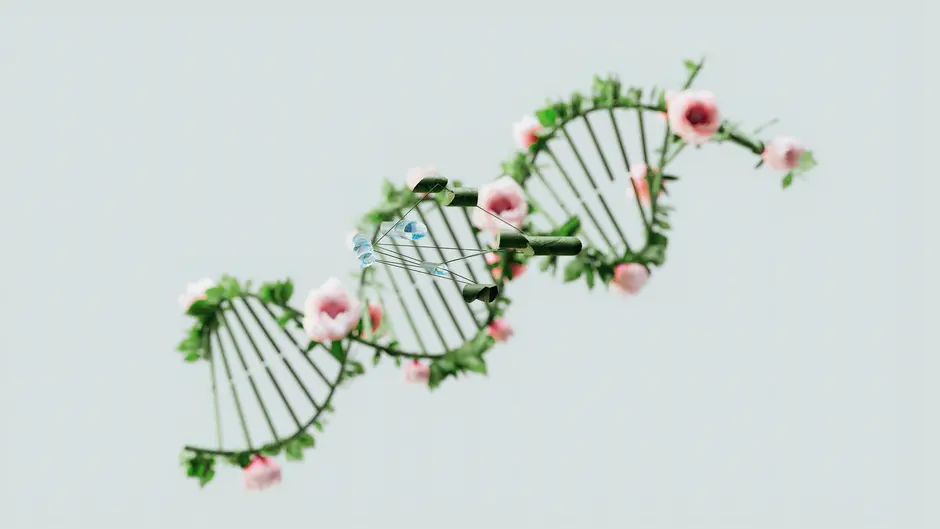
The genomic sequencing revolution has transformed biology, equipping us with unprecedented volumes of data. From mapping complete genomes to transcriptomes and proteomes, we now generate terabytes of information that serve as mirrors to evolutionary history. Before this era, our understanding was largely based on comparative anatomy and fossils, invaluable but limited evidence. Today, genetic data allows us to reconstruct lineages, date divergence events, and probe selective forces with astonishing precision. We no longer merely observe phenotypes; we decipher the genetic scripts that underpin them.
The crucial challenge lies in transforming this raw data into actionable knowledge. This is where biological data analysis becomes a surgical discipline. We employ complex algorithms to identify signatures of common ancestry, gene flow, genetic drift, and, most importantly, natural selection. Every mutation, every single nucleotide polymorphism (SNP), every chromosomal rearrangement becomes a temporal and geographical marker. We trace the migration of species, the co-evolution of hosts and parasites, and the emergence of new biological functions. It is an exciting quest to reveal the fundamental mechanisms that have shaped life's diversity.
For us, bio-optimization experts, the first step is always the same: structuring and cleaning these vast datasets. Common errors in alignment or imputation can skew entire analyses. We forge robust pipelines to ensure data integrity, a prerequisite for any valid evolutionary inference. This requires constant vigilance and continuous process optimization. We understand that every methodological decision has direct repercussions on the fidelity of our evolutionary narrative. We lay the foundation for reliable data interpretation, a prelude to groundbreaking discoveries.
2. Mapping Lineages: Phylogenomics as an Evolutionary Compass
Phylogenomics is our most powerful tool for reconstructing trees of life. Rather than relying on a single gene, which can be subject to divergent evolutionary histories (such as incomplete lineage sorting), we analyze hundreds, if not thousands, of genes simultaneously, or even entire genomes. This approach reduces stochastic noise and provides a much more robust picture of the relatedness among species. We build phylogenies not just for species, but also for populations, genes, and even pathogens, tracing their origins, radiations, and co-evolutions.
We leverage several phylogenetic inference methods, each with its strengths and assumptions. Character-based methods, such as Maximum Likelihood (ML) and Bayesian inference, model the DNA substitution process and estimate the most probable tree topology. They also allow us to estimate divergence times among lineages using calibrated molecular clocks. Other approaches, like distance-based methods (e.g., Neighbor-Joining), are faster and useful for large datasets. The choice of method is surgical; it depends on the biological question and data characteristics. We don't just run software; we understand its underlying principles to optimize our results.
A major challenge in phylogenomics is handling inconsistencies between gene trees and the species tree, often due to incomplete lineage sorting or horizontal gene transfer. We are adept at approaches that integrate these complexities, such as species-tree methods that model the coalescent process. We employ state-of-the-art tools like RAxML, IQ-TREE for Maximum Likelihood, and MrBayes or PhyloBayes for Bayesian inference. The goal is to achieve maximum phylogenetic resolution, enabling us to untangle complex evolutionary histories, understand rapid speciation events, and identify areas of uncertainty. Every tree we build is a map, and every branch is a path to deeper understanding of life's history.
3. Unveiling Adaptation: Population Genetics and the Forge of Selection
Population genetics allows us to scrutinize the evolutionary processes at work within and between populations. By analyzing the distribution and frequency of alleles, we can detect the signatures of natural selection, genetic drift, gene flow, and past demographic events. We employ robust statistics like Fst to measure genetic differentiation between populations, or selective sweep tests to identify regions of the genome that have recently been under strong selective pressure. These analyses reveal how populations adapt to their changing environments, vital understanding in the era of climate change.
We are particularly interested in detecting local adaptations. For instance, by comparing the genomes of populations living in contrasting environments, we can identify genes responsible for disease resistance, drought tolerance, or adaptation to specific diets. This is high-value information, not only for fundamental research but also for practical applications in agriculture or medicine. We use approaches based on neutral models (without selection) as a reference, and then identify regions that deviate significantly, indicating selective pressure. The classic error is to confuse genetic drift with selection; we develop models that distinguish these forces with physiological rigor.
Beyond selection, population genetics is essential for reconstructing demographic history. We can estimate effective population sizes over time, detect bottlenecks (drastic reductions in population size), or expansions. These events have profound implications for genetic diversity and a species' ability to respond to future challenges. Tools like fastsimcoal2, ADMIXTURE, or TreeMix allow us to simulate and infer these dynamics. Our expertise drives us not only to analyze but to interpret this data within the context of species' natural histories. We forge an understanding of the forces that drive biodiversity and optimize our strategies for its preservation and study.
4. Echoes of the Past: Ancient DNA, a Direct Lens into Ancestry
The study of ancient DNA (aDNA) is a technological feat that opens a direct window into previously inaccessible evolutionary histories. By extracting and sequencing DNA from fossil remains, museum specimens, or archaeological sites, we can probe the genomes of extinct organisms or historical populations. This allows us to reconstruct ancestral lineages with unparalleled accuracy, date key events, and understand the complex interactions between species and their past environments. Think of Neanderthals, woolly mammoths, or the earliest waves of human migration; aDNA gives us the genetic narratives.
Processing aDNA is both an art and a science. Ancient DNA is typically fragmented and chemically altered by time, making it difficult to sequence and prone to contamination. We employ specialized extraction and sequencing protocols that minimize modern DNA contamination and maximize endogenous DNA recovery. Signatures of aDNA-specific damage, such as cytosine deamination at fragment ends, are used to authenticate sequences and distinguish ancient from contemporary DNA. We are strategists; we devise analytical strategies that account for these challenges, ensuring that every piece of data we produce is reliable and interpretable.
The applications of aDNA are vast. We can trace human population movements, revealing unexpected interbreeding between groups like Neanderthals and Homo sapiens. We can reconstruct the evolution of pathogens, such as the Black Death, and understand how they mutated and spread over centuries. aDNA also provides insights into species extinction, revealing genetic factors that may have contributed to their decline. To us, every aDNA sample is a time capsule, and our mission is to unlock its secrets. We transform degraded molecules into compelling narratives, vastly enriching our understanding of evolutionary history.
5. Architects of Diversity: Comparative Genomics and Functional Divergence
Comparative genomics is the art of reading the similarities and differences between the genomes of various species to understand their evolution and the genetic basis of phenotypic traits. By aligning and comparing genomic sequences, we can identify conserved regions (often functionally important) and regions that have diverged rapidly (potentially under selection for new functions). We detect gene duplications, gene losses, and chromosomal rearrangements that have shaped the body plans and adaptations of different lineages.
Our approach is that of a genomics engineer. We identify gene families that have expanded or contracted in specific lineages, often in correlation with the acquisition of new adaptive capabilities or the loss of functions. For example, the expansion of olfactory genes in mammals or the loss of vision genes in cave-dwelling species. We directly link genetic modifications to phenotypic changes, offering a mechanistic understanding of evolution. Tools like BLAST, Ensembl, and the UCSC Genome Browser are pillars of our analyses, enabling us to explore and annotate this data with maximum efficiency. We don't just find differences; we seek their functional and evolutionary significance.
A crucial aspect is the identification of conserved or divergent regulatory elements. Changes in non-coding regions can have profound effects on gene expression and development, often being key drivers of phenotypic evolution without altering protein-coding sequences. We use multi-species approaches to identify these regulatory sequences and understand how their evolution contributes to morphological and physiological diversity. Classic pitfalls include attributing functions without solid experimental evidence; we advocate for an integrative approach that combines comparative genomics with functional and experimental data. This fusion of genomic rigor and the impetus of functional exploration is what allows us to decode the genetic architects of life's diversity and optimize our strategies for identifying the most subtle evolutionary mechanisms.
Key Takeaways
The Data Era and Evolution
Genomics has ignited a revolution, transforming our ability to analyze evolution. Vast genetic datasets allow us to reconstruct evolutionary histories with unprecedented accuracy. The key is to transform raw data into actionable insights through surgical analysis, identifying evolutionary forces and ensuring data integrity via robust pipelines.
Phylogenomics for Reconstructing Trees of Life
By analyzing entire genomes or thousands of genes, phylogenomics reduces noise and reveals robust kinship relationships. We use maximum likelihood and Bayesian inference-based methods to date divergences and construct species trees. Managing inconsistencies due to incomplete lineage sorting is crucial for achieving maximum phylogenetic resolution.
Population Genetics and the Detection of Adaptation
The analysis of genetic variation within and between populations allows us to detect signatures of natural selection, genetic drift, and demographic events. We identify local adaptations, bottlenecks, and population expansions, providing essential insights into species' adaptability and their demographic history.
Ancient DNA as a Window to the Past
aDNA offers direct access to the genomes of extinct organisms or historical populations. Despite its fragmentation and degradation, specialized protocols and damage analysis allow for the reconstruction of ancestral lineages, tracking population movements, and the evolution of pathogens, opening a unique window into past evolutionary histories.
Comparative Genomics and the Basis of Traits
By comparing the genomes of different species, we identify conserved and divergent regions, gene duplications or losses, and chromosomal rearrangements. This allows us to directly link genetic modifications to phenotypic changes and understand the genetic drivers of diversity and adaptation, particularly through the evolution of regulatory elements.
FAQ
-
How do molecular clocks help date evolutionary events?
Molecular clocks rely on the assumption that genetic mutations accumulate at a relatively constant rate over time. By knowing the mutation rate for a given gene or genomic region and counting the number of differences between two lineages, we can estimate the time elapsed since their last common ancestor. We calibrate these clocks with known benchmarks, such as fossils or geological events, to obtain precise dates. This is a powerful method for timing speciation, evolutionary radiations, or pandemics. -
What are the common mistakes to avoid when analyzing evolutionary data?
A critical error is to neglect data quality: contamination, sequencing errors, or incorrect alignment can skew inferences. Another is to apply statistical models without verifying their underlying assumptions (e.g., sequence evolution models that do not fit the data). We must also avoid over-interpreting results from small datasets or confirmation bias. Always validate results with independent evidence, whether paleontological, ecological, or experimental. Methodological rigor is our shield against misinterpretations. -
How can biological datasets help predict future evolutionary trends?
By understanding past and present adaptation mechanisms, we can build predictive models. For example, analyzing population genetics data can identify genes under selection for antibiotic resistance or heat tolerance, enabling us to anticipate the future evolution of these traits. By combining genomic data with environmental information, we can model the evolutionary trajectories of species in the face of climate change or disease pressure. This gives us a strategic advantage in designing interventions, from conservation to public health, forging bio-optimized solutions for the future.