
> Biological Data Analysis > Phenotype and Genotype Analysis > Unraveling Evolution: Data-Driven Approaches in Biology
Unraveling Evolution: Data-Driven Approaches in Biology
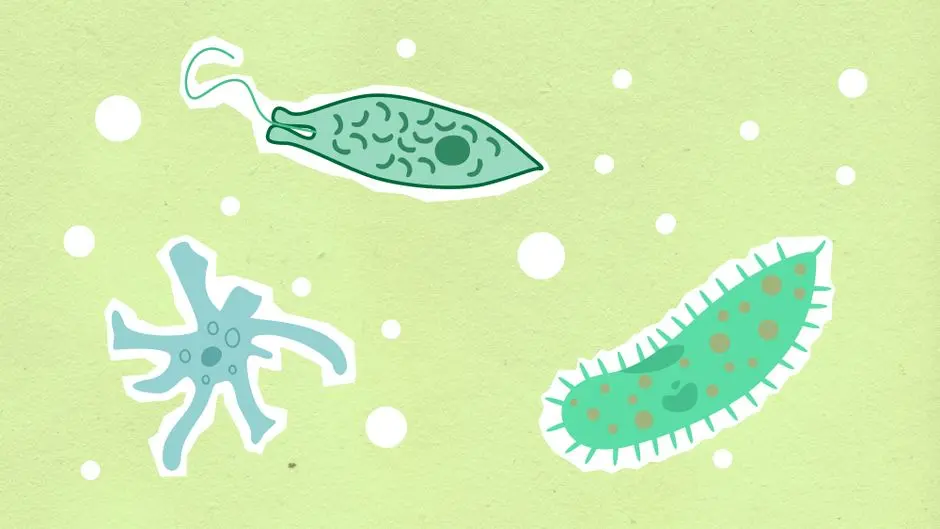
We are forging the future of evolutionary biology. Gone is the era of isolated observation; we are entering a revolution where massive data and computational analysis are redefining our understanding of evolutionary mechanisms. This article, conceived as a surgical expedition into the intricacies of systems biology, propels you to the heart of methods that transform mountains of raw data into concrete revelations about the origin and diversification of life. We will decipher how genomics, transcriptomics, phylogenetics, and artificial intelligence are joining forces to uncover selective pressures, trace past migrations, and even predict future evolutionary trajectories. Understanding and mastering these approaches is no longer an option, but an absolute necessity for any researcher or practitioner wishing to push the boundaries of biological knowledge. Join us to explore how data opens new perspectives, particularly by refining our ability to better understand how traits evolve and to illuminate the intrinsic complexities of analyzing relationships between genetic and phenotypic data. Prepare to transform your approach to evolution.

Forging Foundations: The Dawn of Data-Driven Evolutionary Biology
We stand at a pivotal moment where evolutionary biology, once primarily descriptive, has been irrevocably transformed by the deluge of biological data. This shift from qualitative observations to quantitative, high-throughput analysis marks a new era. We leverage tools from genomics, bioinformatics, and computational science to probe evolutionary questions with unprecedented resolution. This section lays the groundwork, articulating why a data-centric perspective is not merely an enhancement, but the very engine of modern evolutionary discovery. We initiate this transformation by moving beyond single-gene studies, embracing comprehensive 'omics' datasets that span entire genomes, transcriptomes, and proteomes. This holistic view enables us to dissect complex evolutionary patterns that were previously intractable. For instance, consider the revolution in understanding speciation: instead of relying solely on morphological differences, we now meticulously quantify genetic divergence, recombination rates, and gene flow using population genomics data from hundreds or thousands of individuals. This data-rich approach allows us to differentiate between allopatric, parapatric, and sympatric speciation events with statistical rigor. Our goal is to equip you with the strategic mindset to navigate this data landscape, recognizing that every sequence read, every gene expression profile, is a potential key to unlocking a deeper evolutionary truth. We champion a proactive approach: data generation is only the first step; the true power lies in its rigorous, hypothesis-driven analysis, pushing us towards definitive, quantifiable insights into life's historical tapestry.

Harnessing Omics: Dissecting Evolutionary Mechanisms at Scale
The 'omics' revolution provides the molecular binoculars we need to scrutinize evolutionary processes. Genomics, transcriptomics, proteomics, and metabolomics each contribute unique layers of information, offering a multi-dimensional view of adaptation, diversification, and speciation. Genomics, the study of entire genomes, empowers us to identify regions under selection, map gene duplication events, and reconstruct demographic histories. For example, comparing the genomes of closely related species can reveal genes that have undergone rapid evolution, often indicative of adaptive shifts to new environments or lifestyles. A common error here is to assume correlation equals causation; rigorous statistical testing and experimental validation are paramount to confirm adaptive hypotheses. Transcriptomics, analyzing gene expression patterns, uncovers how changes in gene regulation drive phenotypic evolution. We observe how environmental pressures or developmental shifts alter gene activity, providing a dynamic view of evolutionary responses. Imagine identifying specific gene pathways upregulated in a population adapting to extreme temperatures – this offers direct evidence of regulatory evolution. Proteomics and metabolomics delve into the functional consequences, revealing the final protein products and metabolic networks. These approaches illuminate the immediate impact of genetic changes on an organism's biochemistry and physiology. Integrating these diverse data types is a core challenge, demanding sophisticated bioinformatics pipelines to combine and interpret information across different biological scales. We must rigorously assess data quality and experimental design to avoid drawing false conclusions, ensuring our analyses reflect true biological signals rather than technical artifacts. This integrative strategy amplifies our capacity to pinpoint the molecular underpinnings of evolutionary change, transforming abstract concepts into tangible biological pathways.

Phylogenetic Reconstruction: Charting Life's Ancestral Journeys
Phylogenetics is the bedrock of evolutionary biology, providing the historical framework upon which all other analyses rest. In the data-driven era, we construct increasingly robust and accurate phylogenetic trees using vast amounts of molecular sequence data. No longer confined to single genes, modern phylogenomics employs thousands of loci or even whole genomes to infer relationships among species. Key concepts include:
- Maximum Likelihood (ML) methods: These algorithms identify the tree topology and branch lengths that maximize the probability of observing the given sequence data, considering a specific evolutionary model.
- Bayesian Inference (BI): This approach estimates the posterior probability distribution of trees, offering a more comprehensive assessment of phylogenetic uncertainty.
- Concatenation vs. Coalescent: We often choose between concatenating multiple gene alignments into one supermatrix or using coalescent-based methods that account for gene tree discordance, a common phenomenon due to incomplete lineage sorting or hybridization.
A critical insider tip: the choice of evolutionary model profoundly impacts tree inference. We must always perform model selection (e.g., using programs like ModelTest or PartitionFinder) to identify the best-fit model for our data. Failing to do so can lead to biased tree topologies and erroneous evolutionary conclusions. Moreover, we employ comparative genomic approaches on these robust phylogenies to infer ancestral states, track gene duplications, detect horizontal gene transfer, and analyze the evolution of complex traits across the tree of life. This allows us to test hypotheses about the sequence and timing of evolutionary innovations, providing a dynamic narrative of biological diversification. We systematically leverage these methods to dissect the past, illuminating the pathways that led to the staggering biodiversity we observe today.

Population Genomics: Decoding Demographic and Adaptive Histories
Population genomics unleashes the power of large-scale genetic data to decipher the recent evolutionary history and ongoing dynamics within and among populations. By analyzing genetic variation across numerous individuals and loci, we can infer critical demographic parameters and identify signatures of natural selection. Key applications include:
- Demographic Inference: We employ sophisticated statistical methods, often based on coalescent theory, to reconstruct past population sizes, migration rates, and population divergence times. For instance, inferring a bottleneck event during the last ice age or detecting ancient gene flow between two seemingly isolated populations.
- Detecting Selection: Identifying genomic regions under positive selection (adaptation) or purifying selection (constraint). We look for characteristic patterns such as reduced genetic diversity (selective sweeps), unusually long haplotypes, or skewed allele frequency distributions.
- Spatial Genomics: Integrating geographic data with genomic variation to understand how environmental gradients drive local adaptation and shape genetic structure.
Good practice dictates careful sampling design, ensuring representative coverage of both individuals and geographic range to avoid spatial autocorrelation and other biases. A common pitfall is over-interpreting weak signals of selection; robust statistical validation (e.g., using permutation tests or simulations) is essential. We also engage with methods like Approximate Bayesian Computation (ABC) to evaluate complex demographic models by simulating data under different scenarios and comparing them to observed patterns. This allows us to distinguish between competing hypotheses about population history. Ultimately, population genomics provides a high-resolution lens, enabling us to pinpoint the genetic loci responsible for adaptation and to accurately chart the ebb and flow of populations through time, offering profound insights into the immediate evolutionary pressures shaping life on Earth.
AI & Machine Learning: Accelerating Evolutionary Discovery and Prediction
The convergence of artificial intelligence (AI) and machine learning (ML) with evolutionary biology is revolutionizing our capacity to analyze complex data, identify subtle patterns, and even predict evolutionary trajectories. We are now deploying these advanced computational tools to tackle problems previously considered intractable. Applications include:
- Predicting Protein Function and Evolution: ML algorithms analyze sequence features and structural data to predict protein function, stability, and pathways of evolutionary change, aiding in drug discovery and synthetic biology.
- Identifying Adaptive Loci: Beyond traditional statistical tests, supervised and unsupervised ML methods can identify complex genomic signatures of selection, especially in polygenic traits, by sifting through vast genomic datasets to find subtle, non-linear patterns.
- Species Delimitation and Classification: ML algorithms, such as clustering and classification models, process morphological, genetic, and ecological data to delineate species boundaries more objectively, especially in cryptic species complexes.
- Modeling Complex Evolutionary Systems: Neural networks and other AI models simulate and predict the outcomes of evolutionary processes, from pathogen evolution to the dynamics of ecological communities, under various environmental conditions.
A crucial challenge and good practice in this domain is model interpretability. While ML models can be highly predictive, understanding why they make certain predictions is vital for biological insight. We must prioritize methods that offer transparency to avoid 'black box' solutions. Furthermore, data quality and bias remain critical considerations; 'garbage in, garbage out' applies acutely to ML. We meticulously curate our training data to ensure models learn from accurate and representative biological information. By strategically integrating AI and ML, we don't just analyze data; we unlock new predictive capabilities, transforming evolutionary biology into a proactive, forward-looking science, ready to tackle future biological challenges with unprecedented precision.
Key Takeaways
The Data Revolution in Evolutionary Biology
Evolutionary biology has transitioned from observational to data-intensive, leveraging 'omics' (genomics, transcriptomics, proteomics) and computational methods to analyze vast datasets and uncover complex evolutionary mechanisms. This shift enables quantitative insights into adaptation, speciation, and diversification.
Omics Technologies Drive Molecular Insights
Genomics reveals genetic changes under selection and demographic histories. Transcriptomics uncovers gene regulation's role in phenotypic evolution. Proteomics and metabolomics expose functional consequences. Integrating these data types is crucial for a holistic understanding of molecular evolution.
Phylogenetic and Population Genomics as Foundational Tools
Phylogenomics reconstructs robust evolutionary trees from molecular data, allowing us to map trait evolution and infer ancestral states. Population genomics deciphers recent histories, identifies selection signatures, and reconstructs demographic events by analyzing genetic variation within and between populations.
AI and Machine Learning for Advanced Discovery
AI and ML tools are accelerating evolutionary biology by predicting protein function, identifying complex adaptive loci, and modeling evolutionary systems. While powerful, careful consideration of data quality, bias, and model interpretability is essential for extracting reliable biological insights.
FAQ
-
What is the primary advantage of data-driven approaches in evolutionary biology?
The primary advantage is the ability to analyze vast, multi-dimensional datasets to uncover complex evolutionary patterns that are impossible to detect with traditional methods. This allows for more rigorous, quantitative testing of hypotheses and a deeper, more precise understanding of mechanisms like adaptation, speciation, and gene flow.
-
How do 'omics' technologies contribute to our understanding of evolution?
'Omics' technologies (genomics, transcriptomics, proteomics, metabolomics) provide a comprehensive view of genetic variation, gene expression, protein function, and metabolic pathways. This multi-layered data allows us to link genotype to phenotype and track molecular changes that underpin evolutionary processes, revealing the intricate details of how organisms adapt and diversify.
-
What are the common pitfalls to avoid when using machine learning in evolutionary studies?
Common pitfalls include issues with data quality and bias, which can lead to flawed models. Additionally, 'black box' models can lack interpretability, making it difficult to extract biological insights. We must prioritize model validation, interpretability, and rigorous curation of training data to ensure meaningful and reliable results.