
> Biological Data Analysis > Phenotype and Genotype Analysis > Mastering Biological Variation Analysis: Tools & Strategies
Mastering Biological Variation Analysis: Tools & Strategies
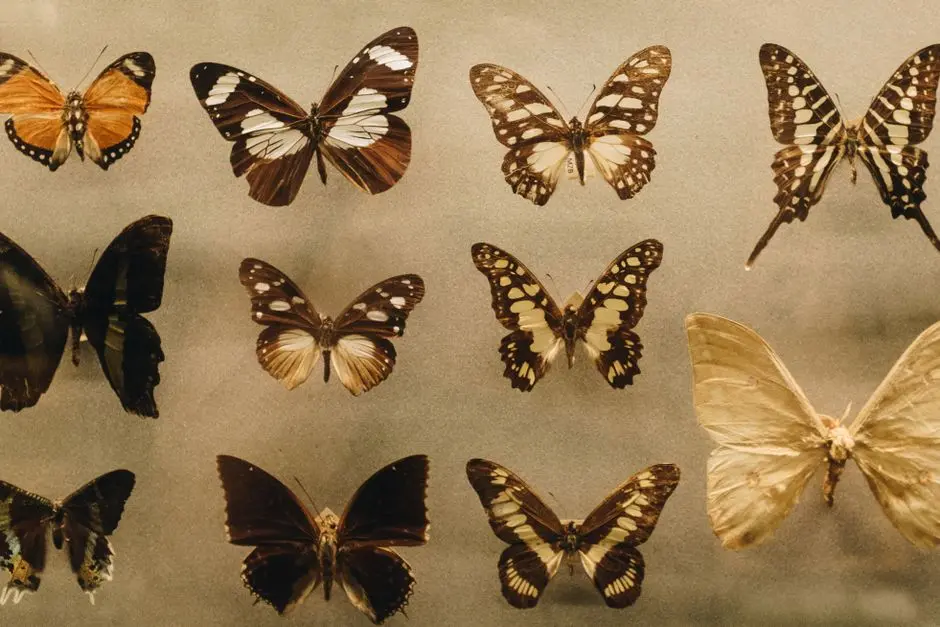
Biological variation represents the fundamental dynamism of life, driving evolution, dictating disease susceptibility, and defining individual traits. Yet, precisely quantifying and interpreting this variation presents a profound challenge for researchers and bioinformaticians alike. We stand at the precipice of a new era in biological discovery, where advanced methodologies are transforming our capacity to dissect the intricate tapestry of life.
This article forges a path through the most impactful methods for studying biological variation. We will equip you with the strategic insights and practical knowledge to navigate complex datasets, from genomic landscapes to nuanced phenotypic expressions. Discover how to identify the subtle shifts that differentiate populations, predict disease trajectories, and unlock novel therapeutic targets. We commit to empowering your research with the cutting-edge tools necessary for analyzing the intricate relationships between genetic and phenotypic data, ensuring your analyses are robust, insightful, and contribute meaningfully to the advancement of biological science. Prepare to elevate your understanding and harness the power of biological data to its fullest potential.

Deciphering Biological Variation: Foundational Concepts and Strategic Approaches
To effectively analyze biological variation, we must first establish a robust conceptual framework. Biological variation encompasses any difference observed between individuals, populations, or even within a single organism over time, originating from genetic, environmental, or epigenetic factors. Genetic variation, stemming from mutations, recombination, and gene flow, represents the bedrock upon which natural selection acts. It manifests as single nucleotide polymorphisms (SNPs), copy number variations (CNVs), insertions, deletions, and structural variants. Environmental variation describes differences induced by external factors such as diet, climate, exposure to toxins, or lifestyle. Critically, epigenetic variation, involving modifications to DNA or histones without altering the underlying sequence (e.g., DNA methylation, histone acetylation), modulates gene expression in response to both genetic predispositions and environmental cues, adding another crucial layer of complexity.
Our strategic approach demands a holistic perspective. We initiate by defining the specific biological question: Are we seeking disease biomarkers, understanding evolutionary adaptation, or predicting drug response? This clarity guides our choice of methodology. We then consider the scale of variation: intra-individual (e.g., somatic mutations), inter-individual (e.g., population differences), or inter-species. Neglecting a multi-faceted view often leads to incomplete or misleading conclusions. A common pitfall is to attribute all variation solely to genetics, overlooking the profound influence of environment and epigenetics. We must integrate these dimensions to truly capture the essence of biological diversity. Our goal is not just to observe variation but to attribute its source and understand its functional consequences.

Unlocking Genomic and Epigenomic Signatures of Variation
The genomic revolution has provided unprecedented power to dissect variation at the molecular level. Next-Generation Sequencing (NGS) stands as our primary weapon, enabling comprehensive analysis of DNA and RNA. For studying genetic variation, we deploy:
- Whole-Genome Sequencing (WGS): Provides a complete map of an individual's genome, uncovering SNPs, indels, and structural variants across coding and non-coding regions. It offers the most comprehensive view but is computationally intensive.
- Whole-Exome Sequencing (WES): Focuses on protein-coding regions (~1-2% of the genome), offering a cost-effective alternative for identifying disease-causing variants in genes.
- Genotyping Arrays: High-throughput platforms for assaying known SNPs across many individuals, ideal for large-scale population studies and Genome-Wide Association Studies (GWAS).
For epigenetic variation, bisulfite sequencing (BS-seq) remains the gold standard for DNA methylation analysis, allowing base-pair resolution mapping of 5-methylcytosine. Techniques like ChIP-seq (Chromatin Immunoprecipitation Sequencing) explore histone modifications and transcription factor binding sites, revealing how epigenetic marks regulate gene expression and contribute to phenotypic diversity. A crucial best practice involves meticulous sample preparation and robust bioinformatics pipelines to minimize technical noise and accurately call variants and epigenetic marks. We must be wary of batch effects and sequencing biases that can confound true biological signals. Integrating data from multiple genomic and epigenomic assays provides a richer understanding of regulatory landscapes and their variation.

Dissecting Phenotypic and Multi-Omic Variation with Precision
Beyond the blueprint of the genome, phenotypic variation represents the observable traits resulting from the complex interplay of genes, environment, and epigenetics. High-throughput phenotyping platforms are transforming our ability to quantify this diversity. For example, image-based phenotyping in plants and animals utilizes robotics and advanced computer vision to measure traits like growth rate, morphology, and stress response across thousands of individuals. In human studies, sophisticated clinical phenotyping combined with wearable sensors collects continuous physiological data, capturing dynamic changes over time.
The advent of multi-omics technologies provides an unparalleled opportunity to integrate different molecular layers:
- Transcriptomics (RNA-seq): Quantifies gene expression levels, revealing how genetic and epigenetic variations manifest in transcriptional activity.
- Proteomics (Mass Spectrometry-based): Identifies and quantifies proteins, offering insights into functional pathways and their variations.
- Metabolomics (NMR/MS-based): Profiles small molecule metabolites, reflecting the downstream functional output of cellular processes and environmental influences.
- Single-cell omics: Revolutionizes our understanding by dissecting variation at the individual cell level, uncovering cellular heterogeneity often masked in bulk analyses.
The challenge lies in integrating these disparate data types. We confront the high dimensionality and varied data structures by employing robust normalization techniques and data harmonization strategies. A common error is to analyze each omics layer in isolation; true insights emerge from their synergistic integration. We strive to connect molecular variations to observable phenotypes, building a comprehensive narrative of biological diversity.
Advanced Analytical Strategies: Integrating Data and Unearthing Insights
The sheer volume and complexity of biological variation data necessitate sophisticated analytical strategies. We move beyond simple comparisons to build predictive models and uncover hidden relationships. Statistical modeling forms the backbone of our analysis, employing methods like linear mixed models to account for confounding factors, population structure, and experimental design. For high-dimensional omics data, techniques such as Principal Component Analysis (PCA) and Partial Least Squares (PLS) are indispensable for dimensionality reduction and pattern recognition. We prioritize rigorous statistical testing to ensure the robustness of our findings, always controlling for multiple comparisons to avoid false positives.
Machine learning (ML) and Artificial Intelligence (AI) are rapidly becoming indispensable tools. Algorithms such as Random Forests, Support Vector Machines (SVMs), and deep neural networks excel at identifying complex, non-linear relationships within integrated omics and phenotypic data. They are powerful for classification (e.g., disease subtyping), regression (e.g., trait prediction), and feature selection (identifying key biomarkers). For example, deep learning can process intricate image data from phenotyping platforms or discern subtle patterns in genomic sequences. Network analysis, another powerful approach, constructs molecular interaction maps (e.g., gene regulatory networks, protein-protein interaction networks) to visualize how variation propagates through biological systems. The best practice here is to validate models rigorously using independent datasets and cross-validation techniques, understanding their limitations and avoiding overfitting. We must also cultivate interpretability for our AI/ML models to translate statistical associations into biological mechanisms. The ultimate goal is to translate these complex data integrations into actionable biological insights and predictive models.
Key Takeaways
Core Concepts: Variation's Trifecta
Biological variation stems from three interconnected sources: genetic, environmental, and epigenetic factors. Understanding their interplay is paramount.
- Genetic: DNA sequence differences (SNPs, indels, CNVs).
- Environmental: External influences like diet, lifestyle, climate.
- Epigenetic: Heritable changes in gene expression without DNA sequence alteration (e.g., methylation).
Genomic & Epigenomic Dissection
Leverage cutting-edge sequencing technologies to map variation:
- Next-Generation Sequencing (NGS): WGS for comprehensive genetic mapping, WES for protein-coding regions, Genotyping Arrays for known variants in large cohorts.
- Epigenomics: Bisulfite sequencing for DNA methylation, ChIP-seq for histone modifications.
Phenotypic & Multi-Omic Integration
Quantify observable traits and molecular layers:
- High-Throughput Phenotyping: Image-based systems and wearable sensors capture dynamic phenotypic data.
- Multi-Omics: Integrate Transcriptomics (RNA-seq), Proteomics (Mass Spec), Metabolomics (NMR/MS), and Single-Cell Omics to build a comprehensive molecular profile.
Advanced Analytics & Strategic Insights
Apply sophisticated methods for data interpretation:
- Statistical Modeling: Linear mixed models, PCA, PLS for dimensionality reduction and confounder control. Prioritize robust statistical testing.
- Machine Learning (ML)/AI: Random Forests, SVMs, Deep Learning for pattern recognition, prediction, classification, and feature selection.
- Network Analysis: Visualize interactions to understand how variation propagates.
FAQ
-
What is the primary difference between genotype and phenotype variation?
Genotype variation refers to differences in the genetic material (DNA sequence) among individuals, encompassing SNPs, indels, and structural variants. It represents an individual's genetic blueprint. Phenotype variation, conversely, describes observable differences in traits, characteristics, or behaviors that result from the interplay between an individual's genotype, environmental factors, and epigenetic modifications. While genotype sets the potential, phenotype is the actual expression of those genes under specific conditions.
-
Why is it crucial to study biological variation?
Studying biological variation is fundamental because it underpins many core biological processes. It is essential for:
- Understanding evolution and adaptation: How species change and adapt to their environments.
- Identifying disease susceptibility and resistance: Pinpointing genetic or molecular factors contributing to health and illness.
- Developing personalized medicine: Tailoring treatments based on individual genetic and molecular profiles.
- Improving agricultural yields: Breeding crops or livestock with desirable traits.
- Uncovering fundamental biological mechanisms: Revealing how genes, environment, and epigenetics interact to shape life.
-
What are the biggest challenges in analyzing large biological datasets for variation?
Analyzing large biological datasets presents several challenges:
- High dimensionality: Datasets often contain thousands of features (genes, metabolites, etc.) for a relatively small number of samples.
- Data heterogeneity: Integrating different omics types (genomics, transcriptomics, proteomics) with diverse formats and noise profiles.
- Computational resources: Processing and storing massive datasets (e.g., WGS data for thousands of individuals) requires significant computational power.
- Biological noise and confounding factors: Distinguishing true biological signals from technical variation, batch effects, and environmental confounders.
- Interpretation: Translating complex statistical and machine learning results back into biologically meaningful insights.
-
How do environmental factors contribute to biological variation?
Environmental factors exert a profound influence on biological variation by modifying gene expression, cellular processes, and ultimately, phenotypes, even in individuals with identical genotypes (e.g., identical twins). These factors include diet, lifestyle, exposure to toxins, climate, stress, and microbial interactions. They can induce epigenetic changes (like DNA methylation or histone modifications) that alter gene activity without changing the underlying DNA sequence. This gene-environment interaction is a major source of phenotypic diversity and explains why individuals with similar genetic backgrounds can exhibit different traits or disease susceptibilities.
-
What is the role of machine learning in studying biological variation?
Machine learning (ML) plays a transformative role in studying biological variation by enabling us to:
- Identify complex patterns: Uncover non-obvious relationships in high-dimensional omics data that traditional statistical methods might miss.
- Predict phenotypes or disease outcomes: Develop predictive models based on integrated genetic, epigenetic, and environmental data.
- Classify biological samples: Categorize individuals into groups (e.g., disease subtypes, response to treatment).
- Feature selection: Pinpoint key genes, proteins, or metabolites most relevant to a specific variation.
- Dimension reduction: Simplify complex datasets to visualize underlying structures and reduce computational burden.