
> New Molecule Discovery > Molecular Docking Techniques > Master Molecular Docking: Key Workflow Steps Unveiled
Master Molecular Docking: Key Workflow Steps Unveiled

In the relentless pursuit of novel therapeutics, molecular docking stands as a foundational pillar, propelling drug discovery forward with precision and unprecedented speed. This computational technique empowers us to predict the binding affinity and orientation of a small molecule (ligand) with a macromolecule (receptor), offering critical insights into molecular interactions before costly experimental synthesis. Decoding the intricate choreography of these interactions is paramount for rational drug design, allowing researchers to prioritize promising candidates and accelerate lead optimization.
We delve deep into the core mechanics, revealing the strategic sequence of actions that define a robust molecular docking workflow. This journey equips us with the tools to navigate computational challenges, transform raw data into actionable intelligence, and sculpt future medicines. Grasping these fundamental steps is not merely theoretical; it is an imperative for anyone serious about contributing to the next generation of pharmacological breakthroughs. Prepare to unlock the full potential of your drug discovery initiatives, moving beyond mere predictions to true mechanistic understanding, and truly revolutionize how we approach the design of drugs. This deep dive complements our exploration of various docking methods to predict molecule target interactions, providing the hands-on blueprint for their effective application.
Laying the Foundation: Target Preparation – The Receptor
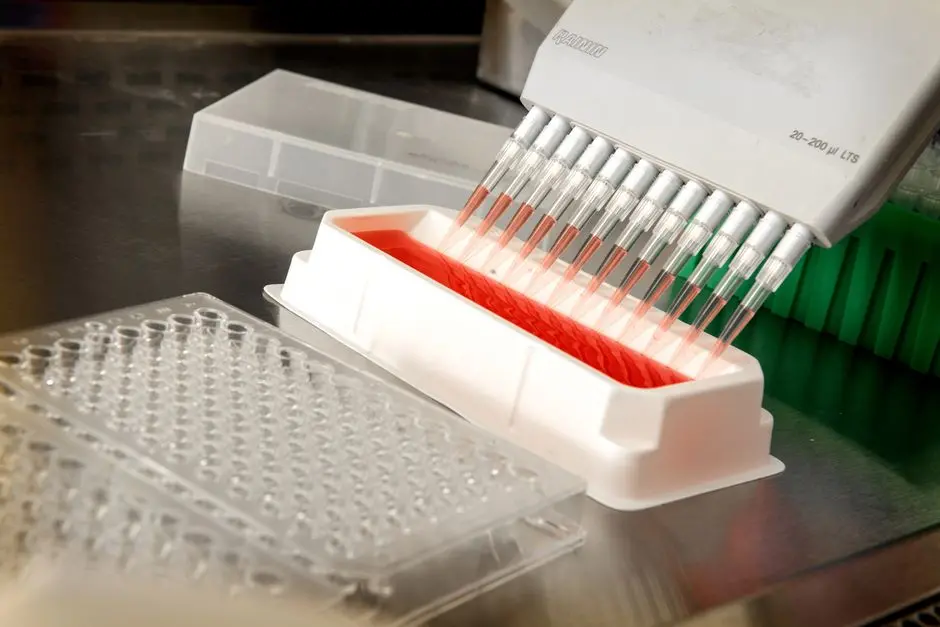
The inaugural stride in any molecular docking endeavor mandates meticulous preparation of the receptor macromolecule. We commence by acquiring the receptor’s three-dimensional structure, predominantly from public databases like the Protein Data Bank (PDB), which houses thousands of experimentally determined structures. A pristine PDB file, however, rarely arrives docking-ready. We embark on a critical cleaning phase, eradicating non-essential elements such as co-crystallized ligands, water molecules (unless they play a verified role in binding), and redundant chains. Neglecting this crucial step introduces noise and computational artifacts, distorting subsequent docking predictions.
Next, we address the precise atomic details. We must accurately add polar hydrogen atoms, essential for forming hydrogen bonds, and assign atomic charges consistent with the chosen force field. Determining the correct protonation states of ionizable residues (e.g., His, Asp, Glu, Lys) at the physiological pH of interest is paramount; an incorrect state fundamentally alters interaction profiles. Advanced tools employ pKa calculations to achieve this. Finally, while most docking assumes a rigid receptor, we recognize that true biological systems exhibit dynamic flexibility. For initial screens, a single, dominant conformation suffices, yet for refined analyses, we often consider multiple receptor conformations (ensemble docking) to capture induced fit phenomena. This foundational preparation dictates the integrity and reliability of all subsequent predictions, making it a non-negotiable phase for any successful docking campaign.
Crafting the Key: Ligand Preparation & Defining the Active Site
Simultaneously with receptor preparation, we meticulously prepare the ligand – the small molecule intended for docking. Ligands are typically sourced as 2D SMILES strings or 3D SDF/MOL2 files. Our primary task involves transforming these into energetically stable 3D conformations suitable for interaction. This includes generating multiple plausible conformers, often through energy minimization using specific force fields, and ensuring correct bond orders and hybridization. A critical consideration involves handling tautomers and stereoisomers; we must generate and dock all relevant forms that might exist under physiological conditions, as each represents a distinct chemical entity with potentially varied binding capabilities. Accurate protonation states for ionizable ligand groups at the target pH are equally vital.
Once the ligand ensemble is ready, we pivot to defining the receptor's binding site. This is where the magic happens – we specify the precise region on the receptor where the ligand is expected to bind. The most common approach involves creating a 'grid box' or a sphere of defined radius centered on known active site residues, a co-crystallized ligand, or a predicted binding pocket. Overly small boxes risk excluding valid binding poses; excessively large boxes increase computational cost and noise. For truly novel targets, advanced algorithms employ blind docking or pocket detection tools to identify potential binding sites across the entire protein surface. This dual focus on meticulously preparing the ligand and precisely delineating the binding site fundamentally dictates the scope and accuracy of our search for optimal interactions.
The Docking Engine: Algorithm Execution & Scoring Function Mechanics
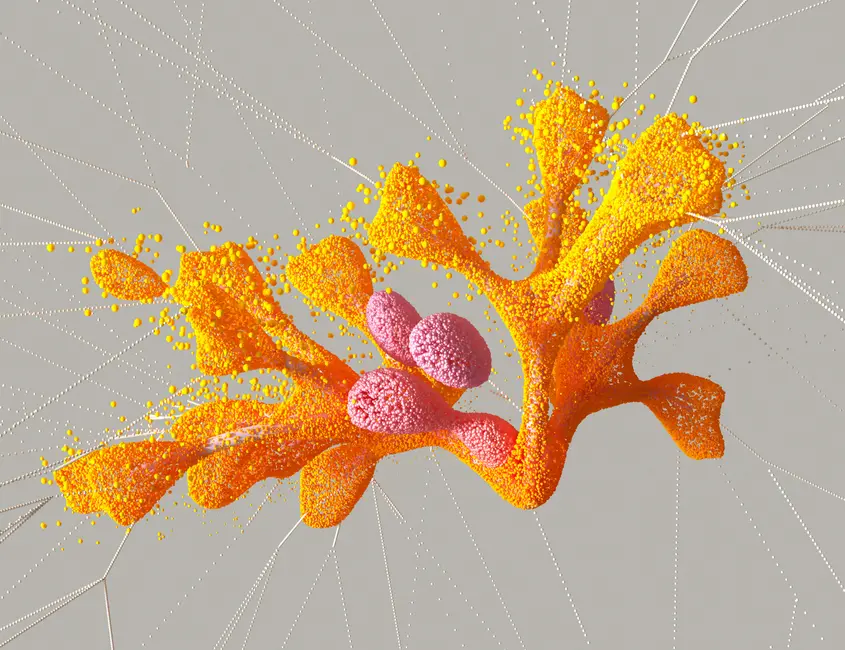
With receptor and ligand meticulously prepared, we unleash the docking algorithm. This computational engine's core mission is to explore the vast conformational space of the ligand within the defined binding site and generate a multitude of possible binding poses. Modern docking tools employ sophisticated search algorithms – often rooted in genetic algorithms, Monte Carlo simulations, or simulated annealing – to efficiently navigate this complex energy landscape. We command these algorithms to generate a diverse set of ligand conformations and orientations, identifying those that achieve the most favorable interactions with the receptor.
Crucially, once a pose is generated, a 'scoring function' evaluates its quality. This function assigns a numerical score (often representing binding energy) to each pose, quantifying the strength of predicted ligand-receptor interactions. Scoring functions fall into several categories: force-field based (calculating physical interactions like van der Waals and electrostatic energies), empirical (derived from experimental binding data), and knowledge-based (statistical potentials from known protein-ligand complexes). We must recognize that no single scoring function is universally perfect; each carries inherent biases and strengths. Our strategic choice of algorithm and scoring function directly impacts the accuracy of pose prediction and affinity ranking, demanding a deep understanding of their underlying principles and limitations to unlock optimal predictive power.
Deciphering Interactions: Post-Docking Analysis & Interpretation
Generating thousands of binding poses is merely the initial phase; the true art lies in interpreting these results to extract meaningful biological insights. Our first step involves cluster analysis, grouping similar poses to identify common binding modes and reduce redundancy. We then meticulously inspect the top-ranked poses, focusing on the ones with the most favorable scores. Visualizing these poses within the active site is paramount; we scrutinize critical interactions such as hydrogen bonds, salt bridges, hydrophobic contacts, and pi-stacking. Does the ligand occupy key sub-pockets? Are there steric clashes? Does it align with known SAR (Structure-Activity Relationship) data?
While docking scores often correlate with experimental binding affinity (Kd, Ki), we never equate them directly. Docking scores provide a rank-ordering, indicating which ligands are more likely to bind strongly, but they are not absolute affinity predictors. We utilize these insights to hypothesize key binding determinants, guide medicinal chemistry efforts, and prioritize compounds for experimental validation. For highly refined analyses, we often integrate molecular dynamics (MD) simulations to assess the stability of predicted complexes and capture dynamic binding events, moving beyond static snapshots. This rigorous post-docking analysis transforms raw computational output into actionable intelligence, driving rational drug design forward with precision.

Optimizing for Impact: Advanced Strategies & Troubleshooting
A fundamental docking workflow forms the bedrock, but the complexities of biological systems often demand advanced strategies. We frequently encounter scenarios where the rigid receptor assumption fails, necessitating approaches like ensemble docking – docking to multiple receptor conformations – or explicit induced fit docking, which allows for receptor flexibility during ligand binding. For ligands forming irreversible bonds, covalent docking algorithms become indispensable, accurately modeling the formation of new chemical bonds.
Virtual screening campaigns, involving thousands to millions of compounds, require robust protocols and careful validation. We must consider the computational cost versus predictive accuracy. Common challenges include accurately accounting for explicit water molecules, identifying cryptic pockets that only emerge upon ligand binding, and the inherent limitations of scoring functions. To troubleshoot, we always validate our docking protocol against known experimental data (e.g., re-docking co-crystallized ligands) to establish its reliability and identify potential biases. Furthermore, we recognize that docking is rarely a standalone solution; its true power is unlocked when integrated with other computational methods, such as ADMET (Absorption, Distribution, Metabolism, Excretion, Toxicity) prediction and cheminformatics tools, forming a comprehensive, iterative drug design pipeline. We constantly refine our strategies, pushing the boundaries to accelerate the discovery of transformative molecules.
Key Takeaways
Receptor Preparation: The Foundation
Meticulously clean and refine receptor structures from PDB. Add polar hydrogens, assign accurate charges, and determine correct protonation states. Consider receptor flexibility for enhanced accuracy, especially for induced fit phenomena. This phase is non-negotiable for reliable predictions.
Ligand Preparation & Site Definition: Crafting Interactions
Convert 2D ligand data to stable 3D conformers, generating tautomers and stereoisomers. Crucially, define the binding site precisely using a grid box or advanced pocket detection tools. This ensures the docking algorithm explores the relevant interaction space efficiently.
Docking Execution & Scoring: The Core Mechanism
Utilize robust search algorithms (e.g., genetic algorithms, Monte Carlo) to explore ligand conformations within the binding site. Apply scoring functions (force-field, empirical, knowledge-based) to quantify interaction strengths. Understand their biases; the choice impacts pose prediction and affinity ranking.
Post-Docking Analysis: Extracting Intelligence
Cluster poses and visually inspect top-ranked ones. Analyze specific interactions (H-bonds, hydrophobic, electrostatic). Remember: docking scores rank-order compounds; they are not direct binding affinity values. Integrate with MD simulations for dynamic insights and validate against SAR data.
Advanced Strategies: Elevating Impact
Employ ensemble docking for receptor flexibility and covalent docking for irreversible binders. For virtual screening, validate protocols rigorously. Address challenges like water molecules and cryptic pockets. Integrate docking with ADMET prediction for a holistic drug discovery pipeline.
FAQ
-
What is the most common error in molecular docking workflows?
The most common error we encounter is inadequate preparation of either the receptor or the ligand. Overlooking crucial steps like proper protonation states, incorrect charge assignments, or failing to generate relevant ligand conformers fundamentally compromises the accuracy of docking predictions. Inaccurate receptor binding site definition also frequently leads to suboptimal results.
-
How can we improve the accuracy of docking results beyond a basic workflow?
To elevate docking accuracy, we leverage advanced techniques. Employing ensemble docking (using multiple receptor conformations), incorporating explicit receptor flexibility through induced fit methods, and validating the protocol against known experimental data are crucial. Furthermore, integrating molecular dynamics simulations to refine and validate predicted poses, and utilizing consensus scoring from multiple scoring functions, significantly enhances reliability and predictive power.
-
Are docking scores directly equivalent to experimental binding affinities (Kd, Ki)?
Crucially, docking scores are not directly equivalent to experimental binding affinities (Kd or Ki). While a strong correlation often exists, especially for congeneric series, docking scores primarily provide a rank-ordering of compounds based on predicted interaction strengths. We use them to prioritize compounds for experimental validation, but true binding affinities always require experimental determination. We utilize docking as a powerful filtering and guiding tool, not an absolute predictor of affinity values.