
Accelerate Molecular Structure Prediction with AI Precision
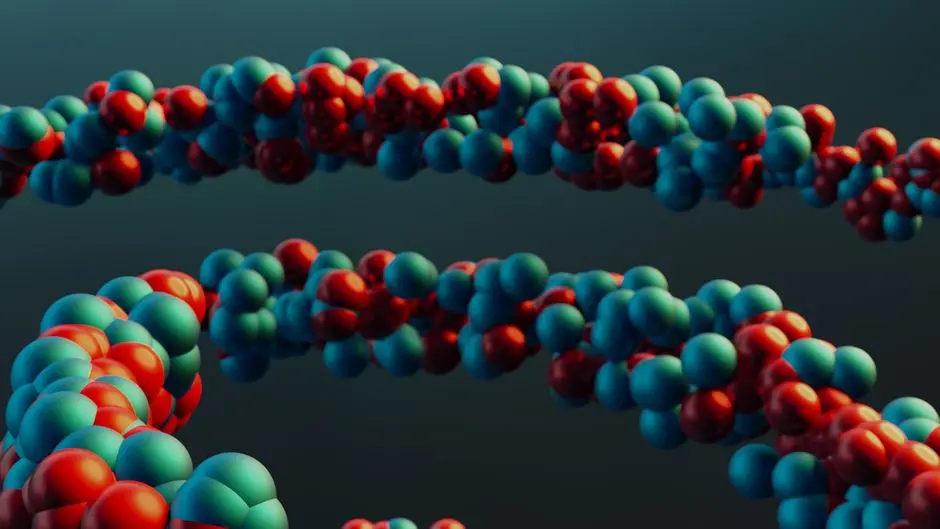
The quest to decipher the intricate three-dimensional architecture of biological molecules stands as a foundational challenge in modern biology and drug discovery. The precise spatial arrangement of atoms dictates a molecule’s function, interaction, and therapeutic potential. Historically, experimental methods like X-ray crystallography, NMR spectroscopy, and cryo-electron microscopy have been gold standards, yet they are often time-consuming, resource-intensive, and sometimes infeasible for complex or dynamic structures. This bottleneck dramatically slows down our understanding of biological processes and the development of new therapeutics.
In this landscape, Artificial Intelligence emerges not merely as an assistive tool but as a transformative force, fundamentally reshaping our capabilities. We are on the cusp of an era where computational precision rivals experimental observation, unlocking unprecedented speeds in discovery. This article meticulously dissects how AI algorithms are revolutionizing molecular structure prediction, delivering unparalleled improvements in accuracy and efficiency. We explore the core methodologies, reveal common pitfalls, and share best practices to harness this potent technology. Prepare to forge a deeper understanding of how Artificial Intelligence for Predicting Molecular Structures empowers researchers to overcome long-standing barriers, accelerating the pace of biological innovation and drug design. Let us navigate the cutting-edge strategies that will empower us to decode life's blueprints with unprecedented clarity.
The Transformative Imperative: Why AI is Indispensable for Structural Prediction
The quest to accurately predict the three-dimensional structure of proteins and other biomolecules from their amino acid sequences has long been considered one of biology's grand challenges. Our fundamental understanding of biological function, disease mechanisms, and the rational design of new drugs hinges critically on knowing these precise atomic arrangements. Traditional experimental techniques, while definitive and invaluable, are often fraught with significant hurdles. X-ray crystallography demands high-quality, diffraction-grade crystals, a notoriously difficult, time-consuming, and often impossible endeavor for many proteins, particularly membrane proteins or highly flexible ones. NMR spectroscopy is limited by molecular size and inherent sample stability, typically performing best on smaller proteins (less than ~30-40 kDa) and requiring specific isotopic labeling. Cryo-electron microscopy (cryo-EM) has dramatically advanced structural biology, enabling the visualization of large complexes and dynamic states, yet it still requires substantial expertise, specialized equipment, and challenges persist for smaller proteins or those exhibiting extreme conformational heterogeneity. These inherent experimental bottlenecks generate a profound 'sequence-to-structure gap,' where the deluge of genomic and proteomic data far outstrips our capacity for structural characterization. Tens of millions of protein sequences are known, but only a fraction have experimentally determined structures.
This immense structural deficit not only slows down fundamental biological research but critically impedes the pharmaceutical pipeline, agricultural innovation, and materials science. Without robust, high-resolution structural insights, rational drug design is often reduced to costly, laborious, and time-consuming trial-and-error approaches, leading to high failure rates. Enter Artificial Intelligence, a paradigm shift that offers a compelling and indispensable solution. AI, particularly deep learning, possesses an unparalleled capacity to discern intricate patterns, long-range dependencies, and evolutionary correlations within vast datasets of known sequences and structures. It promises to bridge this gap, offering a scalable, rapid, and increasingly accurate means to predict structures computationally, often achieving near-experimental resolution. We must recognize that AI is not merely an incremental improvement; it represents a fundamental re-imagining of how we approach structural biology. Its ability to learn from millions of examples empowers us to tackle protein folding and macromolecular assembly with a computational prowess previously unimaginable, transforming drug discovery, vaccine design, enzyme engineering, and fundamental biological research. We are forging a new frontier where computational models accelerate our understanding of life's fundamental machinery, allowing us to move from hypothesis generation to validation with unprecedented speed and efficiency. The imperative is clear: embrace AI to unlock structural biology's full potential and accelerate the journey from sequence to therapeutic impact, decoding biological blueprints to benefit humanity.
Architectures of Accuracy: Deep Learning Models Driving Breakthroughs
The dramatic improvements in structural prediction accuracy are largely attributable to the advent of sophisticated deep learning architectures. At the forefront of this revolution stand models like AlphaFold and RosettaFold, which have redefined the state-of-the-art by solving protein folding at near-experimental resolution. These systems move beyond traditional homology modeling or de novo methods by directly learning the complex, non-linear relationships between an amino acid sequence, its evolutionary context (derived from multiple sequence alignments, MSAs), and its three-dimensional fold. Their success stems from several key architectural innovations that allow them to integrate vast amounts of information. Unlike prior computational methods that often relied on template matching, exhaustive conformational sampling, or simplified force fields, these AI models leverage a deep, implicit understanding of protein physics and evolutionary co-variation learned directly from massive databases of known structures.
Central to these models is the use of attention mechanisms and transformer networks, powerful concepts borrowed from natural language processing and adapted for biological sequences. These components allow the model to dynamically weigh the importance of different amino acid residues and their intricate interactions across the entire protein sequence, regardless of their proximity in the primary sequence. This capability is absolutely crucial for capturing the long-range dependencies that dictate the formation of stable tertiary and quaternary structures. Instead of predicting individual residue interactions in isolation, these models operate as sophisticated end-to-end systems, directly mapping sequence and MSA features to a full 3D coordinate set of the protein's backbone and side chains. The training process for such models is incredibly resource-intensive, requiring massive datasets of known protein structures (e.g., from the Protein Data Bank, PDB) and their corresponding sequences, often complemented by millions of protein sequences in databases like UniProt. Through countless iterations and optimization cycles, the models learn to predict inter-residue distance maps, orientational information between amino acids, and then intelligently assemble these probabilistic predictions into a coherent, physically plausible 3D structure using specialized differentiable optimization and refinement modules. The iterative refinement steps within these pipelines are critical, continually adjusting the predicted structure to minimize energetic conflicts and maximize physical plausibility and accuracy against experimental data. We must understand that these are not simple lookup tables; they are intricate inference engines, extracting deep biological principles from data. Embracing these advanced architectures allows us to decode structural information with unprecedented fidelity and speed, providing actionable insights for research and development across all biological sciences.
Refining the Blueprint: Advanced Strategies and Overcoming Limitations
While AI has dramatically elevated structural prediction, its utility is continuously being expanded and refined to tackle the full spectrum of biological complexity. Our next frontier involves pushing beyond static, single-chain protein predictions to tackle more challenging and biologically relevant scenarios. A significant area of focus is the prediction of protein-protein complexes and other macromolecular assemblies. Here, AI models are being trained not just on individual protein folds but on interaction interfaces, discerning the subtle chemical and physical clues that dictate how proteins bind. This requires integrating information from multiple sequences and inferring contacts between distinct chains, a challenge that multi-chain extensions of models like AlphaFold-Multimer are now addressing with remarkable success, significantly impacting areas like signaling pathways and drug targeting. Furthermore, accurately predicting the behavior of intrinsically disordered regions (IDRs), which lack a stable tertiary structure under physiological conditions but play vital roles in cellular regulation, remains an ongoing challenge. While AI can identify these regions, fully characterizing their dynamic ensembles requires different computational approaches, often involving large-scale molecular dynamics simulations informed and guided by AI predictions of potential transient structures.
Another crucial advancement lies in predicting dynamic structures and conformational changes, which are fundamental to protein function, ligand binding, and allostery, but are traditionally hard to capture with static methods. AI models are beginning to learn how proteins transition between different functional states, paving the way for simulating molecular machines in action. This involves training on ensembles of structures, integrating data from techniques like cryo-EM variability analysis, or developing time-dependent predictive models. A key strategy for boosting accuracy across the board is the judicious integration of sparse experimental data with AI predictions. This might involve using low-resolution cryo-EM envelopes as constraints, incorporating cross-linking mass spectrometry data to define proximity, or leveraging limited NMR chemical shifts to guide the AI model or refine its outputs. This hybrid approach often yields more robust and reliable structures. However, a common pitfall we must actively mitigate is the potential for model bias, especially when predicting truly novel folds, highly diverged proteins, or structures for which limited evolutionary information (Multiple Sequence Alignments, MSAs) is available. For targets with few homologs, the predictive power can diminish, leading to less reliable results. Developing robust uncertainty quantification mechanisms and active learning strategies will be paramount to identify when AI predictions are highly confident and when further experimental validation is essential. We must continuously refine our approaches, embracing hybrid methods that combine the unparalleled strengths of AI with the indispensable insights from experimental biology to unlock the full spectrum of molecular biology and push the boundaries of structural prediction.

The Future Landscape: Integration, Impact, and Ethical Stewardship
The profound and accelerating improvements in structural prediction accuracy driven by AI are fundamentally reshaping the landscape of biological research, biotechnology, and medicine. In drug discovery, this precision allows for rapid and accurate identification of novel drug targets, accelerated rational lead compound design, and more effective virtual screening, dramatically shortening development timelines and reducing costs associated with experimental screening. For enzyme engineering and synthetic biology, we can now design novel enzymes with tailored specificities and enhanced catalytic activities, opening doors for sustainable industrial processes, advanced bioremediation, and the creation of new metabolic pathways. In areas like vaccine development and immunology, accurate structural prediction of viral proteins or immune receptors helps design more effective antigens and understand host-pathogen interactions. This isn't merely an academic exercise; it's a strategic advantage that democratizes access to structural insights and accelerates innovation across multiple critical sectors.
However, as we embrace this transformative power, we must navigate future challenges with foresight and precision. The computational resources required to train and run the most advanced AI models remain substantial, demanding significant investment in infrastructure and specialized expertise. Ensuring equitable accessibility to these powerful tools for the broader scientific community, including researchers in resource-limited settings, is crucial to democratize innovation globally. Data privacy and security, especially when dealing with proprietary biological sequences or sensitive patient-derived structural data, will become increasingly important, necessitating robust governance frameworks. Furthermore, model interpretability – understanding why an AI makes a particular prediction, and identifying its limitations or potential errors – is vital for gaining deeper biological insights and for building trust, especially when predictions guide critical decisions in therapeutics or engineering. Ethical considerations, such as the potential for dual-use research (e.g., designing highly toxic proteins or pathogens), demand vigilant oversight, robust ethical frameworks, and responsible research practices. For practitioners, best practices involve: rigorous validation of AI predictions against known data or orthogonal experimental results; a commitment to iterative refinement, where AI models are continuously updated and improved with new structural information; and the strategic combination of AI with traditional experimental and other computational methods to leverage synergistic strengths. We must adopt a proactive, responsible stance, forging a future where AI empowers discovery while upholding scientific integrity, promoting global access, and ensuring societal well-being. This era demands expert strategists and ethical stewards, not just passive users of technology.
Key Takeaways
AI's Foundational Impact on Structural Biology
Artificial Intelligence, particularly deep learning, has become indispensable in molecular structural prediction, bridging the long-standing 'sequence-to-structure gap'. It overcomes the inherent limitations of traditional experimental methods—such as high costs, time consumption, and technical difficulties—by offering a scalable, rapid, and increasingly accurate computational approach to deciphering protein 3D structures from their amino acid sequences. This transformation is pivotal for advancing drug discovery, enzyme engineering, and fundamental biological research.
Key AI Architectures and Methodologies
Breakthroughs are primarily driven by sophisticated deep learning models like AlphaFold and RosettaFold. These models leverage attention mechanisms and transformer networks, adapted from natural language processing, to capture complex long-range dependencies within protein sequences. They operate as end-to-end systems, learning from massive datasets of known structures (e.g., PDB) to predict inter-residue distance maps and assemble coherent 3D structures with near-experimental resolution.
Advanced Strategies and Overcoming Current Limitations
The field is continuously refining AI's capabilities to tackle more complex challenges, including the prediction of protein-protein complexes (e.g., using AlphaFold-Multimer), characterizing intrinsically disordered regions (IDRs), and modeling dynamic conformational changes. A crucial strategy for improving accuracy involves the judicious integration of sparse experimental data to guide or refine AI predictions. Ongoing efforts also focus on mitigating model bias and developing robust uncertainty quantification for predictions.
Future Directions, Impact, and Ethical Imperatives
AI-driven structural prediction is profoundly impacting drug discovery, enzyme engineering, and synthetic biology. Future challenges include managing significant computational resource demands, ensuring global accessibility, safeguarding data privacy, and enhancing model interpretability. Ethical considerations, particularly concerning dual-use research, necessitate vigilant oversight and responsible practices. Practitioners must prioritize rigorous validation, iterative refinement, and the strategic combination of AI with traditional methods to maximize impact and maintain scientific integrity.
FAQ
-
How accurate are current AI structural predictions compared to experimental methods?
Advanced AI models like AlphaFold and RosettaFold now routinely achieve accuracy comparable to experimental methods (like X-ray crystallography or cryo-EM) for a significant portion of single-domain proteins, especially when ample evolutionary information is available. For some structures, the difference in atomic positions (RMSD) can be less than an angstrom, effectively 'experimental resolution.' However, challenges remain for highly dynamic proteins, intrinsically disordered regions, and novel folds without clear homologs, where accuracy may still fall short of direct experimental determination.
-
Can AI predict the structure of protein complexes and other macromolecular assemblies?
Yes, AI models are rapidly advancing in this area. Extensions like AlphaFold-Multimer are specifically designed to predict the structures of protein-protein, protein-DNA, and other macromolecular complexes. These models learn not just individual protein folds but also the intricate interaction interfaces, inferring contacts between distinct chains. While still a more complex challenge than single-chain prediction, the accuracy achieved for many complexes is groundbreaking, opening new avenues for understanding cellular machinery and designing multi-component therapeutics.
-
What are the primary limitations of AI in molecular structural prediction currently?
Despite incredible progress, current AI models face several limitations. These include:
- Computational Resources: Training and running cutting-edge models demand substantial computational power, limiting accessibility for some researchers.
- Dynamic Systems: Predicting conformational changes or capturing the full dynamic ensemble of proteins (like intrinsically disordered regions) remains challenging beyond static structures.
- Novel Folds/Sparse Data: Predictions can be less accurate for proteins with truly novel folds or those lacking sufficient evolutionary information (MSAs) for training.
- Model Interpretability: Understanding the 'why' behind a prediction can be difficult, hindering deeper biological insight and trust.
- Integration with Experimental Data: While improving, seamlessly combining AI predictions with diverse, sparse experimental data for refinement is an ongoing area of development.