
Unleash AI for Breakthroughs in Structural Biology
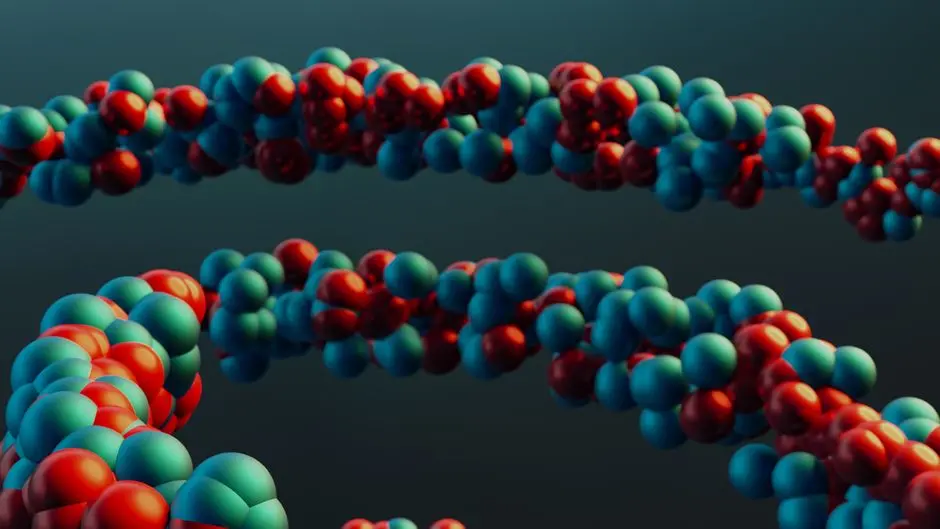
We stand at the precipice of a new era in biological discovery. For decades, deciphering the intricate three-dimensional structures of proteins and other biomolecules has been a monumental challenge, often requiring painstaking experimental techniques. Yet, these structures are the very blueprints of life, dictating function, interaction, and disease. Today, Artificial Intelligence is fundamentally reshaping this landscape, offering unprecedented speed and accuracy in predicting molecular architectures. We are witnessing a revolution, and understanding how researchers leverage AI software is no longer optional; it is essential for anyone aiming to push the boundaries of biological science. This comprehensive guide unveils the methodologies, tools, and practical applications that empower scientists to utilize AI, particularly for the advanced prediction of molecular structures, accelerating drug discovery, disease understanding, and biotechnological innovation. Prepare to navigate the core concepts, master the leading platforms, and strategically integrate AI into your research workflow. We forge the path towards a future where structural insights are no longer a bottleneck but a launchpad for discovery.
Unlocking Life's Blueprints: The AI Paradigm Shift in Structural Biology
For generations, structural biology has grappled with a formidable challenge: elucidating the precise three-dimensional arrangements of proteins, RNA, and DNA. These intricate molecular blueprints govern every biological process, from enzyme catalysis to cellular signaling and immune response. Without understanding these structures, we navigate the complex machinery of life blindly. Traditional experimental methods—X-ray crystallography, Nuclear Magnetic Resonance (NMR) spectroscopy, and more recently, Cryo-Electron Microscopy (Cryo-EM)—are powerful but often time-consuming, resource-intensive, and limited by sample preparation challenges or molecular size. Consequently, a vast chasm exists between the immense number of known protein sequences and the comparatively minuscule fraction with experimentally determined structures. This bottleneck has long impeded drug discovery, vaccine development, and our fundamental grasp of disease mechanisms.
The advent of Artificial Intelligence, particularly deep learning, has irrevocably altered this landscape. We are no longer merely improving existing methods; we are establishing entirely new paradigms for structural determination. AI’s capacity to learn complex patterns from massive datasets of known sequences and structures allows it to infer the folding pathways and stable conformations of novel proteins with startling accuracy. This isn't just an incremental improvement; it's a quantum leap forward. We now wield tools that can predict structures in days, not years, and for molecules previously considered intractable. This paradigm shift fundamentally democratizes structural biology, making high-resolution structural data accessible to a broader scientific community. We accelerate discovery, unlock previously hidden biological insights, and compress timelines in areas like rational drug design and synthetic biology. We ignite an era where structural knowledge becomes a readily available resource, fueling innovation across all biomedical fields.
Navigating the AI Toolkit: Leading Software for Molecular Structure Prediction
The core of AI's transformative power in structural biology lies in sophisticated software tools. At the forefront stands AlphaFold2, developed by DeepMind, which catalyzed a revolution by demonstrating near-experimental accuracy in protein structure prediction. AlphaFold2’s success stems from a novel deep learning architecture that integrates evolutionary information from multiple sequence alignments (MSAs) with a powerful attention mechanism, allowing it to reason about protein folding as a graph prediction problem. It iteratively refines its predictions, learning relationships between amino acids regardless of their position in the linear sequence. We leverage this by inputting a protein's amino acid sequence, and AlphaFold2 generates a highly accurate 3D model, complete with per-residue confidence scores (pLDDT) and predicted alignment error (PAE) matrices to assess reliability.
While AlphaFold2 commands significant attention, other powerful tools contribute to this burgeoning field. RoseTTA-fold, developed by the Baker lab, offers a similar level of accuracy and speed, often serving as a strong complementary or alternative prediction engine. RoseTTA-fold employs a three-track network, simultaneously processing 1D sequence information, 2D distance and orientation predictions, and 3D atomic coordinates, continuously exchanging information between them. This integrated approach allows for robust prediction even with fewer homologous sequences. Furthermore, tools like ESMFold, developed by Meta, demonstrate the power of large language models for biology, predicting structures directly from single sequences without relying on MSAs, thus expanding capabilities for diverse protein families. We also explore specialized tools for predicting protein-protein interactions (PPIs) and RNA structures, each employing tailored AI architectures. We must understand the strengths and limitations of each platform to select the optimal tool for specific research questions, maximizing predictive power and accelerating our structural investigations. Each tool offers a unique lens through which to view the intricate world of molecular architecture.
From Sequence to Structure: A Researcher's AI Workflow
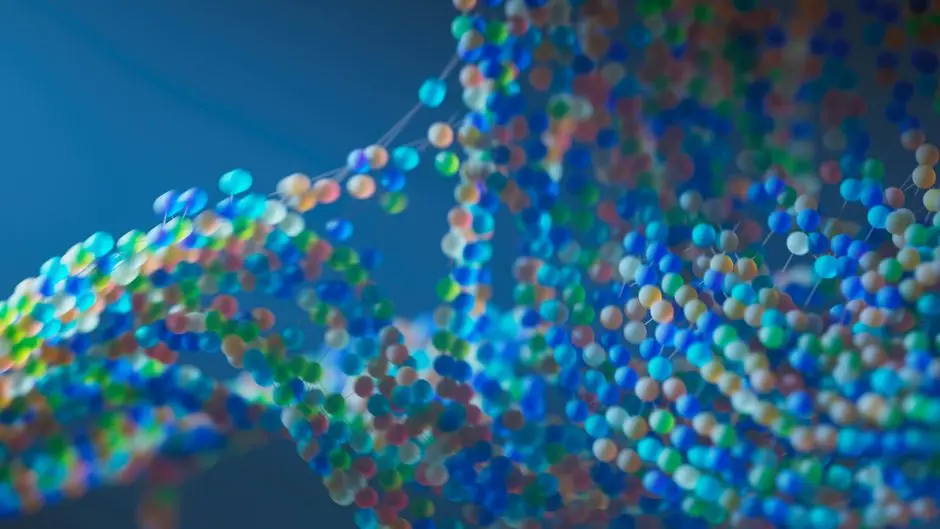
Integrating AI software into structural biology research requires a systematic workflow. We initiate this process by preparing our input data: the amino acid sequence of the target protein. For most robust predictions, especially with tools like AlphaFold2 or RoseTTA-fold, obtaining a high-quality Multiple Sequence Alignment (MSA) is crucial. This involves searching protein sequence databases (e.g., UniRef, MGnify) for homologous sequences that have evolved from a common ancestor. A richer MSA provides more evolutionary context, which the AI models exploit to infer spatial constraints. However, for methods like ESMFold, a single sequence is sufficient, offering flexibility when MSAs are sparse. We then select our preferred AI prediction software, considering factors like computational resources, the target protein's characteristics, and the required prediction accuracy. Cloud-based platforms (e.g., Google Colab notebooks for AlphaFold2) or local installations on GPUs facilitate execution, often taking hours to days depending on protein size and chosen settings.
Upon generating a 3D model, the critical step is interpreting and validating the results. We meticulously examine the per-residue confidence scores (pLDDT values), which indicate the predicted local accuracy of each amino acid. High pLDDT scores (>90) signify high confidence, while lower scores might point to intrinsically disordered regions or flexible loops. We also analyze Predicted Alignment Error (PAE) plots, which show how confident the model is about the relative positions of different parts of the protein, aiding in assessing domain arrangements. Visualizing the predicted structure using molecular viewers (e.g., PyMOL, ChimeraX) allows for qualitative assessment, searching for structural motifs, active sites, or potential binding pockets. We integrate these computational predictions with any available experimental data – cross-referencing with low-resolution Cryo-EM maps, comparing against homologous structures, or designing targeted biochemical experiments (e.g., mutagenesis) to validate functional implications. This iterative process of prediction, validation, and experimental feedback forms the bedrock of AI-driven structural biology, ensuring that our computationally derived insights are robust and biologically relevant. We master this workflow to unlock unprecedented structural understanding.
AI in Action: Driving Discovery Across Biomedical Frontiers
The practical applications of AI-driven structural biology are vast and transformative, permeating every facet of biomedical research. In drug discovery, AI accelerates the identification of novel therapeutic targets and the design of small-molecule inhibitors or biologics. We swiftly predict the structures of disease-relevant proteins, enabling virtual screening of millions of compounds against these models to pinpoint potential drug candidates. This significantly reduces the time and cost associated with traditional high-throughput screening. Furthermore, AI assists in optimizing lead compounds by predicting their binding affinity, selectivity, and potential off-target effects, even aiding in predicting drug resistance mechanisms by modeling mutations.
For enzyme engineering and synthetic biology, AI provides unprecedented capabilities. We leverage predicted structures to rationally design enzymes with enhanced catalytic activity, altered substrate specificity, or improved stability for industrial applications, biofuels, or bioremediation. By understanding the structural consequences of amino acid substitutions, we engineer novel functions into proteins with precision. In understanding disease mechanisms, AI sheds light on the structural basis of pathogenicity. We predict structures of viral proteins, bacterial toxins, or human disease-associated proteins (e.g., amyloid-forming proteins, oncogenes) to decipher how their misfolding or aberrant interactions contribute to disease. This knowledge is paramount for developing targeted interventions and diagnostic tools. For instance, predicting the spike protein structure of SARS-CoV-2 was critical for rapid vaccine design. We also apply AI to design novel biomaterials, understand allergenicity, and even explore the origins of life by modeling ancestral proteins. The ability to generate accurate structural hypotheses rapidly empowers us to tackle grand challenges in health and biotechnology, transforming theoretical concepts into tangible solutions that profoundly impact human well-being. We convert structural insights into actionable biological intelligence.
The Evolving Horizon: AI for Refinement, Design, and Future Challenges
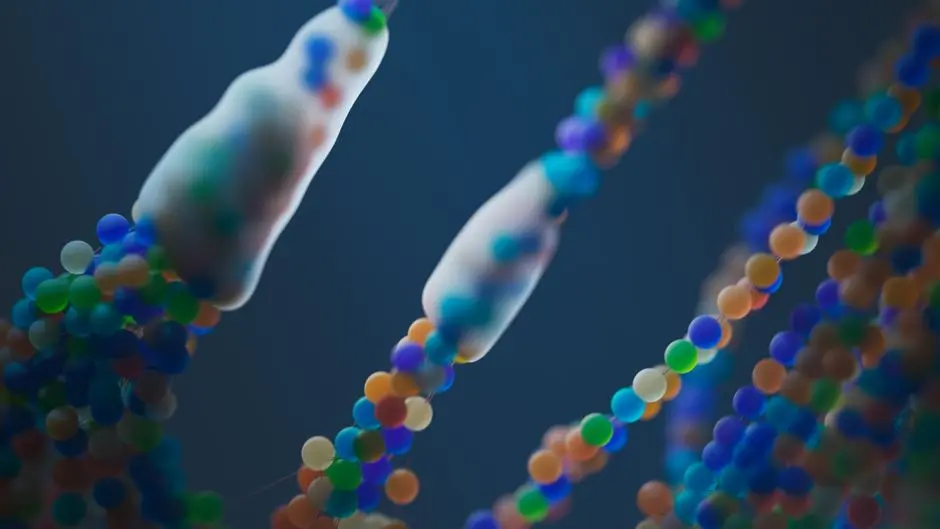
While protein structure prediction has reached remarkable accuracy, the ambition of AI in structural biology extends far beyond simple sequence-to-structure mapping. We are now pushing the boundaries into **structural refinement** and **de novo protein design**. AI models are being trained to improve the quality of experimentally determined structures (e.g., from Cryo-EM or X-ray crystallography) by filling in missing regions or correcting ambiguous interpretations. Furthermore, AI is becoming a powerful engine for **molecular dynamics simulations**, predicting how proteins move, interact, and change conformation over time, critical for understanding transient states and allosteric regulation. This dynamic perspective is vital for a complete functional understanding.
Perhaps the most exhilarating frontier is **de novo protein design**. Instead of predicting the structure of an existing sequence, AI now allows us to design novel protein sequences that fold into predefined structures or possess specific functions. Imagine creating enzymes with entirely new catalytic capabilities, therapeutic proteins tailored for specific targets, or self-assembling nanomaterials. Tools combining generative AI with structural prediction algorithms are making this a reality, moving beyond optimizing natural proteins to creating entirely new ones. However, we acknowledge critical **future challenges and ethical considerations**. Computational demands remain high, and the interpretability of complex deep learning models is an ongoing research area. Ensuring data privacy, addressing potential biases in training data, and developing robust validation frameworks for AI-designed molecules are paramount. We also grapple with designing for inherently flexible or disordered proteins, which still pose significant challenges. The continuous integration of multi-modal data (genomics, proteomics, metabolomics, imaging) will further enhance AI's predictive power. We stand ready to confront these challenges, pushing AI beyond prediction to actively engineer the molecular components of life, ushering in an era of unprecedented biological innovation and control.
Key Takeaways
AI: Revolutionizing Structural Biology
AI, primarily deep learning, has fundamentally transformed structural biology by overcoming the limitations of traditional experimental methods. Tools like AlphaFold2, RoseTTA-fold, and ESMFold predict protein 3D structures with unprecedented speed and accuracy from amino acid sequences, bridging the gap between sequence and structure.
Key AI Software & Methodologies
We utilize tools like AlphaFold2 and RoseTTA-fold, which leverage multiple sequence alignments and deep learning architectures to reason about protein folding. ESMFold extends this by using large language models, predicting structures from single sequences. Understanding each tool's underlying mechanisms and output metrics (e.g., pLDDT, PAE) is crucial for effective application.
Practical Workflow for Researchers
Our workflow involves precise data preparation (amino acid sequence, MSA generation), selecting appropriate AI software, running predictions, and rigorously interpreting confidence metrics (pLDDT, PAE plots). Visual validation and integration with experimental data are essential to confirm biological relevance and hypothesis generation.
Transformative Applications
AI-predicted structures are pivotal in accelerating drug discovery, rational enzyme engineering, and deciphering disease mechanisms. We use these insights for virtual screening, lead optimization, designing novel catalysts, and understanding the structural basis of various pathologies, impacting diverse biomedical fields.
Future Directions: Beyond Prediction
The frontier extends to AI-driven structural refinement, molecular dynamics simulations, and groundbreaking de novo protein design. We are moving towards creating novel proteins with specific functions. Ethical considerations and challenges, particularly regarding data bias and model interpretability, are actively being addressed as we expand AI's role in engineering life at the molecular level.
FAQ
-
What is the primary advantage of using AI for structural biology?
The primary advantage is unparalleled speed and accuracy in predicting 3D molecular structures. AI tools, particularly deep learning models, can generate high-resolution protein structures in days, drastically reducing the time and resources required by traditional experimental methods. This accelerates discovery in drug development, enzyme engineering, and understanding disease mechanisms by making structural information more accessible.
-
How do researchers validate AI-predicted protein structures?
Researchers validate AI-predicted structures through a multi-faceted approach. We analyze per-residue confidence scores (like pLDDT for AlphaFold2) and predicted alignment error (PAE) plots provided by the AI software. We visually inspect the models using molecular viewers for biological plausibility and compare them with any available low-resolution experimental data (e.g., Cryo-EM maps). Ultimately, we design and conduct targeted biochemical or biophysical experiments to confirm functional implications, protein-ligand interactions, or structural integrity.
-
Can AI predict the structure of any biomolecule, or is it limited to proteins?
While AI has made its most significant strides in protein structure prediction, its capabilities are rapidly expanding. Dedicated AI models are emerging for predicting RNA structures, protein-protein interactions (PPIs), and even complex assemblies. The core principles of deep learning can be adapted to various biomolecular systems, though each type of molecule presents unique challenges requiring specialized algorithms and training data.