
> Bio-engineering & bioinformatics pipelines > Protein Language Modeling > Engineer Protein Seq2Seq Models in Python for Mutation Prediction
Engineer Protein Seq2Seq Models in Python for Mutation Prediction
Unlock the profound capabilities of protein engineering by mastering sequence-to-sequence (seq2seq) models in Python. The intricate dance of amino acids dictates protein function, and the slightest alteration can transform its biological role. Our quest is to predict and engineer these critical sequence mutations and modifications, a process vital for drug discovery, enzyme optimization, and understanding disease mechanisms.
This comprehensive resource empowers you to forge robust Python models capable of deciphering the complex language of proteins. We will navigate through architectural choices, data engineering challenges, and advanced training methodologies, equipping you with the expertise to activate predictive systems for protein design. This journey into computational biology is crucial for anyone looking to push the boundaries of bio-engineering. It builds directly on the foundational understanding provided by
the deployment of Transformers and AI to model protein sequences and embeddings, propelling your capabilities into practical, actionable model implementation. Prepare to decode the future of protein manipulation and catalyze innovation in your field.
Activate the Core: Understanding Protein Sequence-to-Sequence Foundations
We commence our exploration by comprehending the fundamental principles of protein sequence-to-sequence (seq2seq) modeling. At its core, seq2seq translates an input sequence into an output sequence, a process immensely powerful for biological data. For proteins, this means inputting an initial amino acid sequence to generate a modified version, predict a mutation, or even design a novel protein segment. This capability becomes a cornerstone for engineering proteins with enhanced stability, altered binding affinities, or specific catalytic activities.
The architecture fundamentally relies on an encoder-decoder paradigm. The encoder’s mission is to process the input protein sequence, distilling its complex features and contextual information into a fixed-length or contextual representation. This 'thought vector' or series of contextual embeddings then becomes the bedrock upon which the decoder operates. The decoder, in turn, takes this representation and sequentially generates the target protein sequence, amino acid by amino acid. A critical innovation, the attention mechanism, allows the decoder to dynamically focus on relevant parts of the input sequence during output generation, mitigating the 'information bottleneck' often faced by earlier models.
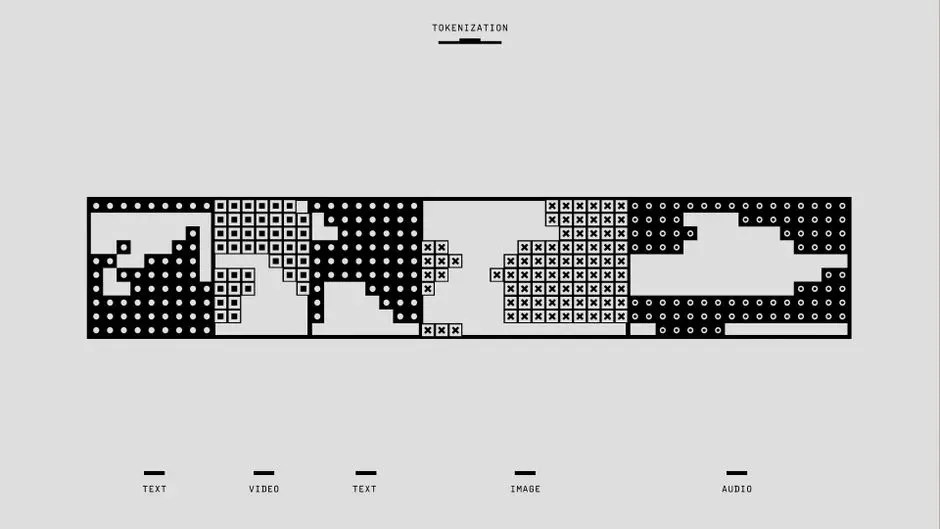
Implementing these models in Python demands a strategic approach to data representation. Proteins, comprised of 20 distinct amino acids, must be transformed into a numerical format suitable for deep learning. One common method is one-hot encoding, where each amino acid is represented as a binary vector. For instance, if our vocabulary has 20 amino acids, 'A' might be [1,0,0,...] and 'C' might be [0,1,0,...]. This initial data engineering step is pivotal; incorrect representation can severely cripple model performance. We must activate robust data preprocessing pipelines to ensure our models learn from the most accurate and interpretable numerical proxies of biological reality.
import numpy as np

# --- Concept: Representing Protein Sequences ---
# Proteins are sequences of 20 common amino acids.
# We need a numerical representation for machine learning models.

# Define a simple amino acid vocabulary, including special tokens for padding, start, end.
AMINO_ACIDS = ['A', 'R', 'N', 'D', 'C', 'Q', 'E', 'G', 'H', 'I',
               'L', 'K', 'M', 'F', 'P', 'S', 'T', 'W', 'Y', 'V', 'X', '<PAD>', '<START>', '<END>'] # X for unknown
AA_TO_INT = {aa: i for i, aa in enumerate(AMINO_ACIDS)}
INT_TO_AA = {i: aa for aa, i in AA_TO_INT.items()}
VOCAB_SIZE = len(AMINO_ACIDS)

def one_hot_encode(sequence, vocab_size=VOCAB_SIZE, aa_to_int=AA_TO_INT):
    """
    Converts an amino acid sequence into a one-hot encoded matrix.
    Each residue is represented by a binary vector in the vocabulary space.
    """
    encoded = np.zeros((len(sequence), vocab_size))
    for i, aa in enumerate(sequence):
        idx = aa_to_int.get(aa, aa_to_int['X']) # Use 'X' for unknown amino acids
        encoded[i, idx] = 1.0
    return encoded

def decode_one_hot(encoded_sequence, int_to_aa=INT_TO_AA):
    """
    Decodes a one-hot encoded matrix back into an amino acid sequence.
    """
    sequence = []
    for residue_vector in encoded_sequence:
        idx = np.argmax(residue_vector)
        sequence.append(int_to_aa[idx])
    return ''.join(sequence)

# Example usage:
input_protein_seq = "MKNKLI"
encoded_input = one_hot_encode(input_protein_seq)
print(f"Original Sequence: {input_protein_seq}")
print(f"Encoded (first 5 residues):\n{encoded_input[:5]}")
decoded_seq = decode_one_hot(encoded_input)
print(f"Decoded Sequence: {decoded_seq}\n")

# For sequence-to-sequence, we'd also need target sequences (e.g., mutated version)
# target_protein_seq = "MKNKRLI"
# encoded_target = one_hot_encode(target_protein_seq)
print("Python environment ready for protein sequence modeling and basic encoding tests.")
Engineer the Neural Core: Building Protein Seq2Seq Architectures
To engineer truly effective protein sequence-to-sequence models, we must select and construct the neural network architecture with surgical precision. While Recurrent Neural Networks (RNNs) like LSTMs or GRUs were once the standard for sequence processing, they struggle with long-range dependencies and parallelization. For protein sequences, which can span hundreds or thousands of amino acids, capturing these distant interactions is paramount. This is where Transformers emerge as the superior choice, leveraging their self-attention mechanism to weigh the importance of all amino acids in a sequence simultaneously, regardless of their position.
A Transformer's architecture is built upon an encoder stack and a decoder stack. The encoder's task is to distill the input protein's contextual information. Each encoder layer typically consists of a multi-head self-attention mechanism, followed by a position-wise feed-forward network. Crucially, positional encoding is fused with the input embeddings. Since Transformers inherently lack recurrence, these positional encodings provide the model with vital information about the order of amino acids within the sequence, a non-negotiable aspect for biological function.
The decoder stack, mirroring the encoder in complexity, generates the output sequence. Each decoder layer incorporates two multi-head attention mechanisms: one for self-attention over the decoder's own input (masked to prevent attending to future tokens during training), and another for attending to the encoder's output. This second attention layer is the bridge, allowing the decoder to reference the encoded representation of the input protein. We must activate these intricate components, ensuring residual connections and layer normalization are correctly applied throughout the network to stabilize training and facilitate gradient flow. This meticulous architectural design is what allows us to decode the subtle biological signals embedded within protein sequences.
import tensorflow as tf
from tensorflow import keras
from tensorflow.keras import layers
import numpy as np

# Reuse vocabulary from previous step, or define for standalone execution
AMINO_ACIDS = ['A', 'R', 'N', 'D', 'C', 'Q', 'E', 'G', 'H', 'I',
               'L', 'K', 'M', 'F', 'P', 'S', 'T', 'W', 'Y', 'V', 'X', '<PAD>', '<START>', '<END>']
AA_TO_INT = {aa: i for i, aa in enumerate(AMINO_ACIDS)}
INT_TO_AA = {i: aa for aa, i in AA_TO_INT.items()}
VOCAB_SIZE = len(AMINO_ACIDS) # Now including special tokens

# --- Model Hyperparameters ---
MAX_SEQ_LENGTH = 50 # Maximum length for input and output sequences
EMBED_DIM = 128     # Dimension of token and positional embeddings
NUM_HEADS = 4       # Number of attention heads in MultiHeadAttention
FF_DIM = 512        # Dimension of the feed-forward network in Transformer blocks
DROPOUT_RATE = 0.1  # Dropout rate for regularization

# --- Part 1: Positional Encoding (Crucial for Transformers) ---
# Transformers lack recurrence, so position needs to be encoded manually.
class PositionalEmbedding(layers.Layer):
    """
    Combines token embeddings with sinusoidal positional embeddings.
    This allows the model to leverage sequence order.
    """
    def __init__(self, sequence_length, vocab_size, embed_dim, **kwargs):
        super(PositionalEmbedding, self).__init__(**kwargs)
        self.token_embeddings = layers.Embedding(vocab_size, embed_dim)
        self.position_embeddings = layers.Embedding(sequence_length, embed_dim)
        self.sequence_length = sequence_length
        self.vocab_size = vocab_size
        self.embed_dim = embed_dim

    def call(self, inputs):
        length = tf.shape(inputs)[-1]
        positions = tf.range(start=0, limit=length, delta=1)
        embedded_tokens = self.token_embeddings(inputs)
        embedded_positions = self.position_embeddings(positions)
        return embedded_tokens + embedded_positions

    def compute_mask(self, inputs, mask=None):
        # Mask out padding tokens (assuming 0 is padding token ID)
        return tf.math.not_equal(inputs, AA_TO_INT['<PAD>'])

    def get_config(self):
        config = super(PositionalEmbedding, self).get_config()
        config.update({
            "sequence_length": self.sequence_length,
            "vocab_size": self.vocab_size,
            "embed_dim": self.embed_dim,
        })
        return config

# --- Part 2: Transformer Encoder Layer ---
class TransformerEncoder(layers.Layer):
    """
    A single layer of the Transformer Encoder, comprising self-attention and a feed-forward network.
    """
    def __init__(self, embed_dim, num_heads, ff_dim, rate=0.1, **kwargs):
        super(TransformerEncoder, self).__init__(**kwargs)
        self.att = layers.MultiHeadAttention(num_heads=num_heads, key_dim=embed_dim)
        self.ffn = keras.Sequential(
            [
                layers.Dense(ff_dim, activation="relu"),
                layers.Dense(embed_dim),
            ]
        )
        self.layernorm1 = layers.LayerNormalization(epsilon=1e-6)
        self.layernorm2 = layers.LayerNormalization(epsilon=1e-6)
        self.dropout1 = layers.Dropout(rate)
        self.dropout2 = layers.Dropout(rate)
        self.embed_dim = embed_dim
        self.num_heads = num_heads
        self.ff_dim = ff_dim
        self.rate = rate

    def call(self, inputs, training):
        attn_output = self.att(inputs, inputs, attention_mask=inputs._keras_mask) # Self-attention
        attn_output = self.dropout1(attn_output, training=training)
        out1 = self.layernorm1(inputs + attn_output)
        ffn_output = self.ffn(out1)
        ffn_output = self.dropout2(ffn_output, training=training)
        return self.layernorm2(out1 + ffn_output)

    def get_config(self):
        config = super(TransformerEncoder, self).get_config()
        config.update({
            "embed_dim": self.embed_dim,
            "num_heads": self.num_heads,
            "ff_dim": self.ff_dim,
            "rate": self.rate,
        })
        return config

# --- Part 3: Transformer Decoder Layer ---
class TransformerDecoder(layers.Layer):
    """
    A single layer of the Transformer Decoder, with masked self-attention and encoder-decoder attention.
    """
    def __init__(self, embed_dim, num_heads, ff_dim, rate=0.1, **kwargs):
        super(TransformerDecoder, self).__init__(**kwargs)
        self.att1 = layers.MultiHeadAttention(num_heads=num_heads, key_dim=embed_dim)
        self.att2 = layers.MultiHeadAttention(num_heads=num_heads, key_dim=embed_dim)
        self.ffn = keras.Sequential(
            [
                layers.Dense(ff_dim, activation="relu"),
                layers.Dense(embed_dim),
            ]
        )
        self.layernorm1 = layers.LayerNormalization(epsilon=1e-6)
        self.layernorm2 = layers.LayerNormalization(epsilon=1e-6)
        self.layernorm3 = layers.LayerNormalization(epsilon=1e-6)
        self.dropout1 = layers.Dropout(rate)
        self.dropout2 = layers.Dropout(rate)
        self.dropout3 = layers.Dropout(rate)
        self.embed_dim = embed_dim
        self.num_heads = num_heads
        self.ff_dim = ff_dim
        self.rate = rate

    def call(self, inputs, encoder_output, training, look_ahead_mask=None, padding_mask=None):
        # Masked multi-head attention over inputs (self-attention)
        # The look_ahead_mask prevents attending to future tokens.
        attn1_output = self.att1(inputs, inputs, look_ahead_mask=look_ahead_mask, attention_mask=inputs._keras_mask)
        attn1_output = self.dropout1(attn1_output, training=training)
        out1 = self.layernorm1(inputs + attn1_output)

        # Multi-head attention over encoder output
        # Key and value are from the encoder output, query from the decoder's current state.
        attn2_output = self.att2(out1, encoder_output, attention_mask=padding_mask)
        attn2_output = self.dropout2(attn2_output, training=training)
        out2 = self.layernorm2(out1 + attn2_output)

        ffn_output = self.ffn(out2)
        ffn_output = self.dropout3(ffn_output, training=training)
        return self.layernorm3(out2 + ffn_output)

    def get_config(self):
        config = super(TransformerDecoder, self).get_config()
        config.update({
            "embed_dim": self.embed_dim,
            "num_heads": self.num_heads,
            "ff_dim": self.ff_dim,
            "rate": self.rate,
        })
        return config

print("Basic Transformer Encoder and Decoder layers defined, ready for model construction.")
Optimize Learning: Data Engineering and Training for Protein Models
Optimizing the learning process for protein sequence-to-sequence models mandates a meticulously engineered data pipeline and robust training strategies. Our journey begins with data acquisition from authoritative sources such as UniProt for sequence data or PDB for structural context. Raw sequences then undergo rigorous preprocessing: we tokenize amino acids into numerical IDs, build a comprehensive vocabulary including special tokens like <START>, <END>, and <PAD>, and apply padding to unify sequence lengths. Crucially, masking techniques are employed to prevent the model from learning from padded tokens, ensuring focus on meaningful biological information.
Building a custom tf.data.Dataset in TensorFlow or similar constructs in PyTorch is paramount for efficient data loading, batching, and shuffling. This minimizes I/O bottlenecks and prepares data optimally for GPU acceleration. For training, we activate sparse categorical cross-entropy as our loss function, ideal for multi-class classification where target labels are integer indices. The Adam optimizer, known for its adaptive learning rate capabilities, is a strong choice for navigating the complex loss landscapes inherent in deep learning. We must also define appropriate learning rate schedules and incorporate early stopping to prevent overfitting and conserve computational resources.
Common pitfalls in this phase demand vigilance. Data imbalance, where certain mutations are underrepresented, can lead to biased models. Overfitting, where the model memorizes training data rather than generalizing, can be countered with dropout, regularization, and robust validation. Furthermore, catastrophic forgetting, where models forget previously learned information when trained on new data, is a risk in sequential training scenarios. We must systematically apply best practices—diligent validation set monitoring, precise hyperparameter tuning, and architectural choices that foster generalization—to engineer models that not only predict but genuinely understand protein language.
import tensorflow as tf
from tensorflow import keras
from tensorflow.keras import layers
import numpy as np

# Ensure vocabulary and hyperparameters from previous parts are available or re-defined
AMINO_ACIDS = ['A', 'R', 'N', 'D', 'C', 'Q', 'E', 'G', 'H', 'I',
               'L', 'K', 'M', 'F', 'P', 'S', 'T', 'W', 'Y', 'V', 'X', '<PAD>', '<START>', '<END>']
AA_TO_INT = {aa: i for i, aa in enumerate(AMINO_ACIDS)}
INT_TO_AA = {i: aa for aa, i in AA_TO_INT.items()}
VOCAB_SIZE = len(AMINO_ACIDS)
MAX_SEQ_LENGTH = 50
EMBED_DIM = 128
NUM_HEADS = 4
FF_DIM = 512
DROPOUT_RATE = 0.1

# Re-define PositionalEmbedding, TransformerEncoder, TransformerDecoder for standalone execution
# (These classes must be defined before creating the model)
class PositionalEmbedding(layers.Layer):
    def __init__(self, sequence_length, vocab_size, embed_dim, **kwargs):
        super(PositionalEmbedding, self).__init__(**kwargs)
        self.token_embeddings = layers.Embedding(vocab_size, embed_dim)
        self.position_embeddings = layers.Embedding(sequence_length, embed_dim)
        self.sequence_length = sequence_length
        self.vocab_size = vocab_size
        self.embed_dim = embed_dim
    def call(self, inputs):
        length = tf.shape(inputs)[-1]
        positions = tf.range(start=0, limit=length, delta=1)
        embedded_tokens = self.token_embeddings(inputs)
        embedded_positions = self.position_embeddings(positions)
        return embedded_tokens + embedded_positions
    def compute_mask(self, inputs, mask=None):
        return tf.math.not_equal(inputs, AA_TO_INT['<PAD>'])
    def get_config(self):
        config = super(PositionalEmbedding, self).get_config()
        config.update({"sequence_length": self.sequence_length, "vocab_size": self.vocab_size, "embed_dim": self.embed_dim})
        return config

class TransformerEncoder(layers.Layer):
    def __init__(self, embed_dim, num_heads, ff_dim, rate=0.1, **kwargs):
        super(TransformerEncoder, self).__init__(**kwargs)
        self.att = layers.MultiHeadAttention(num_heads=num_heads, key_dim=embed_dim)
        self.ffn = keras.Sequential([layers.Dense(ff_dim, activation="relu"), layers.Dense(embed_dim)])
        self.layernorm1 = layers.LayerNormalization(epsilon=1e-6)
        self.layernorm2 = layers.LayerNormalization(epsilon=1e-6)
        self.dropout1 = layers.Dropout(rate)
        self.dropout2 = layers.Dropout(rate)
        self.embed_dim = embed_dim; self.num_heads = num_heads; self.ff_dim = ff_dim; self.rate = rate
    def call(self, inputs, training):
        attn_output = self.att(inputs, inputs, attention_mask=inputs._keras_mask)
        attn_output = self.dropout1(attn_output, training=training)
        out1 = self.layernorm1(inputs + attn_output)
        ffn_output = self.ffn(out1)
        ffn_output = self.dropout2(ffn_output, training=training)
        return self.layernorm2(out1 + ffn_output)
    def get_config(self):
        config = super(TransformerEncoder, self).get_config()
        config.update({"embed_dim": self.embed_dim, "num_heads": self.num_heads, "ff_dim": self.ff_dim, "rate": self.rate})
        return config

class TransformerDecoder(layers.Layer):
    def __init__(self, embed_dim, num_heads, ff_dim, rate=0.1, **kwargs):
        super(TransformerDecoder, self).__init__(**kwargs)
        self.att1 = layers.MultiHeadAttention(num_heads=num_heads, key_dim=embed_dim)
        self.att2 = layers.MultiHeadAttention(num_heads=num_heads, key_dim=embed_dim)
        self.ffn = keras.Sequential([layers.Dense(ff_dim, activation="relu"), layers.Dense(embed_dim)])
        self.layernorm1 = layers.LayerNormalization(epsilon=1e-6); self.layernorm2 = layers.LayerNormalization(epsilon=1e-6); self.layernorm3 = layers.LayerNormalization(epsilon=1e-6)
        self.dropout1 = layers.Dropout(rate); self.dropout2 = layers.Dropout(rate); self.dropout3 = layers.Dropout(rate)
        self.embed_dim = embed_dim; self.num_heads = num_heads; self.ff_dim = ff_dim; self.rate = rate
    def call(self, inputs, encoder_output, training, look_ahead_mask=None, padding_mask=None):
        attn1_output = self.att1(inputs, inputs, look_ahead_mask=look_ahead_mask, attention_mask=inputs._keras_mask)
        attn1_output = self.dropout1(attn1_output, training=training)
        out1 = self.layernorm1(inputs + attn1_output)
        attn2_output = self.att2(out1, encoder_output, attention_mask=padding_mask)
        attn2_output = self.dropout2(attn2_output, training=training)
        out2 = self.layernorm2(out1 + attn2_output)
        ffn_output = self.ffn(out2)
        ffn_output = self.dropout3(ffn_output, training=training)
        return self.layernorm3(out2 + ffn_output)
    def get_config(self):
        config = super(TransformerDecoder, self).get_config()
        config.update({"embed_dim": self.embed_dim, "num_heads": self.num_heads, "ff_dim": self.ff_dim, "rate": self.rate})
        return config

# --- Part 1: Data Generation and Preprocessing ---
def generate_dummy_protein_data(num_samples=100, max_len=MAX_SEQ_LENGTH):
    """
    Generates synthetic protein sequence pairs (original, mutated) for demonstration.
    """
    input_sequences = []
    target_sequences = []
    for _ in range(num_samples):
        # Simulate a protein sequence
        seq_len = np.random.randint(10, max_len - 2) # Leave space for <START>/<END>
        # Exclude special tokens from random amino acid selection
        available_aas = [aa for aa in AMINO_ACIDS if aa not in ['<PAD>', '<START>', '<END>', 'X']]
        input_seq = ''.join(np.random.choice(available_aas, size=seq_len))

        # Simulate a mutation/modification: e.g., one random amino acid change
        mutated_seq_list = list(input_seq)
        if seq_len > 0:
            mut_idx = np.random.randint(0, seq_len)
            mutated_seq_list[mut_idx] = np.random.choice(available_aas)
        target_seq = ''.join(mutated_seq_list)

        input_sequences.append(input_seq)
        target_sequences.append(target_seq)
    return input_sequences, target_sequences

input_seqs_raw, target_seqs_raw = generate_dummy_protein_data()
print(f"Generated {len(input_seqs_raw)} dummy protein pairs.\n")

def tokenize_and_pad(sequences, aa_to_int, max_len):
    """
    Converts raw string sequences to integer token IDs and pads them to max_len.
    Adds <START> and <END> tokens.
    """
    tokenized_sequences = []
    for seq in sequences:
        tokens = [aa_to_int['<START>']] + [aa_to_int.get(aa, aa_to_int['X']) for aa in seq] + [aa_to_int['<END>']]
        if len(tokens) > max_len:
            tokens = tokens[:max_len] # Truncate if too long
        padded_tokens = tokens + [aa_to_int['<PAD>']] * (max_len - len(tokens))
        tokenized_sequences.append(padded_tokens)
    return np.array(tokenized_sequences)

# Process data for encoder and decoder inputs/targets
encoder_input_data = tokenize_and_pad(input_seqs_raw, AA_TO_INT, MAX_SEQ_LENGTH)

# Decoder input needs to be shifted right (e.g., <START> token prepended, last token dropped)
decoder_input_data = tokenize_and_pad(target_seqs_raw, AA_TO_INT, MAX_SEQ_LENGTH)
decoder_input_data_shifted = np.concatenate(
    [np.full((decoder_input_data.shape[0], 1), AA_TO_INT['<START>']), decoder_input_data[:, :-1]], axis=1)

# Decoder target is the actual target sequence (for loss calculation)
# It's the 'next token' for the decoder to predict at each step.
decoder_target_data = tokenize_and_pad(target_seqs_raw, AA_TO_INT, MAX_SEQ_LENGTH)

print(f"Encoder input data shape: {encoder_input_data.shape}")
print(f"Decoder input (shifted) data shape: {decoder_input_data_shifted.shape}")
print(f"Decoder target data shape: {decoder_target_data.shape}\n")

# Create a tf.data.Dataset for efficient training
BATCH_SIZE = 16
dataset = tf.data.Dataset.from_tensor_slices(
    ({"encoder_inputs": encoder_input_data, "decoder_inputs": decoder_input_data_shifted},
     decoder_target_data)
).batch(BATCH_SIZE).shuffle(buffer_size=1000).prefetch(tf.data.AUTOTUNE)

# --- Part 2: Building the Full Transformer Seq2Seq Model ---
def create_transformer_seq2seq_model(max_seq_len, vocab_size, embed_dim, num_heads, ff_dim, dropout_rate):
    """
    Constructs the full Transformer Encoder-Decoder model for sequence-to-sequence tasks.
    """
    # Encoder
    encoder_inputs = keras.Input(shape=(max_seq_len,), dtype="int32", name="encoder_inputs")
    x = PositionalEmbedding(max_seq_len, vocab_size, embed_dim)(encoder_inputs)
    encoder_outputs = TransformerEncoder(embed_dim, num_heads, ff_dim, dropout_rate)(x) # Pass training mask if needed

    # Decoder
    decoder_inputs = keras.Input(shape=(max_seq_len,), dtype="int32", name="decoder_inputs")
    x = PositionalEmbedding(max_seq_len, vocab_size, embed_dim)(decoder_inputs)
    # Create a look-ahead mask for decoder self-attention
    look_ahead_mask = tf.linalg.band_part(tf.ones((max_seq_len, max_seq_len)), -1, 0)
    look_ahead_mask = 1 - look_ahead_mask # This mask is inverted for MultiHeadAttention's `look_ahead_mask` parameter
    look_ahead_mask = tf.cast(look_ahead_mask, dtype=tf.bool)

    # Combine look_ahead_mask with padding mask from decoder_inputs
    decoder_padding_mask = tf.cast(tf.math.not_equal(decoder_inputs, AA_TO_INT['<PAD>']), dtype=tf.float32)
    decoder_padding_mask = decoder_padding_mask[:, tf.newaxis, tf.newaxis, :]
    combined_mask = tf.minimum(look_ahead_mask, decoder_padding_mask)

    # Encoder-decoder attention mask (for masking encoder padding tokens)
    encoder_padding_mask = tf.cast(tf.math.not_equal(encoder_inputs, AA_TO_INT['<PAD>']), dtype=tf.float32)
    encoder_padding_mask = encoder_padding_mask[:, tf.newaxis, tf.newaxis, :]

    decoder_outputs = TransformerDecoder(
        embed_dim, num_heads, ff_dim, dropout_rate)(x, encoder_outputs, training=True,
        look_ahead_mask=combined_mask, padding_mask=encoder_padding_mask)

    # Output layer: predicts the next amino acid for each position
    decoder_outputs = layers.Dense(vocab_size, activation="softmax")(decoder_outputs)

    # Define the model
    model = keras.Model([encoder_inputs, decoder_inputs], decoder_outputs)
    return model

# Build the model
model = create_transformer_seq2seq_model(MAX_SEQ_LENGTH, VOCAB_SIZE, EMBED_DIM, NUM_HEADS, FF_DIM, DROPOUT_RATE)
model.summary()

# --- Part 3: Training Configuration (Simplified) ---
# We optimize using sparse categorical crossentropy because target tokens are integer IDs.
model.compile(
    optimizer="adam",
    loss="sparse_categorical_crossentropy",
    metrics=["accuracy"]
)

print("\nModel compiled with Adam optimizer and Sparse Categorical Crossentropy loss.")
print("Ready for training. Use `model.fit(dataset, epochs=...)` to train.")

# Example of actual training (uncomment to run)
# history = model.fit(dataset, epochs=10, validation_data=dataset)
# (Using training dataset as validation here for simplicity; use separate validation data in real scenario)
Decode and Deploy: Validation and Inference for Protein Models
Our final frontier involves deploying and rigorously validating the protein sequence models we have engineered. Model validation transcends simple accuracy; it demands a multi-faceted approach to ascertain true biological relevance and predictive power. For sequence generation tasks, we activate metrics like perplexity, which quantifies how well the model predicts a sample, with lower values indicating better performance. The BLEU (Bilingual Evaluation Understudy) score, traditionally used in machine translation, can also be adapted to assess the overlap between predicted and target protein sequences, providing a measure of structural and compositional similarity. Exact match accuracy for individual amino acids remains a critical baseline.
When moving from training to inference, we confront the challenge of generating sequences from the trained decoder. Greedy decoding, where the model selects the most probable amino acid at each step, is straightforward but can lead to suboptimal sequences by missing globally better paths. Beam search offers a more sophisticated alternative, maintaining multiple top-k candidate sequences at each step, exploring a wider search space to find a higher-quality output. This strategic choice impacts the biological plausibility and utility of our generated modifications.
Beyond numerical evaluation, we emphasize model interpretability. Techniques such as visualizing attention weights can reveal which parts of the input protein sequence the model prioritizes when generating specific mutations, offering valuable biological insights. We must also address ethical considerations, ensuring our models do not perpetuate biases present in training data or generate potentially harmful sequences without thorough vetting. Saving and loading model weights correctly is a non-negotiable step for reproducibility and deployment. By embracing robust validation, intelligent inference, and responsible deployment, we ensure our computational tools genuinely accelerate the conquest of biological frontiers.
import tensorflow as tf
from tensorflow import keras
import numpy as np
import os

# Ensure vocabulary and hyperparameters from previous parts are available or re-defined
AMINO_ACIDS = ['A', 'R', 'N', 'D', 'C', 'Q', 'E', 'G', 'H', 'I',
               'L', 'K', 'M', 'F', 'P', 'S', 'T', 'W', 'Y', 'V', 'X', '<PAD>', '<START>', '<END>']
AA_TO_INT = {aa: i for i, aa in enumerate(AMINO_ACIDS)}
INT_TO_AA = {i: aa for aa, i in AA_TO_INT.items()}
VOCAB_SIZE = len(AMINO_ACIDS)
MAX_SEQ_LENGTH = 50
EMBED_DIM = 128
NUM_HEADS = 4
FF_DIM = 512
DROPOUT_RATE = 0.1

# Re-define PositionalEmbedding, TransformerEncoder, TransformerDecoder, tokenize_and_pad for standalone execution
# (These classes must be defined before creating/loading the model)
class PositionalEmbedding(layers.Layer):
    def __init__(self, sequence_length, vocab_size, embed_dim, **kwargs):
        super(PositionalEmbedding, self).__init__(**kwargs)
        self.token_embeddings = layers.Embedding(vocab_size, embed_dim)
        self.position_embeddings = layers.Embedding(sequence_length, embed_dim)
        self.sequence_length = sequence_length; self.vocab_size = vocab_size; self.embed_dim = embed_dim
    def call(self, inputs):
        length = tf.shape(inputs)[-1]; positions = tf.range(start=0, limit=length, delta=1)
        embedded_tokens = self.token_embeddings(inputs); embedded_positions = self.position_embeddings(positions)
        return embedded_tokens + embedded_positions
    def compute_mask(self, inputs, mask=None):
        return tf.math.not_equal(inputs, AA_TO_INT['<PAD>'])
    def get_config(self):
        config = super(PositionalEmbedding, self).get_config()
        config.update({"sequence_length": self.sequence_length, "vocab_size": self.vocab_size, "embed_dim": self.embed_dim})
        return config

class TransformerEncoder(layers.Layer):
    def __init__(self, embed_dim, num_heads, ff_dim, rate=0.1, **kwargs):
        super(TransformerEncoder, self).__init__(**kwargs)
        self.att = layers.MultiHeadAttention(num_heads=num_heads, key_dim=embed_dim)
        self.ffn = keras.Sequential([layers.Dense(ff_dim, activation="relu"), layers.Dense(embed_dim)])
        self.layernorm1 = layers.LayerNormalization(epsilon=1e-6); self.layernorm2 = layers.LayerNormalization(epsilon=1e-6)
        self.dropout1 = layers.Dropout(rate); self.dropout2 = layers.Dropout(rate)
        self.embed_dim = embed_dim; self.num_heads = num_heads; self.ff_dim = ff_dim; self.rate = rate
    def call(self, inputs, training):
        attn_output = self.att(inputs, inputs, attention_mask=inputs._keras_mask)
        attn_output = self.dropout1(attn_output, training=training)
        out1 = self.layernorm1(inputs + attn_output)
        ffn_output = self.ffn(out1)
        ffn_output = self.dropout2(ffn_output, training=training)
        return self.layernorm2(out1 + ffn_output)
    def get_config(self):
        config = super(TransformerEncoder, self).get_config()
        config.update({"embed_dim": self.embed_dim, "num_heads": self.num_heads, "ff_dim": self.ff_dim, "rate": self.rate})
        return config

class TransformerDecoder(layers.Layer):
    def __init__(self, embed_dim, num_heads, ff_dim, rate=0.1, **kwargs):
        super(TransformerDecoder, self).__init__(**kwargs)
        self.att1 = layers.MultiHeadAttention(num_heads=num_heads, key_dim=embed_dim)
        self.att2 = layers.MultiHeadAttention(num_heads=num_heads, key_dim=embed_dim)
        self.ffn = keras.Sequential([layers.Dense(ff_dim, activation="relu"), layers.Dense(embed_dim)])
        self.layernorm1 = layers.LayerNormalization(epsilon=1e-6); self.layernorm2 = layers.LayerNormalization(epsilon=1e-6); self.layernorm3 = layers.LayerNormalization(epsilon=1e-6)
        self.dropout1 = layers.Dropout(rate); self.dropout2 = layers.Dropout(rate); self.dropout3 = layers.Dropout(rate)
        self.embed_dim = embed_dim; self.num_heads = num_heads; self.ff_dim = ff_dim; self.rate = rate
    def call(self, inputs, encoder_output, training, look_ahead_mask=None, padding_mask=None):
        attn1_output = self.att1(inputs, inputs, look_ahead_mask=look_ahead_mask, attention_mask=inputs._keras_mask)
        attn1_output = self.dropout1(attn1_output, training=training)
        out1 = self.layernorm1(inputs + attn1_output)
        attn2_output = self.att2(out1, encoder_output, attention_mask=padding_mask)
        attn2_output = self.dropout2(attn2_output, training=training)
        out2 = self.layernorm2(out1 + attn2_output)
        ffn_output = self.ffn(out2)
        ffn_output = self.dropout3(ffn_output, training=training)
        return self.layernorm3(out2 + ffn_output)
    def get_config(self):
        config = super(TransformerDecoder, self).get_config()
        config.update({"embed_dim": self.embed_dim, "num_heads": self.num_heads, "ff_dim": self.ff_dim, "rate": self.rate})
        return config

def tokenize_and_pad(sequences, aa_to_int, max_len):
    tokenized_sequences = []
    for seq in sequences:
        tokens = [aa_to_int['<START>']] + [aa_to_int.get(aa, aa_to_int['X']) for aa in seq] + [aa_to_int['<END>']]
        if len(tokens) > max_len:
            tokens = tokens[:max_len]
        padded_tokens = tokens + [aa_to_int['<PAD>']] * (max_len - len(tokens))
        tokenized_sequences.append(padded_tokens)
    return np.array(tokenized_sequences)

def create_transformer_seq2seq_model(max_seq_len, vocab_size, embed_dim, num_heads, ff_dim, dropout_rate):
    # Encoder
    encoder_inputs = keras.Input(shape=(max_seq_len,), dtype="int32", name="encoder_inputs")
    x = PositionalEmbedding(max_seq_len, vocab_size, embed_dim)(encoder_inputs)
    encoder_outputs = TransformerEncoder(embed_dim, num_heads, ff_dim, dropout_rate)(x)

    # Decoder
    decoder_inputs = keras.Input(shape=(max_seq_len,), dtype="int32", name="decoder_inputs")
    x = PositionalEmbedding(max_seq_len, vocab_size, embed_dim)(decoder_inputs)
    look_ahead_mask = tf.linalg.band_part(tf.ones((max_seq_len, max_seq_len)), -1, 0)
    look_ahead_mask = 1 - look_ahead_mask
    look_ahead_mask = tf.cast(look_ahead_mask, dtype=tf.bool)
    decoder_padding_mask = tf.cast(tf.math.not_equal(decoder_inputs, AA_TO_INT['<PAD>']), dtype=tf.float32)
    decoder_padding_mask = decoder_padding_mask[:, tf.newaxis, tf.newaxis, :]
    combined_mask = tf.minimum(look_ahead_mask, decoder_padding_mask)
    encoder_padding_mask = tf.cast(tf.math.not_equal(encoder_inputs, AA_TO_INT['<PAD>']), dtype=tf.float32)
    encoder_padding_mask = encoder_padding_mask[:, tf.newaxis, tf.newaxis, :]

    decoder_outputs = TransformerDecoder(
        embed_dim, num_heads, ff_dim, dropout_rate)(x, encoder_outputs, training=True,
        look_ahead_mask=combined_mask, padding_mask=encoder_padding_mask)
    decoder_outputs = layers.Dense(vocab_size, activation="softmax")(decoder_outputs)
    model = keras.Model([encoder_inputs, decoder_inputs], decoder_outputs)
    return model

# --- Model Saving and Loading ---
print("\n--- Model Saving and Loading ---")
# First, create and (conceptually) train a model
model = create_transformer_seq2seq_model(MAX_SEQ_LENGTH, VOCAB_SIZE, EMBED_DIM, NUM_HEADS, FF_DIM, DROPOUT_RATE)
model.compile(optimizer="adam", loss="sparse_categorical_crossentropy", metrics=["accuracy"])

# Create a dummy checkpoint directory for demonstration
checkpoint_dir = './protein_model_checkpoints'
os.makedirs(checkpoint_dir, exist_ok=True)
model_weights_path = os.path.join(checkpoint_dir, "protein_seq2seq_weights.weights.h5")

# Save the model's weights
model.save_weights(model_weights_path)
print(f"Model weights saved to {model_weights_path}")

# To load, first instantiate the same model architecture
loaded_model = create_transformer_seq2seq_model(MAX_SEQ_LENGTH, VOCAB_SIZE, EMBED_DIM, NUM_HEADS, FF_DIM, DROPOUT_RATE)
# It's important to build the model's graph before loading weights
# A dummy call with input shapes builds the graph.
_ = loaded_model({"encoder_inputs": np.zeros((1, MAX_SEQ_LENGTH), dtype='int32'),
                  "decoder_inputs": np.zeros((1, MAX_SEQ_LENGTH), dtype='int32')})
loaded_model.load_weights(model_weights_path)
print(f"Model weights loaded from {model_weights_path}\n")

# --- Inference Function: Greedy Decoding ---
def predict_sequence(input_sequence_str, model, aa_to_int, int_to_aa, max_seq_len):
    """
    Generates a target sequence from an input sequence using greedy decoding.
    """
    encoder_input = tokenize_and_pad([input_sequence_str], aa_to_int, max_seq_len)
    encoder_input = tf.constant(encoder_input)

    decoder_input = np.full((1, max_seq_len), aa_to_int['<PAD>'], dtype='int32')
    decoder_input[0, 0] = aa_to_int['<START>']

    output_sequence = []

    for i in range(max_seq_len):
        # Pass training=False for inference
        predictions = model({"encoder_inputs": encoder_input, "decoder_inputs": decoder_input}, training=False)

        # Get the prediction for the current token (index i)
        predicted_token_logits = predictions[0, i, :].numpy()
        predicted_token_id = np.argmax(predicted_token_logits)

        if predicted_token_id == aa_to_int['<END>']:
            break

        # Append predicted amino acid if it's not padding or start/end
        if predicted_token_id not in [aa_to_int['<PAD>'], aa_to_int['<START>'], aa_to_int['<END>']]:
            output_sequence.append(int_to_aa[predicted_token_id])

        # Update decoder input for the next step
        if i + 1 < max_seq_len:
            decoder_input[0, i + 1] = predicted_token_id

    return ''.join(output_sequence)

# Example Usage:
# For a realistic prediction, you would train the model first.
# Here, we demonstrate with the randomly initialized 'loaded_model'.
sample_input_protein = "MKNKLITGA"
predicted_mutation = predict_sequence(sample_input_protein, loaded_model, AA_TO_INT, INT_TO_AA, MAX_SEQ_LENGTH)
print(f"Input Protein: {sample_input_protein}")
print(f"Predicted Mutation/Modification (random without training): {predicted_mutation}")

print("\n--- Evaluation Metrics ---")
print("For sequence-to-sequence, metrics like perplexity, BLEU score, or exact match accuracy are crucial.")
print("These quantify how well the generated sequence matches the ground truth. Post-training, these are vital for validation.")
Key Takeaways
Core Principles of Protein Seq2Seq
Protein sequence-to-sequence models translate an input protein sequence into a modified or predicted output sequence, vital for engineering mutations and modifications. They operate on an encoder-decoder architecture, with the encoder compressing input context and the decoder generating the output. Numerical representation, typically one-hot encoding, is the foundational data engineering step for machine learning.
Transformer Architecture for Biological Precision
Transformers, with their self-attention mechanisms, are the optimal choice for capturing long-range dependencies in protein sequences, outperforming RNNs. Their encoder-decoder stacks integrate multi-head attention and position-wise feed-forward networks. Positional encoding is crucial for providing sequence order information, enabling the model to decode complex biological relationships accurately.
Strategic Data and Training Pipelines
Effective protein model training relies on robust data acquisition (e.g., UniProt), meticulous preprocessing including tokenization, padding, and masking, and efficient dataset creation (e.g., tf.data.Dataset). Sparse categorical cross-entropy and adaptive optimizers like Adam are standard. Vigilance against overfitting, data imbalance, and catastrophic forgetting through validation and hyperparameter tuning is paramount.
Validation and Deployment for Biological Impact
Model validation extends beyond simple accuracy, employing metrics like perplexity and BLEU score for sequence quality. Inference strategies range from greedy decoding to beam search for optimal sequence generation. Model interpretability via attention visualization and addressing ethical considerations are crucial for responsible deployment, ensuring models drive meaningful biological innovation.
FAQ
-
What is the primary advantage of Transformer models over RNNs for protein sequence modeling?
Transformers excel at capturing long-range dependencies across protein sequences due to their self-attention mechanism, which processes all amino acids in parallel. RNNs, processing sequentially, struggle with distant interactions and are less efficient for very long sequences.
-
How do we handle variable protein sequence lengths during training?
We employ padding to bring all sequences to a uniform maximum length, typically filling shorter sequences with a special padding token. Concurrently, masking is applied during training to ensure the model ignores these padded tokens and focuses solely on the actual biological sequence data.
-
What are common pitfalls to avoid when implementing protein sequence-to-sequence models?
Critical pitfalls include data scarcity and imbalance, leading to biased predictions; overfitting, where the model memorizes training data rather than generalizing; and insufficient interpretability, making it difficult to understand the biological rationale behind predictions. Robust validation, diverse datasets, and attention visualization are key countermeasures.
-
Why is positional encoding essential in Transformer-based protein models?
Transformers process sequences in parallel, inherently losing the order information critical for biological context. Positional encoding injects information about the relative or absolute position of each amino acid into its embedding, allowing the model to understand sequence order without relying on sequential processing.