
> Biological Data Analysis > Biological Data Processing Workflows > Automate Bio Data Analysis: Forge Efficient Workflows
Automate Bio Data Analysis: Forge Efficient Workflows
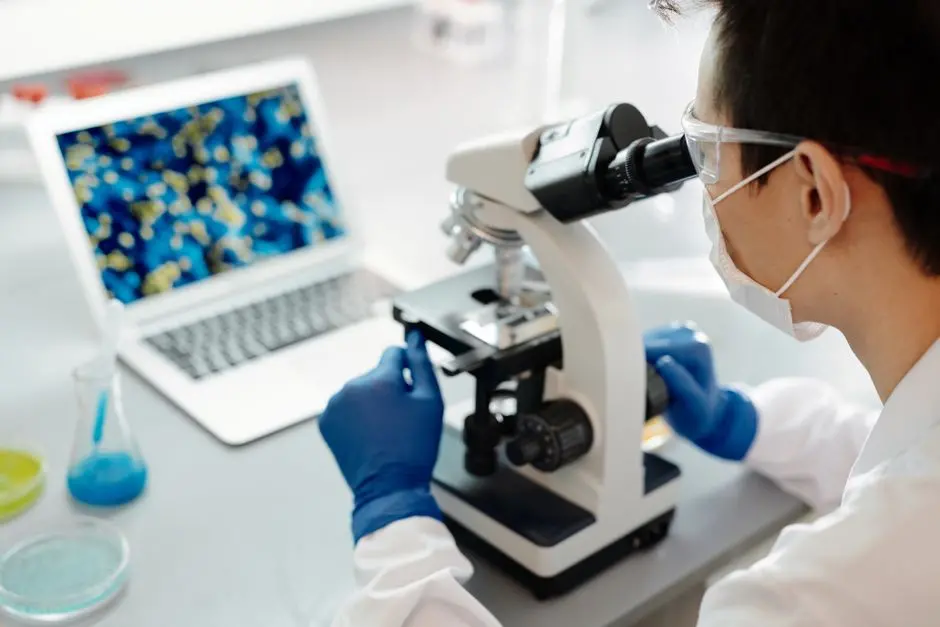
We stand at the precipice of a data revolution in biology. The sheer volume and inherent complexity of biological data, from intricate genomic sequences to vast proteomic landscapes, demand an immediate evolution in our analytical approaches. Manual processing, once a cornerstone, now represents a critical bottleneck, actively hindering discovery and delaying the extraction of vital insights. To truly harness this deluge of information, we must transcend ad-hoc scripts and fragmented solutions. We are compelled to architect robust, scalable, and automated analysis workflows. This authoritative article delves into the strategic imperative of designing these sophisticated systems, transforming raw data into actionable biological knowledge with unparalleled efficiency and precision. We will explore the core principles, essential tools, and insider best practices that empower researchers to streamline their analytical pipelines. Discover how a meticulously crafted workflow not only accelerates research but also elevates data reproducibility and integrity, a critical component for any robust pipeline for processing experimental biological data. Forge a new era of biological discovery; let's master workflow automation together.

Unleash Efficiency: The Strategic Imperative of Automated Bio-Analysis
The biological sciences are undergoing an unprecedented data explosion, a true revolution driven by high-throughput technologies. Consider a single next-generation sequencing run, capable of generating terabytes of genomic, transcriptomic, or epigenomic information. Factor in advanced imaging, single-cell analyses, and large-scale proteomic experiments, and the sheer scale of modern biological datasets renders traditional, manual data processing not merely inefficient, but utterly unsustainable and prone to systemic failure. This 'data deluge' creates a critical bottleneck, actively hindering the pace of discovery, introducing insidious human errors at every step, and making true reproducibility – the bedrock of scientific credibility – a formidable, often elusive, challenge. We must recognize that relying solely on ad-hoc scripts or one-off, artisanal analyses is no longer a viable strategy for rigorous, scalable, and impactful research. The strategic imperative is unequivocal: we must proactively embrace automation. By designing sophisticated, purpose-built, automated analysis workflows, we fundamentally shift from reactive problem-solving to the proactive engineering of biological insights. These meticulously constructed workflows offer profound advantages: they drastically reduce processing times – often by 70% or more for large cohorts, transforming weeks into hours – while simultaneously boosting reproducibility by upwards of 90%, thereby dramatically enhancing the reliability and trustworthiness of all scientific findings. Critically, automation liberates highly skilled researchers from the monotonous, repetitive, and error-prone tasks of data manipulation and preliminary analysis, allowing them to dedicate their invaluable intellect to higher-level interpretation, innovative experimental design, and the incisive critical questioning that truly propels scientific progress. We do not merely process data; we strategically engineer the most direct, efficient, and unimpeachable pathway to accelerated biological discovery. We forge efficiency, we conquer the data mountain, and we propel research forward with clarity and purpose through intelligent automation, establishing a new paradigm for biological inquiry.
Forge Robustness: Fundamental Principles of Workflow Design
A truly robust automated workflow is far more than a mere collection of disconnected scripts; it is a meticulously engineered system, purposefully built upon a bedrock of foundational design principles. First and foremost, we must prioritize modularity. This involves dissecting complex analytical tasks into discrete, self-contained components. Each module is designed to perform a single, well-defined function, which inherently ensures clarity in purpose, drastically simplifies debugging efforts, and facilitates independent development and testing. Building upon this, reusability emerges as paramount. We design modules to be sufficiently generic and parameterizable, enabling their adaptation and deployment across a multitude of different projects or datasets. This approach maximizes the return on our development investment, fosters analytical consistency across diverse investigations, and accelerates future research. Version Control, typically implemented with systems like Git, is unequivocally non-negotiable. It provides an immutable, chronological history of all code changes, meticulously tracks dependencies, enables seamless collaborative development without conflicts, and ensures complete auditability – critically allowing us to pinpoint changes and, if necessary, roll back to previous, validated versions. Data Provenance demands an explicit, systematic tracking of every input file, every configurable parameter, every specific tool version, and every transformation step applied to the data. This establishes an unassailable audit trail from raw data acquisition to final results, which is absolutely crucial for efficient troubleshooting, rigorous validation, and transparent scientific reporting. Furthermore, we implement robust Error Handling and Resilience, proactively anticipating potential failures at each stage. This encompasses gracefully capturing errors, providing clear and informative log messages, and defining intelligent recovery or retry strategies to prevent complete workflow collapse. Finally, Parameterization ensures essential flexibility; we design workflows to accept configurable inputs rather than embedding hard-coded values, making them inherently adaptable to diverse experimental conditions, reference genomes, or analytical thresholds. By embracing and rigorously applying these fundamental principles, we decisively transform brittle, idiosyncratic scripts into resilient, high-performance analytical engines capable of driving consistent, high-impact biological discovery.

Equip the Biologist: Key Tools and Technologies for Automation
To truly conquer the data processing challenge, we must arm ourselves with the right arsenal of tools. At the core of any automated workflow lie Workflow Management Systems (WMS). We champion Nextflow and Snakemake as prime examples. These systems do not just execute commands; they intelligently manage dependencies, handle parallelization across multiple compute cores or nodes, and ensure portability across diverse computing environments—from a local laptop to cloud clusters. Nextflow excels in orchestrating complex, highly parallelized tasks, often favored for large-scale genomics, with its inherent support for cloud execution. Snakemake, built on Python, offers a more Pythonic syntax and integrates seamlessly with existing Python-based analytical pipelines, appealing to those deeply embedded in the Python ecosystem. Crucially, Containerization technologies like Docker and Singularity are game-changers. They encapsulate entire software environments—including all libraries, dependencies, and executables—into isolated, portable units. This eliminates the dreaded 'it works on my machine' syndrome, guaranteeing that your workflow runs identically regardless of the underlying system. Singularity, in particular, is widely adopted in high-performance computing (HPC) environments due to its rootless operation. For custom analytical steps and data manipulation within these workflows, robust scripting languages such as Python (leveraging libraries like Biopython, Pandas, NumPy) and R (with its rich Bioconductor ecosystem) remain indispensable. They provide the flexibility to craft specific analyses that integrate directly into the orchestrated workflow. Lastly, we must consider cloud platforms (e.g., AWS Batch, Google Cloud Life Sciences) which provide virtually limitless, scalable compute resources, enabling workflows to tackle datasets of unprecedented size without local infrastructure constraints.
<p>// nextflow.config</p>
<p>params.input = "./data/*.fastq"</p>
<p>process FASTQC {</p>
<p>    input:</p>
<p>    path reads</p>
<p>    output:</p>
<p>    path "${reads.baseName}_fastqc.zip"</p>
<p>    script:</p>
<p>    """</p>
<p>    fastqc ${reads} -o .</p>
<p>    """</p>
<p>}</p>
<p>workflow {</p>
<p>    Channel.fromPath(params.input)</p>
<p>        | FASTQC</p>
<p>        | view</p>
<p>}</p>
Deploy the Pipeline: Implementation Strategies and Best Practices
Moving from conceptual design to a fully operational analytical pipeline demands a strategic implementation approach. We initiate the construction process by embracing an iterative methodology: start small, build core components, and progressively add complexity. Define clear, unambiguous inputs and outputs for each individual module, ensuring seamless data flow and preventing 'garbage in, garbage out' scenarios. Rigorous testing is paramount at every stage. Implement unit tests for individual components to verify their functionality in isolation. Crucially, conduct integration tests for the full workflow using both synthetic data – to cover edge cases – and small, representative real datasets to ensure all modules interact correctly. This proactive testing minimizes costly surprises downstream. Comprehensive documentation is not an afterthought; it is a fundamental requirement. Provide clear, concise inline code comments for individual scripts. Develop thorough README files for the entire workflow, detailing installation, usage, input requirements, parameter explanations, and output descriptions. This meticulous documentation is vital for maintainability, onboarding new team members, and ensuring future reproducibility. Effective resource management is another cornerstone. We must optimize CPU, RAM, and storage allocation for each workflow step. This involves benchmarking to identify resource-intensive operations and configuring them appropriately, preventing bottlenecks and runaway cloud costs. Design with scaling considerations in mind from the outset; a workflow should seamlessly transition from local execution on a single machine to distributed execution on HPC clusters or cloud platforms, accommodating datasets of increasing size without requiring a complete re-architecture. Finally, foster a culture of continuous refinement. Solicit and integrate user feedback to enhance usability and address emergent needs. By adhering to these implementation strategies, we construct not just functional pipelines, but high-performance, maintainable, and adaptable analytical assets.

Anchor Durability: Validation, Maintenance, and Evolution of Workflows
The longevity and sustained utility of an automated workflow extend far beyond its initial deployment. We must strategically anchor its durability through continuous validation, proactive maintenance, and adaptive evolution. Validation and Quality Assurance (QA) are non-negotiable. This involves rigorous testing against known gold-standard datasets or established benchmarks, ensuring that the workflow consistently produces scientifically accurate and expected results. Implement reproducibility checks, perhaps by re-running the workflow with identical inputs and verifying output hashes. A critical strategy is the adoption of Continuous Integration/Continuous Deployment (CI/CD) practices. By integrating automated testing and deployment into our development lifecycle, every code change to the workflow triggers a suite of tests. This ensures that new features or bug fixes do not inadvertently break existing functionality, safeguarding workflow integrity. Effective monitoring and logging are vital for operational oversight; track workflow execution times, resource utilization (CPU, RAM, storage), and meticulously log all error messages. This proactive approach enables rapid identification and diagnosis of issues, preventing minor glitches from escalating into significant disruptions. Maintenance encompasses regular updates of underlying dependencies, bioinformatics tools, and reference data. Periodically refactor code for clarity, performance, and adherence to evolving best practices. Beware of common anti-patterns like hard-coding paths, neglecting comprehensive error handling, or creating 'black box' steps without clear documentation. Finally, true sustainability demands adaptability and evolution. Workflows are living entities; they must be designed to evolve as new analytical methods emerge, data types diversify, or scientific questions shift. Foster a modular design that facilitates easy replacement or addition of components. By embedding these practices, we ensure our automated workflows remain robust, relevant, and reliable engines of discovery for years to come, consistently delivering high-quality, reproducible biological insights.
Key Takeaways
Key Takeaways: Automated Workflow Design in Bio-analysis
Automation is indispensable for biological data analysis, transforming manual bottlenecks into efficient, reproducible discovery pipelines.
Core Principles: Prioritize modularity, reusability, version control (Git), data provenance, robust error handling, and flexible parameterization.
Essential Tools: Leverage workflow managers like Nextflow or Snakemake for parallelization and portability. Utilize Docker/Singularity for environment encapsulation and Python/R for custom analytical steps.
Strategic Implementation: Build iteratively, rigorously test components and full integration. Document meticulously for maintainability and collaboration. Optimize resource management.
Durability and Evolution: Validate workflows against reference datasets. Integrate CI/CD for automated updates and continuous quality control. Maintain and adapt pipelines to ensure long-term scientific relevance and reliability.
FAQ
-
Why can't I just use custom scripts for my analysis?
Custom scripts are useful for isolated tasks, but they lack the scalability, reusability, and robust error handling inherent in automated workflows. Workflows intelligently manage dependencies, provide parallelization, and ensure reproducibility across environments, crucial for complex biological data. -
How do I choose between Nextflow and Snakemake?
Both are powerful workflow managers. Nextflow excels in cloud and distributed environments, often favored for large-scale, highly parallel genomic analyses. Snakemake, based on Python, offers a more Pythonic syntax and integrates well with existing Python tooling, often preferred by users already proficient in Python. The choice hinges on project scale, team expertise, and infrastructure. -
What is data provenance, and why is it important in biological workflows?
Data provenance tracks the origin and every transformation step of data throughout an analysis. In biology, it's critical for ensuring reproducibility, validating results, and troubleshooting. It builds trust in findings by providing a clear audit trail from raw input to final output. -
How often should I update my automated workflows?
Regularly. Updates should occur when underlying tools, reference data, or dependencies change, or when new biological insights necessitate methodological refinements. Implementing CI/CD practices helps automate testing for these updates, ensuring continued functionality and relevance.