
> Biological Data Analysis > Biological Data Processing Workflows > Forge Reproducible Biological Workflows: A Master Blueprint
Forge Reproducible Biological Workflows: A Master Blueprint
In the current era of cutting-edge biology, where data complexity is exploding, the reproducibility of our analyses is the invisible pillar supporting all valid scientific discovery. Without it, our conclusions float in uncertainty, our research efforts are wasted, and trust in science erodes. The challenge is colossal: how can we ensure that an experiment analyzed today by one team can be precisely replicated and validated tomorrow, by anyone, anywhere? This is a fundamental question that haunts every laboratory, every bioinformatician.
This article lays out a surgical action plan to build unshakeable biological workflows. We will unveil the strategies, tools, and mindsets that will transform your analyses into reliable and transparent data architectures. Together, we will forge the skills to master Pipelines for Processing Experimental Biological Data, equipping you with a roadmap to sidestep common pitfalls and maximize the impact of your research. Prepare to transmute uncertainty into certainty, chaos into systematic order. The future of biological discovery demands this rigor; we will build it.

The Imperative of Reproducibility: Why It's Non-Negotiable
Reproducibility is the cornerstone of any rigorous scientific endeavor. In biology, where datasets are often massive, heterogeneous, and generated by ever-evolving technologies, a lack of reproducibility is a major Achilles' heel. An unreproducible workflow means that a third party (or even yourself a few months later) cannot obtain the same results from the same raw data and code. This negates the verifiability of discoveries, slows down progress, and can lead to erroneous conclusions, sometimes with disastrous clinical or economic implications. We must adopt a proactive stance: reproducibility is not a luxury, but a fundamental ethical and methodological requirement. We are building robust science, not houses of cards.
The consequences of irreproducibility are multiple and severe:
- Wasted Resources: Entire teams can spend months attempting to replicate results without success, squandering time, money, and energy.
- Loss of Trust: When results diverge, the credibility of publications and institutions is undermined, eroding public trust in science.
- Hindrance to Innovation: The inability to build upon previous discoveries slows down the collective construction of knowledge and the emergence of new hypotheses.
- Validation Challenges: It becomes nearly impossible to validate new methods or theories if the foundations upon which they rest are unstable.
We are forging an ecosystem where every step of the analysis is traceable, transparent, and replayable. This commitment to reproducibility amplifies the impact of our research and consolidates the foundation of biological knowledge.
Foundational Pillars: Version Management and Isolated Environments
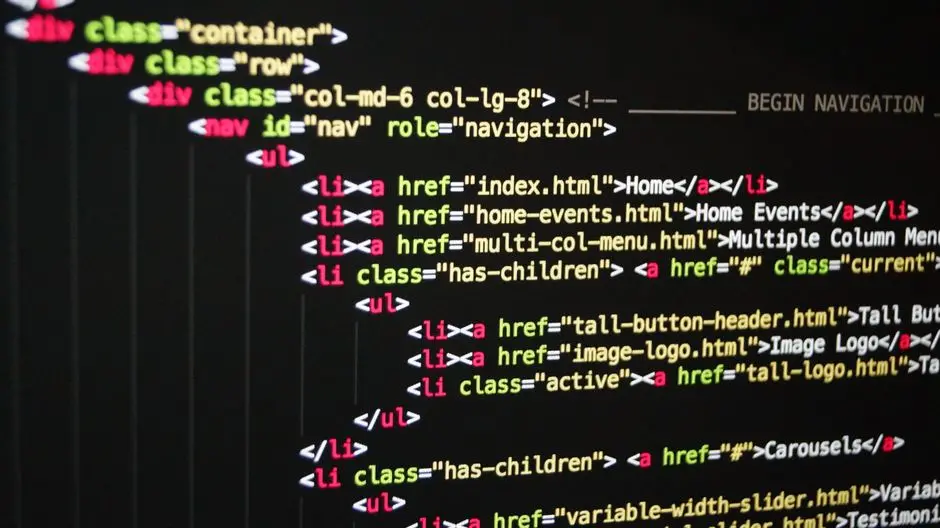
To establish reproducible biological workflows, we must first master two essential pillars: version management and runtime environment management. Version management, with Git as our workhorse, allows us to track every modification made to our scripts, code, and even certain configuration files. It's our time machine, ensuring that each iteration of our analysis is recorded, commented, and reversible. We leave nothing to chance, with each commit being an indelible fingerprint of our progress.
Git Best Practices:
- Atomic Commits: Each commit should encapsulate a single logical change, facilitating tracking and reversion.
- Clear Commit Messages: Let's precisely describe what was done and why.
- Branches: Let's use branches for new features or fixes before merging them into the main branch.
- Shared Repositories: Let's regularly synchronize our work on platforms like GitHub or GitLab.
Runtime environment management, on the other hand, solves the nightmare of software dependencies. How many times has an analysis failed simply because a library was updated or a specific version of a tool is no longer available? Tools like Conda, Docker, or Singularity allow us to encapsulate all software dependencies (libraries, executables, language versions) within an isolated container or virtual environment. Thus, we ensure that the code always runs in the same precise context, regardless of the host system. We eliminate environmental variability, a major factor in irreproducibility. We forge portable environments, exact replicas of our workspace.
<strong>Exemple d'initialisation Git et création d'environnement Conda :</strong><br><br><p><code>git init</code></p><p><code>git add .</code></p><p><code>git commit -m "Initial commit: Project setup"</code></p><br><p><code>conda create -n my_bio_env python=3.9 biopython r-base</code></p><p><code>conda activate my_bio_env</code></p>
Orchestrer l'Analyse : Systèmes de Gestion de Workflows (WMS)
Beyond version and environment management, the backbone of reproducibility lies in the methodical orchestration of each analysis step. This is where Workflow Management Systems (WMS) come into play, transforming disparate scripts into a logical, automated, and robust sequence. Tools like Snakemake, Nextflow, or the Common Workflow Language (CWL) are data architects, enabling us to define precise rules for task dependencies, process parallelization, and error handling. We build self-adapting pipelines, resilient to unforeseen circumstances. A WMS doesn't just execute commands; it understands the structure of your workflow. It knows which input files are needed for each step, which files are produced as output, and how these steps chain together. This deep understanding allows for massive optimizations: a WMS will only re-execute steps whose input files have changed, thus saving valuable computation time. It also automatically manages parallelization on compute clusters or cloud environments, multiplying our analysis power. We delegate execution complexity to focus on science. Choosing the right WMS depends on the complexity of your project, the size of your team, and your computing ecosystem. Snakemake is ideal for bioinformaticians with a Python affinity, Nextflow excels in parallelization on distributed infrastructures with a Groovy syntax, while CWL aims for maximum interoperability across different platforms and teams. Regardless of the tool, the goal is the same: to create an explicit, transparent, and reusable execution plan that transforms complexity into operational clarity. We forge self-documenting and self-executing workflows.

Data Integrity and Documentation: The Unsung Heroes
Best practices for version control and orchestration are useless if the raw data is corrupted or the process is not properly documented. Data integrity is fundamental: raw data must be treated as immutable. Once acquired, it should never be modified. All transformations or filtering must be performed by traceable, versioned scripts, producing new versions of derived data. We also need to implement integrity verification mechanisms, such as checksums, to ensure files are not accidentally altered. Metadata management is equally crucial: each dataset must be accompanied by detailed information about its origin, experimental conditions, and collection methods. This context is what gives meaning to our numbers, a vital map for every bit of information. Documentation, often overlooked, is one of the most powerful pillars of reproducibility. An undocumented workflow is a lost workflow. We must go beyond simply writing comments in code. Every reproducible project must include a comprehensive README file detailing:
- Project Objective: What the workflow aims to achieve.
- Directory Structure: Where to find what.
- Dependencies: Software, versions, and commands to recreate the environment.
- Execution Steps: How to run the workflow from start to finish.
- Data Description: Origin, format, and meaning of each file.
- Results Interpretation: How to read and understand the outputs.
Key Takeaways
The Scientific Imperative
Reproducibility is non-negotiable in computational biology to ensure the validity, transparency, and reliability of discoveries. Its absence leads to wasted resources, loss of trust, and hinders innovation. We are building robust science, demanding that every analysis be traceable and verifiable.
Technical Fundamentals
Mastering Git for script version control and Conda (or Docker/Singularity) for environment management is crucial. These tools ensure that the code and its execution context are always identical, eliminating variability and errors related to software dependencies.
Advanced Orchestration
Workflow Management Systems (WMS) like Snakemake or Nextflow transform scripts into automated and resilient pipelines. They manage task dependencies, parallelization, and execution optimization, enabling the creation of complex analyses with operational clarity.
Integrity & Documentation
The integrity of raw data (immutability, checksums) and metadata is essential. Exhaustive documentation (READMEs, Jupyter Notebooks) is the cornerstone of understanding and reuse. It must detail every aspect of the workflow, from objectives to results, transforming each analysis into a coherent story.
FAQ
-
What is the main difficulty in making a biological workflow reproducible?
The main difficulty often lies in managing the complexity of software dependencies (R versions, Python, specific bioinformatics libraries) and the variability of computing environments. Integrating all these moving parts coherently, while ensuring access to raw data and complete documentation, requires rigorous planning and the adoption of dedicated tools. -
Where to start if my team has no experience in reproducibility?
Start small: the first step is to systematically adopt a version control system like Git for all your scripts and code. Then, gradually introduce environment management with Conda for your critical projects. Once these foundations are mastered, explore workflow management systems like Snakemake to structure your complex analyses.
-
Is the time invested in reproducibility always worth it?
Absolutely. While the initial investment may seem substantial, the long-term benefits are immense. Reproducibility reduces debugging time, facilitates collaboration, speeds up code reuse, enhances scientific validity, and prevents wasted effort. It is an exponential gain in efficiency and credibility. -
What are the essential tools every bioinformatician should master for reproducibility?
- Git: For code version control.
- Conda/Miniconda or Docker/Singularity: For environment and dependency management.
- A WMS (Snakemake or Nextflow): For pipeline orchestration.
- A text editor/IDE: With integrated versioning features.
- Documentation tools: Such as R Markdown or Jupyter Notebooks.