
> Laboratory Techniques > Laboratory Data Processing and Experiment Analysis > Forge Precision: Documenting Biological Experiments for Success
Forge Precision: Documenting Biological Experiments for Success
In the relentless pursuit of scientific truth, meticulous documentation stands as the bedrock of discovery. Without a robust and systematic approach to recording experimental procedures, observations, and results, the integrity of biological research falters, leading to a cascade of irreproducibility, wasted resources, and stalled innovation. Estimates suggest that a significant portion of published research suffers from replication issues, often stemming directly from inadequate documentation. This crisis underscores the urgent need for scientists to adopt rigorous documentation practices.
This definitive guide arms you with the strategies and insights required to elevate your laboratory records from mere notes to an authoritative repository of scientific knowledge. We navigate the critical components, common pitfalls, and advanced techniques that ensure your work is not only reproducible but also poised for impactful collaboration and future breakthroughs. Master the art of precise data capture to confidently progress from experimentation to
analyzing and interpreting experimental data in biology labs.
The Cornerstone of Discovery: Why Meticulous Documentation Propels Biological Science
We initiate our journey into the vital realm of biological experiment documentation by confronting its fundamental imperative. In the dynamic landscape of biological research, the ability to replicate findings is not merely a best practice; it is the absolute cornerstone of scientific validity and progress. Poor documentation lies at the heart of the current reproducibility crisis, where countless hours, significant funding, and promising leads are lost due to an inability to verify or build upon prior work. We must view documentation not as a tedious administrative task, but as an indispensable scientific tool that directly impacts our capacity for innovation and our ethical obligation to the scientific community.
Meticulous records serve multiple critical functions:
- Ensuring Reproducibility: Detailed protocols allow any competent scientist, including your future self, to precisely repeat an experiment and achieve consistent results. This validates findings and builds trust in the data.
- Protecting Intellectual Property: Comprehensive, dated, and signed records are irrefutable evidence for patent applications and intellectual property claims. They establish priority of invention and safeguard your discoveries.
- Facilitating Collaboration and Training: Clear documentation enables seamless knowledge transfer within teams, accelerates the onboarding of new researchers, and fosters effective collaboration across disciplines or institutions.
- Regulatory Compliance and Audit Trails: In fields governed by Good Laboratory Practices (GLP) or other regulatory frameworks (e.g., clinical trials), precise documentation is mandatory for compliance, ensuring data integrity and patient safety.
- Error Identification and Troubleshooting: A detailed record allows for systematic review of experimental failures, pinpointing variables that may have contributed to unexpected outcomes.
We champion a culture where every experimental step, every observation, and every thought process is captured, transforming raw data into an understandable narrative of discovery. This commitment to detail is what distinguishes robust, credible science from fleeting observations.

Architecting Your Research Record: Essential Elements of a Robust Lab Notebook
To build an unimpeachable record, we must standardize the core components of our lab notebooks, whether physical or electronic. This structured approach ensures no critical information is overlooked and that your work narrates a complete, understandable story. Every entry must be conceived with the mindset: could another scientist replicate this experiment exactly, without any additional input from me? If the answer is no, our documentation requires further refinement.
We mandate the inclusion of the following essential elements for every experiment:
- Date and Time: Precise timestamps for every entry, indicating when the work was performed.
- Experiment Title: A clear, concise identifier for the experiment.
- Objective/Hypothesis: Articulate the specific question being addressed or the hypothesis being tested.
- Materials and Reagents: List all chemicals, biological materials (cell lines, antibodies, organisms), equipment, and software used, including supplier, catalog numbers, lot numbers, and concentrations. Detail preparation methods for reagents.
- Methods/Protocols: Provide a step-by-step description of the procedure. Reference Standard Operating Procedures (SOPs) if applicable, noting any deviations. Include incubation times, temperatures, volumes, centrifugations speeds, and specific instrument settings.
- Results: Record all raw data, processed data (or clear references/links to where they are stored), observations (both expected and unexpected), and measurements. Utilize tables, graphs, and images where appropriate.
- Observations and Notes: Document any subjective observations, anomalies, equipment malfunctions, or environmental factors that might influence results. These seemingly minor details are often crucial for troubleshooting.
- Data Analysis and Interpretation: Describe how data was analyzed, including software used, statistical tests applied, and preliminary interpretations.
- Conclusions and Future Directions: Summarize findings relative to the objective and outline next experimental steps.
- Signature/Initials: Each entry should be signed and dated by the experimenter, and ideally, countersigned and dated by a supervisor to validate the entry.
The transition to Electronic Lab Notebooks (ELNs) significantly enhances these capabilities, offering features like automatic timestamping, multimedia integration, robust search functions, and improved security, propelling our documentation into the digital age.
Optimizing Data Flow: Advanced Strategies for Comprehensive Data Capture and Annotation
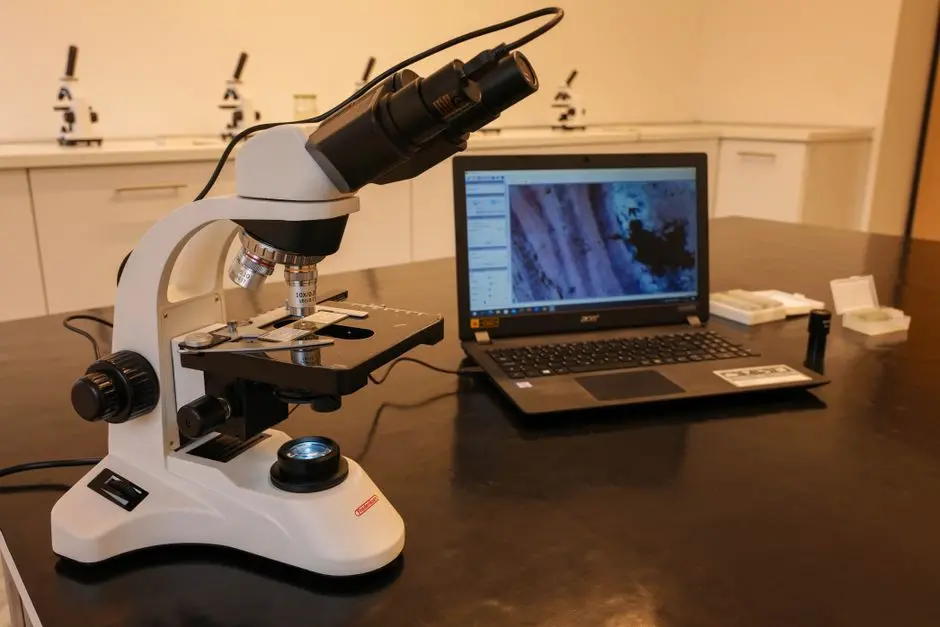
Beyond the fundamental textual records, modern biological experiments generate a torrent of diverse data types. Our strategy must evolve to encompass the meticulous capture and annotation of these complex outputs, ensuring their immediate utility and long-term retrievability. We integrate images, spectra, sequencing reads, and various instrument outputs directly into our documentation ecosystem, transforming disparate files into a cohesive narrative.
Key strategies for optimizing data flow include:
- Metadata Integration: For every piece of data – an image, a chromatogram, a sequencing file – we embed or link comprehensive metadata. This includes acquisition parameters (e.g., microscope settings, HPLC gradient), instrument calibration dates, sample preparation details, and relevant experimental conditions. Metadata makes data findable and understandable without requiring direct access to the original experimenter.
- Standardized Naming Conventions: Implement a strict, logical file naming convention across all data generated. This ensures consistency and facilitates automated organization. A robust scheme might incorporate date, experiment ID, sample ID, and data type. For instance,
is an effective template.YYYYMMDD_ExpID_SampleID_DataType.ext - Version Control for Protocols and Data Analysis Scripts: Protocols evolve, and analysis scripts are refined. We employ version control systems (e.g., Git for code, or dedicated ELN features) to track every modification, ensuring that we can always revert to previous versions and understand the exact methodology or analytical approach used at any given time. This traceability is paramount for debugging and validating results.
- Direct Data Integration: Leverage ELN capabilities to embed or link directly to raw data files, rather than simply transcribing results. This allows for direct access to the primary source, bolstering transparency and confidence in the derived data. For instance, a cell count result in the notebook should link directly to the image or flow cytometry file from which it was derived.
- Contextual Annotation: Every data point or file must be accompanied by explicit notes explaining its significance, any processing steps undertaken, and its relationship to the broader experiment. Without this context, raw data quickly becomes meaningless. Annotate images with scale bars, labels, and specific features of interest.
By mastering these advanced strategies, we transform our documentation from a mere record-keeping exercise into a powerful, intelligent database that accelerates understanding and fuels future innovation.

Ensuring Scientific Legacy: Traceability, Archiving, and FAIR Principles
Our commitment to rigorous documentation culminates in the creation of a scientific legacy: records that are not only accurate but also traceable, accessible, and poised for long-term impact. This requires a proactive approach to data archiving and an adherence to principles that extend the utility of our research far beyond the immediate experimental phase. We strive for a future where our data contributes maximally to the collective scientific knowledge base.
Key considerations for ensuring a lasting scientific legacy include:
- Comprehensive Traceability: Every data point, every observation, and every conclusion must be traceable back to its origin. This involves clear audit trails, electronic signatures, and immutable timestamps within ELNs. We demand that the lineage of all data, from raw acquisition to final processed result, is transparent and verifiable. This is critical for defending scientific claims and ensuring accountability.
- Adherence to FAIR Principles: We embed the FAIR principles – Findable, Accessible, Interoperable, and Reusable – into our data management strategy.
- Findable: Data and metadata are assigned globally unique and persistent identifiers, making them easy to locate.
- Accessible: Data is retrievable by standardized communication protocols, potentially with appropriate authentication and authorization.
- Interoperable: Data uses common formats, vocabularies, and standards, allowing different systems and applications to exchange and interpret it.
- Reusable: Data is richly described with accurate and relevant attributes, along with clear usage licenses, to enable its reuse in future research.
- Strategic Data Archiving: Develop a robust archiving strategy for long-term preservation. This involves moving data from active storage to secure, cost-effective archives (e.g., institutional repositories, cloud storage solutions with redundant backups). Ensure data formats are non-proprietary or widely supported to prevent obsolescence. Establish clear data retention policies.
- Minimizing Common Documentation Pitfalls: We actively avoid common errors such as delayed documentation (recording observations hours or days later), insufficient context, illegible handwriting, missing links to raw data, and using jargon without clear definitions. Immediate, concise, and complete recording is our standard.
By integrating these principles, we transform individual experiments into enduring contributions, empowering future generations of scientists to build upon a foundation of meticulously documented and verifiable knowledge.
Key Takeaways
The 'Why': Reproducibility & Integrity
Meticulous documentation is crucial for validating scientific findings, ensuring reproducibility, protecting intellectual property, and meeting regulatory compliance. It transforms raw data into a credible, understandable scientific narrative.
The 'What': Core Elements of a Lab Notebook
Every experiment requires clear objectives, detailed materials, step-by-step methods (with deviations), raw and processed results, subjective observations, and analytical interpretations. Timestamping and signing entries are paramount.
The 'How': Data Integration & Annotation
Beyond text, integrate diverse data types (images, spectra) with comprehensive metadata. Employ standardized naming conventions and version control for protocols and scripts. Contextual annotation clarifies data significance.
The 'Future': Traceability, Archiving & FAIR
Ensure all data is traceable to its origin. Implement FAIR principles (Findable, Accessible, Interoperable, Reusable) for long-term data utility. Develop strategic archiving plans and avoid common documentation pitfalls like delayed recording.
FAQ
-
What is the single most critical aspect of biological experiment documentation?
The single most critical aspect is contextual completeness combined with immediate recording. Documenting every step, observation, and deviation as it occurs, alongside all relevant parameters (materials, equipment settings, timestamps), ensures that the experiment's narrative is whole and interpretable. Without immediate and comprehensive context, even raw data becomes difficult to understand or reproduce later.
-
How do Electronic Lab Notebooks (ELNs) truly enhance documentation beyond paper?
ELNs revolutionize documentation by offering enhanced searchability, traceability, and multimedia integration. They facilitate collaboration, enforce standardized templates, provide automatic timestamping, and offer robust security features like audit trails and electronic signatures. This dramatically improves data integrity, reduces errors, and streamlines the sharing and long-term archiving of experimental records compared to traditional paper notebooks.
-
How can we ensure our documentation meets regulatory and ethical standards?
To meet regulatory and ethical standards, we must rigorously adhere to Standard Operating Procedures (SOPs), institutional guidelines, and relevant Good Laboratory Practices (GLP) or Good Clinical Practices (GCP) where applicable. Regular training, internal audits, meticulous record-keeping with clear audit trails, and strict version control are essential. Furthermore, ensuring transparency and appropriate data sharing in line with FAIR principles supports ethical data management.