
> Laboratory Techniques > Laboratory Data Processing and Experiment Analysis > Implement Controls: Validate Biological Experiment Outcomes
Implement Controls: Validate Biological Experiment Outcomes
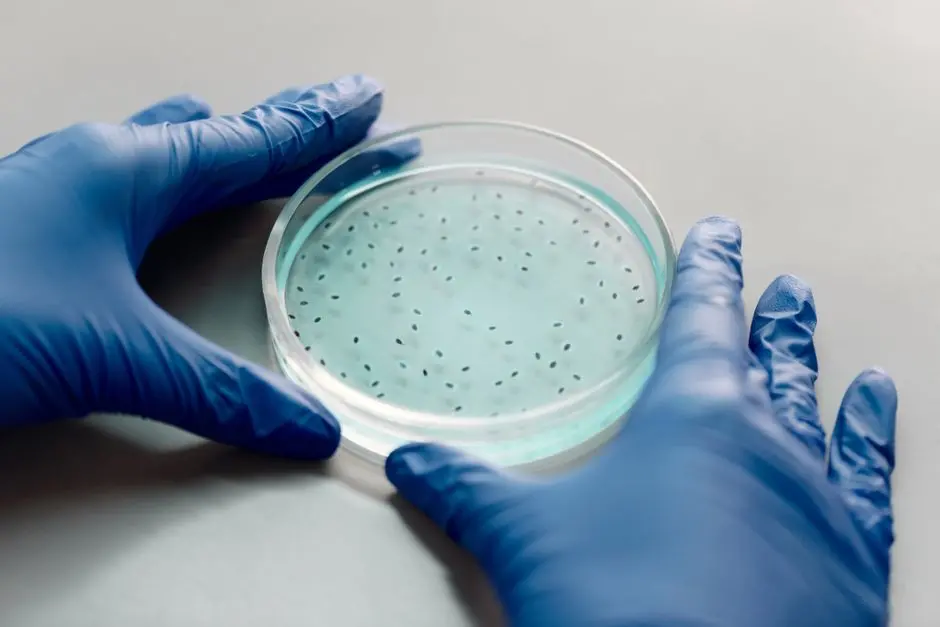
The integrity of biological research hinges on a single, critical element: robust experimental controls. Without meticulously designed controls, our most sophisticated assays yield data as unreliable as a compass without true north. We forge scientific certainty, not mere conjecture. This authoritative resource dissects the indispensable role of controls, transforming your understanding from a theoretical concept to a strategic imperative.
We empower you to navigate the complexities of experimental design, ensuring every conclusion you draw is anchored in undeniable empirical evidence. Mastering the art of experimental controls directly correlates with our capacity for effectively analyzing and interpreting experimental data in biology labs. It is the bedrock upon which meaningful discoveries are built. Uncover the foundational principles and advanced strategies that elevate your research from good to gold standard, delivering insights that withstand rigorous scrutiny.

Anchor Your Data: The Non-Negotiable Core of Experimental Controls
In the relentless pursuit of biological truth, experimental controls are not merely optional additions; they are the foundational pillars supporting every valid conclusion we draw. We define an experimental control as a trial where every variable is held constant, except for the specific independent variable under investigation, which is either absent or set to a baseline condition. This allows us to isolate the precise effect of the independent variable, establishing a clear cause-and-effect relationship.
Our objective is always to maximize internal validity – the extent to which we can confidently state that the observed effect was caused by the independent variable, rather than extraneous factors. Without adequate controls, any observed change could stem from myriad uncontrolled influences, rendering our data ambiguous and our conclusions baseless. We seize control over these variables to ensure that our experimental results reflect true biological phenomena, rather than experimental artifacts or environmental noise. Forge experiments where every outcome is attributable, every discovery verifiable.
This unwavering commitment to controls distinguishes rigorous science from mere observation. We design our experiments to systematically eliminate alternative explanations, building a robust edifice of evidence brick by scientific brick. Every experimental step, every reagent, every environmental parameter demands our attention in the context of control. We champion this proactive mindset, preempting challenges before they compromise our invaluable data.

Positive Controls: Confirming Your Assay's Functional Prowess
A positive control stands as our unequivocal affirmation that an assay is functioning correctly and is capable of detecting the effect we are investigating. We include a positive control to ensure that if the experimental treatment were to produce a specific outcome, our experimental system is competent to detect it. This is not merely a check; it is a critical validation of the entire experimental workflow.
Consider these compelling examples: in a drug efficacy study, a known active compound with a well-established effect serves as a positive control. If this known compound fails to elicit its expected response, we immediately know that our assay system—be it cell culture, reagents, or equipment calibration—is compromised. Similarly, in molecular biology, a plasmid containing a gene known to express a fluorescent protein confirms transfection efficiency, while a standard curve with known concentrations of an analyte validates our quantitative measurement system.
Neglecting a positive control leaves us vulnerable to false negatives, unable to discern whether a lack of effect in our experimental group is due to the absence of a biological response or simply a malfunctioning assay. We validate assay functionality, preventing wasted resources and misdirected research. A robust positive control is our beacon of reliability, confirming the operational prowess of our scientific tools.

Negative Controls: Silencing Noise and Unmasking True Biological Effects
While positive controls confirm functionality, negative controls are our frontline defense against spurious results, contamination, and non-specific effects. We define a negative control as an experimental condition where the independent variable or treatment is intentionally omitted or replaced by an inert substitute. Its purpose is to demonstrate that any observed effect in our experimental groups is indeed due to our intervention, not to background noise, contaminants, or other unintended influences.
Imagine a PCR experiment: a 'no-template control' (NTC) containing all reagents except DNA template tells us if our master mix or water is contaminated with target DNA. In cell culture, a 'vehicle control' applies the solvent used to dissolve our experimental compound without the compound itself, revealing any effects of the solvent. A 'sham surgery' in animal models accounts for the physiological impact of the surgical procedure itself, distinct from the treatment.
Failure of a negative control—for instance, observing an effect where none should exist—signals a critical issue. It could indicate contamination, non-specific binding, or inherent background activity that obscures the true biological signal. We purify our signal, rigorously eliminating confounding factors. This meticulous attention to negative controls is paramount; it allows us to confidently attribute observed changes to our independent variable, empowering us to discern genuine biological phenomena from artifacts.

Specialized Controls: Refining Precision and Reproducibility in Data Acquisition
Beyond the fundamental positive and negative controls, a suite of specialized controls stands ready to elevate the precision, accuracy, and reproducibility of our biological experiments, particularly in quantitative analyses. We demand precision in every measurement, every comparison. These controls address specific sources of variability and error, ensuring our data reflects reality with unparalleled fidelity.
Consider blanks: an instrument blank (e.g., spectrophotometer zeroed with water) removes background signal from the measurement device, while a reagent blank (all reagents without sample) accounts for signal generated by the assay components themselves. Calibration standards are indispensable; they consist of known concentrations of an analyte used to generate a standard curve, allowing us to accurately quantify unknown samples. Solvent controls isolate the effects of a solvent on cells or organisms when the experimental agent requires a vehicle.
Crucially, internal controls, such as 'loading controls' in Western blotting (e.g., detection of housekeeping proteins like GAPDH or β-actin) or 'housekeeping genes' in qPCR, normalize for variations in sample input or extraction efficiency. These internal benchmarks allow us to compare relative changes across samples with confidence, accounting for non-experimental variability. We integrate these specialized controls, turning raw measurements into robust, comparable, and interpretable biological insights, thereby bolstering the foundational strength of our discoveries.

Engineering Robust Control Strategies: Design Principles and Troubleshooting
Engineering a robust control strategy begins at the very inception of experimental design, not as an afterthought. We must proactively identify all potential sources of variability and non-specific effects that could confound our results. This necessitates a comprehensive understanding of the biological system, the assay's mechanisms, and the chosen experimental techniques. We integrate controls as an intrinsic part of our experimental blueprint, anticipating pitfalls and fortifying our data's integrity from the outset.
Common errors in control design include insufficient controls, inappropriate selection (e.g., a 'no-treatment' control instead of a 'vehicle' control when a solvent is used), or poor execution that introduces new biases. We also recognize the importance of blinding; whenever feasible, researchers analyzing data should be unaware of which samples are controls and which are experimental groups, eliminating unconscious bias.
What actions must we take if a control in our experiment does not yield the expected result? A failing control demands immediate investigation. It signifies a fundamental problem with the assay, reagents, equipment, or experimental setup. We must halt the experiment, systematically troubleshoot each component, and rectify the issue before proceeding, ensuring all subsequent data is trustworthy. We preempt pitfalls by meticulous planning and rigorous execution, documenting every control, every observation. This commitment to detail ensures that our research yields reproducible and scientifically unimpeachable findings.
Key Takeaways
Controls as Scientific Bedrock
Controls are not optional; they are the architectural pillars of valid biological experimentation. They permit us to attribute observed outcomes directly to the independent variable, establishing causality and ensuring data integrity. Without them, our data lacks credibility, and our conclusions are open to critical challenge.
Differentiating Control Types for Clarity
We strategically deploy positive controls to confirm assay functionality and detect expected effects, ensuring our system is capable of producing a signal. Negative controls are our vigilance system, unmasking non-specific reactions, contamination, or background noise, thereby purifying the true biological signal from interfering factors.
Precision Through Specialized Controls
Beyond the primary positive and negative, specialized controls—such as blanks, standards, and internal normalizers (e.g., loading controls)—are crucial for quantitative accuracy. They calibrate instruments, reduce measurement error, and ensure data comparability across samples or experimental runs, elevating the reliability of our numerical findings.
Proactive Design and Troubleshooting Imperative
Integrate controls from the experiment's inception, anticipating potential pitfalls and designing strategies to mitigate them. When controls falter, it signals a systemic issue we must resolve before proceeding. This proactive and systematic approach reinforces our commitment to unimpeachable scientific practice and reproducible research.
FAQ
-
Why are experimental controls absolutely essential in biological research?
Controls establish a baseline, isolate variables, and validate that observed effects are genuinely due to the independent variable, not extraneous factors. Without them, we cannot distinguish true biological phenomena from artifacts or noise, rendering our conclusions scientifically unsound. -
Can an experiment incorporate too many controls, becoming overly complex or resource-intensive?
While we prioritize thoroughness, an optimal balance is key. Excessive controls can inflate costs and complexity without adding proportional value. We strategically select controls that address the most significant threats to validity and precision, focusing on relevance and efficiency to maximize scientific yield without unnecessary burden. -
What actions must we take if a control in our experiment does not yield the expected result?
A failing control demands immediate investigation. It signifies a fundamental problem with the assay, reagents, equipment, or experimental setup. We must halt the experiment, systematically troubleshoot each component, and rectify the issue before proceeding. Conducting an experiment with a compromised control undermines all subsequent data and wastes invaluable resources.