
> New Molecule Discovery > Molecular Optimization Strategies > Unleash Molecular Innovation: Bridging In Silico and Lab Synthesis
Unleash Molecular Innovation: Bridging In Silico and Lab Synthesis

In the relentless pursuit of novel therapeutic agents and advanced materials, the landscape of molecule discovery has undergone a profound transformation. Traditional, often serendipitous, approaches are yielding to a powerful new paradigm: the symbiotic integration of computational and chemical optimization. This convergence is not merely an incremental improvement; it is a fundamental shift that empowers us to explore vast chemical spaces with unprecedented precision and accelerate the journey from concept to functional compound.
We stand at the precipice of a new era where digital insights meticulously guide laboratory synthesis, and experimental data rigorously refines predictive models. This article will dissect the intricate mechanisms, unparalleled advantages, and strategic imperative of this combined approach. We illuminate how computational methods act as powerful architects, designing and prescreening potential molecules, while advanced chemical synthesis translates these blueprints into tangible entities for rigorous validation. Prepare to uncover the secrets to more efficient, cost-effective, and impactful breakthroughs, fundamentally enhancing our capacity for improving chemical compounds for biological activity. We will forge a path through the challenges and champion the best practices necessary to master this dual discipline, ensuring your discovery efforts are not just productive, but pioneering.

The New Frontier: Why Fusion is Non-Negotiable in Molecular Discovery
We embark on a journey through molecular discovery, where the fusion of computational and chemical optimization is no longer an option but an absolute imperative. The era of brute-force screening, though historically significant, is increasingly inefficient and resource-intensive for the complexities of modern biological targets. Traditional methods often suffer from high failure rates, extended timelines, and exorbitant costs, pushing the boundaries of what is economically feasible. Our mandate is clear: we must innovate faster, smarter, and with greater precision. This drive has forged the concept of rational drug design, propelling us beyond mere trial-and-error.
Combining computational prowess with chemical synthesis unleashes a synergistic effect that amplifies both speed and efficacy. Computational tools provide an unparalleled capacity to sift through billions of virtual compounds, predict their properties, and prioritize candidates with a high likelihood of success, long before any physical synthesis begins. This targeted approach dramatically reduces the number of compounds that need to be synthesized and tested, slashing costs and accelerating timelines. Furthermore, it expands our reach into previously inaccessible chemical spaces, uncovering novel scaffolds and mechanisms of action. We transition from a broad-net fishing expedition to a highly targeted, intelligent hunt, optimizing every resource and every step of the discovery pipeline. This strategic integration is the bedrock upon which future molecular breakthroughs will be built, ensuring we seize every opportunity to pioneer impactful solutions.
Architecting Molecules Digitally: The Power of In Silico Design and Screening
The computational engine is the initial architect in our integrated optimization strategy, providing the blueprints for molecular innovation. In silico design and screening represent a formidable array of techniques that enable us to predict, prioritize, and even design molecules digitally. We leverage tools such as virtual screening, which can be either structure-based (docking molecules into a target protein's binding site) or ligand-based (identifying compounds similar to known active ones). These methods rapidly identify potential hits from massive databases, drastically narrowing the focus for experimental chemists.
Beyond initial hit identification, computational chemistry extends its reach to predict crucial pharmacokinetic and pharmacodynamic properties. Quantitative Structure-Activity Relationships (QSAR) and Quantitative Structure-Property Relationships (QSPR) models correlate chemical features with biological activity or physical properties, guiding lead optimization. ADMET (Absorption, Distribution, Metabolism, Excretion, Toxicity) prediction further refines candidate selection by anticipating how a molecule will behave in a biological system, mitigating costly late-stage failures. Moreover, molecular dynamics simulations offer insights into protein-ligand interactions over time, revealing conformational changes and binding stability. We utilize these digital insights to make informed decisions, sculpting molecules with desired characteristics and minimizing the risks associated with empirical experimentation. This predictive power is a game-changer, allowing us to proactively engineer success.
From Code to Compound: The Art of Chemical Synthesis and Validation
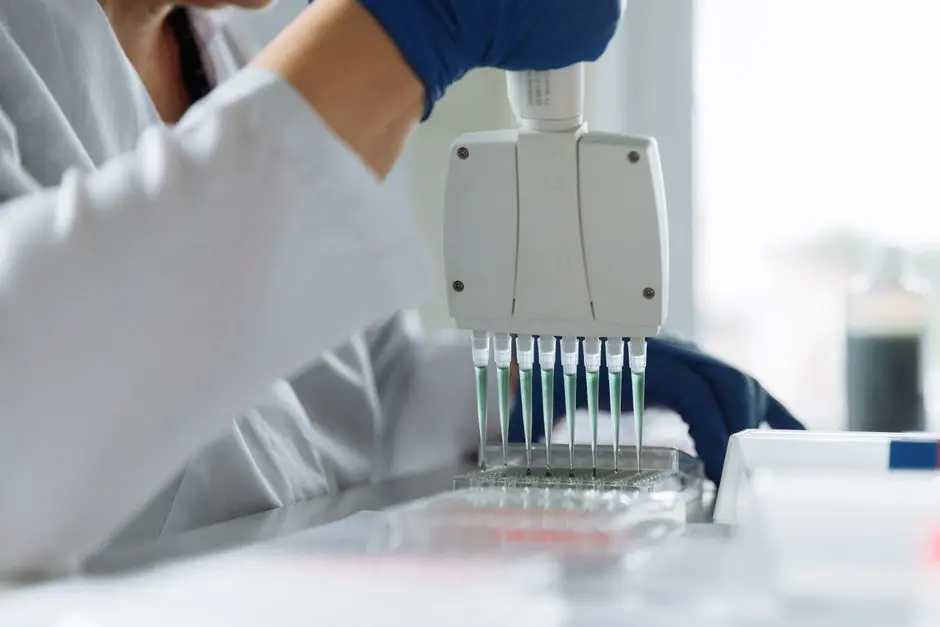
Once computational models illuminate promising molecular structures, the baton passes to the chemical forge, where skilled synthetic chemists transform digital blueprints into tangible compounds. This stage is a testament to the art and science of organic synthesis, requiring meticulous planning and execution. We engage in targeted synthesis, precisely building the desired molecules piece by piece, ensuring structural integrity and purity. For higher throughput, we deploy parallel synthesis techniques, enabling the rapid generation of libraries of related compounds, each subtly different, to explore structure-activity relationships (SAR).
Following synthesis, rigorous characterization techniques such as Nuclear Magnetic Resonance (NMR), Mass Spectrometry (MS), and High-Performance Liquid Chromatography (HPLC) are paramount. These ensure the correct compound has been made and is of sufficient purity for biological evaluation. The next critical step is assay development and high-throughput screening (HTS) of these synthesized compounds against the specific biological target. This experimental validation measures the actual biological activity, potency, and selectivity. The data generated here—precise, empirical, and often quantitative—forms the crucial feedback loop that informs and refines the next iteration of computational design. We rigorously validate every compound, building a robust dataset that underpins our iterative optimization cycle and propels us closer to a biologically active molecule with optimal properties.
The Iterative Symphony: Feedback Loops for Rapid Progression
The true power of combining computational and chemical optimization lies in their dynamic, iterative interplay—a continuous symphony of design, make, test, and analyze (DMTA) cycles. This is where the synergy blossoms. Computational predictions guide the synthesis of a focused set of compounds; these compounds are then rigorously tested in the lab. The resulting experimental data – biological activity, ADMET profiles, physicochemical properties – is not merely an endpoint but a rich source of new information. We feed this data back into our computational models, enriching them, correcting their biases, and refining their predictive accuracy.
For instance, if a computationally predicted molecule shows unexpected toxicity in vitro, we analyze the experimental data to identify the contributing structural features and integrate this knowledge into our QSAR models. This allows subsequent computational iterations to avoid similar liabilities. Conversely, if a synthesized compound exhibits exceptional potency, computational analysis can rapidly explore structural variations around that scaffold to further enhance activity or improve other properties. This continuous feedback loop is powered by robust data management systems and increasingly by machine learning algorithms, which can learn complex relationships from experimental data. It's an agile, self-correcting process that dramatically accelerates lead optimization, ensuring that each iteration builds intelligently upon the last, progressively converging towards the optimal molecule. We conquer complexity through this relentless refinement.

Navigating the Labyrinth: Challenges and Best Practices in Integrated Optimization
While the combined approach offers immense potential, we must acknowledge and strategically overcome its inherent challenges. One critical hurdle is data quality and consistency. Inaccurate or incomplete experimental data fed back into computational models can lead to flawed predictions and misdirected synthetic efforts. We champion rigorous data curation and standardization as a foundational best practice. Another challenge lies in the limitations of computational models themselves; they are approximations of reality and may struggle with novel chemical space or complex biological systems. We mitigate this by employing diverse modeling approaches and always validating predictions experimentally.
Synthetic feasibility is a practical constraint; a computationally ideal molecule might be exceedingly difficult or impossible to synthesize in the lab. Early integration of synthetic chemists' expertise in the design phase is crucial to avoid dead ends. Furthermore, interdisciplinary communication is paramount. Bridging the language barrier between computational scientists, medicinal chemists, and biologists demands structured collaboration. We advocate for dedicated, multidisciplinary teams that foster open dialogue, shared understanding, and clear goal alignment. Implementing rapid prototyping strategies, establishing clear go/no-go decision points, and maintaining a culture of continuous learning and adaptation are non-negotiable best practices. By systematically addressing these challenges, we fortify our integrated optimization efforts and maximize our chances of success.
Future Forging: AI, Quantum Chemistry, and Autonomous Discovery
We gaze into the future, envisioning a landscape where the integration of computational and chemical optimization reaches unprecedented levels of sophistication. The next frontier is being forged by advancements in Artificial Intelligence (AI) and Machine Learning (ML), which are rapidly transitioning from predictive tools to generative ones. We are developing algorithms capable of de novo molecule design, autonomously proposing novel chemical entities with desired property profiles, transcending human intuition. These AI-driven approaches will compress DMTA cycles even further, achieving optimizations that were once unthinkable.
Moreover, quantum chemistry calculations are becoming increasingly accessible, offering unparalleled accuracy in predicting molecular properties and reactivity, especially for complex systems. While computationally intensive, their insights will refine our understanding of intricate interactions at an atomic level, enhancing the precision of our design efforts. The promise of autonomous synthesis platforms and robotics will further streamline the 'make' and 'test' phases, enabling rapid, automated compound generation and high-throughput validation with minimal human intervention. Imagine self-optimizing laboratories where AI designs, robots synthesize and test, and data autonomously refines the next iteration. We are not just dreaming; we are actively building this future. This continuous evolution in technology is poised to redefine the speed and scope of new molecule discovery, making health and innovation futuristically exact and exhilarating. We actively shape this destiny.
Key Takeaways
The Strategic Imperative of Integration
Combining computational and chemical optimization is no longer optional; it is essential for accelerating molecule discovery, reducing costs, and expanding chemical space exploration. This fusion represents a paradigm shift from serendipitous discovery to rational, data-driven design, driving unprecedented efficiency and precision.
The Iterative DMTA Cycle is Key
The power of this integrated approach lies in its iterative Design-Make-Test-Analyze (DMTA) cycle. Computational predictions guide synthesis, experimental results refine models, and this continuous feedback loop drives rapid, intelligent progression towards optimal molecular properties, amplifying success rates.
Overcoming Challenges through Collaboration and Data Quality
Success hinges on addressing critical challenges like data quality, model limitations, and synthetic feasibility. This demands strong interdisciplinary collaboration, robust data management, and continuous experimental validation, ensuring a seamless and effective journey from digital concept to biological impact.
FAQ
-
What are the primary benefits of combining computational and chemical optimization in molecule discovery?
The primary benefits are multifaceted and profound. Firstly, we achieve a significant acceleration of the discovery timeline by dramatically reducing the number of compounds that need to be physically synthesized and tested. Computational tools efficiently filter vast chemical spaces, directing experimental efforts toward the most promising candidates. Secondly, we realize substantial cost savings by minimizing resource-intensive laboratory work and mitigating late-stage failures. Thirdly, this integrated approach expands our capacity to explore novel chemical scaffolds and mechanisms of action, pushing the boundaries of traditional discovery. Finally, it fosters a deeper, data-driven understanding of structure-activity relationships, leading to more rational and successful molecular design.
-
What are the key challenges in integrating computational and chemical approaches, and how are they addressed?
Several key challenges demand our strategic attention. Data quality and consistency are paramount; we address this through robust data management protocols and rigorous experimental validation. Limitations of computational models require a pragmatic approach, utilizing diverse modeling techniques and always confirming predictions experimentally. Synthetic feasibility is crucial; early involvement of synthetic chemists ensures designs are practically realizable. Interdisciplinary communication is overcome by fostering dedicated, collaborative teams and clear communication channels. We tackle these challenges head-on by championing a culture of precision, validation, and continuous learning, ensuring a seamless flow of information and expertise between the computational and chemical domains.