
> Advanced Molecular Biology > Molecular Mechanisms of Gene Expression > Unleashing RNA Polymerase: Decoding DNA into RNA
Unleashing RNA Polymerase: Decoding DNA into RNA
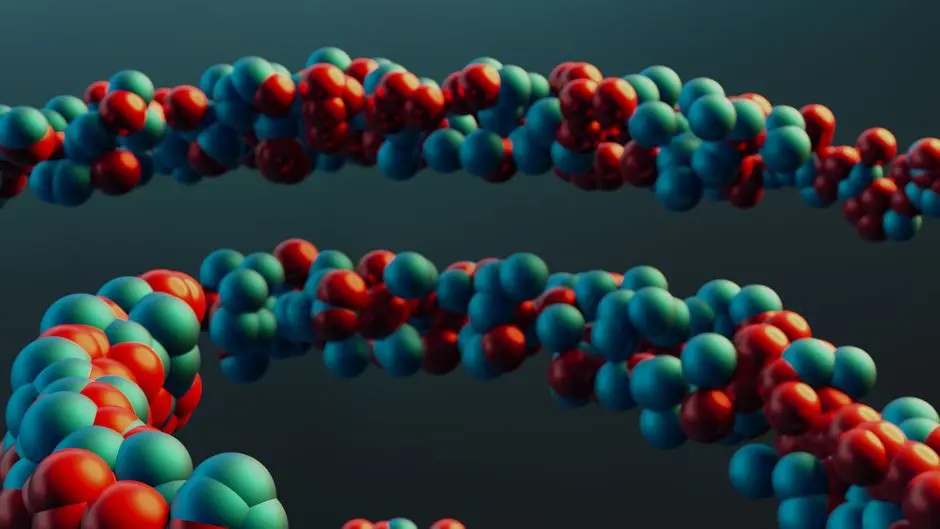
Every living cell orchestrates an intricate ballet of molecular machinery, meticulously transforming genetic blueprints into the functional proteins that define life. This fundamental process, known as gene expression, initiates with the precise act of transcription. Without it, the vast information encoded within our DNA would remain locked away, rendering all biological functions impossible. The fidelity and efficiency of this process are paramount, underpinning everything from cellular differentiation to disease pathogenesis. Prepare to journey into the molecular heart of the cell as we unravel the sophisticated mechanisms by which RNA polymerase, the undisputed maestro of this molecular symphony, meticulously reads DNA sequences and synthesizes RNA. We will dissect each critical stage, from the initial promoter recognition to the ultimate termination of synthesis, equipping you with an unparalleled understanding of this vital cellular operation. This deep dive will not only clarify the foundational steps but also highlight the regulatory nuances that control gene output, illustrating the dynamic journey that transforms genetic information into functional biomolecules. Forge your expertise and command the intricacies of this core biological process, elevating your grasp on life's molecular language.
Initiating the Blueprint: RNA Polymerase and Transcription's Core Stages
We embark on our exploration of transcription by first understanding its central enzyme: RNA polymerase (RNAP). This molecular machine is the undisputed linchpin, translating the genetic code from DNA into RNA. In prokaryotes, a single type of RNAP handles all transcription, a complex enzyme comprising a core enzyme (α2ββ'ω subunits) and a detachable sigma (σ) factor that confers promoter specificity. Eukaryotic systems, conversely, deploy three distinct RNA polymerases: RNAP I synthesizes ribosomal RNA (rRNA), RNAP II is responsible for messenger RNA (mRNA) and some small RNAs, and RNAP III produces transfer RNA (tRNA) and other small RNAs. Our primary focus converges on RNAP II for its critical role in mRNA synthesis and thus protein production, forming the very essence of gene expression.
The process of transcription itself is a highly orchestrated series of events, meticulously divided into three core stages: initiation, where RNAP precisely locates and binds to a gene's starting point; elongation, the rapid synthesis of the RNA transcript using the DNA template; and termination, the controlled disengagement of RNAP from the DNA and release of the nascent RNA molecule. Each stage is tightly regulated, ensuring that genes are expressed at the correct time, in the correct cell, and at the appropriate level. We must recognize that precise control at each step is not merely efficient, but absolutely essential for cellular viability and organismal development. The template DNA strand, running 3' to 5', dictates the sequence of the new RNA molecule, which is synthesized in a 5' to 3' direction. This polarity is non-negotiable, a fundamental rule governing nucleotide addition. The building blocks for this synthesis are ribonucleoside triphosphates (ATP, UTP, CTP, GTP), and their accurate incorporation relies on Watson-Crick base pairing rules (A with U, G with C) with the DNA template. While transcription boasts an impressive fidelity, generally around one error per 10,000 to 100,000 nucleotides, it is notably less accurate than DNA replication. This reflects a biological trade-off: transient RNA molecules tolerate more errors than the permanent DNA blueprint. This foundational understanding sets the stage for a deeper dive into each phase, revealing the intricate molecular dance that powers life.
Mastering Initiation: Promoter Recognition and Open Complex Formation
The initiation phase marks the critical moment when RNA polymerase establishes its foothold and prepares for RNA synthesis. In prokaryotes, the core RNAP enzyme requires a sigma (σ) factor to accurately recognize and bind to promoter regions. These promoters typically contain two conserved sequences: the -35 sequence (TTGACA) and the -10 sequence (TATAAT, often called the Pribnow box), located upstream from the transcription start site (+1). The σ factor guides the RNAP holoenzyme to these specific DNA motifs, forming a closed promoter complex where the DNA remains double-stranded. This precise targeting is paramount; errors here lead to aberrant gene expression. Once bound, RNAP undergoes a conformational change, unwinding approximately 12-15 base pairs of DNA around the -10 region to form an open promoter complex or transcription bubble. This melting of the DNA double helix is energetically favorable, exposing the template strand for base pairing. We recognize this as a crucial step, converting potential energy into kinetic action for synthesis.
In eukaryotes, the initiation process is far more complex, involving a battery of General Transcription Factors (GTFs) to recruit and position RNAP II at core promoter elements like the TATA box (TATAAA). For instance, TFIID, containing the TBP (TATA-binding protein), first binds to the TATA box, forming a platform for subsequent GTFs and RNAP II. This elaborate pre-initiation complex (PIC) formation ensures highly regulated and specific gene activation. After the open complex forms, RNAP initiates RNA synthesis, but often produces short, non-productive transcripts in a process termed abortive initiation. This "stuttering" allows RNAP to stabilize its binding and achieve higher processivity before finally escaping the promoter. The transition from abortive initiation to productive elongation involves a key conformational change and the release of the σ factor in prokaryotes, or phosphorylation of the C-terminal domain (CTD) of RNAP II in eukaryotes. This promoter clearance step signifies RNAP's commitment to synthesizing a full-length RNA, leaving the promoter region behind. Mastering this initial intricate dance is fundamental to understanding gene regulation.

Driving Elongation: RNA Synthesis and Transcript Processivity
Once RNA polymerase successfully clears the promoter, it enters the highly processive elongation phase, a remarkable feat of molecular mechanics. During elongation, RNAP moves steadily along the DNA template strand in a 3' to 5' direction, continuously unwinding the double helix ahead and re-annealing it behind the moving complex. This dynamic unwinding and re-winding creates a transient transcription bubble, typically around 12-17 base pairs long, with a short RNA-DNA hybrid region of about 8-9 base pairs at its core. We must visualize this as a miniature molecular machine constantly adjusting its grip on the DNA and the nascent RNA.
As RNAP advances, it catalyzes the formation of phosphodiester bonds between incoming ribonucleoside triphosphates (NTPs) and the growing RNA chain. These NTPs are selected based on Watson-Crick base pairing with the DNA template strand: adenine (A) pairs with uracil (U) in RNA, and guanine (G) pairs with cytosine (C). The energy for this polymerization is derived from the hydrolysis of the incoming NTPs, releasing pyrophosphate. The RNA molecule grows in a strict 5' to 3' direction, adding new nucleotides to the 3'-hydroxyl group of the preceding nucleotide. This directional synthesis is a cornerstone of molecular biology. While RNAP possesses limited proofreading activity, such as pyrophosphorolysis (reversing polymerization) or hydrolytic editing, its error rate (approximately 1 error per 104 to 105 nucleotides) is significantly higher than that of DNA polymerase. This reflects a biological trade-off: RNA molecules are transient, and errors are generally less deleterious than those in the permanent DNA genome. The enzyme's remarkable processivity, allowing it to synthesize thousands of nucleotides without dissociating, is critical for efficient gene expression. We are essentially witnessing a molecular factory in full swing, converting a DNA blueprint into a functional RNA product with speed and precision.

Concluding Synthesis: Termination Mechanisms and Transcript Release
The culmination of transcription is the termination phase, a precisely regulated process that ensures the complete and accurate release of the newly synthesized RNA molecule and the dissociation of RNA polymerase from the DNA template. Errors in termination can lead to truncated or elongated transcripts, profoundly impacting gene function. In prokaryotes, we primarily encounter two distinct mechanisms: Rho-dependent termination and intrinsic (Rho-independent) termination.
Intrinsic termination relies on specific RNA sequences that form a stable hairpin structure followed by a stretch of 8-10 uracil residues. The hairpin causes RNAP to pause, and the weak A-U base pairing in the subsequent poly-U tract destabilizes the RNA-DNA hybrid, leading to the spontaneous dissociation of the RNA transcript and RNAP. This elegant mechanism is hardwired into the RNA sequence itself. Conversely, Rho-dependent termination involves the Rho protein, an ATP-dependent helicase. Rho binds to a specific C-rich, G-poor "Rho utilization site" (rut site) on the nascent RNA. It then translocates along the RNA towards the RNAP, catches up to the stalled polymerase, and unwinds the RNA-DNA hybrid using its helicase activity, thereby forcing the dissociation of the transcript and enzyme. This mechanism provides an additional layer of control, often activated when translation is uncoupled from transcription.
Eukaryotic termination, particularly for RNAP II, is more intricate and tightly coupled with post-transcriptional processing. For protein-coding genes, termination is often linked to the cleavage and polyadenylation of the nascent mRNA. Specific sequences, such as the polyadenylation signal (e.g., AAUAAA), recruit cleavage and polyadenylation factors. These factors cleave the RNA downstream of the signal, and then poly(A) polymerase adds a tail of approximately 200 adenine nucleotides to the 3' end. While the precise mechanism of RNAP II dissociation is still under active investigation, models suggest that the uncapped RNA downstream of the cleavage site is rapidly degraded by exonucleases (like Xrn2 in mammals), which then "catch up" to and dislodge the stalled polymerase. This multi-layered control ensures transcript integrity and prepares the RNA for subsequent maturation.
Beyond the Core: Regulatory Layers and Post-Transcriptional Nuances
While the core steps of transcription define RNA synthesis, its true power lies in its intricate regulation. We understand that genes are not simply "on" or "off" but are modulated with exquisite precision. In eukaryotes, the complex packaging of DNA into chromatin profoundly influences accessibility to RNA polymerase. Euchromatin, characterized by a more open structure (often linked to histone acetylation), permits transcription, whereas condensed heterochromatin generally represses it. This dynamic interplay between DNA and histone proteins is a primary regulatory frontier.
Beyond chromatin, specific DNA sequences known as enhancers and silencers play crucial roles. Enhancers, often located far from the gene they regulate, bind to transcriptional activators, forming DNA loops that bring these activators into proximity with the promoter and RNAP II complex, boosting transcription rates significantly. Conversely, silencers recruit repressors, dampening gene expression. This long-range control exemplifies the sophisticated molecular architecture governing gene output. A vast array of transcriptional activators and repressors – sequence-specific DNA-binding proteins – interact with RNAP and general transcription factors, or with co-activators and co-repressors, to fine-tune transcription levels. These factors often recruit enzymes that modify chromatin structure, such as histone acetyltransferases (HATs) or deacetylases (HDACs), dynamically altering gene accessibility.
Epigenetic modifications, including DNA methylation (typically repressing gene expression when occurring in promoter CpG islands) and histone modifications (acetylation, methylation, phosphorylation), represent another critical layer of control. These chemical tags do not alter the DNA sequence but dramatically impact gene activity, representing a heritable regulatory code. Furthermore, we recognize that the nascent RNA transcript is not yet a mature, functional molecule. Post-transcriptional processing, including 5' capping, 3' polyadenylation, and crucially, splicing (the removal of introns), are essential steps for mRNA stability, translation efficiency, and ultimately, protein diversity. These processing events often begin co-transcriptionally, intrinsically linked to the RNAP II CTD phosphorylation status. Deciphering these regulatory layers and their experimental dissection (e.g., ChIP-seq for transcription factor binding, GRO-seq for nascent RNA) is where advanced molecular biology truly empowers us to control and understand life's fundamental processes.
Key Takeaways
Transcription's Core Enzyme and Stages
RNA Polymerase (RNAP) is the central enzyme synthesizing RNA from a DNA template. Prokaryotes use a single RNAP for all RNA types, while eukaryotes utilize three distinct RNAPs: RNAP I (rRNA), RNAP II (mRNA, primary focus), and RNAP III (tRNA, small RNAs). Transcription unfolds in three precisely regulated stages: Initiation, Elongation, and Termination.
Initiation: Promoter Binding and Unwinding
Initiation involves RNAP recognizing specific DNA promoter regions. In prokaryotes, the sigma (σ) factor guides RNAP to -35 and -10 sequences. In eukaryotes, numerous General Transcription Factors (GTFs) recruit RNAP II to core promoters like the TATA box. RNAP then unwinds DNA, forming an open promoter complex (transcription bubble), and may undergo abortive initiation before successfully clearing the promoter for productive synthesis.
Elongation: RNA Synthesis and Fidelity
During elongation, RNAP moves along the 3' to 5' DNA template, synthesizing RNA in a 5' to 3' direction. It continuously unwinds DNA ahead and re-anneals it behind, forming phosphodiester bonds between incoming ribonucleotides. While highly processive, RNAP's proofreading mechanisms are less robust than DNA polymerase, tolerating a higher error rate in transient RNA molecules.
Termination: Transcript Release Mechanisms
Termination ensures RNA release and RNAP dissociation. Prokaryotic termination is either intrinsic (RNA hairpin + poly-U tract) or Rho-dependent (involving the Rho helicase protein). Eukaryotic RNAP II termination is complex, often coupled with mRNA cleavage and polyadenylation, where specific signals lead to transcript processing and eventual polymerase dislodgement.
Regulation and Post-Transcriptional Linkages
Transcription is highly regulated by factors like chromatin structure (euchromatin vs. heterochromatin), enhancers and silencers, transcriptional activators/repressors, and epigenetic modifications (DNA methylation, histone modifications). In eukaryotes, the C-terminal domain (CTD) of RNAP II couples transcription with essential post-transcriptional processing events, including 5' capping, splicing, and 3' polyadenylation, critical for functional mRNA.
FAQ
-
What is the primary difference between prokaryotic and eukaryotic RNA polymerase?
The primary difference lies in their complexity and number. Prokaryotes typically utilize a single RNA polymerase, a multi-subunit enzyme that synthesizes all RNA types. Eukaryotes, in contrast, possess three distinct RNA polymerases (RNAP I, II, and III), each specialized for transcribing different classes of RNA molecules, and require a more extensive set of general transcription factors for initiation.
-
How does RNA polymerase ensure high fidelity during transcription without robust proofreading like DNA polymerase?
While RNA polymerase has limited intrinsic proofreading (pyrophosphorolysis, hydrolytic editing), its comparatively higher error rate is tolerated because RNA molecules are typically transient and exist in multiple copies. Errors in RNA are less catastrophic than in the permanent DNA genome. Furthermore, many gene products are robust to minor sequence variations, and redundant transcripts can compensate for individual faulty ones.
-
What is the role of the C-terminal domain (CTD) of RNA Polymerase II in eukaryotes?
The C-terminal domain (CTD) of eukaryotic RNA Polymerase II is a critical regulatory hub, particularly for mRNA synthesis. It undergoes extensive phosphorylation during the transition from initiation to elongation. This phosphorylation acts as a docking site for enzymes involved in mRNA processing, including 5' capping, splicing factors, and 3' polyadenylation machinery, effectively coupling transcription with post-transcriptional RNA maturation.