
Forge Precision: AI-Driven Prediction of Molecular Structures
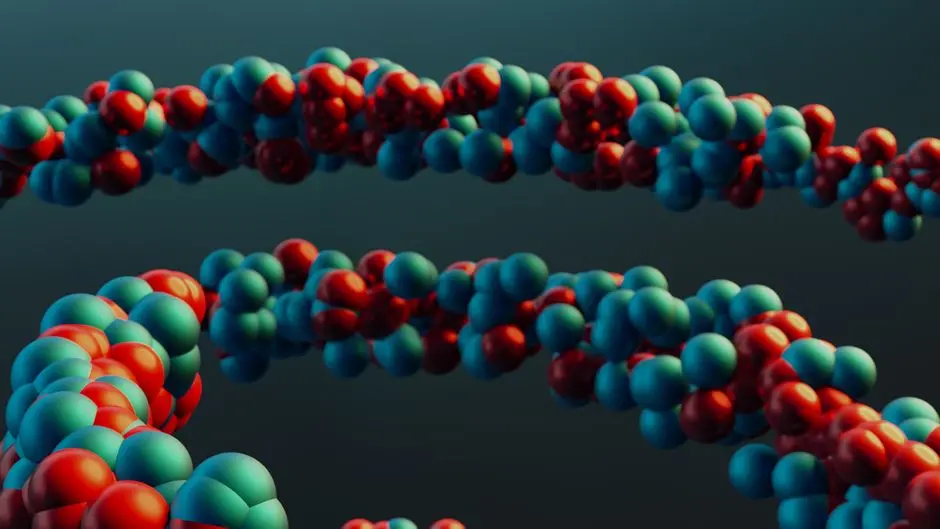
The quest to unravel the intricate three-dimensional architecture of molecules stands as a cornerstone in biology, drug discovery, and materials science. Traditionally, this endeavor demanded laborious, time-consuming, and often resource-intensive experimental techniques like X-ray crystallography, NMR spectroscopy, or cryo-EM. However, the dawn of Artificial Intelligence ushers in a seismic shift, transforming this foundational challenge into a realm of unprecedented speed and accuracy. Imagine accelerating drug development by predicting how a molecule will bind to a target protein, or designing novel materials with atomic precision – this is the transformative power AI brings to molecular structure prediction.
This deep dive reveals how AI, particularly deep learning, is not merely augmenting but revolutionizing our ability to visualize and understand the molecular world. We dissect the core methodologies, explore groundbreaking applications from protein folding to novel compound design, and equip you with insights into the tools and best practices shaping this frontier. Prepare to navigate the complex landscape of AI in structural biology, where computational prowess unlocks biological opportunities. We empower researchers and innovators to harness these cutting-edge techniques, propelling discovery and engineering the future of molecular science.
The Foundational Shift: AI Redefines Molecular Structure Prediction
For decades, deciphering the precise three-dimensional arrangements of atoms within molecules presented one of the grandest challenges in biological and chemical sciences. This understanding is paramount; a molecule's function is inextricably linked to its structure. Consider the active site of an enzyme, the binding pocket of a receptor, or the intricate folds of a protein – their specific shapes dictate their biological roles. Historically, experimental methods, while invaluable, were bottlenecks, demanding significant time, specialized equipment, and purified samples, often proving intractable for complex systems or transient states. We faced a monumental gap between the sheer volume of known sequences (like DNA or protein amino acid chains) and the experimentally determined structures.
Artificial Intelligence emerges as the pivotal force bridging this chasm. It introduces a paradigm where computational models learn complex patterns from existing structural data, enabling them to infer the 3D form of molecules directly from their basic sequences or chemical compositions. This shift is not merely incremental; it is a fundamental re-engineering of how we approach structural biology. We now witness how AI transforms the theoretical into the tangible, providing rapid, scalable, and often highly accurate predictions. This capability is fundamentally changing what AI-based protein structure prediction truly entails, moving it from a niche computational pursuit to a central pillar of modern scientific discovery. We are not just predicting; we are accelerating insight into the very fabric of life. Harnessing these advanced capabilities, we are now adept at predicting molecular structures using AI models with an efficiency previously unimaginable.
Architecting Insight: Deep Learning's Ascent in Structural Biology
At the heart of AI's transformative power in molecular structure prediction lies deep learning, a sophisticated subset of machine learning. Unlike traditional computational methods that rely on hand-crafted features or exhaustive conformational searches, deep learning models learn intricate representations directly from raw data. These models, often structured as artificial neural networks with multiple layers, can discern subtle relationships between a molecule's sequence or chemical graph and its eventual 3D conformation. The brilliance lies in their ability to process vast datasets of known structures and sequences, identifying principles that govern molecular folding and interaction without explicit programming of these rules.
Central to this revolution is the concept of feature extraction, where the network automatically learns to identify relevant structural motifs or interaction energies. For instance, when provided with a protein's amino acid sequence, a neural network can learn to predict angles between residues or distances between atoms. We observe how specialized architectures, such as graph neural networks (GNNs), excel by representing molecules as graphs, where atoms are nodes and bonds are edges. This framework inherently respects the molecular topology. This is precisely how neural networks model 3D molecular structures, translating linear information into spatial reality. We assert that understanding the essence of deep learning based structural modeling is crucial for any modern bioscientist. The careful selection and optimization of the specific neural network architectures for molecular prediction are paramount to achieving highly accurate and robust structural insights, pushing the boundaries of what is computationally possible.
Decoding the Proteome: AI's Mastery over Protein Folding
The protein folding problem, once dubbed one of biology's grandest challenges, seeks to predict a protein's intricate 3D structure from its linear amino acid sequence. This puzzle has captivated scientists for decades, as accurately determining these structures is fundamental to understanding protein function, disease mechanisms, and designing new therapeutics. The advent of AI has dramatically reshaped this landscape, most notably with breakthroughs like AlphaFold, which demonstrated near-experimental accuracy in predicting protein structures. These models leverage vast datasets of known protein sequences and structures, learning the complex physics and biochemistry that dictate how a polypeptide chain folds into its unique functional shape.
We now deploy sophisticated deep learning frameworks, often employing attention mechanisms and transformer architectures, to infer the intricate relationships between residues. This approach illuminates how AI predicts protein structures from sequences, transforming a sequence of letters into a precise spatial blueprint. The effectiveness hinges on the advanced the sophisticated deep learning models used in protein folding prediction that can capture both local and long-range interactions within the protein. Fundamentally, why protein folding prediction matters in biology cannot be overstated; it underpins our capacity to design drugs, engineer enzymes, and comprehend cellular processes. Furthermore, these AI models are not just predicting static structures; they are increasingly revealing how machine learning predicts protein folding pathways, offering dynamic insights into the folding process itself.
Overcoming the Intricacies: Challenges and Dynamics in Protein Folding
While AI has made monumental strides in protein structure prediction, the field is far from fully conquered. We confront inherent complexities that continue to challenge even the most advanced models. One primary hurdle is the sheer conformational space a protein can explore during folding; a protein can theoretically adopt an astronomical number of shapes before settling into its native, functional state. Capturing these dynamic transitions, rather than just the final stable state, requires immense computational power and novel algorithmic approaches. This is where the significant challenges existing in computational protein folding become acutely apparent, extending beyond mere accuracy to encompass the nuances of biological reality.
Furthermore, many proteins exhibit intrinsic disorder or exist in multiple functional conformations, posing a significant test for models trained predominantly on stable, ordered structures. Predicting these dynamic behaviors, including transient interactions and allosteric changes, necessitates models capable of simulating molecular dynamics at unprecedented scales. We are actively developing innovative AI approaches to modeling protein folding dynamics that move beyond static snapshots to capture the fluid, ever-changing nature of proteins in their cellular environment. A critical aspect of this involves predicting protein folding stability with machine learning, which is crucial for understanding protein-protein interactions, drug binding, and disease pathogenesis. These models must not only predict structure but also infer the thermodynamic stability of a given fold under varying physiological conditions.
Amplifying Discovery: Broader Applications and Strategic Advantages
The profound capabilities of AI in molecular structure prediction extend far beyond proteins, catalyzing breakthroughs across numerous scientific disciplines. In drug discovery, for instance, accurate molecular models enable the virtual screening of millions of compounds, predicting their binding affinities to target proteins with unparalleled speed. This dramatically shortens the lead optimization phase, identifying promising drug candidates more efficiently than traditional high-throughput experimental methods. Similarly, in materials science, AI assists in designing novel polymers or catalysts by predicting their atomic arrangements and resulting properties, opening pathways to innovative functionalities.
We assert that the the clear advantages of AI in protein structure prediction are not limited to speed and scale; they encompass an entirely new frontier of hypothesis generation. Researchers can explore previously inaccessible molecular landscapes, test theories rapidly, and prioritize experiments with higher confidence. This strategic foresight significantly impacts how structural prediction robustly supports biological research, empowering studies into disease mechanisms, enzyme engineering, and synthetic biology. Ultimately, how AI accelerates structural biology discoveries by transforming the very workflow, from initial hypothesis to validated insight. We are engineering a future where molecular understanding is no longer a bottleneck but an accelerating force behind innovation.
Ensuring Integrity: Validation, Metrics, and Model Refinement
The power of AI-predicted molecular structures is undeniably transformative, but their utility is inextricably linked to their reliability. We must rigorously assess and validate these predictions to ensure scientific integrity and practical applicability. A critical question for researchers centers on just how accurate are AI models for protein structure prediction—a metric often quantified by comparing predicted structures to experimentally determined ones using metrics like RMSD (Root Mean Square Deviation) or TM-score. These benchmarks provide a quantitative measure of similarity, but true validation extends beyond numerical scores.
We meticulously evaluate what metrics effectively evaluate AI molecular structure predictions to encompass not just global fit but also local accuracy, residue contacts, and stereochemical validity. A structure might be globally similar but contain local clashes or unrealistic bond angles, rendering it biologically irrelevant. Therefore, improving structural prediction accuracy using AI is a continuous cycle of model refinement, data augmentation, and iterative comparison against new experimental data. Furthermore, effective AI approaches to validating molecular models are emerging, where AI itself can be trained to assess the plausibility and quality of a predicted structure, flagging potential errors for human review. Ultimately, how researchers verify AI-predicted structures in practice involves a multi-pronged approach combining computational quality assessment with targeted experimental validation. It is this rigorous verification that solidifies the trust in AI’s predictive capabilities. The continuous feedback loop of experimental validation also informs how AI validates predicted protein structures itself through self-correction and improved training data.
Empowering the Explorer: Tools, Platforms, and Best Practices
Translating theoretical AI advancements into practical biological research requires accessible and robust tools. We empower researchers by identifying and utilizing the leading platforms that democratize access to these sophisticated computational models. The landscape of AI-driven molecular modeling is rapidly evolving, offering a spectrum of solutions from open-source software to cloud-based services with powerful computational backends. Understanding the best AI tools for predicting molecular structures involves evaluating their accuracy, ease of use, computational requirements, and specific applications. Prominent examples include AlphaFold for protein structures, RoseTTAFold, and various commercial packages offering comprehensive molecular modeling suites.
For optimal results, researchers must adopt strategic best practices. This includes understanding the limitations of each model, preparing input data meticulously, and interpreting outputs critically. We emphasize how researchers use AI software for structural biology not just as a black-box operation, but as an informed process integrating domain expertise. Choosing the leading platforms that provide AI molecular modeling solutions often depends on the scale of the project, available resources, and the specific molecular system under investigation. A comprehensive approach to effectively comparing AI-based structure prediction tools is essential to selecting the right fit for your research questions. This involves benchmarking against known structures, assessing features like flexibility modeling, and considering integration with other bioinformatics workflows. We champion a proactive approach, where scientists leverage these tools as powerful allies, driving molecular discovery with unprecedented efficiency and insight.
Key Takeaways
AI's Transformative Role
Artificial Intelligence, particularly deep learning, revolutionizes molecular structure prediction by rapidly and accurately inferring 3D structures from sequences or compositions. This moves beyond traditional, time-consuming experimental methods, accelerating discovery across biology and chemistry.
Deep Learning Core
Deep learning models, especially neural networks and graph neural networks, learn complex patterns from vast datasets to predict molecular conformations. They automatically extract features, modeling 3D structures and dynamic behaviors without explicit programming of rules.
Protein Folding Mastered
AI has made breakthroughs in the protein folding problem, with models like AlphaFold achieving near-experimental accuracy. This capability is critical for understanding protein function, disease mechanisms, and drug design, extending to predicting folding pathways and stability.
Broad Impact
Beyond proteins, AI structure prediction benefits drug discovery (virtual screening, lead optimization), materials science (novel material design), and enzyme engineering, by rapidly generating hypotheses and prioritizing experimental efforts.
Validation is Key
Rigorous validation using metrics like RMSD and TM-score is crucial for AI predictions. Researchers combine computational quality assessment with experimental verification to ensure accuracy, address limitations, and continuously refine models for improved reliability.
Accessible Tools
A growing ecosystem of user-friendly AI tools and platforms (e.g., AlphaFold, commercial suites) makes sophisticated molecular modeling accessible. Best practices involve informed tool selection, meticulous data preparation, and critical interpretation of results to maximize research impact.
FAQ
-
What kind of molecules can AI predict structures for?
AI models are highly versatile and can predict structures for a wide range of molecules, including proteins (from their amino acid sequences), small organic molecules, nucleic acids (DNA/RNA), and even complex molecular assemblies. The capability depends on the specific model and the data it was trained on. -
How do AI predictions compare to experimental methods?
In many cases, AI models, particularly for protein structures (e.g., AlphaFold), can achieve accuracy comparable to low-resolution experimental methods, and sometimes even close to high-resolution ones. While experimental validation remains the gold standard, AI provides rapid, high-throughput predictions that complement and accelerate experimental efforts, especially for difficult-to-crystallize proteins. -
What are the limitations of AI in molecular structure prediction?
Current limitations include challenges with predicting dynamic molecular behaviors (e.g., conformational changes, intrinsically disordered regions), accurately modeling protein-ligand interactions with high precision for drug design, and predicting structures for novel molecular types for which limited training data exists. Computational resources can also be a significant constraint for large or highly flexible systems. -
Is programming knowledge required to use AI molecular prediction tools?
Not necessarily. Many AI molecular modeling platforms offer user-friendly graphical interfaces (GUIs) or web-based services that abstract away the underlying code, making them accessible to biologists and chemists without extensive programming skills. However, a basic understanding of computational concepts can enhance data preparation and result interpretation. -
How can AI-predicted structures be used in drug discovery?
In drug discovery, AI-predicted structures enable virtual screening of potential drug candidates, prediction of binding sites and affinities, rational drug design by modifying molecules for optimal interaction, and understanding resistance mechanisms. This significantly reduces the time and cost associated with identifying promising drug leads.