
> AI in Biology > AI for Molecular Structure Prediction > Unlock Biology's Secrets: Why Protein Folding Matters
Unlock Biology's Secrets: Why Protein Folding Matters
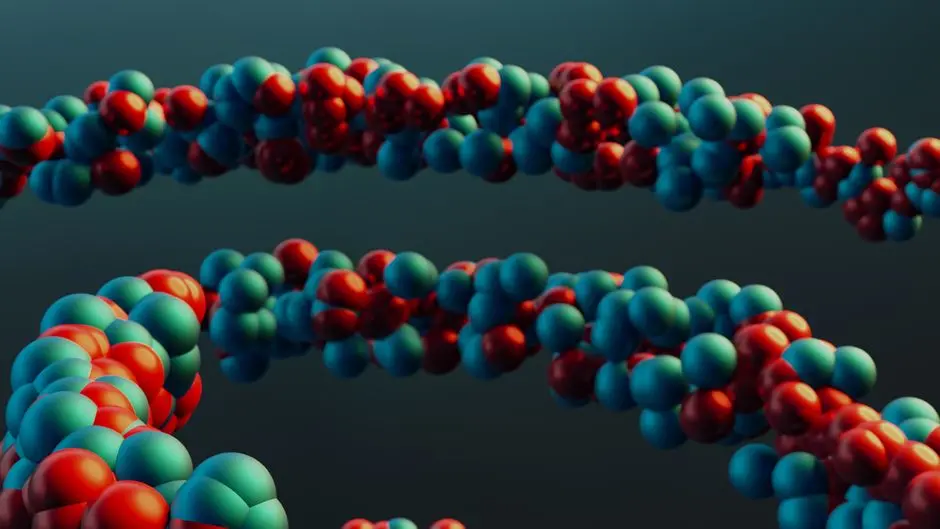
The intricate dance of life’s machinery hinges on a fundamental principle: a protein’s function flows directly from its three-dimensional structure. Yet, the path from a linear sequence of amino acids to this complex, functional fold has remained one of biology’s most profound and enduring mysteries. This article meticulously unpacks the critical role of protein folding prediction, illuminating why deciphering this enigma is not merely an academic pursuit but a powerful leverage point for scientific advancement.
We delve deep into the profound biological implications, from understanding disease mechanisms to revolutionizing drug discovery and bioengineering. Discover how the ability to predict these molecular architectures acts as a catalyst, accelerating breakthroughs across medical science, agriculture, and industrial biotechnology. By mastering the art of predicting molecular structures with advanced AI, we unlock unprecedented opportunities to design novel therapeutics, engineer highly efficient enzymes, and even develop next-generation biomaterials. Prepare to explore why this foundational challenge, now increasingly tackled by artificial intelligence, is indispensable for forging the future of biological innovation.
The Central Dogma's Unresolved Mystery: The Protein Folding Problem
At the very heart of molecular biology lies the Central Dogma, a pathway dictating how genetic information flows from DNA to RNA, and finally to protein. While gene sequencing has become routine, unlocking the subsequent, critical step – how a linear chain of amino acids spontaneously folds into a precise, functional three-dimensional structure – remains a monumental intellectual and computational challenge. This is the protein folding problem, initially articulated by Cyrus Levinthal in 1969, who noted that a protein couldn't possibly sample all possible conformations to find its native state within biologically relevant timescales. His paradox highlighted the existence of a 'folding funnel' or specific pathways that guide proteins efficiently to their functional shape.
The sheer complexity of this task is staggering. A typical protein, comprising hundreds of amino acids, possesses an astronomical number of theoretical conformations. Consider a small protein of 100 amino acids; if each residue could adopt just three orientations, there would be 3^100 possible structures – a number far exceeding the number of atoms in the observable universe. Deciphering the underlying biophysical rules governing this self-assembly process is crucial because a protein's function, its interaction with other molecules, its stability, and even its degradation are inextricably linked to its precise spatial arrangement. Errors in this folding process lead to devastating consequences, underscoring the imperative of understanding and predicting these intricate molecular architectures.
Profound Biological Ramifications: Function, Disease, and Evolution
We assert unequivocally: protein structure dictates function. Every enzymatic reaction, every signal transduction event, every immune response, and every structural component within a cell relies on proteins adopting their correct three-dimensional form. When this intricate folding process goes awry, the biological consequences are severe, often catastrophic. Misfolded proteins can aggregate, forming insoluble clumps that disrupt cellular processes and lead to a spectrum of debilitating neurodegenerative diseases.
Consider the insidious progression of Alzheimer's, Parkinson's, and Huntington's diseases, where the accumulation of misfolded proteins like amyloid-beta, alpha-synuclein, and huntingtin, respectively, is a hallmark pathology. Cystic fibrosis, a genetic disorder, arises from a mutation that causes the CFTR protein to misfold, preventing it from reaching the cell surface to regulate chloride ion transport. Our ability to predict protein folding not only deepens our fundamental understanding of these molecular pathologies but also furnishes us with critical insights into how to intervene. By comprehending the precise structural defects, we forge pathways for targeted therapeutic development, seeking to stabilize correct folds or prevent harmful aggregation.
Beyond disease, accurate folding prediction unlocks doors to profound evolutionary insights. Comparing protein structures across species reveals conserved functional domains and evolutionary relationships far more clearly than sequence comparisons alone. This structural perspective allows us to trace the origins of life's molecular machinery, understand adaptation, and predict the function of novel proteins found in unexplored organisms, pushing the boundaries of our biological knowledge.
Catalyzing Innovation: Drug Discovery and Bioengineering
The capacity to predict protein structures acts as a transformative catalyst across myriad fields, most notably in rational drug design and advanced bioengineering. In pharmaceutical development, the traditional trial-and-error approach to drug discovery is notoriously time-consuming and expensive. Knowing the precise three-dimensional structure of a disease-related protein – a target – allows us to design small molecules or biologics that bind specifically and effectively to it, either inhibiting its harmful activity or enhancing its beneficial function. This structure-based drug design accelerates the identification of lead compounds, optimizes their binding affinity, and minimizes off-target effects, fundamentally changing how we approach therapeutic development.
Furthermore, protein folding prediction is indispensable for vaccine development, enabling the design of antigens that elicit robust immune responses by mimicking native pathogen proteins. In the realm of bioengineering, we leverage this predictive power to create novel proteins with tailored properties. Imagine engineering enzymes for industrial processes – breaking down plastics, producing biofuels, or synthesizing pharmaceuticals with unprecedented efficiency and specificity. This involves modifying existing protein structures or even designing entirely de novo proteins from scratch to perform specific tasks.
We actively optimize agricultural yields by engineering plant proteins for enhanced nutrient uptake or pest resistance. We forge novel biomaterials with superior strength, biocompatibility, or biodegradability. The potential applications are vast and diverse, demonstrating that accurate protein folding prediction is not just about understanding nature, but about actively engineering it to address global challenges and unleash new technological capabilities.

The AI Revolution: Deciphering the Folding Code
For decades, the protein folding problem resisted computational solutions, often deemed one of the grand challenges of biology. Experimental methods like X-ray crystallography and cryo-electron microscopy provided invaluable structures, but their limitations in throughput and sample requirements left a vast chasm between known sequences and determined structures. This landscape dramatically shifted with the advent of artificial intelligence, particularly deep learning. The biennial Critical Assessment of protein Structure Prediction (CASP) competition served as a crucial benchmark, and in CASP13 (2018), DeepMind’s AlphaFold team achieved a breakthrough, marking a pivotal moment in structural biology.
AlphaFold, and subsequent iterations like AlphaFold2, harnessed sophisticated neural network architectures trained on vast datasets of known protein sequences and structures. These models learned the intricate relationships between amino acid sequences and their resulting three-dimensional folds, effectively deciphering the elusive 'folding code.' AlphaFold2’s accuracy, approaching that of experimental methods for single protein domains, was nothing short of revolutionary. This AI triumph dramatically accelerates scientific discovery by providing reliable structural models for proteins that were previously intractable, offering researchers a powerful computational microscope.
The implications are profound. Researchers no longer face multi-year delays waiting for experimental structure determinations. Instead, they can obtain high-confidence predictions within hours or days, enabling rapid hypothesis generation, targeted experimentation, and a fundamentally faster pace of scientific inquiry. We have moved from a laborious, often bottlenecked process to an era where structural insights are becoming democratized, catalyzing advancements across biology and medicine at an unprecedented rate.
Navigating the Frontier: Remaining Challenges and Future Vistas
While AI has undeniably revolutionized protein folding prediction, the frontier still presents formidable challenges. The current generation of AI models excels at predicting static, single-domain protein structures. However, biology is inherently dynamic. Proteins are not rigid entities; they breathe, move, and undergo conformational changes crucial for their function. Predicting these dynamic motions, often involving complex allosteric transitions or disordered regions, remains an active area of research. Furthermore, many biological processes depend on the intricate interactions within multi-protein complexes, where predicting the assembly and interface of multiple interacting proteins introduces an additional layer of complexity.
Post-translational modifications (PTMs), such as phosphorylation or glycosylation, profoundly alter protein function and structure, yet are often not explicitly captured by current sequence-to-structure models. Integrating these modifications and their effects into predictive frameworks represents a crucial next step. We must also continue to refine models to account for the cellular environment, which can influence folding and stability, moving beyond idealized in-silico conditions. The synergy between computational prediction and cutting-edge experimental validation remains paramount. AI-generated structures serve as powerful starting points, but experimental techniques will always be essential for confirming predictions, exploring dynamics, and resolving ambiguities.
The future of protein folding prediction lies in holistic, multi-scale modeling – combining sequence-based predictions with biophysical simulations, experimental data integration, and the capacity to predict interactions within complex biological systems. We are forging a future where AI not only predicts structures but truly understands the intricate, dynamic symphony of life at the molecular level, unlocking entirely new paradigms for biological design and intervention.

Practical Mastery: Leveraging Folding Predictions in Research
Harnessing the power of AI-driven protein folding predictions demands practical mastery and a discerning eye. While tools like AlphaFold provide remarkable accuracy, they are not infallible, and their outputs require judicious interpretation. A common pitfall for new users is treating every prediction as absolute truth without critical evaluation. We must understand the confidence metrics provided by these tools (e.g., pLDDT scores) and integrate them with existing biological knowledge. A low confidence score in a particular region might indicate intrinsic disorder, flexibility, or an area requiring further experimental validation, not necessarily an incorrect prediction.
Best practices for leveraging these predictions involve a multi-pronged approach. First, always validate key structural features against available experimental data, even if it’s from homologous proteins. Second, use predictions to guide targeted mutagenesis experiments, informing which residues are critical for function or stability. Third, integrate predicted structures into molecular docking simulations for drug design or protein-protein interaction studies. Fourth, remember that these models typically predict the most stable conformation in isolation; for understanding dynamic processes or interactions, consider applying molecular dynamics simulations starting from the predicted structure.
We optimize our research by treating AI predictions as powerful hypotheses generators, not definitive answers. This approach accelerates discovery by narrowing down vast experimental spaces. Furthermore, we actively explore emerging tools that extend beyond single-chain predictions to model complexes (like AlphaFold-Multimer) and predict dynamics. By strategically combining computational insights with rigorous experimental validation, we forge a robust pipeline for unlocking new biological understanding and driving innovative solutions.
Key Takeaways
The Core Challenge: Protein Folding
Proteins' 3D structure dictates function, yet predicting this fold from amino acid sequence is one of biology's hardest problems due to the immense number of possible conformations (Levinthal's paradox). Understanding this self-assembly is crucial because misfolding leads to disease.
Biological and Medical Impact
Accurate protein structures are vital for understanding cellular processes. Misfolded proteins are implicated in severe diseases like Alzheimer's, Parkinson's, and cystic fibrosis. Prediction aids in disease mechanism elucidation, targeted drug development, and offers profound evolutionary insights.
Innovation Catalyst: Drug Design & Bioengineering
Protein folding prediction transforms drug discovery by enabling rational, structure-based design, accelerating target identification, and optimizing therapeutics. It is also key for bioengineering, allowing the design of novel enzymes for industry, agriculture, and biomaterials with tailored properties.
AI's Breakthrough: The AlphaFold Era
Deep learning models like AlphaFold have revolutionized the field, achieving near-experimental accuracy in predicting protein structures. This AI triumph dramatically accelerates research by providing rapid access to structural models, enabling faster hypothesis generation and experimental design across biology and medicine.
Future Frontier: Dynamics & Complexes
Despite AI's success, challenges remain: predicting protein dynamics, multi-protein complexes, and the effects of post-translational modifications. The future involves integrating AI with biophysical simulations and experimental data for a holistic understanding of molecular life, pushing beyond static single-protein predictions.
Practical Application: Critical Validation
Leveraging AI predictions requires critical evaluation and validation. Users must understand confidence metrics, integrate predictions with experimental data, and use them as powerful hypothesis generators. Combining computational insights with rigorous experimental validation is paramount for robust scientific advancement.
FAQ
-
What is the protein folding problem?
The protein folding problem refers to the challenge of predicting the three-dimensional structure of a protein from its linear sequence of amino acids. Despite proteins spontaneously folding into their functional shapes, the vast number of possible conformations makes computational prediction incredibly complex.
-
Why is protein folding prediction important for drug discovery?
Accurate protein folding prediction is crucial for rational drug design. Knowing the precise 3D structure of a disease-related protein (the target) allows researchers to design small molecules or biologics that specifically bind to and modulate its activity, accelerating the development of new therapies and vaccines.
-
How has AI, like AlphaFold, changed protein folding prediction?
AI, especially deep learning models like AlphaFold, has revolutionized the field by achieving unprecedented accuracy in predicting protein structures. These models, trained on vast datasets, can generate high-confidence structural models within hours, dramatically accelerating scientific discovery and reducing reliance on time-consuming experimental methods.
-
What are the limitations of current AI protein folding predictions?
Current AI models primarily predict static structures of single proteins. Key limitations include accurately modeling protein dynamics, predicting multi-protein complexes, and the effects of post-translational modifications. These aspects remain active areas for further research and development.
-
Can protein folding prediction help in understanding diseases?
Absolutely. Many diseases, particularly neurodegenerative conditions like Alzheimer's and Parkinson's, are linked to protein misfolding and aggregation. Predicting protein folds helps us understand the molecular basis of these diseases, identify structural defects, and design strategies to correct misfolding or prevent harmful aggregations.