
> AI in Biology > Computational Modeling and Simulation > Advance Biology: AI-Powered Physics Simulations in Research
Advance Biology: AI-Powered Physics Simulations in Research
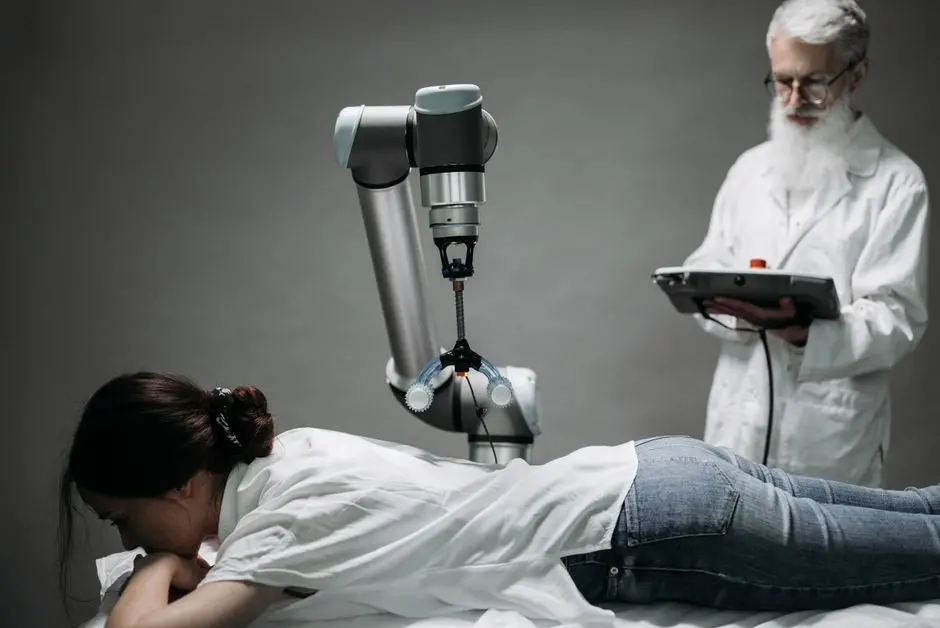
The frontier of biological discovery is no longer solely in wet labs; it is profoundly reshaped by computational power. We are witnessing an unprecedented acceleration, driven by the symbiotic integration of Artificial Intelligence and physics simulations. This synergy unlocks biological mechanisms previously opaque, allowing us to model complex systems with astonishing precision and scale.
This article embarks on an expedition into the heart of cutting-edge research, spotlighting compelling examples where AI-driven physics simulations are not just augmenting, but fundamentally transforming our understanding of life. We will dissect the methodologies, illuminate the breakthroughs, and chart the strategic implications for fields ranging from drug discovery to personalized medicine. Prepare to forge a deeper understanding of how these innovative approaches are crucial to advancing
the advanced AI driven modeling of biological and molecular systems, propelling us toward a future of predictive and proactive biological insight. We will explore the challenges overcome and the new horizons revealed, empowering you with the knowledge to navigate this transformative landscape.
Forging New Frontiers: The Synergistic Power of AI and Physics in Biology
The intersection of Artificial Intelligence and physics simulations has ignited a revolution across biological research. Traditional physics simulations, while foundational, often grapple with immense computational costs and the inherent complexity of biological systems. They require precise initial conditions, extensive parameterization, and can be notoriously slow for systems with vast degrees of freedom or over extended timescales. This is where AI intervenes, not merely as an optimizer, but as a transformative force.
We are no longer limited to brute-force computations. AI, particularly machine learning, enables the development of hybrid models that combine the mechanistic rigor of physics with the predictive power of data-driven approaches. We observe AI learning intricate force fields from quantum mechanical calculations, effectively speeding up molecular dynamics simulations by orders of magnitude. Furthermore, AI algorithms identify crucial reaction coordinates, enhance sampling techniques, and even interpret complex simulation outputs, revealing hidden patterns that human analysts might miss. This profound integration allows us to explore vast conformational spaces, predict protein folding dynamics, and understand drug-target interactions with unprecedented efficiency and accuracy. Our ability to model biological phenomena, from atomic interactions to cellular behaviors, is expanding exponentially, ushering in an era of predictive biology.
Accelerating Molecular Dynamics: AI's Impact on Protein Folding and Drug Discovery
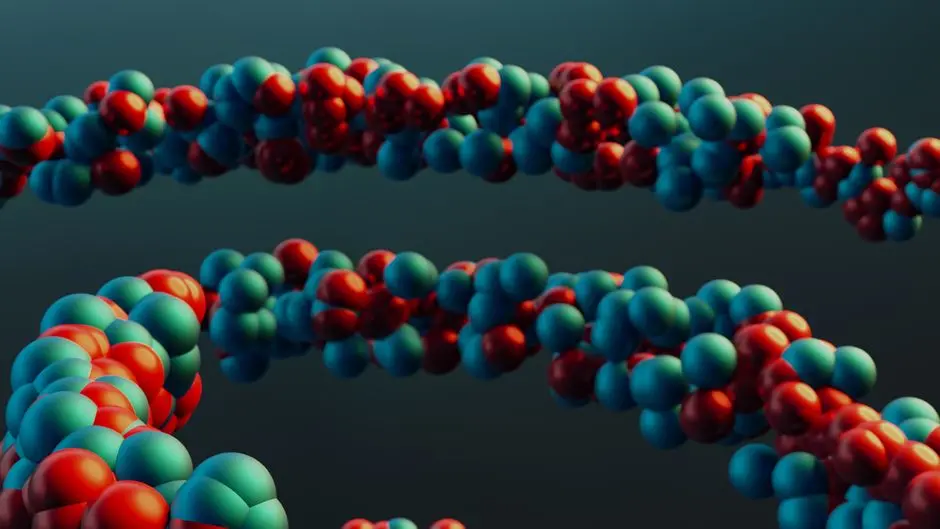
Molecular Dynamics (MD) simulations are cornerstones in understanding protein dynamics, ligand binding, and enzymatic reactions. However, simulating biological processes often requires timescales far beyond what traditional MD can achieve. Here, AI acts as a critical accelerator. We leverage machine learning to parameterize force fields with higher accuracy and efficiency than classical methods. Instead of relying on empirical parameters, AI learns from quantum chemistry calculations to derive potentials, enabling more accurate representations of interatomic forces.
Consider protein folding: a classic grand challenge in biology. While AlphaFold primarily predicts structures, its underlying principles resonate with AI-enhanced simulations. AI-driven MD employs techniques like enhanced sampling algorithms (e.g., metadynamics, variational autoencoders) guided by neural networks to overcome energy barriers, rapidly exploring conformational landscapes. This allows us to simulate folding events or ligand unbinding processes that would otherwise take microseconds to milliseconds – effectively compressing simulation time. In drug discovery, AI predicts binding affinities, identifies cryptic binding sites, and simulates drug-target residence times, moving beyond static snapshots to dynamic interactions. We refine lead compounds, predict drug resistance mechanisms, and optimize therapeutic interventions with a precision unattainable just a decade ago. For example, AI models predict how specific mutations alter protein stability or drug binding, guiding experimental design and clinical strategies.
Unveiling Cellular Complexity: AI-Physics in Cell-Level Dynamics and Tissue Modeling
Moving beyond individual molecules, AI-powered physics simulations illuminate the intricate dynamics at the cellular and tissue levels. Understanding processes like cell migration, division, differentiation, and collective behavior within tissues requires integrating multiple physical forces and biological signaling pathways. Traditional computational models often struggle with the sheer number of interacting components and the emergent properties arising from these interactions.
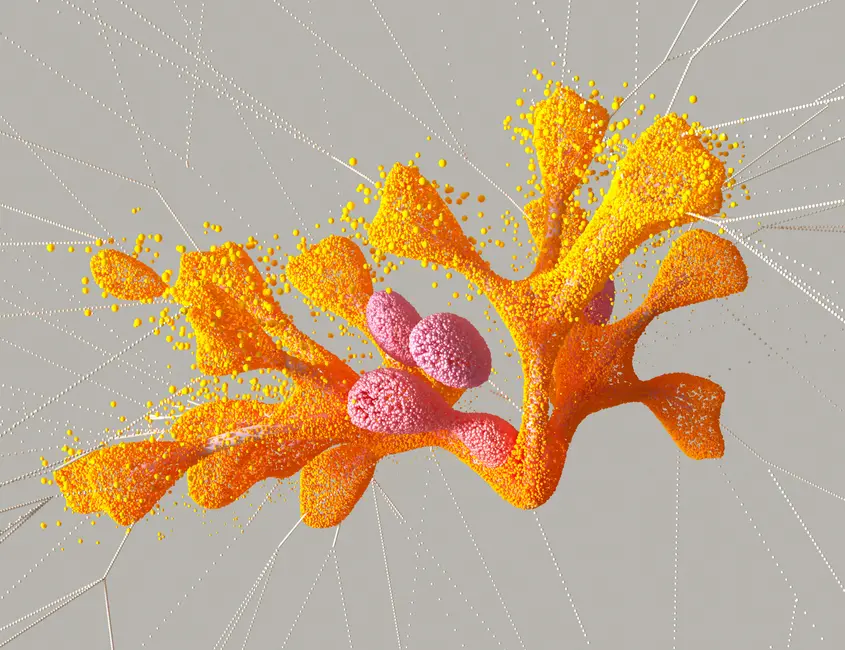
We employ AI to develop agent-based models and continuum models that capture the physics of cell-cell adhesion, cell-matrix interactions, and fluid dynamics within biological contexts. For instance, in cancer research, AI simulates tumor growth and metastasis by modeling cell proliferation, motility, and interaction with the extracellular matrix, incorporating real physical forces and biological feedback loops. In developmental biology, AI assists in modeling organoid formation, predicting how cell sorting and morphogenesis are governed by physical cues and genetic programs. We observe how neural networks learn effective potentials that simplify complex cellular interactions, allowing for simulations of larger systems over longer timescales. This empowers us to predict outcomes of genetic perturbations, understand disease progression, and even design regenerative medicine strategies by guiding tissue self-organization. The ability to simulate these multi-component, multi-physics systems provides unparalleled insights into cellular decision-making and tissue engineering.
Optimizing Biophysical Sensing: AI for Design and Interpretation
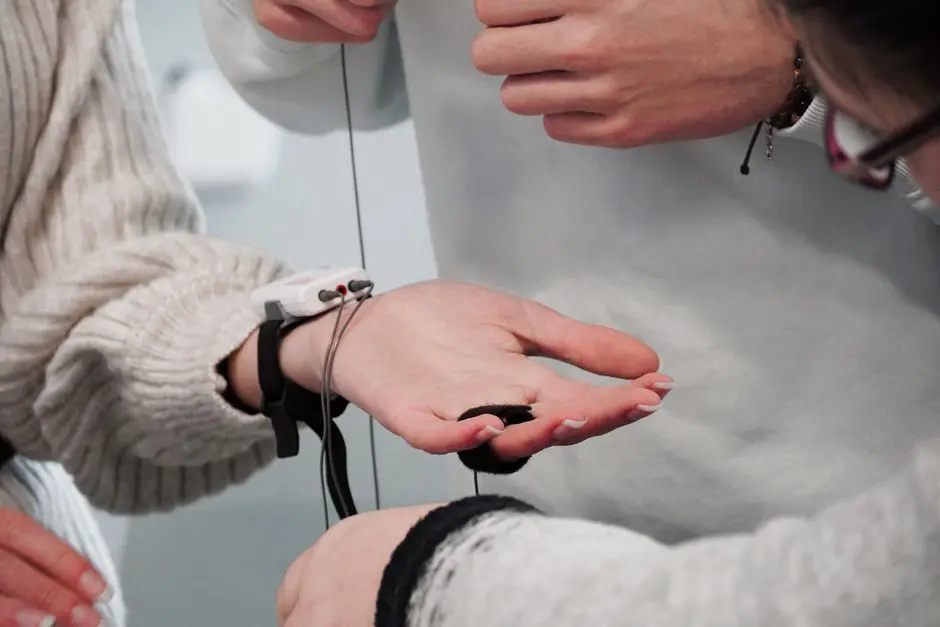
The interface between biological systems and physical sensors is another fertile ground for AI-physics simulations. Developing and interpreting advanced biophysical sensors – from microfluidic devices to advanced imaging modalities like cryo-electron microscopy (cryo-EM) or magnetic resonance imaging (MRI) – demands a deep understanding of physical interactions. We leverage AI to both optimize sensor design and enhance data interpretation, maximizing the utility of experimental setups.
Consider microfluidics: AI-driven simulations predict fluid flow, particle separation, and chemical reactions within these miniature devices, allowing for optimized chip design for specific biological assays, such as single-cell analysis or drug screening. In advanced imaging, AI assists in reconstructing high-resolution 3D structures from noisy 2D projections (e.g., cryo-EM), effectively solving an inverse physics problem. AI learns the physical principles governing image formation and noise, leading to more accurate and faster reconstructions. For MRI, AI models predict how different pulse sequences interact with biological tissues, optimizing contrast and spatial resolution for detecting pathologies. We also deploy AI to simulate the interaction of electromagnetic fields with biological samples, crucial for developing new bioelectronic devices or understanding therapeutic effects. This proactive integration of AI into sensor physics accelerates the development of next-generation diagnostic and therapeutic tools, pushing the boundaries of what is detectable and interpretable in biological systems.
Navigating Multi-Scale Challenges: Bridging the Biological Chasm with AI
Biological systems inherently operate across vast spatial and temporal scales, from femtoseconds of quantum interactions to years of organismal development. A formidable challenge in computational biology is to bridge these scales – to understand how atomic-level events propagate to influence cellular behavior and, ultimately, organismal phenotype. Traditional methods struggle with this inherent multi-scale complexity, often requiring approximations that sacrifice accuracy or scope.
We deploy AI as the central orchestrator in multi-scale modeling. AI constructs coarse-grained models from atomistic simulations, effectively reducing the computational burden while retaining essential physical properties. Machine learning algorithms identify crucial degrees of freedom and emergent behaviors at one scale and map them onto parameters for models at a coarser scale. For example, AI can learn effective potentials for entire proteins, allowing us to simulate their interactions within a cell without resolving every individual atom. Conversely, AI can refine coarse-grained simulations by integrating atomistic detail where critical events occur. We forge connections between quantum mechanics (QM) and molecular mechanics (MM), where AI refines QM/MM interfaces, enabling more accurate representations of bond breaking and formation in enzymatic reactions. Furthermore, AI helps in validating these multi-scale models against experimental data, identifying discrepancies, and suggesting improvements. This integrated AI-physics approach is not just an optimization; it is a fundamental shift in our ability to simulate entire biological hierarchies, offering a holistic understanding of health and disease from the quantum realm to the complete organism.
Key Takeaways
AI's Transformative Role in Biological Physics
AI radically enhances physics simulations in biology, overcoming computational barriers and accelerating discovery. It enables hybrid models that merge mechanistic rigor with data-driven predictions, critical for complex biological systems.
Molecular Dynamics & Drug Discovery Acceleration
AI significantly boosts Molecular Dynamics (MD) by optimizing force field parameterization and employing enhanced sampling algorithms. This accelerates protein folding studies and refines drug discovery by accurately predicting binding kinetics and drug-target interactions.
Cellular and Tissue Modeling Insights
At the cellular and tissue levels, AI-physics simulations unravel complex dynamics like cell migration and tissue development. AI helps construct agent-based and continuum models, offering predictive power for areas like cancer progression and regenerative medicine.
Optimization of Biophysical Sensing
AI plays a pivotal role in designing and interpreting biophysical sensors. It optimizes microfluidic devices and enhances data reconstruction and analysis for advanced imaging techniques such as cryo-EM and MRI, leading to next-generation diagnostics.
Bridging Multi-Scale Biological Systems
AI is crucial for multi-scale modeling, connecting diverse biological phenomena from atomic to organismal levels. It builds coarse-grained models and refines inter-scale interfaces, providing a holistic understanding of biological hierarchies.
FAQ
-
What is the primary advantage of combining AI with physics simulations in biology?
The primary advantage lies in overcoming the limitations of traditional physics simulations, specifically their computational cost and complexity. AI accelerates simulations, enhances accuracy through better force field parameterization, improves sampling of rare events, and aids in interpreting vast amounts of data, thereby unlocking previously inaccessible biological insights and enabling multi-scale modeling.
-
How does AI specifically enhance Molecular Dynamics (MD) simulations?
AI enhances MD by: 1. Accelerating force field parameterization using quantum mechanics data. 2. Developing enhanced sampling techniques guided by neural networks to overcome energy barriers and explore conformational space more efficiently. 3. Predicting binding kinetics and interaction profiles in drug discovery, moving beyond static models.
-
Can AI-physics simulations be applied to entire cells or tissues?
Absolutely. AI-physics simulations are increasingly applied to model cell-level dynamics (e.g., migration, division) and tissue behavior (e.g., tumor growth, organoid formation). AI helps manage the complexity of numerous interacting components and emergent properties, integrating physical forces and biological signaling pathways to predict collective cellular behaviors.
-
What role does AI play in biophysical sensor development and data interpretation?
AI plays a crucial role in optimizing sensor design by simulating physical interactions within devices (e.g., microfluidics). It also significantly enhances data interpretation for advanced imaging techniques (e.g., cryo-EM, MRI) by reconstructing high-resolution structures, denoising data, and predicting optimal experimental parameters based on physical principles.
-
What are the future prospects for AI-physics simulations in biology?
The future prospects are immense. We anticipate more sophisticated multi-scale models that seamlessly integrate diverse biological scales. Further advances will lead to more accurate predictive models for disease progression, personalized medicine, and the design of novel therapeutics and biotechnologies. The ultimate goal is to create comprehensive 'digital twins' of biological systems.