
> AI in Biology > Computational Modeling and Simulation > Forge Predictive Power: AI's Biological Modeling Revolution
Forge Predictive Power: AI's Biological Modeling Revolution

Unlocking the full potential of biological insight demands not just observation, but foresight. The ability to anticipate, rather than merely react, transforms our approach to health, environment, and fundamental understanding. In the intricate tapestry of life, predictive models stand as our most potent instruments for gazing into the biological future. This article dissects the profound applications of these models, powered by cutting-edge artificial intelligence, across the vast landscape of biology. We delve into how they are redefining drug discovery, revolutionizing disease management, and optimizing ecological interventions. Prepare to explore the mechanisms and strategic implications that elevate mere data into actionable foresight, offering an unparalleled advantage in biological exploration. This journey into predictive analytics reveals how we are mastering the complexities of life by leveraging the immense capabilities of AI-driven modeling of biological and molecular systems, pushing the boundaries of what's possible.

Foundational Frameworks: The Anatomy of Biological Prediction
We initiate our strategic exploration by grounding ourselves in the foundational frameworks of predictive modeling within biology. These models are not mere statistical tools; they are sophisticated computational constructs designed to forecast outcomes, identify patterns, and simulate complex biological phenomena based on input data. Our mission: transform raw biological data—genomic sequences, protein structures, cellular interactions, population dynamics—into actionable intelligence. Predictive models thrive on vast datasets, learning intricate relationships that often elude direct human observation. We employ diverse methodologies, ranging from classical statistical regressions and machine learning algorithms to deep learning architectures, each tailored to the specific biological question at hand. For instance, in genomics, we deploy models to predict gene expression levels from epigenetic marks; in proteomics, we forecast protein-protein interaction networks. The core principle involves training an algorithm on known data, allowing it to discern underlying rules, and then applying these rules to novel data to predict future states or unseen characteristics. This proactive approach significantly reduces experimental trial-and-error, accelerating discovery and validating hypotheses with unprecedented efficiency. We are not just analyzing the past; we are actively engineering the biological future.
A critical initial step involves meticulous data curation and feature engineering. Poor data quality sabotages even the most advanced models. We must cleanse, normalize, and intelligently transform data, extracting salient features that truly inform our predictions. Ignoring this fundamental step is a common pitfall that leads to unreliable insights. Consider a scenario where we aim to predict a drug's efficacy; we must integrate diverse data types: molecular descriptors, clinical trial outcomes, and patient genetic profiles. Our models then learn to weigh these features, identifying which variables hold the most predictive power. This iterative process of model selection, training, validation, and refinement ensures robust and generalizable predictions. We are not merely applying off-the-shelf algorithms; we are engineering bespoke solutions that resonate with the unique complexities of biological systems. Forgeons des modèles qui non seulement interprètent, mais anticipent, débloquant des niveaux de compréhension biologique inédits.

Accelerating Therapeutic Innovation: Drug Discovery & Development
Our conquest of disease hinges significantly on our ability to accelerate therapeutic innovation. Predictive models are proving to be indispensable catalysts in drug discovery and development, transforming a historically lengthy, expensive, and high-risk process. We strategically deploy these models across multiple stages, from initial target identification to post-market surveillance. In the early stages, AI-driven models identify promising drug targets by analyzing vast genomic and proteomic datasets, pinpointing molecular pathways implicated in disease. This allows us to focus resources on the most probable points of intervention. Furthermore, virtual screening techniques, powered by sophisticated machine learning, predict the binding affinity of millions of compounds to a specific target molecule, drastically reducing the need for costly wet-lab experiments. We optimize lead compound selection, predicting potential efficacy and toxicity even before synthesis. Imagine the time and resources saved by virtually discarding compounds likely to fail, long before they enter a lab.
Beyond initial screening, predictive models revolutionize toxicology and pharmacokinetics/pharmacodynamics (PK/PD) assessments. We build models to forecast adverse drug reactions, predict drug metabolism rates, and estimate optimal dosing regimens, enhancing patient safety and treatment efficacy. These models integrate diverse data, including in vitro assays, animal studies, and existing clinical trial data, to generate robust predictions. A key challenge we proactively address is the 'black box' nature of some deep learning models; interpretability is paramount in drug development. We are increasingly employing explainable AI (XAI) techniques to understand why a model makes a particular prediction, gaining crucial mechanistic insights. This allows us to refine drug design and validate model outputs with biological understanding, rather than blind trust. We are not just finding drugs faster; we are developing safer, more effective therapies by leveraging the predictive foresight of AI. This fusion of computational rigor and biological intuition empowers us to conquer therapeutic frontiers with unprecedented speed and precision.
Precision Health: Diagnosing, Prognosing, and Personalizing Medicine
The era of one-size-fits-all medicine is rapidly receding; we are forging a path towards precision health, where predictive models tailor medical interventions to individual patients. Our strategic objective is to move beyond reactive treatment to proactive prevention and personalized care. Predictive models are central to this transformation, enabling earlier and more accurate disease diagnosis, precise prognosis, and optimized treatment selection. Consider the fight against cancer: models analyze a patient's genetic profile, tumor characteristics, and historical treatment responses to predict the likelihood of recurrence or the efficacy of specific chemotherapies. This empowers oncologists to choose the most effective treatment strategy, minimizing adverse effects and maximizing patient outcomes. We are leveraging multimodal data—genomics, transcriptomics, imaging, electronic health records—to construct holistic patient profiles, generating unprecedented diagnostic and prognostic power.
Moreover, these models excel in identifying individuals at high risk for developing certain conditions long before symptoms manifest. For instance, in cardiovascular disease, AI analyzes lifestyle data, genetic markers, and clinical measurements to predict future cardiac events, allowing for timely preventative interventions. This proactive approach saves lives and significantly reduces healthcare burdens. The ethical implications of predictive diagnostics demand our utmost attention; we must ensure fairness, transparency, and data privacy. Deploying these models responsibly is as critical as their technical prowess. We also utilize predictive analytics to optimize hospital resource allocation, forecast disease outbreaks, and manage public health crises more effectively. By building robust models that predict patient trajectories and treatment responses, we are unlocking the full potential of personalized medicine. We transform healthcare from a reactive battle into a preemptive strategy, optimizing every biological opportunity for better health outcomes across populations. Forgeons un futur où chaque traitement est une intervention chirurgicale, taillée pour l'individu unique.
Ecological Stewardship & Agritech: Modeling Earth's Living Systems
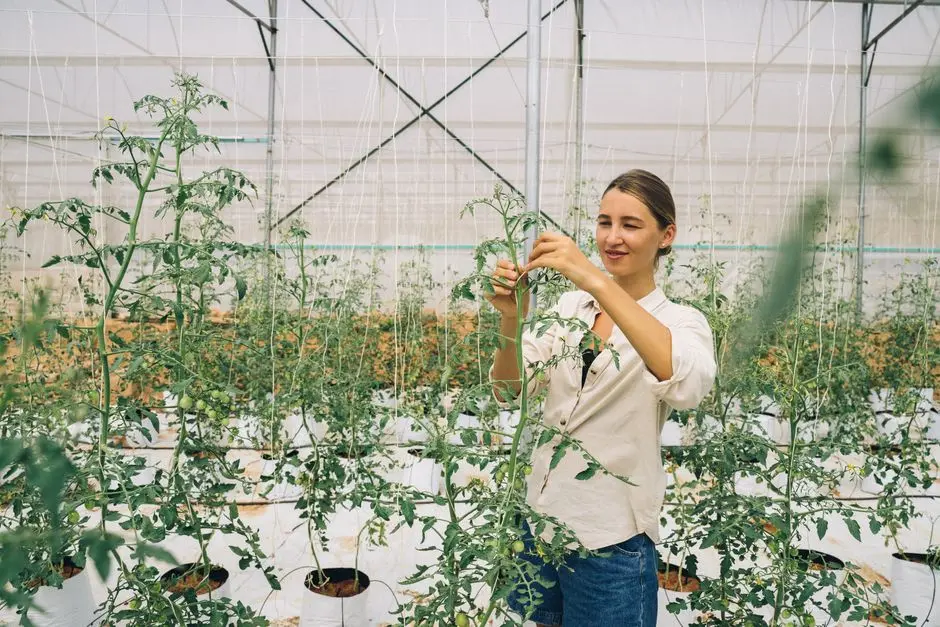
Our imperative to sustain life extends beyond human health; we must also optimize our stewardship of Earth's living systems. Predictive models are indispensable tools in agritech and environmental biology, enabling us to forecast ecological changes, optimize agricultural practices, and conserve biodiversity. In agriculture, we deploy models to predict crop yields based on climate data, soil composition, and planting strategies. This allows farmers to optimize resource allocation, minimize waste, and enhance food security. Furthermore, models predict pest outbreaks and disease spread in crops, enabling targeted interventions that reduce pesticide use and protect harvests. We are not guessing; we are precisely targeting our efforts, making every intervention count.
In environmental biology, predictive models help us understand and mitigate the impacts of climate change and pollution. We model species distribution shifts, predict biodiversity loss hotspots, and forecast the spread of invasive species, informing conservation strategies. For instance, AI-driven models analyze satellite imagery, climate patterns, and historical data to predict deforestation rates or water quality degradation. This foresight empowers policymakers and conservationists to implement timely and effective protective measures. A common challenge in environmental modeling is the sheer complexity and interconnectedness of ecosystems; models must account for numerous interacting variables. Our approach involves integrating diverse data sources—remote sensing, sensor networks, genomic data—to build comprehensive ecological models. These models become our virtual laboratories for testing different management scenarios, allowing us to anticipate outcomes without real-world risk. We are optimizing our interaction with nature, transforming environmental challenges into opportunities for sustainable coexistence. Forgeons un futur où l'homme et la nature prospèrent en harmonie, guidés par la sagesse prédictive de l'IA.
Navigating the Nuances: Challenges, Interpretability, and Ethical Frontiers
While predictive models offer immense power, we must navigate their development and deployment with surgical precision, acknowledging inherent challenges and ethical frontiers. A primary obstacle is the availability and quality of biological data. Biological datasets are often heterogeneous, noisy, incomplete, or proprietary, limiting the scope and accuracy of our models. We actively implement robust data governance strategies and innovative imputation techniques to address these gaps. Another critical challenge is model interpretability. Complex deep learning models often operate as 'black boxes,' making it difficult to understand the rationale behind their predictions. In fields like medicine, where accountability and trust are paramount, merely knowing 'what' a model predicts is insufficient; we must understand 'why.' We are investing heavily in Explainable AI (XAI) methodologies to shed light on model decisions, fostering trust and enabling biological validation of computational insights. This allows us to identify and correct biases embedded in the training data.
Ethical considerations represent another crucial frontier. Predictive models raise profound questions about data privacy, consent, algorithmic bias, and equitable access to AI-driven health or environmental benefits. For example, biased training data can lead to models that perform poorly for specific demographic groups, exacerbating existing health disparities. We must proactively design models with fairness and equity as core principles, auditing them rigorously for bias and ensuring transparent deployment. Furthermore, the increasing reliance on AI for critical biological decisions necessitates robust validation and continuous monitoring to prevent unforeseen negative consequences. We must also address the 'generalizability' problem: a model trained on one dataset or population may not perform well on another. Overcoming these challenges requires interdisciplinary collaboration—bringing together biologists, data scientists, ethicists, and policymakers. We are not just building algorithms; we are architecting a responsible and impactful future for AI in biology. Forgeons des cadres éthiques qui encadrent notre puissance prédictive, garantissant une évolution bénéfique pour tous.

Strategic Deployment: Best Practices for Implementing Predictive Models
To truly harness the transformative power of predictive models, we must adopt a strategic and systematic approach to their implementation. Our success hinges on meticulous planning and adherence to best practices that ensure robustness, reliability, and real-world impact. First, define the problem with absolute clarity. A vague problem statement leads to misguided models. We identify the specific biological question to answer, the desired outcome, and the metrics for success. This clarity guides every subsequent step. Second, prioritize data quality and quantity. Garbage in, garbage out. We invest significant effort in data collection, cleaning, annotation, and integration from diverse sources. This often involves establishing robust data pipelines and collaborative data-sharing frameworks. Ignoring this fundamental step sabotages the entire modeling endeavor.
Third, emphasize iterative model development and validation. Predictive modeling is rarely a one-shot process. We build, test, refine, and re-validate models using independent datasets to ensure generalizability and prevent overfitting. Techniques like cross-validation and external validation are non-negotiable. We constantly evaluate model performance against predefined biological benchmarks. Fourth, foster interdisciplinary collaboration. No single expert possesses all the necessary knowledge. We convene teams comprising biologists, data scientists, statisticians, computational engineers, and ethical experts. This synergistic approach bridges the gap between biological insight and computational prowess. Finally, cultivate a culture of continuous learning and adaptation. Biological systems are dynamic; our models must evolve. We implement feedback loops, continuously updating models with new data and insights, ensuring they remain relevant and accurate. We are not just building tools; we are establishing dynamic intelligence systems that adapt and grow. Optimisons chaque étape du processus, transformant les données en décisions éclairées, et les prédictions en progrès tangibles.
Key Takeaways
The Core Mission of Predictive Models
Predictive models transform raw biological data into actionable foresight, allowing us to anticipate outcomes rather than merely react. They are crucial for forecasting biological phenomena across genomics, proteomics, ecology, and health, minimizing experimental trial-and-error.
Revolutionizing Drug Discovery
AI-driven models accelerate drug development by identifying targets, performing virtual screening, predicting drug efficacy and toxicity, and optimizing lead compounds, making the process faster, cheaper, and safer.
Advancing Precision Health
In medicine, these models enable accurate disease diagnosis, precise prognosis, and personalized treatment plans by analyzing individual patient data, moving healthcare towards proactive prevention and tailored interventions.
Impact on Agriscience and Environment
Predictive models optimize crop yields, forecast pest outbreaks, monitor biodiversity loss, and predict environmental changes, supporting sustainable agriculture and ecological conservation efforts.
Navigating Challenges and Best Practices
Key challenges include data quality, model interpretability ('black box' problem), and ethical considerations (bias, privacy). Best practices emphasize clear problem definition, robust data pipelines, iterative validation, interdisciplinary collaboration, and continuous model adaptation.
FAQ
-
What are predictive models in biology?
Predictive models in biology are computational tools and algorithms that analyze existing biological data to forecast future biological events, identify patterns, or predict specific outcomes. They leverage statistical methods, machine learning, and deep learning to discern complex relationships within biological systems, enabling researchers and practitioners to anticipate behaviors, disease progression, drug efficacy, or environmental changes rather than merely observing them.
-
How do AI and machine learning enhance predictive biology?
AI and machine learning significantly enhance predictive biology by enabling models to process and learn from massive, complex, and high-dimensional biological datasets (e.g., genomics, proteomics, imaging) far beyond human capabilities. They can identify subtle, non-linear patterns, optimize model parameters, and perform tasks like feature selection or anomaly detection with superior accuracy and speed, leading to more robust and insightful predictions in areas such as drug discovery, diagnostics, and personalized medicine.
-
What are common applications of predictive models in drug discovery?
In drug discovery, predictive models are used to accelerate target identification, virtually screen vast libraries of chemical compounds for potential drug candidates (predicting binding affinity and efficacy), forecast potential drug toxicity and adverse effects, optimize lead compound selection, and predict drug metabolism and pharmacokinetics. This dramatically reduces the time and cost associated with bringing new therapies to market.
-
What challenges do we face when implementing predictive models in biology?
Key challenges include the heterogeneity and quality of biological data (often noisy, incomplete, or biased), the 'black box' nature of complex AI models (making interpretability difficult), ethical concerns around data privacy and algorithmic bias, ensuring model generalizability across diverse populations or conditions, and the need for continuous validation and adaptation as biological understanding evolves.
-
How do predictive models contribute to personalized medicine?
Predictive models are central to personalized medicine by analyzing individual patient data (genomics, clinical history, lifestyle) to forecast disease risk, predict response to specific treatments, and determine optimal therapeutic strategies. This allows for highly tailored medical interventions that are more effective and minimize adverse reactions, moving towards proactive and individualized healthcare.