
> AI in Biology > Computational Modeling and Simulation > Elevate Molecular Predictions: Hybrid AI-Physics Models Unveiled
Elevate Molecular Predictions: Hybrid AI-Physics Models Unveiled
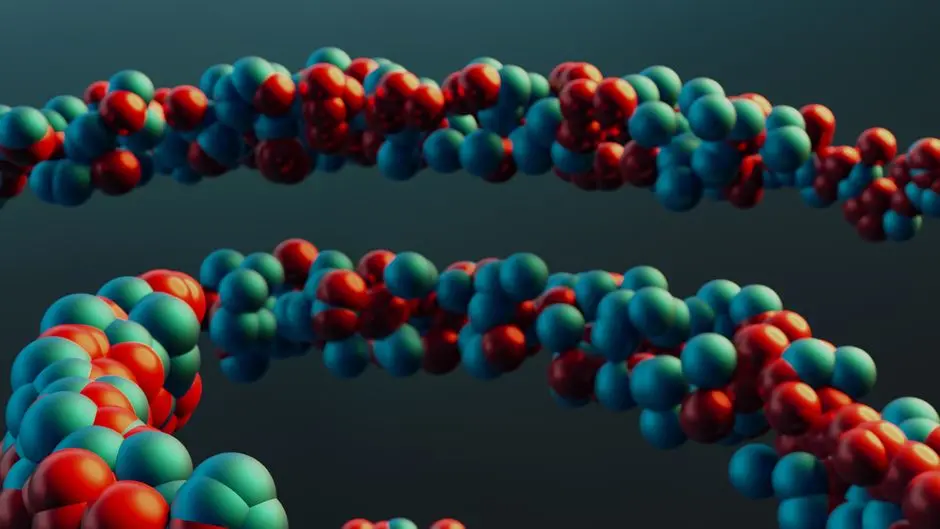
We are forging the future of computational biology. At the heart of this revolution lie hybrid models, a strategic convergence of fundamental physics and artificial intelligence, redefining our ability to anticipate molecular behavior. Gone are the days of compromising between accuracy and speed; these avant-garde architectures are ushering in an era of molecular predictions with unparalleled finesse.
This article is not merely an exploration; it's a roadmap for anyone seeking to master the art of molecular anticipation. We will dissect why traditional approaches are reaching their limits and how the synergistic integration of AI and physical laws transcends them. Prepare to dive into the mechanisms that empower hybrid models with their transformative might, a crucial advancement for the entire field, notably in unlocking new opportunities for AI-driven analysis of biological and molecular systems. We will optimize our understanding of the subtle dynamics that govern life, paving the way for unprecedented discoveries in pharmacology, material science, and beyond. Let's explore together how these models are redefining the boundaries of what's possible.

The Confluence: Bridging Physics and AI in Molecular Science
We stand at a pivotal juncture in molecular science, where the ambition for precise molecular predictions often collides with computational realities. Traditional physics-based models, while fundamentally robust and grounded in first principles, often demand immense computational resources. Simulating molecular dynamics for complex biological systems, even for microsecond durations, can consume supercomputing hours, limiting the scope of discovery. Conversely, purely AI-driven models excel in pattern recognition and speed, but typically require vast datasets for training. Their Achilles' heel often lies in their lack of physical intuition, leading to predictions that might violate fundamental laws or struggle with generalizability to novel molecular spaces.
This is where hybrid models emerge as our strategic imperative. They are not merely an aggregation but a true synergy, leveraging the interpretability, robustness, and physical consistency of classical or quantum mechanics, fused with the unparalleled speed, efficiency, and pattern-recognition capabilities of machine learning. This strategic integration allows us to overcome the inherent limitations of each paradigm. We combine the predictive power of AI with the unwavering fidelity of physical laws. Consider the challenge of accurately modeling protein folding or drug-receptor binding: pure physics struggles with the sheer conformational space and computational cost, while pure AI risks hallucinating unphysical states. Hybrid models provide a vital solution, enabling us to explore vast landscapes with AI acceleration, all while remaining tethered to the bedrock of physical reality.
Architecting Precision: Mechanics of Hybrid Model Integration
To unlock superior molecular predictions, we meticulously architect hybrid models through diverse integration strategies. One prominent approach involves AI-enhanced force fields, where machine learning (ML) potentials augment or completely replace traditional empirical force fields. Instead of relying on predefined functional forms, ML models learn complex energy landscapes directly from high-fidelity quantum mechanical (QM) calculations. Examples include Behler-Parrinello neural networks, ANI (Accurate Neural networK Interatomic Potentials), and DeepMD. These models retain QM-level accuracy at the computational cost often associated with classical molecular dynamics, yielding orders of magnitude speedup for atomistic simulations.
Another powerful paradigm is the emergence of Physics-Informed Neural Networks (PINNs). Here, neural networks are not just trained on data but are also embedded with physical laws (e.g., Schrödinger's equation, Navier-Stokes equations for fluid dynamics) as part of their loss function. This ensures that even in data-scarce scenarios, the model's predictions inherently respect fundamental physical principles, enhancing generalization and interpretability. Furthermore, hybrid simulations integrate AI to accelerate specific, computationally intensive components within larger simulations. We might use ML to predict reaction pathways, accelerate quantum mechanical calculations within a QM/MM framework, or rapidly screen configurations to guide more rigorous physical computations. This targeted application of AI ensures computational bottlenecks are surgically addressed, transforming the feasibility of complex molecular explorations and expanding the boundaries of what we can simulate and understand.
Unlocking Insights: Applications and Transformative Impact
Hybrid models are not just theoretical constructs; they are instruments of transformation, actively reshaping our capabilities across critical biological and material science domains. In drug discovery, we witness a paradigm shift. Hybrid approaches accelerate the screening of vast chemical libraries, predict drug-target binding affinities with unprecedented accuracy, and even de novo design novel molecular structures with desired pharmacological properties. The ability to simulate molecular interactions more accurately and rapidly translates directly into shorter lead times and higher success rates in identifying viable drug candidates. Imagine reducing the timeframe for lead optimization by 30-50% through accelerated simulations of drug-protein interactions – this is the impact we are already observing.
For materials science, these models empower us to engineer new materials from the atomic scale up. Predicting properties like conductivity, strength, or catalytic activity for novel compositions becomes feasible, allowing for targeted design of superconductors, battery materials, or catalysts with tailored performance. The ability to explore vast compositional and structural spaces, guided by physically consistent AI, compresses development cycles significantly. In protein folding and dynamics, a notoriously complex challenge, hybrid models are simulating conformational changes and ligand binding events over biologically relevant timescales with enhanced fidelity, elucidating mechanisms previously inaccessible. Furthermore, in catalysis, these models dissect reaction mechanisms at the molecular level, identifying optimal active sites and pathways with a precision and speed that empirical methods cannot match. We are not just predicting; we are discovering, designing, and fundamentally transforming industries.
Navigating the Frontier: Challenges, Best Practices, and Future Trajectories
While hybrid models unleash unprecedented power, we must navigate their development with strategic foresight. Significant challenges persist. Data scarcity remains a hurdle; generating high-fidelity quantum mechanical data for training ML potentials is resource-intensive. Interpretability of the AI component, especially in black-box neural networks, can obscure the underlying physical insights, making it challenging to understand why a prediction was made. The computational cost of training sophisticated hybrid models, even if runtime is faster, can be substantial. Moreover, rigorous validation and benchmarking against diverse experimental datasets are paramount to ensure the models are not merely interpolating but truly generalizing across chemical space.
To surmount these challenges, we forge best practices. We prioritize the curation of high-quality, diverse training datasets that span relevant chemical and conformational spaces. Employing active learning strategies can optimize data generation by focusing on regions of high uncertainty. We insist on rigorous cross-validation and systematic comparison against experimental ground truth across a wide range of conditions. Understanding the inherent limitations of both the physical and AI components is crucial; hybrid models are not silver bullets but powerful tools requiring skilled application. We also emphasize transferability, designing models that perform well beyond their training domain. The future trajectory for hybrid models is exhilarating: we anticipate tighter integration with quantum computing for 'quantum AI' potentials, the rise of explainable AI (XAI) to demystify AI components, and the development of autonomous molecular design platforms that dynamically iterate between prediction, synthesis, and experimental validation. We are building the foundational infrastructure for true molecular engineering.
Key Takeaways
Hybrid Models Bridge the Gap
Purely physics-based models are accurate but slow, while AI models are fast but can lack physical intuition. Hybrid models strategically combine the strengths of both, offering a balance of speed, accuracy, and physical consistency essential for complex molecular predictions.
Diverse Architectures for Precision
Integration strategies include AI-enhanced force fields (e.g., ANI, DeepMD) that replace classical potentials with ML-derived ones, and Physics-Informed Neural Networks (PINNs) that embed physical laws directly into the AI's learning process. These allow for QM-level accuracy at classical simulation costs.
Transformative Applications Across Fields
Hybrid models are revolutionizing drug discovery (faster screening, better binding prediction), materials science (de novo design of materials), protein folding (simulating complex dynamics), and catalysis (understanding reaction mechanisms), accelerating discovery and development cycles.
Strategic Development and Future Outlook
Challenges like data scarcity, AI interpretability, and training costs demand best practices like high-quality data curation and rigorous validation. The future promises integration with quantum computing, explainable AI, and autonomous molecular design platforms.
FAQ
-
What is the primary advantage of hybrid models over purely physics-based or AI-based models for molecular predictions?
The primary advantage lies in their synergy: hybrid models combine the computational efficiency and pattern recognition of AI with the physical accuracy, robustness, and interpretability of physics-based methods. This allows for faster simulations without sacrificing fidelity and enhances generalizability by grounding AI predictions in fundamental physical laws. -
Can hybrid models truly replace traditional quantum mechanical calculations?
While hybrid models, particularly those using ML potentials trained on QM data, can achieve QM-level accuracy at significantly lower computational cost, they don't entirely replace traditional QM. QM calculations remain the 'ground truth' for generating training data and for validating hybrid models. Hybrid models extend the reach of QM by enabling simulations of much larger systems or longer timescales than pure QM could handle. -
What are the common challenges in developing and implementing hybrid molecular models?
Key challenges include the need for high-quality, diverse training data (often from expensive QM calculations), ensuring the interpretability of the AI component, managing the computational cost of training complex models, and rigorously validating the models against experimental data to ensure broad applicability and accuracy.