
> AI in Biology > Computational Modeling and Simulation > Unleash Hybrid AI: Revolutionizing Molecular Science Futures
Unleash Hybrid AI: Revolutionizing Molecular Science Futures
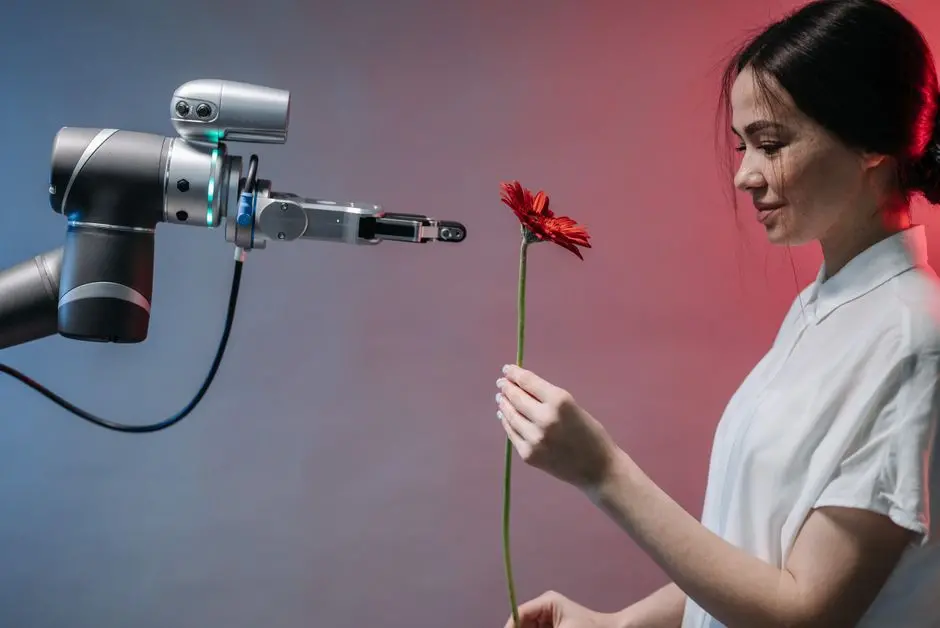
We stand at the precipice of a scientific revolution, where the intricate dance of molecules, once solely within the realm of experimental observation, is now profoundly illuminated by the synergy of artificial intelligence and fundamental physical laws. The advent of hybrid AI models in molecular science is not merely an incremental advancement; it is a paradigm shift, unlocking unprecedented capabilities in understanding, predicting, and designing molecular systems.
This article unveils the strategic pathways to harness these synergistic forces, building upon the foundational concepts crucial to AI-driven modeling of biological and molecular systems. We dissect how these powerful models integrate deep learning's predictive prowess with physics-based simulations' mechanistic rigor, bridging gaps that neither approach could conquer alone. Prepare to explore the cutting-edge architectures, transformative applications in drug discovery and materials science, and the strategic imperatives that will define the next decade of molecular innovation. We forge a path towards a future where computational biology is not just predictive, but profoundly generative, redesigning life at its most fundamental level.
Hybrid AI in Molecular Science: Forging the Synergy of Data and Physics
We embark on an exploration of hybrid AI models, recognizing them as the crucible where the vast, data-driven power of artificial intelligence melds seamlessly with the immutable principles of physics. Traditional approaches in molecular science often face a dichotomy: purely data-driven machine learning models excel at pattern recognition but struggle with extrapolation beyond training data and lack inherent physical consistency. Conversely, purely physics-based simulations, while robustly grounded in theory, demand immense computational resources and often simplify complex interactions to remain tractable. The hybrid model transcends these limitations, providing a 'best of both worlds' solution. We integrate knowledge from first principles, such as quantum mechanics or classical force fields, directly into machine learning architectures, or use AI to accelerate computationally expensive physics simulations. This convergence allows us to achieve superior predictive accuracy, enhanced generalization, and a deeper, physically consistent understanding of molecular phenomena. This strategic fusion is paramount for tackling grand challenges, from unraveling protein folding mysteries to engineering novel materials with atomic precision. We are no longer limited to observing; we are actively co-creating, propelling molecular science into an era of unprecedented discovery where AI acts as a guiding hand rooted in physical reality.
Architectural Evolution: Engineering Advanced Hybrid AI Frameworks
The core of hybrid AI's transformative power lies in its diverse and evolving architectural frameworks. We observe several key paradigms emerging. First, Physics-Informed Neural Networks (PINNs) directly embed partial differential equations (PDEs) into the neural network's loss function, ensuring predictions adhere to physical laws, crucial for molecular dynamics and reaction kinetics. Second, Machine Learning Potentials (MLPs) represent a significant leap. Instead of computationally intensive ab initio calculations for every atomic interaction, MLPs learn potential energy surfaces from high-fidelity quantum mechanical data, then integrate seamlessly into classical molecular dynamics simulations, drastically accelerating atomistic simulations without sacrificing accuracy. This allows for simulations of larger systems over longer timescales. Third, end-to-end differentiable simulators are gaining traction, where entire simulation pipelines are made differentiable, enabling gradient-based optimization of molecular structures or material properties. A common pitfall is the naive coupling of disparate models; successful integration demands careful consideration of data transfer, error propagation, and model interpretability. We must champion architectures that offer modularity and explainability, allowing researchers to peer into the 'black box' and validate physical consistency. Optimal design requires a deep understanding of both computational science and molecular physics, fostering interdisciplinary teams capable of engineering these sophisticated frameworks.
Catalyzing Discovery: Transformative Applications Across Molecular Domains
Hybrid AI models are not theoretical constructs; they are practical tools actively catalyzing breakthroughs across a multitude of molecular science domains. In drug discovery, we are accelerating hit identification, lead optimization, and ADMET (Absorption, Distribution, Metabolism, Excretion, Toxicity) prediction. By combining ML's capacity for rapid virtual screening with physics-based binding affinity calculations, we dramatically reduce the experimental search space, identifying promising drug candidates faster and with higher confidence. For instance, hybrid models predict protein-ligand binding with unprecedented accuracy, guiding the synthesis of novel therapeutic agents. In materials science, we are pioneering the rational design of new materials with tailored properties. Hybrid AI predicts crystal structures, assesses mechanical strength, and optimizes catalytic activity by integrating quantum chemistry insights with ML's ability to navigate vast combinatorial spaces. Consider the development of advanced battery materials or catalysts for sustainable chemistry: hybrid models enable us to simulate and predict performance from first principles, then optimize through iterative learning cycles. Furthermore, these models are proving instrumental in understanding complex biological processes like protein folding dynamics, enzymatic reactions, and biomolecular interactions, where the interplay of forces and conformation dictates function. We are moving beyond observation to proactive design, leveraging these tools to sculpt molecular reality for human benefit.
Pioneering the Future: Strategic Trajectories and Ethical Imperatives
As we cast our gaze toward the horizon, the future of hybrid AI in molecular science is vibrant with strategic opportunities and critical responsibilities. We foresee several key trajectories. First, the integration with quantum computing: Quantum Machine Learning (QML) holds the promise of simulating molecular interactions with unparalleled accuracy, and hybrid models will bridge the gap between current classical resources and future quantum capabilities, enabling simulations currently deemed impossible. Second, explainable AI (XAI) will become non-negotiable for hybrid models. Understanding why a model makes a specific prediction, especially when physical principles are embedded, is crucial for scientific validation and trust, particularly in medical and safety-critical applications. Third, federated learning and collaborative AI platforms will allow researchers globally to train robust models on distributed, sensitive molecular datasets without compromising data privacy. Strategically, we must foster interdisciplinary education, equipping the next generation of scientists with expertise in both AI and molecular physics. Industry leaders must invest in robust computational infrastructures and cultivate open-source collaboration. On the ethical front, we must establish clear guidelines for the responsible development and deployment of generative molecular AI. The ability to design novel proteins or chemical compounds carries immense potential for both good and harm. We commit to a future where hybrid AI serves as a responsible and powerful co-pilot in our journey to understand and reshape the molecular world, ensuring that innovation aligns with human welfare and scientific integrity.
Key Takeaways
Synergistic Fusion: Bridging Data-Driven AI and Physics-Based Simulation
Hybrid AI models effectively combine the strengths of machine learning (pattern recognition, speed) with the rigor of physics-based simulations (physical consistency, extrapolation). This strategic fusion overcomes the limitations of standalone approaches, yielding models that are both highly predictive and physically sound. We leverage this synergy to tackle complex molecular challenges, from drug discovery to advanced materials design, achieving unprecedented accuracy and efficiency in molecular system analysis.
Architectural Innovation: Tailoring Models for Molecular Insight
The evolution of hybrid AI is driven by innovative architectures like Physics-Informed Neural Networks (PINNs) and Machine Learning Potentials (MLPs). These frameworks embed physical laws directly into AI or use AI to accelerate costly simulations, respectively. We meticulously engineer these models to ensure seamless integration, enhanced generalizability, and interpretability, allowing for deeper insights into molecular interactions and dynamics.
Future Trajectories: Quantum Integration, XAI, and Ethical Stewardship
The future of hybrid AI in molecular science will be shaped by its integration with quantum computing, the imperative for Explainable AI (XAI), and the adoption of collaborative learning paradigms like federated learning. We must strategically invest in interdisciplinary education and robust infrastructure, while upholding strict ethical guidelines for the responsible development and deployment of these powerful, generative molecular design tools. We commit to pioneering a future where AI serves as a responsible force for molecular innovation.
FAQ
-
What core advantage do hybrid AI models offer over traditional approaches in molecular science?
Hybrid AI models offer a superior balance between predictive accuracy and physical consistency. Pure AI models often lack generalizability outside their training data and ignore physical laws, while purely physics-based simulations are computationally intensive. Hybrid models fuse AI's pattern recognition with physics-based rigor, providing high accuracy, better extrapolation, and a deeper, physically grounded understanding of molecular systems, enabling more efficient and reliable discovery.
-
How do Machine Learning Potentials (MLPs) enhance molecular dynamics simulations?
MLPs dramatically accelerate molecular dynamics simulations by replacing computationally expensive quantum mechanical calculations for atomic interactions. They learn potential energy surfaces from high-fidelity quantum data, then provide rapid, accurate energy and force calculations for classical MD. This allows us to simulate larger systems and longer timescales with near quantum-mechanical accuracy, opening new avenues for material design and biological understanding.
-
What are the biggest challenges in developing and implementing hybrid AI models?
Key challenges include managing data scarcity, ensuring model interpretability, and overcoming the computational cost associated with integrating complex components. We face difficulties in harmonizing disparate models, propagating errors effectively, and verifying that the AI adheres to all relevant physical constraints without introducing biases. Success demands robust validation techniques and interdisciplinary collaboration.