
> AI in Biology > Computational Modeling and Simulation > Unleash AI Power: Examples Accelerating Biological Simulations
Unleash AI Power: Examples Accelerating Biological Simulations

The intricate dance of life, from the folding of a single protein to the complex dynamics of entire ecosystems, often defies conventional understanding due to its sheer scale and complexity. Traditional biological simulations, while foundational, frequently grapple with computational bottlenecks, demanding vast resources and time. But what if we could compress decades of simulation into mere hours, or unlock insights previously hidden by computational limitations?
We stand at the precipice of a computational revolution. Artificial Intelligence (AI) is not just augmenting, but fundamentally transforming how we approach biological research, acting as a potent catalyst for accelerating simulations across every scale of biological organization. This article unveils concrete examples where AI propels biological simulations forward, demonstrating a paradigm shift from laborious computation to intelligent prediction and optimization. We will dissect the mechanisms, celebrate the breakthroughs, and equip you with the strategic insights necessary to harness this formidable synergy.
Prepare to explore how AI redefines the landscape of biological research, empowering us to model previously intractable problems and accelerate discovery at an unprecedented pace. The journey into the AI-driven modeling of biological and molecular systems is not merely academic; it is an imperative for anyone seeking to push the boundaries of biological understanding and therapeutic innovation.
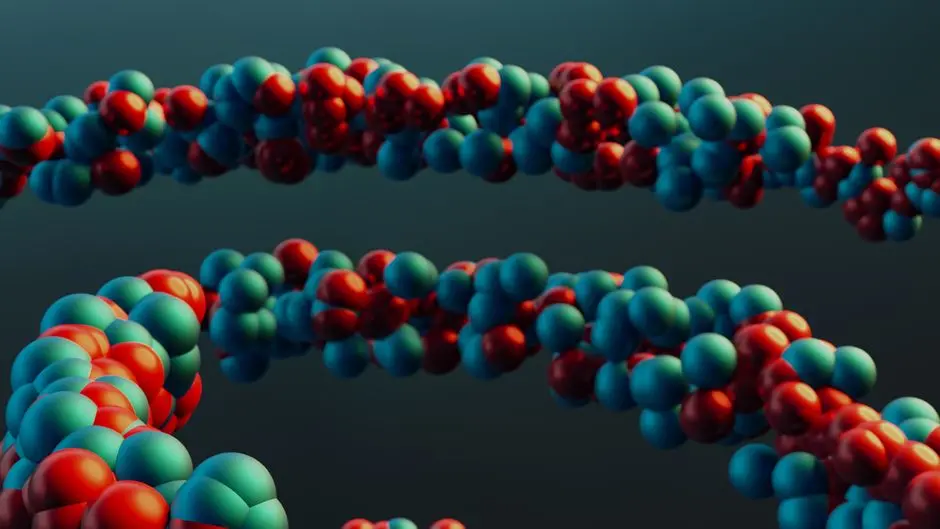
Forging Breakthroughs in Molecular Dynamics: AI's Role in Protein Folding and Drug Discovery
Molecular dynamics (MD) simulations are fundamental to understanding the behavior of proteins, nucleic acids, and other biomolecules. Yet, their computational cost, especially for long timescales or large systems, remains prohibitive. We encounter the 'sampling problem': exhaustive exploration of a molecule's conformational landscape demands immense processing power. This is precisely where AI intervenes, not just as an optimizer, but as a transformative force.
Protein Folding: Consider AlphaFold. This deep learning model, developed by DeepMind, shattered decades-old barriers in protein structure prediction. Traditional MD simulations could take weeks to simulate a protein folding event, often yielding limited insights. AlphaFold, leveraging intricate neural networks trained on vast databases of known protein structures, predicts 3D protein structures from amino acid sequences with near-experimental accuracy in minutes or hours. It fundamentally accelerates the initial step of understanding protein function, which would otherwise require extensive experimental validation or prohibitively long MD runs. This predictive capability directly informs subsequent targeted MD simulations, guiding them towards more relevant conformational states.
Drug Discovery: In drug discovery, AI-accelerated MD plays a pivotal role. Identifying lead compounds requires screening billions of potential molecules against target proteins. AI models, particularly machine learning algorithms like random forests or neural networks, learn to predict binding affinities and pharmacokinetic properties far more rapidly than traditional docking and MD methods. They prune the vast chemical space, focusing MD simulations on the most promising candidates. Techniques like enhanced sampling methods, often guided by AI, allow MD simulations to escape local energy minima and explore crucial binding pathways faster, revealing how drugs interact with their targets. This synergy drastically cuts down development timelines, identifying potent therapeutic candidates with unprecedented efficiency.

Optimizing Cellular and Subcellular Simulations with Intelligent Algorithms
Moving beyond individual molecules, the complexity of cellular and subcellular processes introduces new simulation challenges. Cytoskeletal dynamics, organelle transport, signal transduction pathways, and cell-cell interactions all operate across diverse spatial and temporal scales. Traditional reaction-diffusion models or agent-based simulations, while powerful, often demand extensive parameter tuning and computational cycles to accurately capture emergent behaviors. AI streamlines these intricate simulations, making them more predictive and efficient.
Cellular Automata and Agent-Based Models: AI-driven approaches are revolutionizing cellular automata (CA) and agent-based models (ABM). For instance, simulating tumor growth or immune responses involves tracking thousands or millions of individual cells, each with its own state and interaction rules. Machine learning models can be trained on experimental data to infer optimal rules for cell division, migration, and apoptosis, replacing complex, hand-tuned equations. This allows ABMs to generate more realistic and robust predictions of tissue dynamics without exhaustive, trial-and-error parameter sweeps.
Reduced-Order Modeling and Surrogate Models: A key strategy involves creating 'surrogate models' or 'reduced-order models' using AI. Instead of running a full, high-fidelity simulation that might take days, a neural network can be trained to learn the input-output relationship of the complex simulation. Once trained, this AI surrogate can predict outcomes almost instantaneously for new inputs. For example, in simulating calcium signaling cascades within a neuron, AI can learn the dynamics of ion channels and receptor activations from a few high-fidelity runs, then rapidly predict responses to various stimuli, accelerating exploration of the vast parameter space defining neuronal excitability. We are not replacing simulation, but intelligently augmenting it.
Accelerating Systems Biology: From Gene Networks to Organ-on-a-Chip
Systems biology aims to understand the emergent properties of biological systems by integrating data across multiple scales – from genes to proteins, pathways, cells, and tissues. Simulating these interconnected systems is computationally intensive, often involving large numbers of differential equations and complex feedback loops. AI provides critical leverage, simplifying model construction, parameter inference, and accelerating predictive simulations for complex biological networks and microphysiological systems.
Gene Regulatory Networks (GRNs) and Metabolic Pathways: Inferring GRNs from gene expression data is a classic challenge. Machine learning algorithms, such as Bayesian networks or deep learning architectures, can reconstruct these networks far more effectively than traditional statistical methods, directly feeding into dynamic simulations. Once a GRN or metabolic pathway is modeled, AI can accelerate its simulation by learning the underlying dynamics and predicting the system's response to perturbations (e.g., gene knockouts, drug treatments). This allows researchers to rapidly explore therapeutic targets or predict cellular responses to environmental changes without running computationally expensive full system simulations for every scenario.
Organ-on-a-Chip and Microphysiological Systems: These innovative platforms mimic human organ function in vitro. Simulating the complex interplay of fluid dynamics, cell-cell interactions, and biochemical reactions within these devices is crucial for their design and optimization. AI, particularly techniques like Physics-Informed Neural Networks (PINNs) or Convolutional Neural Networks (CNNs), can learn the governing partial differential equations and material properties directly from experimental data or sparse high-fidelity simulations. This allows for rapid prediction of flow patterns, nutrient distribution, and cellular responses under various conditions, significantly accelerating the design cycle of these complex microenvironments. We transcend guesswork, crafting precision.

AI in Macro-Scale Biology: Ecological Dynamics and Population Health Models
The applications of AI in biological simulations extend far beyond the molecular and cellular scales, impacting macro-scale phenomena such as ecological dynamics, epidemiology, and population health. These systems are characterized by vast numbers of interacting agents, environmental stochasticity, and complex non-linear relationships. Traditional ecological or epidemiological models, while informative, often struggle with parameter uncertainty and the computational burden of scenario exploration. AI empowers us to manage this complexity, yielding more robust and actionable insights.
Ecological Dynamics and Biodiversity Modeling: Simulating population dynamics, species interactions, and ecosystem responses to climate change demands sophisticated approaches. AI, particularly reinforcement learning or deep learning, can train models to predict long-term ecological outcomes based on initial conditions and environmental shifts. For example, predicting the spread of invasive species or the resilience of a forest ecosystem to disturbances can be accelerated by AI models that learn patterns from historical data and coarse-grained simulations, then generalize to novel scenarios. This rapid predictive capability is invaluable for conservation efforts and resource management, allowing for proactive, rather than reactive, strategies.
Epidemiological and Population Health Simulations: Modeling infectious disease spread or the impact of public health interventions involves simulating large populations and their complex interactions. Traditional compartmental models (e.g., SIR models) are often too simplistic for nuanced policy decisions. Agent-based models become computationally overwhelming. Here, AI-driven approaches come into play. Machine learning can learn complex transmission dynamics from real-world data, predicting disease trajectories under various intervention strategies (e.g., vaccination campaigns, social distancing) far more quickly than traditional, computationally intensive simulations. This enables rapid, data-informed decision-making in public health crises, optimizing resource allocation and minimizing societal impact. We forge resilience through data-driven foresight.
Navigating the AI Frontier: Challenges, Best Practices, and Future Trajectories
While AI offers unprecedented acceleration in biological simulations, navigating this frontier demands strategic awareness of its challenges and a commitment to best practices. We must acknowledge that AI is not a panacea; its effective deployment requires careful consideration.
Common Pitfalls and Best Practices: A primary challenge is data quality and availability. AI models are only as good as the data they are trained on. Biased, noisy, or insufficient biological data will lead to flawed predictions. Best practice: Invest rigorously in data curation, standardization, and augmentation. Another pitfall is lack of interpretability. Many powerful deep learning models are 'black boxes,' making it difficult to understand *why* they make certain predictions, which is critical for scientific validation. Best practice: Employ Explainable AI (XAI) techniques, integrate mechanistic knowledge, and validate AI predictions against experimental data. Furthermore, overfitting remains a risk; models might perform well on training data but fail to generalize to new biological scenarios. Best practice: Utilize robust validation strategies (cross-validation, independent test sets) and ensure model parsimony where possible.
Key Concepts for Success:
- Hybrid Modeling: Combine AI with mechanistic models. AI accelerates parts of the simulation (e.g., parameter inference, reduced-order models), while mechanistic models maintain physical consistency and interpretability.
- Active Learning: Use AI to intelligently select which new simulations or experiments would yield the most informative data for model improvement, optimizing resource utilization.
- Foundation Models: Leverage large, pre-trained biological AI models (similar to large language models) that can be fine-tuned for specific simulation tasks, minimizing the need for extensive task-specific data.
Future Trajectories: We anticipate a future where AI becomes an indispensable co-pilot for every biological simulation. Real-time simulation steering, where AI dynamically adjusts simulation parameters based on evolving outcomes, will become common. Autonomous discovery platforms, integrating AI-driven simulations with robotics and high-throughput experimentation, will dramatically accelerate the scientific method. The convergence of quantum computing with AI will further unlock capabilities for simulating quantum mechanical aspects of biological systems, pushing us towards an era of predictive biology with unparalleled accuracy and speed. We will not merely observe; we will engineer biological understanding.
Key Takeaways
AI Transforms Molecular Dynamics
AI, exemplified by AlphaFold, drastically accelerates protein structure prediction from weeks to minutes, revolutionizing fields like drug discovery. Machine learning models efficiently screen compounds and guide molecular dynamics (MD) simulations to identify promising drug candidates, overcoming the 'sampling problem' by focusing computational effort on relevant binding pathways.
Intelligent Cellular and Systems Biology Modeling
AI optimizes simulations of cellular processes, tumor growth, and gene regulatory networks. It creates 'surrogate models' to emulate complex simulations rapidly, allowing for quick prediction of system responses. For 'organ-on-a-chip' systems, AI learns governing dynamics from experimental data, accelerating design and optimization with precision.
Macro-Scale Biological Insights with AI
AI extends its power to ecological dynamics and population health, making complex simulations more robust. It predicts species interactions, climate change impacts, and disease spread more rapidly than traditional methods, enabling proactive strategies in conservation and public health. This capability supports data-driven decision-making in large-scale biological challenges.
Strategic AI Deployment for Biological Simulations
Effective AI integration demands high-quality data, interpretability (Explainable AI), and robust validation to avoid pitfalls like overfitting. Best practices include hybrid modeling (AI + mechanistic models), active learning for efficient data acquisition, and leveraging large foundation models. The future foresees AI co-piloting simulations for autonomous discovery and real-time optimization, enhancing predictive accuracy and speed.
FAQ
-
How does AI specifically accelerate molecular dynamics simulations?
AI accelerates molecular dynamics by addressing its primary bottlenecks: sampling efficiency and computational cost. Models like AlphaFold predict protein structures with high accuracy, drastically reducing the need for exhaustive conformational searches. Machine learning algorithms guide drug discovery by rapidly predicting binding affinities, focusing computationally intensive MD simulations on the most promising candidates. Enhanced sampling techniques, often AI-guided, allow simulations to overcome energy barriers and explore relevant conformational spaces faster, thereby compressing simulation time from weeks to hours or even minutes for certain tasks.
-
What are 'surrogate models' in the context of biological simulations, and how do they use AI?
Surrogate models, also known as reduced-order models or metamodels, are simplified mathematical models that emulate the input-output behavior of more complex, computationally expensive simulations. AI, particularly neural networks, is used to train these surrogates by learning the relationships from a limited number of high-fidelity simulation runs. Once trained, the AI surrogate can predict outcomes for new inputs almost instantaneously, effectively replacing the slow, full-scale simulation for many queries. This is especially useful for parameter exploration, optimization, and uncertainty quantification in complex cellular or systems biology models.
-
What are the main challenges when integrating AI into biological simulations?
Integrating AI into biological simulations presents several challenges. Data quality and availability are paramount; AI models demand vast amounts of high-quality, unbiased biological data for effective training. Interpretability is another significant hurdle, as complex AI models often operate as 'black boxes,' making it difficult to understand the scientific rationale behind their predictions. This can hinder scientific validation and trust. Furthermore, the risk of overfitting to specific datasets and the difficulty of ensuring generalizability to novel biological contexts are persistent concerns. Addressing these requires robust validation, explainable AI techniques, and a strong emphasis on hybrid modeling approaches that combine AI with established mechanistic principles.