
> AI in Biology > Computational Modeling and Simulation > Forge Future Biology: AI Predicts System Behavior
Forge Future Biology: AI Predicts System Behavior

The sheer complexity of living systems has long defied complete comprehension, presenting an intricate tapestry of interactions from the molecular to the ecological scale. Traditional investigative methods, though foundational, often grapple with the non-linearity, vastness, and dynamic nature of biological data. Yet, a revolutionary force is reshaping our capacity to peer into this complexity: Artificial Intelligence. We stand at the precipice of a new era where AI models are not merely processing information, but actively predicting the subtle dances of cells, the intricate pathways of disease progression, and the profound responses of organisms to their environment.
This deep dive will equip us with an expert understanding of how AI orchestrates these predictions, unraveling the methodologies, data strategies, and transformative applications that redefine biological inquiry. We shall explore the core algorithms that power this revolution, the critical importance of robust data, and the real-world impacts stretching from accelerated drug discovery to highly personalized medical interventions. Join us as we explore the transformative realm of AI-driven modeling of biological and molecular systems, forging a path toward predictive biology where insight precedes observation, and action is informed by foresight. Prepare to unlock the strategic blueprint for leveraging AI's unparalleled predictive capabilities in biology.
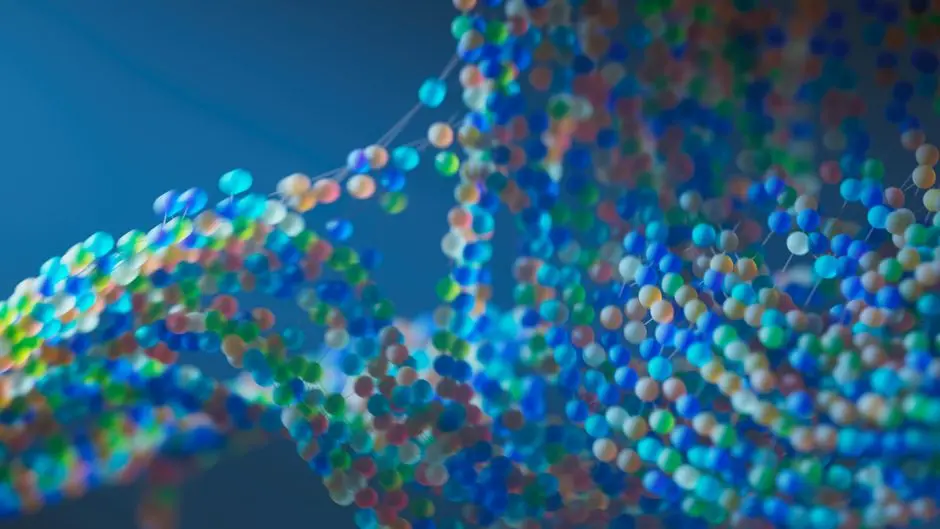
Deciphering Life's Code: The AI Predictive Revolution
We embark on an exploration of the profound shift AI engineers in our understanding of biological systems. For centuries, biological research primarily relied on empirical observation, painstaking experimentation, and reductive analysis. While invaluable, these approaches often struggled to synthesize the massive, multi-scale, and dynamic datasets inherent to life. The non-linear relationships, feedback loops, and emergent properties within biological systems present a computational challenge that traditional statistical methods frequently find insurmountable. This is precisely where AI intervenes, acting as an unparalleled pattern recognition and inference engine.
The AI predictive revolution is founded on its ability to learn from data, identifying hidden correlations, causality, and intricate dependencies that elude human perception. It moves us beyond static descriptions to dynamic foresight. Consider the trajectory: from mapping genomes to predicting gene function; from identifying pathogens to forecasting epidemic spread; from observing protein structures to designing novel molecules. We are moving from 'what is' to 'what will be.' This paradigm shift demands a proactive mindset, where we leverage algorithms to simulate, extrapolate, and pre-empt biological outcomes. We forge a new era of biology where hypotheses are refined by predictive models, and experimental design is optimized for maximum informational yield. The core premise is clear: by intelligently analyzing vast biological datasets, AI constructs predictive models that illuminate the future behavior of living systems, empowering us with strategic biological control.
Architecting Prediction: Core AI Models & Their Biological Blueprint
To unlock AI's predictive power, we must master the architectural blueprints of its most effective models. Different AI methodologies excel at distinct biological problems, necessitating a strategic selection. We dissect the primary models currently driving this revolution:
- Deep Learning (Neural Networks): These multi-layered networks are supreme at recognizing complex patterns in high-dimensional data. In biology, they excel in tasks like
image analysis (e.g., identifying cellular phenotypes from microscopy, diagnosing disease from medical scans), sequence analysis (predicting protein folding from amino acid sequences, identifying regulatory elements in DNA), and drug discovery (screening vast chemical libraries for potential therapeutic compounds).
- Reinforcement Learning (RL): Inspired by behavioral psychology, RL agents learn optimal strategies through trial and error within an environment. Its application in biology involves
optimizing experimental protocols (e.g., cell culture conditions), designing novel proteins or molecules with desired properties, and even controlling nanobots for targeted drug delivery, where the agent learns to navigate complex biological landscapes.
- Graph Neural Networks (GNNs): Biological systems are inherently relational; proteins interact, genes regulate each other, metabolic pathways form networks. GNNs are specifically designed to process data structured as graphs. We leverage them to
model protein-protein interaction networks, analyze drug-target interactions, map disease progression pathways, and understand the complex interplay within microbiomes, uncovering emergent properties from network topology.
- Probabilistic Graphical Models (PGMs): Bayesian networks and Markov Random Fields, for instance, infer causal relationships and dependencies. These models are crucial for
unraveling genetic regulatory networks, identifying biomarkers, and understanding disease etiologies by explicitly representing uncertainty and probabilistic relationships between biological variables.
Our strategic approach involves pairing the right AI architecture with the specific biological question and data structure, transforming raw information into actionable predictive insights.

Fueling the Engine: Data Strategies for AI in Biology
The prowess of AI in biology is directly proportional to the quality and quantity of data it consumes. Data is the irreplaceable fuel for our predictive engine, demanding rigorous acquisition, curation, and preprocessing strategies. We must understand the diverse landscape of biological data:
- Omics Data: Genomics, transcriptomics, proteomics, metabolomics, epigenomics – providing snapshots of molecular states.
- Imaging Data: High-resolution microscopy, medical imaging (MRI, CT) capturing cellular and tissue structures.
- Clinical Data: Electronic Health Records (EHRs), patient registries, vital signs, treatment outcomes.
- Single-Cell Data: Unprecedented resolution into cellular heterogeneity.
- Environmental Data: Ecological surveys, climate data impacting biological systems.
However, this data often arrives heterogeneous, noisy, sparse, and burdened with ethical considerations. We confront critical challenges: data standardization across diverse labs, managing missing values, correcting batch effects, and ensuring data privacy. Our strategy mandates adherence to
FAIR principles (Findable, Accessible, Interoperable, Reusable)
to maximize data utility. Prioritizing high-quality, ethically sourced, and well-annotated datasets is paramount. Before feeding data to AI models, rigorous preprocessing is non-negotiable:- Normalization: Scaling data to comparable ranges.
- Imputation: Strategically filling missing values.
- Feature Engineering: Crafting new, more informative features from raw data, informed by biological expertise.
- Dimensionality Reduction: Simplifying complex datasets while retaining critical information.
Common pitfalls include biased datasets leading to skewed predictions, insufficient data causing overfitting, and poor annotation rendering data unusable. Our best practice dictates robust data validation and an iterative refinement process, ensuring our predictive models are built on an unshakeable empirical foundation.

Real-World Impact: Unleashing AI's Predictive Power Across Biology
The true measure of AI's predictive capability lies in its transformative real-world impact. We witness its profound influence across numerous biological disciplines, catalyzing breakthroughs previously considered intractable:
- Drug Discovery & Development: AI accelerates target identification, predicts compound efficacy and toxicity, optimizes lead candidates, and even designs novel molecules with desired pharmacological properties. This significantly shortens drug development timelines and reduces costs, moving potential therapies from concept to clinic with unprecedented speed. For instance, AI-powered platforms have identified novel antibiotic candidates within days, a process that traditionally takes years.
- Personalized Medicine: By integrating genomic, proteomic, clinical, and lifestyle data, AI predicts individual disease risk, forecasts treatment response, and tailors therapeutic strategies. This enables precision oncology, personalized pharmacogenomics, and proactive health management, ushering in an era of truly individualized healthcare.
- Synthetic Biology & Bioengineering: AI predicts the behavior of designed biological circuits, optimizes gene editing strategies, and engineers novel proteins or metabolic pathways with specific functions. This empowers us to design biological systems for biofuel production, bioremediation, and advanced therapeutic delivery.
- Protein Folding: Deep learning models like AlphaFold have revolutionized our ability to predict complex 3D protein structures from amino acid sequences, a grand challenge in biology for decades. This breakthrough unlocks new avenues for understanding disease mechanisms and designing therapeutic proteins.
- Environmental Biology & Epidemiology: AI models predict ecological shifts due to climate change, forecast pathogen spread and outbreak trajectories, and identify environmental factors impacting public health. This empowers proactive interventions and resource allocation.
Each application underscores a fundamental truth: AI transforms biology from a reactive science to a powerfully predictive and proactive discipline, driving innovation that directly impacts human health, agriculture, and environmental sustainability.
Mastering AI Biology: Implementation Strategies & Overcoming Obstacles
Deploying AI for biological prediction demands a strategic implementation framework and a keen awareness of potential pitfalls. We outline essential practices to ensure robust, reliable, and impactful AI integration:
- Interdisciplinary Collaboration: The most potent breakthroughs emerge at the intersection of expertise. Forge strong partnerships between biologists, computational scientists, data scientists, and ethicists. Biologists provide indispensable context and validation, while AI experts build and refine models.
- Data Governance & Curation: Reiterate the absolute necessity of high-quality, unbiased, and well-annotated data. Establish clear protocols for data collection, storage, and sharing (adhering to FAIR principles) to fuel AI models consistently and ethically.
- Robust Validation: Predictive models are only as good as their validation. Beyond computational metrics, insist on rigorous in vitro and in vivo experimental validation. A prediction is a hypothesis, not a conclusion, until empirically confirmed. This iterative feedback loop between dry and wet lab is critical.
- Explainable AI (XAI): Move beyond 'black-box' models. Prioritize interpretability to understand *why* an AI makes a particular prediction. This builds trust, allows for biological mechanistic insights, and identifies potential biases or flaws in the model. Techniques like SHAP (SHapley Additive exPlanations) or LIME (Local Interpretable Model-agnostic Explanations) are invaluable.
- Ethical Considerations & Bias Mitigation: Actively address ethical implications of AI in biology, particularly concerning patient data privacy, fairness, and potential biases embedded in algorithms or training data. Implement strategies to detect and mitigate bias to ensure equitable outcomes.
- Iterative Development & Open Science: Embrace an iterative approach to model development, continuously refining models with new data and insights. Foster an open science environment, sharing code and data to accelerate collective progress and enable reproducibility.
Common errors we conquer include over-reliance on purely computational metrics without biological validation, insufficient data causing overfitting, ignoring model interpretability, and neglecting the ethical dimensions. By proactively addressing these, we master AI's application, transforming biological prediction into a powerful, responsible, and verifiable scientific tool.
Key Takeaways
Core AI Models & Their Biological Strengths
Deep Learning excels in pattern recognition across image and sequence data, driving breakthroughs in diagnostics and genomics. Reinforcement Learning optimizes complex biological processes and designs novel biomolecules. Graph Neural Networks are indispensable for modeling intricate biological networks like protein interactions. Strategic model selection is paramount for predictive success.
Data: The Unsung Hero of Predictive Biology
High-quality, well-curated, and ethically sourced data – from omics to imaging – is the bedrock of AI in biology. Adherence to FAIR principles and rigorous preprocessing (normalization, imputation, feature engineering) are critical. Overcome challenges like data heterogeneity and scarcity through robust data strategies.
Transformative Applications & Strategic Imperatives
AI delivers unprecedented impact in drug discovery, personalized medicine, synthetic biology, and protein folding. Success hinges on interdisciplinary collaboration, robust experimental validation, prioritizing Explainable AI (XAI) for interpretability, and navigating ethical considerations to ensure responsible and impactful deployment.
FAQ
-
What types of biological data can AI effectively predict?
AI can predict across a vast spectrum of biological data, encompassing genomics (gene function, regulatory elements), transcriptomics (gene expression patterns), proteomics (protein structure, function, interactions), metabolomics (metabolic pathways), and imaging data (cellular phenotypes, disease progression in medical scans). It also extends to clinical data (disease risk, treatment response), single-cell analyses, and even ecological data (population dynamics, pathogen spread). The key is the availability of structured, high-quality training data.
-
What are the main challenges in applying AI to biological systems?
Several formidable challenges exist: Data Heterogeneity & Quality: Biological data is often noisy, incomplete, and highly variable across experiments. Data Scarcity: For many rare diseases or specific biological phenomena, sufficiently large datasets are unavailable. Biological Complexity: Systems are non-linear, dynamic, and multi-scale, making causal inference difficult. Interpretability: Many powerful AI models are 'black boxes,' hindering biological insight. Ethical Concerns: Data privacy, bias, and responsible deployment are paramount. Overcoming these requires interdisciplinary collaboration, robust data governance, and advanced AI methodologies.
-
How does AI specifically help in personalized medicine?
AI revolutionizes personalized medicine by integrating diverse patient data – genetics, lifestyle, medical history, microbiomics – to create individualized health profiles. It predicts disease susceptibility, forecasts drug response and potential side effects, and identifies optimal therapeutic strategies tailored to an individual's unique biological makeup. This enables precision diagnostics, targeted therapies for diseases like cancer, and proactive interventions that move healthcare from a 'one-size-fits-all' model to highly personalized, preventive care.