
> AI in Biology > Computational Modeling and Simulation > Revolutionize Molecular Dynamics: AI's Untapped Potential
Revolutionize Molecular Dynamics: AI's Untapped Potential
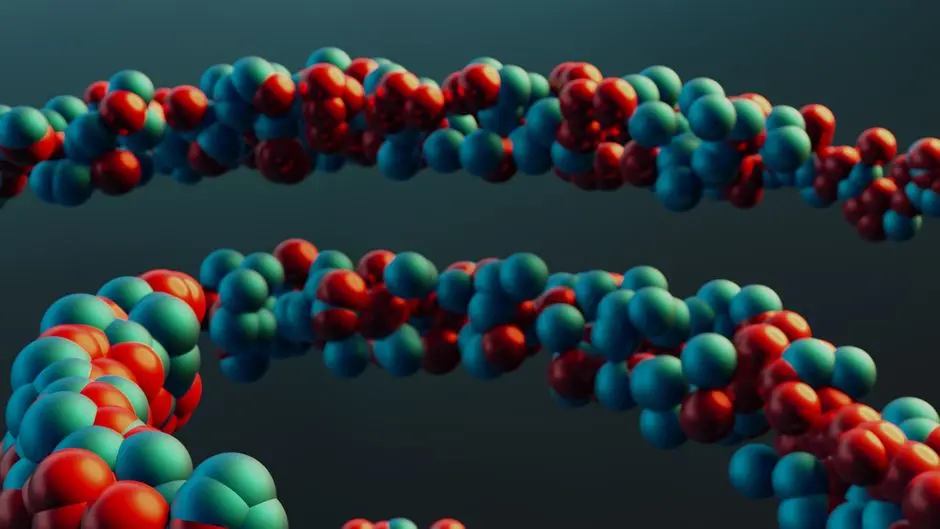
Molecular Dynamics (MD) simulations are the bedrock of modern computational biology, unraveling the intricate dance of atoms and molecules that underpins life itself. From drug discovery to material science, MD offers unparalleled insights into dynamic processes. Yet, its inherent computational cost and the 'sampling problem'—the challenge of exploring vast conformational landscapes within reasonable timescales—have historically limited its transformative power.
However, a seismic shift is underway. Artificial Intelligence (AI) is not merely augmenting MD; it is fundamentally transforming its capabilities, pushing the boundaries of what's computationally feasible. We are witnessing an era where AI algorithms, from machine learning potentials to advanced sampling techniques, are drastically accelerating simulations, enabling us to probe phenomena once deemed intractable.
This article embarks on an expedition into the heart of this revolution. We will meticulously dissect how AI provides unprecedented speed and accuracy, revealing how to leverage these tools to drive scientific discovery. Discover the methodologies that empower a new generation of simulations, where the synergy between biological principles and cutting-edge AI opens pathways to breakthroughs. Forgeons ensemble une compréhension approfondie de cette convergence capitale, pour débloquer le plein potentiel de l'AI-driven modeling of biological and molecular systems, et sculpter l'avenir de la science computationnelle.
Decoding Molecular Dynamics: The Foundational Challenge
Molecular Dynamics (MD) simulations provide a dynamic view of molecular systems, allowing us to observe how atoms interact and move over time. At its core, MD solves Newton's equations of motion for a system of interacting particles, where forces are derived from a potential energy function known as a force field. This foundational approach has propelled our understanding in fields ranging from protein folding and enzyme catalysis to drug-receptor binding and material properties.
The power of MD lies in its atomistic detail, offering insights into mechanisms that are often inaccessible through experimental methods alone. We can visualize molecular interactions, track conformational changes, and quantify kinetic and thermodynamic properties critical for rational design. For example, in drug discovery, MD helps us understand ligand binding affinities and identify cryptic pockets, accelerating the identification of promising lead compounds.
Yet, the promise of MD has always been tempered by significant computational hurdles. Simulating even modest systems (thousands of atoms) for biologically relevant timescales (microseconds to milliseconds) demands colossal computational resources. The 'sampling problem' is particularly acute: systems often get trapped in local energy minima, making it challenging to explore the full range of important conformations, such as rare but crucial protein folding intermediates or ligand unbinding pathways. This limitation has historically constrained MD to shorter timescales and simpler systems, often necessitating approximations that compromise accuracy. We must confront these computational bottlenecks to truly unleash MD's full potential.
AI's Precision Strike: Revolutionizing Force Fields and Interatomic Potentials
Traditional force fields, while effective, rely on empirical parameters derived from experimental data or high-level quantum mechanical (QM) calculations. They are often transferable only within specific chemical classes and struggle to accurately describe complex phenomena like bond breaking/formation or charge transfer, which are crucial for chemical reactions or reactive biological processes. This is where AI delivers a precision strike, fundamentally enhancing the accuracy and efficiency of potential energy surface descriptions.
Machine Learning (ML), particularly neural networks, is now capable of learning intricate interatomic potentials directly from large datasets of QM calculations. These 'Neural Network Potentials' (NNPs) approximate the QM energy landscape with remarkable fidelity, offering an accuracy comparable to QM methods but with the computational speed of classical MD. Consider the ANI (Accurate Neural networK Interatomic Potential) family of models, or the Deep Potential Molecular Dynamics (DeePMD) framework; these represent breakthroughs. They capture complex many-body interactions without explicit functional forms, providing a more robust and flexible description of atomic interactions.
The benefit is profound: we can now simulate reactive systems, explore chemical transformations, and accurately describe electron correlation effects over extended timescales, phenomena previously out of reach for classical MD. This hybrid approach—QM accuracy at MD speed—transforms our ability to model challenging systems, from catalysis to enzyme kinetics. However, careful consideration of the training data's diversity and quality is paramount to ensure the NNP's transferability and avoid extrapolation errors, a common pitfall that demands diligent validation against new chemical environments.
Accelerating Exploration: AI-Driven Enhanced Sampling Techniques
The Achilles' heel of conventional MD—the 'sampling problem'—arises because many biologically significant events occur on timescales far exceeding what standard simulations can access. Systems frequently become trapped in metastable states, hindering the exploration of crucial conformational spaces. AI provides powerful strategies to circumvent this limitation, dramatically accelerating the sampling process.
One potent approach involves AI-driven identification of 'collective variables' (CVs). These are low-dimensional representations of the system's high-dimensional configuration space that describe critical reaction coordinates. Techniques like Variational Autoencoders (VAEs) or Diffusion Maps, enhanced by deep learning, can automatically learn optimal CVs from MD trajectories. Once identified, these CVs can be used with established enhanced sampling methods like metadynamics or umbrella sampling, guiding the system more efficiently across energy barriers.
Reinforcement Learning (RL) is also emerging as a game-changer. RL agents can learn optimal biasing strategies dynamically during a simulation, adapting to the system's behavior to push it out of local minima and toward unexplored regions of conformational space. This 'adaptive sampling' allows for intelligent exploration, focusing computational effort where it is most needed. Furthermore, AI can refine Markov State Models (MSMs) by clustering states and identifying transition pathways with greater accuracy, providing deeper insights into kinetic mechanisms. The judicious selection and validation of CVs remain crucial; poorly chosen CVs can introduce artifacts or fail to capture essential physics, underscoring the need for domain expertise alongside AI prowess.
Optimizing Workflows: AI for Analysis and Predictive Insights in MD
The utility of MD simulations extends beyond generating trajectories; extracting meaningful insights from terabytes of data presents its own analytical challenge. AI streamlines and deepens this analytical phase, optimizing the entire MD workflow from initial setup to final interpretation. Post-processing MD data traditionally involves labor-intensive clustering and statistical analysis to identify significant conformational states or binding events. AI, particularly unsupervised learning algorithms, excels here.
Machine learning models can rapidly cluster vast ensembles of simulation snapshots, identifying distinct conformational ensembles and their populations. Techniques like t-SNE or UMAP, often preceded by principal component analysis, reduce high-dimensional trajectory data into interpretable lower dimensions, revealing hidden patterns and correlated motions. Furthermore, AI can predict crucial events, such as protein-ligand unbinding pathways or allosteric communication, by analyzing features in early stages of a simulation. This predictive capacity allows us to focus subsequent simulations or experiments on the most promising avenues.
Beyond analysis, AI automates aspects of the simulation setup itself. From optimizing initial configurations to suggesting optimal force field parameters or even designing new molecules for simulation, AI acts as an intelligent assistant. This reduces human error, accelerates iterative design cycles, and frees researchers to concentrate on high-level scientific questions. A common error to circumvent is treating AI models as black boxes; for true scientific discovery, we must ensure interpretability and validate AI predictions with physical intuition and, where possible, experimental data. We must understand why an AI model makes a certain prediction, not just what it predicts.
Charting the Course: Future Challenges and Ethical Imperatives in AI-MD
As AI continues to redefine the landscape of molecular dynamics, we must proactively address the challenges and navigate the ethical imperatives that accompany this powerful paradigm shift. The development of robust and generalizable AI models demands extensive, high-quality training data. Generating these datasets, particularly for complex biological systems or novel chemical spaces, remains a significant bottleneck. We need standardized data repositories and collaborative efforts to pool resources and ensure data diversity.
A critical challenge lies in the interpretability of complex AI models. For AI to truly accelerate scientific discovery, researchers must understand not only the outcomes but also the underlying reasons for AI-driven predictions or accelerations. 'Black-box' models, while powerful, can obscure novel physical insights and hinder hypothesis generation. We must champion the development of interpretable AI methods that provide actionable scientific understanding, allowing us to ask deeper questions about molecular mechanisms.
Looking ahead, the integration of AI-MD with experimental data via active learning and closed-loop systems represents the next frontier. Imagine AI-guided simulations that inform real-time experimental design, and experimental results that continuously refine AI models—a symbiotic relationship accelerating discovery across the board. However, this future demands vigilant attention to ethical considerations: ensuring fairness in data representation, preventing biases in model outcomes, and establishing responsible AI deployment frameworks. We must ensure that the AI revolution in MD serves to democratize scientific advancement, fostering innovation while upholding scientific rigor and integrity.
Key Takeaways
AI's Transformative Impact on Molecular Dynamics
AI is fundamentally revolutionizing Molecular Dynamics (MD) simulations, overcoming historical limitations in computational cost and sampling efficiency. This synergy enables researchers to probe complex biological and chemical phenomena with unprecedented depth and speed.
Enhanced Potentials for Unparalleled Accuracy
Neural Network Potentials (NNPs) learn from quantum mechanical data, providing atomic interaction descriptions with QM-level accuracy at the speed of classical MD. This allows for accurate simulations of reactive processes, bond breaking, and charge transfer, which were previously intractable for traditional force fields.
Accelerated Sampling for Deeper Insights
AI-driven techniques, including machine learning for collective variable identification (e.g., VAEs) and Reinforcement Learning for adaptive sampling, significantly accelerate the exploration of conformational space. This helps overcome the 'sampling problem' and reveals rare but critical molecular events.
Optimized Workflows and Predictive Analytics
AI automates and enhances various stages of the MD workflow, from intelligent simulation setup and parameter optimization to rapid post-processing and insightful data analysis (clustering, prediction of pathways). It provides predictive power, guiding further simulations and experimental design.
Charting the Future: Data, Interpretability, and Ethics
Key challenges for the future include generating diverse, high-quality training data, ensuring the interpretability of AI models for scientific discovery, and integrating AI-MD with experimental data in active learning loops. Ethical considerations around bias and responsible AI deployment remain paramount.
FAQ
-
What is the primary bottleneck AI helps overcome in Molecular Dynamics?
The primary bottleneck AI addresses in Molecular Dynamics is the 'sampling problem.' Traditional MD simulations struggle to explore vast conformational spaces and capture rare, slow events (like protein folding or drug unbinding) within reasonable computational timescales. AI-driven enhanced sampling techniques and more efficient potential energy surface evaluations significantly accelerate this exploration, allowing access to longer timescales and more complex phenomena.
-
How do Neural Network Potentials (NNPs) differ from traditional force fields?
Traditional force fields rely on empirical parameters and fixed functional forms, limiting their accuracy for complex chemistries or reactive events. Neural Network Potentials (NNPs), on the other hand, are trained on large datasets of high-level quantum mechanical calculations. They learn the intricate relationship between atomic coordinates and potential energy, offering QM-level accuracy at classical MD speeds, and are capable of describing bond breaking and formation more accurately.
-
Can AI replace the need for traditional physics-based MD simulations?
No, AI is not replacing traditional MD; it is augmenting and transforming it. AI leverages the foundational physics captured by MD, enhancing its accuracy, efficiency, and scope. While AI can learn potentials or guide sampling, the underlying principles of atomic interactions and Newtonian mechanics remain crucial. It's a powerful synergy where AI amplifies the capabilities of physics-based simulations, enabling exploration of previously inaccessible scientific questions.
-
What are the biggest challenges in applying AI to Molecular Dynamics?
Key challenges include the need for extensive and high-quality training data for AI models, ensuring the interpretability of complex AI algorithms (avoiding 'black-box' scenarios), and validating the transferability of AI models to new chemical or biological systems. Furthermore, integrating AI seamlessly into existing MD workflows and ensuring responsible, ethical deployment of AI tools are ongoing areas of development.