
> AI in Biology > Computational Modeling and Simulation > Mastering Molecular Motion: AI's Predictive Frontier
Mastering Molecular Motion: AI's Predictive Frontier
We are opening the doors to an era where artificial intelligence unlocks the secrets of molecular motion with surgical precision. Understanding and predicting the complex dance of atoms and molecules is a fundamental quest in biology, chemistry, and materials science. Until recently, this task was hampered by insurmountable computational challenges, limiting our ability to fully explore the conformational space of biomolecules vital for life.
This article is not a mere overview; it is a strategic roadmap for harnessing the revolutionary potential of AI in predicting molecular motion. We will explore how machine learning algorithms are transforming molecular dynamics simulations, accelerating drug discovery, protein engineering, and the design of novel materials. Prepare to dive into cutting-edge AI architectures, deployment methodologies, and forward-looking visions that are redefining what is possible, building upon the foundations laid by AI-driven modeling of biological and molecular systems. Let us forge together an understanding that will propel your research beyond conventional boundaries.
The Intricate Dance of Molecules: Why Prediction is Essential
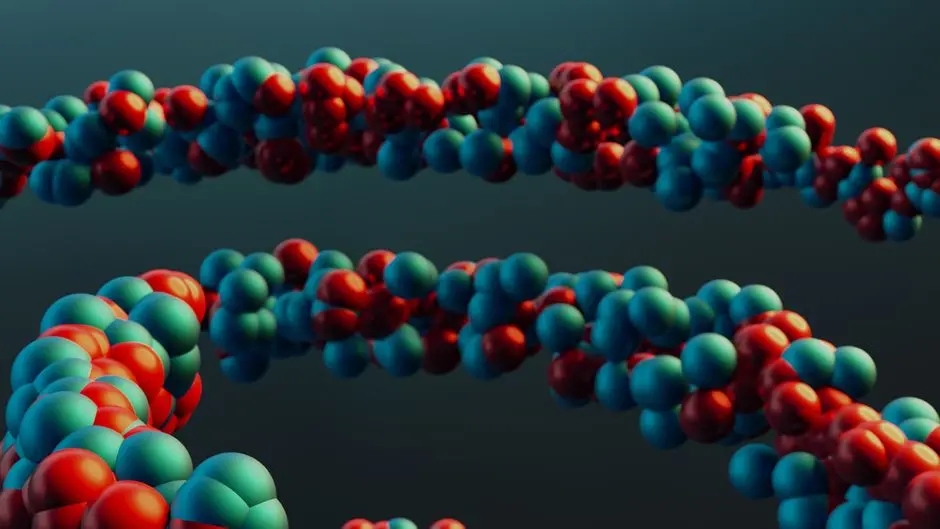
Life itself is a symphony of molecular movements. Every protein-ligand interaction, every macromolecule folding, every enzymatic catalysis is governed by the spatial and temporal dynamics of atoms. Traditionally, Molecular Dynamics (MD) has been our go-to tool for simulating these movements, but it faces colossal challenges. The relevant timescales for many biological processes (microseconds to seconds) far exceed direct simulation capabilities, which are often limited to nanoseconds, even with massive computational power. This creates a fundamental barrier to observing rare but critical transitions, such as protein folding or major conformational changes.
We are faced with a paradox: the underlying physical equations are known, but solving them for complex systems over significant timescales is intractable. Classical force fields, though refined, are often approximations that struggle to accurately capture the complexity of interatomic interactions, especially subtle quantum effects. This imprecision can lead to significant deviations from real trajectories. We need an approach that overcomes these limitations, that can learn from atomic data and predict system evolution with unprecedented fidelity and speed.
The need to predict molecular motion accurately and efficiently is critical. Imagine designing a drug that targets a specific protein by precisely modeling its interaction, or engineering an enzyme for an industrial reaction by optimizing its dynamics. These advancements directly depend on our ability to simulate and anticipate molecular behaviors. AI stands as the catalyst capable of unlocking these potentials, offering methods to accelerate calculations, improve model fidelity, and explore otherwise inaccessible energy landscapes.
Decoding Molecular Trajectories: The AI Paradigm Shift
The integration of AI into molecular motion prediction represents a true qualitative leap. Gone are the days of monolithic simulations; we now forge models that learn from data to anticipate. At the heart of this revolution are machine learning architectures, capable of extracting complex patterns from massive datasets of simulation or experimental data. Neural networks are particularly powerful here, acting as sophisticated cartographers of molecules' intricate energy landscapes.
We employ feedforward neural networks (FFNNs) to learn direct relationships between atomic coordinates and forces, or between configurations and potential energies. More recently, graph neural networks (GNNs) have emerged as a natural fit for molecular data, as they directly process the intrinsic structure of molecules as a graph of atoms connected by bonds. This approach allows GNNs to capture non-local interactions and molecular symmetries more effectively, significantly improving the accuracy of force and energy predictions. We also leverage recurrent neural networks (RNNs) or transformers to predict temporal sequences of motion, learning dynamic correlations over time.
The principle is simple, but the execution is sophisticated: AI learns a numerical representation of a molecular system's potential energy surface (PES). Instead of calculating forces at each simulation step from first principles (quantum mechanics) or classical force potentials, the AI infers these forces in real-time. This inference is orders of magnitude faster, enabling us to extend simulation durations while maintaining a level of accuracy comparable to, or even exceeding, ab initio methods for certain properties. We are shifting from a "direct computation" approach to a "predictive learning" approach, thereby unlocking previously inaccessible timescales and complexities.
Forging Predictive Force Fields: The Key Mechanism of AI
The true power of AI in molecular motion prediction lies in its ability to forge predictive force fields. We are no longer confined to static approximations; instead, we are building dynamic models that learn from real or computed data. The primary task here is to accurately model the potential energy surface (PES) of a molecular system. This PES dictates all interactions between atoms and, consequently, their motion. AI-based approaches learn the PES by training neural networks on a dataset of atomic configurations and their corresponding energies/forces, often obtained from high-accuracy quantum mechanical calculations (ab initio methods). This allows us to capture complex electronic effects that classical force fields cannot. Once trained, the AI model can instantaneously predict energies and forces for new configurations, radically accelerating MD simulations. This process is often referred to as AI-driven force field learning or machine learning-based interatomic potentials. A particularly effective technique is active learning. Instead of generating a fixed initial dataset, the AI model is trained iteratively. It performs an MD simulation, identifies regions of the PES that it is uncertain about (where its predictions are inaccurate), and then requests new ab initio calculations for those specific configurations. This new data is then used to refine the model. This continuous cycle allows for efficient exploration of the conformational space and improvement of model accuracy where it is most needed, while minimizing the computational cost of ab initio calculations. In doing so, we create high-fidelity force models that are not only accurate but also capable of adapting and learning as the simulation progresses, optimizing our exploration of molecular landscapes.
Strategic Implementation: From Data to Discovery
Implementing AI models for molecular motion prediction requires a methodical strategy. We don't just throw an algorithm at the problem; we build a robust pipeline of data, training, and validation. The crucial first step is data generation: AI models need high-quality datasets, often thousands or millions of molecular configurations with their associated energies and forces, derived from quantum mechanics calculations (DFT, MP2) or experiments. The diversity and representativeness of this data are paramount to ensure the model generalizes well to new situations. Common pitfalls include datasets that are too narrow, leading to overfitting and an inability to explore unexpected conformations.
Model training is the next stage. We select neural network architectures (GNNs for molecular systems are often the optimal choice) and optimize their hyperparameters. Best practices include using loss functions that account for both energy and forces, and incorporating physical invariances (rotation, translation) to enhance generalizability. We then rigorously validate the model. Cross-validation and testing on independent datasets are essential to assess the model's accuracy and robustness. We must ensure the model doesn't just memorize the training data but accurately predicts new molecular trajectories.
Finally, integrating the AI model into an existing MD simulation framework presents a technical challenge. It requires an efficient interface for the AI to interact with the MD simulator, quickly providing forces at each timestep. Common errors here are communication bottlenecks or implementations that don't fully leverage GPU acceleration. We also need to consider model interpretability. Understanding why the AI makes certain predictions can help us refine the model and gain new biological insights, rather than treating the AI as a black box. Transparency is key to full trust and widespread adoption.

The Frontier of Molecular AI: Impact and Vision
The impact of AI on molecular motion prediction transcends performance gains; it is redefining the frontiers of scientific discovery. In the realm of drug discovery, we are now capable of screening billions of candidate molecules with unprecedented speed, predicting their binding affinity to protein targets, and optimizing their pharmacokinetics. AI-accelerated simulations reveal elusive allosteric binding sites and rare binding pathways, opening new therapeutic avenues.
Protein engineering is another major beneficiary. We can now simulate protein folding, design mutations to enhance stability or enzymatic function, and even create de novo proteins with specific dynamics. This paves the way for more efficient biocatalysts and innovative biological materials. In materials science, AI enables the prediction of complex material properties (polymers, crystals, nanomaterials) based on their atomic architecture and long-term dynamics, accelerating the design of materials with targeted properties.
The future vision of molecular AI is even bolder. We anticipate multimodal AI systems that will integrate experimental data (cryo-EM, NMR, X-ray) directly into the prediction process, reducing reliance on simulations alone. Quantum computing may merge with AI to unlock unprecedented levels of accuracy for electronic interactions, though this remains a long-term challenge. Explainable AI (XAI) will become the norm, allowing us not only to predict but also to understand the underlying mechanisms that dictate molecular motion, transforming AI models into tools for scientific hypothesis generation rather than mere black boxes. Challenges lie in the availability of high-quality data, managing massive computational resources, and rigorous experimental validation of predictions. We are at the dawn of an era where every atom and every bond will reveal its potential through the acuity of artificial intelligence.
Key Takeaways
The Challenge of Molecular Dynamics
Traditional molecular dynamics (MD) simulations are limited by timescales and computational complexity. AI addresses these issues by accelerating force calculations and exploring inaccessible energy landscapes.
The AI Architectures Revolution
Graph Neural Networks (GNNs) are ideal for molecules, modeling atomic interactions. FFNNs and RNNs/Transformers predict energies, forces, and time-series trajectories, learning directly from data to map the potential energy surface (PES).
AI-Powered Force Field Generation
AI learns an accurate representation of MS from ab initio quantum calculations. Active learning iteratively refines the model, requesting new calculations for unknown regions, optimizing accuracy and efficiency.
Strategic Implementation Methodology
A successful implementation requires diverse and high-quality data generation, rigorous model training with hyperparameter optimization, strict cross-validation, and efficient integration into DM simulators. Model interpretability is crucial for trust and discovery.
Impact et Perspectives Futures
AI is transforming drug discovery, protein engineering, and materials science by enabling ultra-fast and accurate simulations. The future will see multimodal integration (experimental data), potentially quantum computing, and Explainable AI (XAI) for deeper scientific breakthroughs.
FAQ
-
What is the main advantage of AI for molecular motion prediction?
The main advantage is a phenomenal acceleration of molecular dynamics simulations. AI enables the calculation of interatomic forces orders of magnitude faster than traditional methods (quantum or classical), allowing us to explore timescales and system complexities previously inaccessible. This opens the door to observing rare but crucial biological processes. -
What types of AI models are most effective for this task?
Graph Neural Networks (GNNs) are particularly effective as they naturally process molecular structure as a graph, capturing atomic interactions and symmetries. Feedforward Neural Networks are also employed to learn potential energy surfaces. The integration of active learning techniques is also key for optimizing data generation and continuous model improvement.
-
What are the major challenges in implementing AI for molecular dynamics?
Challenges include the need for very high-quality and representative training datasets (often derived from computationally expensive quantum mechanics calculations), the risk of model overfitting or lack of generalization to unknown regions of the energy landscape, optimization of AI architectures for specific systems, and efficient integration of these models into existing simulation frameworks. The interpretability of AI models also remains a significant challenge for gaining scientific confidence.