
> New Molecule Discovery > Integrated Discovery Workflows > Accelerate Discovery: Unifying Computational & Lab Methods
Accelerate Discovery: Unifying Computational & Lab Methods

The quest for novel molecules—be it life-saving drugs, advanced materials, or sustainable chemicals—stands as a monumental challenge. Traditionally, this journey has been a marathon of trial-and-error, often fraught with exorbitant costs and formidable timelines. But what if we could radically optimize this process, shifting from blind exploration to intelligent design? The convergence of computational and experimental methods represents this pivotal paradigm shift, unleashing unprecedented power in accelerating discovery. We are not merely combining tools; we are forging a synergistic ecosystem where algorithms guide laboratory work, and experimental data refines predictive models, culminating in a dynamic feedback loop. This article will dissect the intricate mechanisms by which these two powerful forces integrate, revealing how we can dramatically shorten discovery cycles, enhance success rates, and unlock the true potential of molecular innovation. We embark on a journey to understand how to sculpt efficient and robust workflows that push the boundaries of what is possible in the creation of groundbreaking molecules, a critical step in mastering end-to-end processes for discovering novel bioactive molecules. We shall equip ourselves with the strategic blueprint to command this integrated frontier.
Forge Synergies: Why Integration Powers Molecular Discovery
We stand at a critical juncture in molecular discovery. Historically, the pursuit of new compounds relied heavily on empirical methods, often characterized by extensive, costly, and time-consuming laboratory screening. This siloed approach, where computational predictions might inform initial choices but rarely drive continuous feedback, has inherent limitations. Consider the sheer scale of chemical space—an estimated 1060 molecules—and the practical impossibility of exploring even a fraction through traditional methods alone. Without strategic integration, we encounter:
- Astronomical Costs: Each failed experimental campaign represents a significant financial drain. Pharmaceutical R&D costs often soar into the billions for a single approved drug.
- Prolonged Timelines: A new drug takes an average of 10-15 years to reach the market, hindering our ability to respond rapidly to emerging health crises.
- High Failure Rates: The vast majority of candidate molecules fail during development, often due to unforeseen toxicity or lack of efficacy, discovered only after substantial investment.
- Limited Scope: Empirical methods struggle to predict complex biological interactions or optimize properties beyond what can be directly screened.
The imperative is clear: we must move beyond isolated efforts. We forge an integrated discovery workflow that transcends these limitations. This strategic alliance between computational and experimental methods transforms the discovery pipeline from a linear, often broken, process into a dynamic, iterative cycle. We leverage computational power to navigate vast chemical landscapes, generate hypotheses, and prioritize candidates with unprecedented speed. Simultaneously, we employ experimental rigor to validate these predictions, refine models, and provide indispensable empirical data. This fusion is not merely an add-on; it is the fundamental architectural shift required to command the future of molecular innovation, enabling us to dissect complexity with surgical precision and propel discovery forward with a proactive, data-driven approach. We are building a resilient, adaptable ecosystem for molecular creation.

Unleash In Silico: Guiding Hypothesis Generation and Prioritization
Computational methods act as powerful catalysts, igniting the molecular discovery process by enabling intelligent exploration and prioritization long before any synthesis occurs. We command these digital tools to rapidly sift through billions of potential molecules, generating actionable hypotheses that streamline experimental work. Key computational approaches include:
- Virtual Screening (VS): We employ techniques like molecular docking to predict how a small molecule might bind to a target protein, scoring potential candidates based on their predicted affinity. This allows us to drastically reduce the number of molecules entering experimental screens from millions to hundreds.
- Quantitative Structure-Activity Relationships (QSAR): We build models that correlate molecular features (structure) with biological activities. QSAR enables us to predict the activity of new, unsynthesized compounds and optimize existing leads by identifying key structural determinants for potency.
- Molecular Dynamics (MD) Simulations: We execute MD simulations to observe the dynamic behavior of molecules and protein-ligand complexes over time. This provides crucial insights into binding stability, conformational changes, and allosteric effects—information unattainable from static docking poses.
- Artificial Intelligence (AI) and Machine Learning (ML): We deploy AI/ML algorithms to learn complex patterns from vast datasets of molecular structures and their properties.
Specifically, deep learning models excel at predicting ADMET (Absorption, Distribution, Metabolism, Excretion, Toxicity) properties, potentially flagging problematic compounds early. Generative models, such as recurrent neural networks (RNNs) or generative adversarial networks (GANs), push the boundaries further by designing novel molecules with desired properties from scratch, rather than just screening existing ones. We are not just predicting; we are creating. These in silico tools significantly de-risk early-stage discovery, reducing the candidate pool by up to 99% in some cases, and ensuring that experimental resources are focused on the most promising compounds. This precision targeting saves immense time and cost, transforming early discovery from a shot in the dark into a laser-guided mission.
Validate with Precision: Experimental Methods Confirming Hypotheses
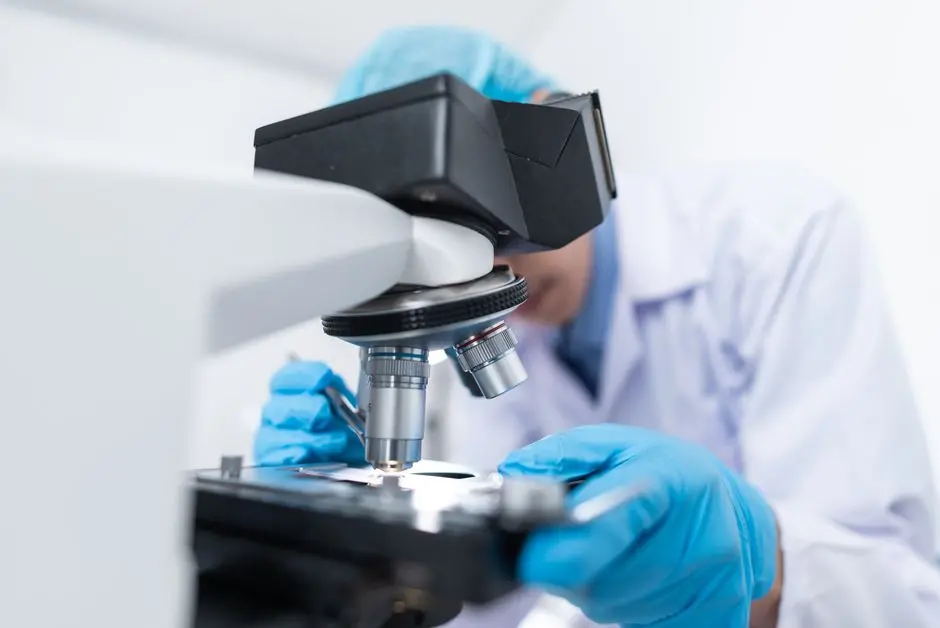
While computational methods provide unparalleled predictive power, experimental validation remains the bedrock of molecular discovery. We transition from hypothesis generation to empirical confirmation, ensuring that our in silico predictions hold true in the biological world. This indispensable phase involves a suite of sophisticated laboratory techniques:
- High-Throughput Screening (HTS): After computational prioritization, we deploy automated HTS platforms to rapidly test hundreds of thousands of compounds against a biological target. This validates predicted activity and identifies initial hits, confirming the computational insights at scale. Modern HTS often incorporates diverse assay formats, from biochemical to cell-based, to capture various aspects of activity.
- Structural Biology: Techniques such as X-ray crystallography, Cryo-Electron Microscopy (Cryo-EM), and Nuclear Magnetic Resonance (NMR) spectroscopy provide atomic-level insights into protein-ligand interactions. We determine the precise binding mode of a molecule within its target, which is critical for rational design and for refining computational models. Understanding the 'how' and 'where' of binding is paramount.
- Biophysical Assays: We utilize methods like Surface Plasmon Resonance (SPR) or Isothermal Titration Calorimetry (ITC) to precisely quantify binding kinetics and thermodynamics. These assays confirm the strength and nature of molecular interactions, offering a deeper understanding beyond simple activity measures.
- Cell-Based Assays: Moving beyond isolated proteins, we assess molecular efficacy and selectivity in more complex cellular environments. These assays provide crucial context for a molecule's behavior within a living system.
- ADMET Profiling: Early experimental ADMET (Absorption, Distribution, Metabolism, Excretion, Toxicity) assays are crucial. We measure parameters such as solubility, permeability, metabolic stability, and cytotoxicity in vitro to identify potential liabilities early. This prevents costly failures in later-stage development, confirming or refuting computational predictions of these critical properties.
Each experimental data point acts as a critical anchor, grounding our computational predictions in reality. This iterative process allows us to not only confirm hypotheses but also to uncover unforeseen biological complexities that enrich our overall understanding and drive the next cycle of rational design.
Command the Cycle: Iterative Integration for Optimized Outcomes
The true power of integrated discovery lies in the dynamic, iterative feedback loop we establish between computational and experimental stages. This is not a one-way street but a continuous cycle of refinement and optimization. We must actively orchestrate this flow of information, transforming isolated data points into collective intelligence.
Forging the Feedback Loop:
- Data Recalibration: Experimental results (binding affinities, structural data, ADMET profiles) become invaluable training data for our computational models. We use this empirical evidence to refine and retrain QSAR models, improve docking algorithms, and enhance AI/ML predictions of molecular properties. Each experimental outcome makes our predictive tools sharper.
- Hypothesis Refinement: New insights from the lab directly inform the next round of computational design. For example, if crystallography reveals a novel binding pocket, we immediately launch new virtual screens tailored to this discovery. If toxicity emerges, computational models are tasked with designing analogs that mitigate this risk.
- Iterative Design: We implement cycles of 'Design-Make-Test-Analyze' (DMTA) that are deeply integrated. Computational design suggests new molecules (Design), chemists synthesize them (Make), biologists test them (Test), and data scientists analyze the results to feedback into the next Design phase (Analyze). This accelerates lead optimization with surgical precision.
Overcoming Integration Challenges:
- Data Silos: A common pitfall. We dismantle these by implementing unified data management systems (e.g., ELNs, LIMS) and standardized data formats, ensuring seamless data exchange.
- Communication Gaps: Computational scientists, medicinal chemists, and biologists often speak different technical languages. We foster interdisciplinary team meetings, shared goals, and collaborative platforms to bridge these gaps, ensuring everyone understands the full discovery picture.
- Validation Rigor: We establish clear validation criteria for computational models. A model is only as good as the experimental data it's tested against. Regular benchmarking and recalibration are non-negotiable.
By proactively managing these challenges, we transition from merely integrating tools to truly integrating minds and processes. We leverage the inherent strengths of each discipline in a symbiotic relationship. The future of molecule discovery is not just about faster screens or better algorithms; it is about the intelligent orchestration of these forces to systematically unlock new biological opportunities. We command this integrated frontier to drive innovation with unparalleled efficiency and precision.
Key Takeaways
Synergistic Imperative
Integration is essential for overcoming the limitations of traditional, siloed molecular discovery. It dramatically reduces costs and timelines by leveraging the strengths of both computational prediction and experimental validation, moving us towards a proactive, data-driven approach.
Computational Powerhouse
In silico methods (AI/ML, docking, MD, QSAR) rapidly generate hypotheses, predict properties, and filter vast chemical spaces. They transform early-stage discovery from trial-and-error to intelligent, data-driven prioritization, focusing resources on the most promising candidates.
Experimental Validation
Laboratory experiments (HTS, structural biology, biophysical assays) are indispensable for validating computational predictions, refining models, and grounding theoretical insights in empirical reality. This ensures the efficacy and safety of new molecules, confirming their real-world biological relevance.
Iterative Feedback
A continuous, iterative feedback loop between computational and experimental stages is paramount. Experimental data informs and retrains computational models, which, in turn, guide subsequent experiments. This creates an accelerating cycle of optimization, discovery, and innovation.
FAQ
-
What is the primary benefit of integrating computational and experimental methods in molecule discovery?
The primary benefit is accelerating discovery timelines, reducing costs, and increasing success rates by replacing largely empirical approaches with data-driven, predictive, and iteratively refined workflows. We move from vast, undirected screening to targeted, intelligent design, thereby maximizing our return on investment and impact.
-
How do AI and Machine Learning contribute to this integrated workflow?
AI and ML models act as powerful predictive engines. They analyze vast datasets to identify patterns, predict molecular properties (activity, toxicity), optimize synthetic routes, and even generate novel molecular structures. Crucially, they learn from experimental feedback, continuously improving their predictive accuracy and guiding subsequent experimental efforts with greater precision.
-
What are the biggest challenges in achieving true integration?
Key challenges include data interoperability (different formats, silos), communication gaps between diverse expert teams (computational vs. experimental), the need for robust validation protocols, and the development of unified IT infrastructure. Overcoming these requires strategic leadership, standardized protocols, and genuine interdisciplinary collaboration to forge a cohesive discovery ecosystem.