
Mastering End-to-End Processes for Novel Bioactive Molecule Discovery

Unlock the secrets to efficient and impactful drug discovery. The journey from identifying a biological target to delivering a promising drug candidate is complex, demanding precision, innovation, and an integrated strategy. This article dissects the entire pipeline, revealing how cutting-edge methodologies, computational prowess, and advanced automation converge to accelerate the identification of novel bioactive molecules.
We delve into the critical phases, from initial target validation to sophisticated lead optimization, exposing the strategies that elevate success rates and mitigate costly failures. Prepare to gain an insider's perspective on optimizing workflows, leveraging data, and embracing future technologies that are redefining pharmaceutical research. Forge a path to faster, more effective discovery and transform the landscape of health innovation with us.
Laying the Foundation: Strategic Target Identification and Validation
The quest for novel bioactive molecules commences with a profound understanding of biological targets. We identify critical proteins, enzymes, or pathways implicated in disease, often through genomic, proteomic, and metabolomic studies. This initial phase is not merely about spotting a potential target; it demands rigorous validation to confirm its role in pathophysiology and assess its 'druggability'. A target's druggability refers to its amenability to modulation by small molecules or biologics, a crucial determinant for downstream success.
We employ advanced bioinformatics tools to analyze vast datasets, pinpointing targets with strong therapeutic potential and minimal off-target effects. Functional assays, genetic manipulation (e.g., CRISPR-Cas9), and phenotypic screening provide experimental validation, ensuring that modulating the chosen target indeed translates into a desired biological outcome. Neglecting this foundational step is a common pitfall, leading to significant resource wastage later in the pipeline. Forge clarity early to secure a robust discovery trajectory.
Understanding exactly how the molecule discovery pipeline works from its earliest conceptual stages is paramount. It's an intricate dance between hypothesis generation and experimental validation. We must recognize that the efficacy of the entire process hinges on the strength of this initial biological insight. Furthermore, this phase often determines the types of assays and screening campaigns that will follow, setting the stage for the subsequent identification of compounds that can interact with the target. We must operate with surgical precision, confirming the therapeutic relevance of each target before committing significant resources to compound discovery.

Navigating Early Stage Discovery: From Target to Lead Compound
With a validated target in hand, we transition into the exciting realm of hit identification and lead generation. This stage is characterized by the systematic search for compounds that bind to and modulate the activity of our chosen target. We initiate diverse compound screening campaigns, often leveraging vast chemical libraries numbering millions of compounds. These campaigns range from high-throughput screening (HTS) to more focused fragment-based drug discovery (FBDD) or virtual screening approaches.
HTS involves rapidly testing thousands to millions of compounds against a target in automated assays, identifying 'hits' that show initial activity. FBDD, conversely, screens smaller molecular fragments, which are then grown or linked to improve potency and selectivity. Virtual screening, a computational technique, predicts compound binding affinity, prioritizing candidates for experimental testing. This multi-pronged approach maximizes our chances of finding promising starting points.
We consolidate these efforts to progress from hits to 'lead' compounds, refining their properties for better potency, selectivity, and drug-like characteristics. These are the key stages in modern drug discovery workflows that define our initial success. Understanding what are the steps from target to lead compound means meticulously triaging hits, performing dose-response experiments, and initiating preliminary structure-activity relationship (SAR) studies. This iterative process of synthesis, testing, and refinement begins to sculpt a molecule capable of becoming a future therapeutic agent. It is a phase of rapid iteration and data-driven decision-making.
Optimizing Leads: Enhancing Efficacy and Safety Profiles
The journey from a raw 'hit' to a developable 'lead' is an intensive optimization process. Once initial hits are identified, we embark on lead optimization, focusing on improving the compound's potency, selectivity, pharmacokinetic (ADME - Absorption, Distribution, Metabolism, Excretion) properties, and safety profile. This involves medicinal chemistry efforts to synthesize structural analogs around the initial hit, systematically exploring the chemical space to enhance desired attributes while mitigating undesirable ones.
We run a battery of in vitro and in vivo assays to evaluate these optimized compounds. These include assays for target engagement, cellular potency, off-target effects, metabolic stability, solubility, and permeability. Early toxicity screening helps deselect compounds with inherent safety concerns, saving significant downstream costs and time. This iterative cycle of design, synthesis, and testing is the engine of lead optimization, pushing molecules toward drug candidacy.
This is where the overview of early stage molecule discovery truly gains momentum, transforming raw data into actionable insights for molecular design. Moreover, it is precisely how computational and experimental methods integrate to drive intelligent design cycles. We use computational models to predict compound properties before synthesis, guiding our chemists to focus on the most promising analogs. This synergy dramatically reduces the number of compounds needing to be synthesized and tested, making the process exponentially more efficient and targeted.
Integrating Computational and Experimental Synergies for Accelerated Discovery
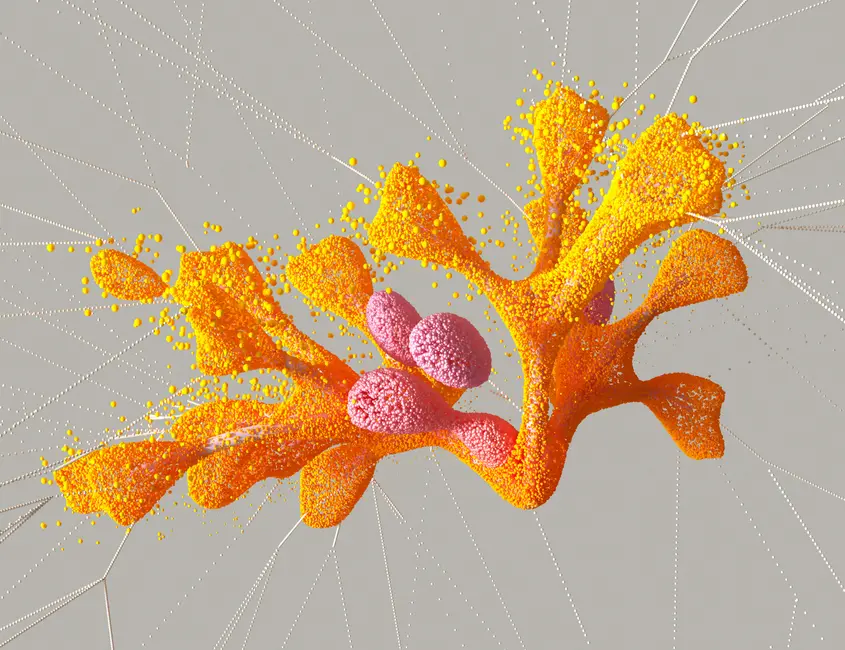
In contemporary molecule discovery, the distinction between 'in silico' and 'wet lab' is increasingly blurred. We actively forge a powerful synergy between computational predictions and experimental validation, creating a truly integrated discovery workflow. Computational tools, such as molecular docking, molecular dynamics simulations, pharmacophore modeling, and quantitative structure-activity relationship (QSAR) models, provide invaluable insights into compound-target interactions and predict physicochemical properties. These insights allow us to prioritize compounds for synthesis and testing, reducing experimental burden and accelerating the discovery timeline.
For instance, virtual screening can filter millions of compounds down to a few hundred promising candidates, which are then rigorously tested in the lab. This intelligent pre-selection is a game-changer. Conversely, experimental data generated in the lab feeds back into computational models, refining their predictive power and enhancing our understanding of complex biological systems.
This strategic approach to combining computational screening with lab testing is now standard practice. It exemplifies how in silico methods guide experimental discovery at every turn, from initial hit identification to lead optimization. The benefits are profound: reduced costs, faster cycles, and a higher probability of identifying truly novel and effective compounds. This is what is hybrid discovery in pharmaceutical research?: a seamless blend of digital and physical exploration, optimizing every step of the journey.
Leveraging Automation for High-Throughput Efficiency and Precision
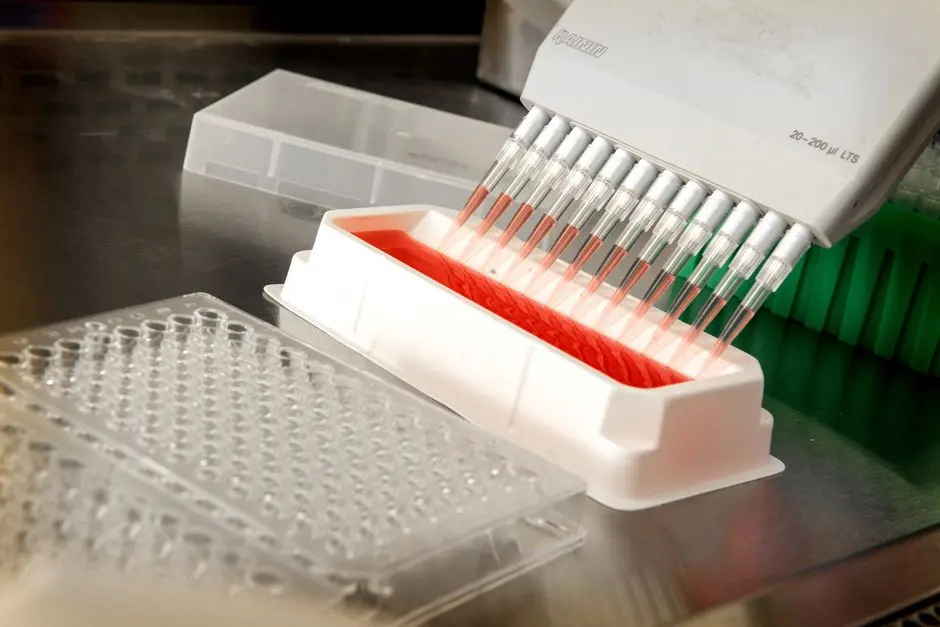
The scale and complexity of modern drug discovery demand unparalleled efficiency. Automation stands as our pivotal enabler, transforming slow, labor-intensive processes into rapid, high-throughput operations. Robotic systems handle compound plating, assay execution, liquid handling, and data acquisition with precision and reproducibility far beyond human capability. This allows us to screen millions of compounds against multiple targets simultaneously, dramatically expanding our exploratory capacity.
High-throughput screening (HTS) platforms, enabled by robotics, are central to this efficiency. They perform thousands of experiments per day, generating massive datasets that inform our decision-making. Beyond HTS, automation extends to compound synthesis, purification, and even advanced cell culture, streamlining virtually every experimental step. We actively invest in and deploy these technologies to shrink timelines and elevate data quality.
The benefits of integrating computational and wet lab methods are further amplified by this widespread automation. It's clear how automation accelerates molecule discovery through sheer throughput and reduction of human error. We utilize robotic systems used in compound screening to execute complex protocols with unwavering consistency. Furthermore, understanding what technologies automate drug discovery pipelines allows us to select and deploy the most impactful solutions, securing a competitive edge. This commitment to high throughput automation in chemical discovery is non-negotiable for success. These are the benefits of automated discovery platforms we relentlessly pursue to propel our programs forward.

Architecting Data Management for Reproducibility and Insight
The explosion of data generated throughout the discovery pipeline presents both a challenge and an immense opportunity. Effective data management is not just an administrative task; it is a strategic imperative that underpins reproducibility, accelerates insights, and ensures the long-term value of our research. We implement robust Laboratory Information Management Systems (LIMS) and Electronic Lab Notebooks (ELNs) to meticulously track every experiment, sample, and result.
These systems capture everything from compound IDs and synthesis details to assay conditions, raw data, and analyzed results. Data standardization, metadata tagging, and secure storage are paramount. Without a well-architected data infrastructure, integrating insights from disparate experiments—computational screens, biochemical assays, cell-based studies—becomes arduous, if not impossible. We prioritize interoperability and accessibility to foster a truly collaborative and data-driven environment.
Central to our operation is efficient managing data in molecule discovery workflows. We employ specialized databases that track discovery experiments from inception to conclusion. Identifying the best tools for managing chemical screening data is critical for maintaining data integrity and accessibility. This is precisely why data integration matters in drug discovery: it enables a holistic view of our compounds and targets. We are dedicated to organizing discovery projects for reproducibility, ensuring that every finding can be verified and built upon, a cornerstone of scientific rigor.
Embracing Future Technologies: AI, Machine Learning, and Next-Generation Innovations
The landscape of molecule discovery is continually evolving, driven by disruptive technologies that promise to redefine the very essence of pharmaceutical research. We are at the forefront of integrating Artificial Intelligence (AI) and Machine Learning (ML) across the entire discovery pipeline. AI algorithms excel at pattern recognition in vast biological and chemical datasets, predicting compound properties, identifying novel targets, and even designing de novo molecules with desired characteristics. This moves us beyond traditional trial-and-error into an era of intelligent design.
Beyond AI, advancements in areas such as organ-on-a-chip technologies offer more physiologically relevant in vitro models, reducing reliance on animal testing and improving predictivity for human outcomes. Cryo-electron microscopy (Cryo-EM) provides atomic-resolution structural insights into complex protein targets, accelerating structure-based drug design. Quantum computing, while nascent, holds future promise for simulating molecular interactions with unprecedented accuracy.
We actively monitor and deploy future technologies shaping molecule discovery to stay ahead. It is undeniable how AI and automation transform drug discovery by injecting intelligence and speed into every phase. We are constantly evaluating what innovations will accelerate molecule discovery to refine our strategies. The emergence of emerging computational methods in chemical discovery like generative AI for molecular design marks a new frontier. These trends shaping next generation pharmaceutical research are not just theoretical concepts; they are the practical tools we wield to forge the future of medicine, creating a healthier tomorrow.
Key Takeaways
Strategic Target Identification
Begin with rigorous target identification and validation using multi-omics data and functional assays. This foundational step is critical for ensuring 'druggability' and therapeutic relevance, mitigating downstream failures, and shaping the entire discovery trajectory.
Iterative Hit-to-Lead Optimization
Progress from initial 'hits' identified via high-throughput or fragment screening to optimized 'lead' compounds. This involves iterative medicinal chemistry to enhance potency, selectivity, and ADME properties while assessing early toxicity, systematically refining molecules towards drug candidacy.
Integrated Computational-Experimental Workflows
Fuse 'in silico' predictions (molecular docking, AI/ML) with 'wet lab' experiments. Computational methods guide synthesis and prioritize testing, while experimental data refines models. This hybrid approach significantly reduces discovery timelines and costs by focusing efforts on the most promising candidates.
Automation for Efficiency and Precision
Leverage robotics and high-throughput automation across all experimental stages. This accelerates compound screening, synthesis, and assay execution, boosting throughput, ensuring reproducibility, and minimizing human error, which is essential for managing the scale of modern discovery.
Robust Data Management & Integration
Implement comprehensive LIMS and ELN systems for meticulous data capture, standardization, and integration. Effective data management underpins reproducibility, facilitates cross-disciplinary insights, and is critical for making informed decisions and ensuring long-term project viability.
Embracing Future-Forward Technologies
Actively adopt and integrate cutting-edge technologies like AI/ML for intelligent molecular design and prediction, advanced structural biology (Cryo-EM), and organ-on-a-chip models. These innovations are reshaping pharmaceutical research, promising faster, more effective discovery and a higher success rate for novel therapeutics.
FAQ
-
What is the primary goal of end-to-end molecule discovery?
The primary goal is to systematically identify, optimize, and validate novel chemical entities or biologics that can effectively treat or prevent diseases. This spans from initial target identification through to preclinical development, aiming to deliver a safe and efficacious drug candidate.
-
How do computational methods significantly impact the discovery process?
Computational methods, such as virtual screening, molecular docking, and AI/ML, enhance discovery by predicting compound properties, guiding molecular design, identifying potential targets, and prioritizing candidates for experimental testing. This reduces costs, saves time, and increases the success rate by intelligently narrowing down vast chemical spaces.
-
What role does automation play in modern molecule discovery?
Automation, through robotic systems and high-throughput platforms, accelerates discovery by enabling rapid, precise, and reproducible execution of experiments at scale. It minimizes human error, increases throughput for screening millions of compounds, and streamlines processes from compound synthesis to data acquisition, making the entire pipeline more efficient.
-
Why is robust data management crucial in drug discovery?
Robust data management ensures the integrity, accessibility, and reproducibility of experimental data. It allows for seamless integration of diverse datasets, facilitates informed decision-making, and is vital for tracking compound progress, identifying trends, and building comprehensive knowledge bases, all of which are critical for successful and compliant discovery programs.
-
What are some emerging technologies expected to transform molecule discovery?
Emerging technologies include advanced AI/ML for generative chemistry and predictive modeling, organ-on-a-chip systems for more physiologically relevant testing, enhanced structural biology techniques like Cryo-EM, and potentially quantum computing. These innovations promise to further accelerate discovery, improve drug candidate quality, and reduce development timelines.