
> New Molecule Discovery > Biological Testing of Candidate Molecules > Define Hit Compounds: The Blueprint for Drug Discovery Success
Define Hit Compounds: The Blueprint for Drug Discovery Success

The quest for novel therapeutics propels biological research into uncharted territories, a journey where the stakes are incredibly high and precision is paramount. We embark on a challenging expedition to transform theoretical insights into tangible medical solutions. At the very bedrock of this monumental endeavor lies the concept of the "hit compound." This isn't merely an arbitrary molecule; it represents the first whisper of therapeutic potential, a signal amidst the noise of countless chemical structures.
Understanding what constitutes a true hit compound is not just academic; it's a strategic imperative that dictates the trajectory of entire drug development programs. A misidentified hit can squander invaluable resources, time, and potential breakthroughs. Conversely, a meticulously validated hit acts as a robust launchpad, propelling us towards the next crucial stages of drug discovery. In this comprehensive exploration, we dissect the intricacies of hit compounds, from their initial detection through high-throughput screening to the rigorous criteria that elevate them beyond mere statistical anomalies. We forge a path through the methodological labyrinth, distinguishing genuine promise from chemical noise, and arm ourselves with the knowledge to navigate the critical early phases of drug discovery. We emphasize the necessity for robust characterization, a step foundational to the subsequent experimental validation of bioactive compounds that transforms potential into proven efficacy.
Join us as we unveil the strategic blueprint for identifying, evaluating, and leveraging hit compounds to unlock the future of medicine.

Unveiling the Hit Compound: The Genesis of Therapeutic Promise
At the very core of drug discovery, a "hit compound" emerges as the initial flicker of success. We define a hit compound as a molecule that demonstrates reproducible biological activity against a specific therapeutic target or in a phenotypic assay during the primary screening phase. This is the critical first step where millions of compounds are sifted, and only a select few reveal even a hint of desired interaction. It is not yet a drug, nor even a lead; it is the raw material, a validated signal that warrants further investigation. We meticulously ensure this activity is genuine and not an artifact of the assay system, a common pitfall we proactively circumvent. Our focus here is on identifying compounds with minimal, yet significant, activity that can be consistently observed across multiple replicates and under optimized conditions.
Distinguishing a hit from noise requires a surgical approach to data analysis and a deep understanding of assay performance. We often encounter false positives – molecules that interfere with the assay readout but lack genuine biological activity. We must filter these out through rigorous counter-screening and orthogonal validation. A genuine hit compound, while often possessing modest potency, provides a tangible starting point for medicinal chemists. It confirms that a particular chemical scaffold can indeed modulate the target of interest. We recognize this moment as the true genesis of a potential therapeutic, setting the stage for subsequent optimization and refinement. We commit to a meticulous evaluation process, ensuring that every identified hit is robust and provides a credible foundation for the arduous journey ahead.
The Strategic Pursuit: Navigating Hit Identification Methodologies
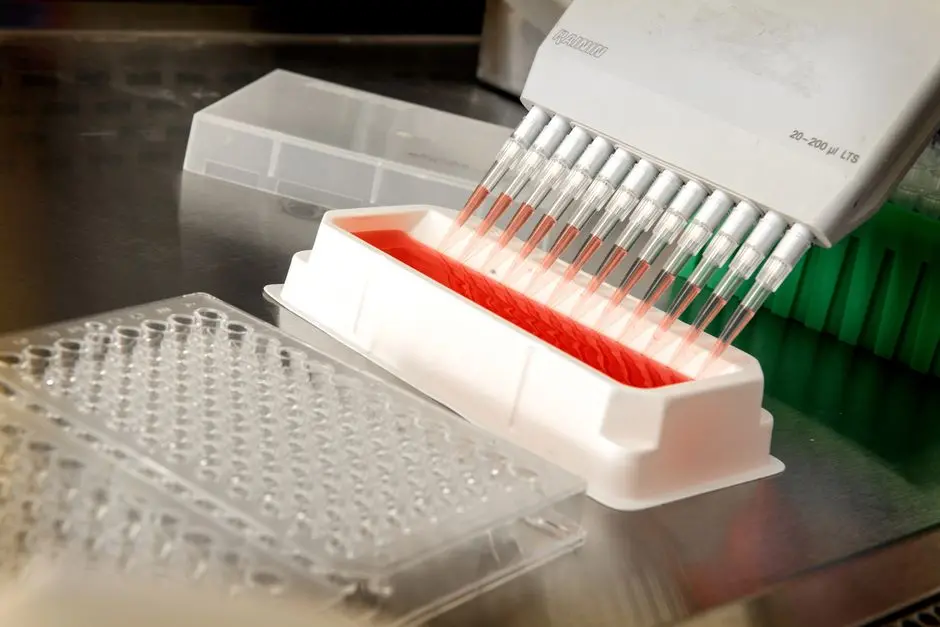
Our journey to unearth hit compounds is primarily powered by advanced screening technologies. High-Throughput Screening (HTS) stands as our premier engine, systematically assaying vast chemical libraries, often numbering in the millions of compounds, against our chosen biological target. This automated process allows us to rapidly identify compounds exhibiting the desired activity profile. We deploy sophisticated robotics and miniaturized assay formats to achieve unparalleled efficiency, generating immense datasets that demand astute interpretation. Our strategy extends beyond sheer volume; we optimize assay sensitivity and specificity to minimize false signals and maximize the detection of true positives.
Beyond HTS, we integrate complementary approaches to cast a wider net. Virtual screening, leveraging computational models, allows us to computationally sift through billions of molecules, predicting their binding affinity to the target before physical synthesis or testing. This in silico method prioritizes compounds, dramatically reducing the experimental workload. We also strategically employ smaller, focused libraries or natural product collections when seeking novel chemical scaffolds or exploring underexplored chemical space. The initial hits generated from these diverse methods undergo immediate preliminary validation. We cherry-pick the active compounds, re-test them to confirm activity, and establish a preliminary dose-response curve to assess potency. This rapid validation loop is critical; it allows us to quickly discard irrelevant compounds and focus our resources on the most promising candidates, thereby optimizing our resource allocation and accelerating the discovery timeline. We continuously refine our screening strategies to adapt to the evolving complexities of biological targets.

Architecting a Potent Hit: Criteria for Strategic Advancement
Identifying a hit is merely the first step; validating its potential requires adhering to stringent criteria that elevate it beyond a statistical anomaly. We meticulously evaluate each hit compound based on several key characteristics. First, Potency: We establish a dose-response relationship, quantifying its half-maximal inhibitory or effective concentration (IC50 or EC50). While not yet optimized, a reasonable starting potency, typically in the low micromolar range (<10 µM), is desirable. Second, Selectivity: We assess its activity against related targets or cellular pathways to ensure it's not a promiscuous binder. Early indications of selectivity prevent us from pursuing compounds with broad, non-specific effects that often lead to off-target toxicity.
Third, Novelty and Patentability: We scrutinize the hit's chemical structure to ensure it represents novel chemical space, offering opportunities for intellectual property protection. Fourth, Physicochemical Properties: We apply principles like Lipinski's Rule of 5 as an initial filter, evaluating molecular weight, logP, hydrogen bond donors, and acceptors. These properties provide early insights into drug-like characteristics, predicting factors like solubility, permeability, and oral bioavailability. Fifth, Tractability for medicinal chemistry: Can the compound be synthetically modified and optimized? A complex, difficult-to-synthesize hit with limited points for modification is often deemed less desirable. Finally, we seek any early insights into its Mechanism of Action (MoA), even if preliminary. We understand that a well-characterized hit, even with modest initial potency, offers a far more robust foundation for successful drug development than a highly potent but poorly understood molecule. We proactively eliminate compounds exhibiting pan-assay interference (PAINS) or other artifactual activities, ensuring we invest in truly promising leads.

From Hit to Lead: Orchestrating the Critical Transition Phase
The transition from a validated hit to a bona fide lead compound is a pivotal and resource-intensive phase in drug discovery. We initiate this phase with meticulous Hit Confirmation and Re-synthesis. We procure or re-synthesize the hit compound from a different batch or vendor to eliminate any false positives due to impurities or sample degradation. Reproducibility of activity across these new samples is non-negotiable. This step provides an essential layer of confidence before we commit further resources.
Next, we embark on early Structure-Activity Relationship (SAR) studies. We synthesize a small set of analogues around the hit scaffold, systematically modifying different parts of the molecule to understand which structural features are crucial for activity. This iterative process begins to map the chemical space around our hit, guiding future optimization efforts. We also perform Hit Expansion and Clustering, identifying chemically related compounds to expand our understanding of the scaffold's potential and identifying scaffolds with similar activity but distinct chemical structures. This mitigates risks associated with a single chemical series. Early consideration of ADMET (Absorption, Distribution, Metabolism, Excretion, Toxicity) properties is also crucial. We perform preliminary assays for metabolic stability, cytotoxicity, and plasma protein binding to identify any 'fatal flaws' early on. A hit compound must not only demonstrate activity but also possess properties that suggest it can eventually become an effective and safe drug candidate. We assemble multidisciplinary teams, integrating biologists, medicinal chemists, and computational chemists, to collaboratively drive this transition, making informed decisions on which chemical series to prioritize and advance into the lead optimization phase. We meticulously orchestrate this transition, transforming potential into tangible therapeutic pathways.
Pioneering Hit Discovery: Advanced Strategies and Future Horizons
As drug discovery evolves, so too do our strategies for identifying compelling hit compounds. We continuously integrate cutting-edge methodologies to enhance efficiency and discover novel chemical entities. Fragment-Based Drug Discovery (FBDD) represents a powerful paradigm shift. Instead of screening large, complex molecules, we screen small, low molecular weight fragments that bind weakly to the target. These 'fragment hits' exhibit higher hit rates and can be grown or linked into more potent, drug-like compounds with exquisite target selectivity. This approach often leads to novel chemical scaffolds not discoverable through traditional HTS.
Another groundbreaking technology we leverage is DNA-Encoded Libraries (DELs). These libraries can comprise billions of unique chemical compounds, each tagged with a unique DNA barcode. This allows for highly efficient screening against a target, where active binders are identified by sequencing their DNA tags. DELs provide access to an unprecedented chemical diversity, dramatically expanding the scope of our hit identification efforts. Furthermore, we explore Phenotypic Screening, where instead of targeting a specific protein, we screen compounds based on their ability to elicit a desired change in cell behavior (e.g., cell differentiation, reduced inflammation). This unbiased approach can uncover compounds with novel mechanisms of action, particularly valuable for complex diseases. Finally, the integration of Artificial Intelligence (AI) and Machine Learning (ML) is revolutionizing hit discovery. AI algorithms analyze vast datasets, predict promising molecular structures, optimize synthesis routes, and even design de novo compounds. We actively develop and deploy these intelligent systems, transforming data into actionable insights and accelerating our mission to bring life-changing medicines to patients. We stand at the forefront, pushing the boundaries of what's possible in the pursuit of tomorrow's cures.
Key Takeaways
The Essence of a Hit Compound
A hit compound is a molecule demonstrating reproducible biological activity against a target in initial high-throughput screening. It serves as the foundational chemical entity, indicating therapeutic potential and validating a chemical scaffold for further investigation. It is distinct from a lead compound, which has already undergone significant preliminary optimization.
Strategic Hit Identification and Validation
We identify hits primarily through High-Throughput Screening (HTS), complemented by virtual screening and specialized libraries. Rigorous validation is paramount: re-testing, dose-response curve generation, and elimination of false positives (e.g., assay interference, promiscuous binders) are critical steps. Orthogonal assays confirm genuine activity, ensuring resource allocation to truly promising candidates.
Key Criteria for Advancing Hits
Beyond initial activity, we evaluate hits based on potency, selectivity against off-targets, novelty, and favorable physicochemical properties (e.g., Lipinski's Rule of 5). Tractability for medicinal chemistry, allowing for synthetic modification and optimization, is also a vital consideration. A 'good' hit offers a solid starting point for optimization into a lead series.
Transitioning from Hit to Lead
The hit-to-lead phase involves confirming hits via re-synthesis, conducting initial Structure-Activity Relationship (SAR) studies, expanding the chemical series, and performing early ADMET profiling. This iterative process refines the hit into a more potent, selective, and drug-like lead compound, ready for advanced optimization. This stage requires seamless collaboration across multidisciplinary teams.
FAQ
-
What distinguishes a hit compound from a lead compound?
A hit compound is a molecule showing initial, reproducible activity against a target in a primary screen. It's a starting point that validates a chemical scaffold's potential. A lead compound, however, is a hit that has undergone significant initial optimization. It possesses improved potency, selectivity, and drug-like properties (e.g., better solubility, metabolic stability), making it a stronger candidate for further development in the lead optimization phase. We meticulously refine hits into leads, addressing their inherent limitations.
-
What are common reasons for a 'false positive' hit?
False positive hits can derail early drug discovery if not properly identified. Common reasons include: assay interference (e.g., compounds that are fluorescent, colored, or aggregate), compound impurities (the activity comes from a contaminant, not the main compound), compound instability (degradation products cause activity), non-specific binding, or cytotoxicity at screening concentrations that mimics desired activity. We employ rigorous counter-screens, orthogonal assays, and re-synthesis to eliminate these misleading signals.
-
How important are physicochemical properties in evaluating a hit compound?
Physicochemical properties are critically important, even at the hit stage. They provide early indications of a compound's potential for becoming an orally bioavailable drug. Properties like molecular weight, lipophilicity (logP), and hydrogen bonding capacity (often summarized by rules like Lipinski's Rule of 5) influence solubility, permeability, metabolic stability, and even target engagement. We assess these parameters early to identify and prioritize hits that possess drug-like characteristics, reducing the risk of encountering insurmountable ADMET challenges later in development. A hit with poor physicochemical properties is often an immediate discard, regardless of its initial potency, because we recognize the futility of optimizing a fundamentally flawed molecule.