
> Basic Biology Concepts > DNA and Genetic Information Basics > Decoding DNA: Architecting Life's Genetic Blueprint
Decoding DNA: Architecting Life's Genetic Blueprint
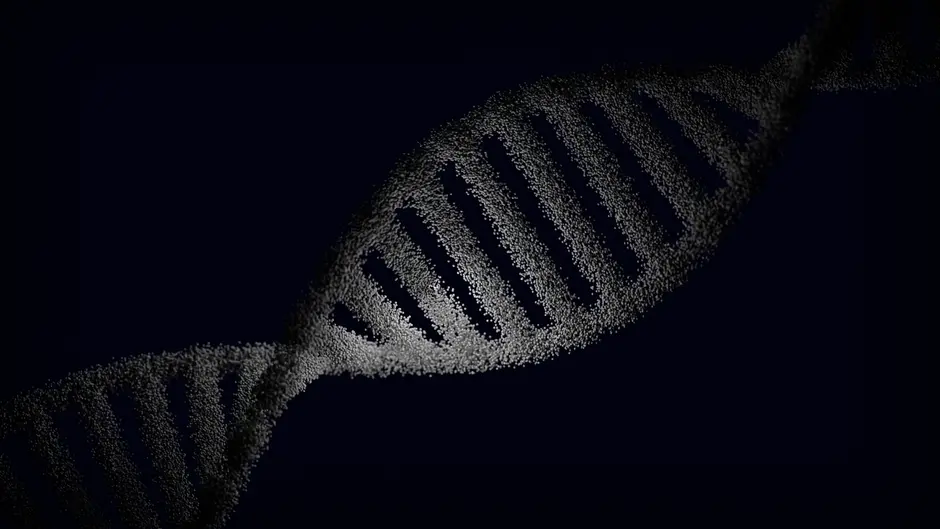
We stand at the threshold of life's most profound secret: the molecular script governing every organism. How does an infinitesimally small molecule hold the voluminous instructions for building, maintaining, and reproducing a living entity? This is not merely a scientific query; it is the fundamental challenge we conquer in understanding biology. Our journey into How DNA stores biological information unveils the exquisite precision and staggering complexity embedded within the double helix.
This article serves as your definitive expedition into the intricate mechanisms by which deoxyribonucleic acid (DNA) functions as the ultimate biological hard drive. We meticulously dissect its structure, decode its language, explore its sophisticated organization, and understand the robust systems ensuring its integrity across generations. Prepare to gain an unparalleled understanding of the fundamental principles of genetic material in living systems, equipping you with expert insights into the very essence of life's continuity. Let us forge ahead and illuminate the profound ingenuity of nature's master plan.
The Molecular Architecture of Information: DNA's Alphabetic Foundation
At the core of DNA's incredible information storage capacity lies its elegant, yet robust, molecular architecture. Imagine DNA as a vast biological library, where each 'book' (a gene) is written in a precise, four-letter alphabet. This alphabet comprises four distinct nitrogenous bases: Adenine (A), Thymine (T), Guanine (G), and Cytosine (C). These bases are the informational units, forming the rungs of a twisted ladder—the iconic double helix.
Each rung is a 'base pair,' formed by specific hydrogen bonding: Adenine always pairs with Thymine (A-T), and Guanine always pairs with Cytosine (G-C). This complementary pairing is absolutely critical for accurate information replication and repair. These base pairs are anchored to a backbone composed of alternating deoxyribose sugar and phosphate groups, linked by strong phosphodiester bonds. This sugar-phosphate backbone provides structural stability, protecting the delicate sequence of bases within. We observe two strands running in opposite directions, an antiparallel arrangement (one 5' to 3' and the other 3' to 5'), which is paramount for processes like replication and transcription.
Consider this: the order of these base pairs along a DNA strand is the actual sequence that encodes biological instructions. Just as different arrangements of letters form different words and sentences, varying sequences of A, T, C, and G dictate the unique genetic instructions for every organism. This sequential arrangement is the primary method of information encoding, a digital language refined over billions of years of evolution. We recognize this fundamental principle as the basis for all genetic diversity and functional specificity in life.
The Genetic Code: Translating Sequence into Functional Proteins
The raw sequence of A, T, C, G on a DNA strand holds immense potential, but its biological meaning only unfolds through the genetic code. This universal code acts as the translator, converting the nucleotide sequence into the amino acid sequence that constructs proteins. Proteins are the workhorses of the cell, executing virtually all cellular functions, from catalyzing reactions to providing structural support.
The genetic code operates in 'words' called codons. Each codon consists of three consecutive nucleotide bases. With four possible bases at each position, there are 4³ = 64 possible codons. Crucially, each codon specifies either a particular amino acid or a signal for stopping protein synthesis. For instance, the codon 'AUG' universally signals the start of protein synthesis and codes for the amino acid methionine. While there are 64 codons, there are only 20 common amino acids, meaning the code is 'degenerate' or redundant. Most amino acids are specified by more than one codon, a feature that offers a degree of protection against the detrimental effects of single-base mutations.
This exquisite translation process adheres to the Central Dogma of Molecular Biology: DNA's information is first transcribed into messenger RNA (mRNA), and then mRNA's information is translated into proteins. This unidirectional flow of information—from nucleic acid to protein—is foundational to gene expression. The precision of this code ensures that specific DNA sequences reliably produce the correct proteins, thereby dictating cellular identity and function. A slight misreading can lead to altered proteins, potentially compromising biological processes and underpinning various genetic conditions.
Packaging and Accessibility: Organizing Life's Massive Data Set
Imagine trying to store miles of delicate thread within a tiny thimble. This analogy illustrates the challenge cells face in containing vast amounts of DNA within a microscopic nucleus. The human genome, for example, stretches approximately two meters end-to-end, yet must fit into a nucleus merely 5-10 micrometers in diameter. This extraordinary feat is achieved through sophisticated packaging mechanisms that not only compact the DNA but also regulate its accessibility.
DNA is intricately wound around specialized proteins called histones, forming bead-like structures called nucleosomes. These nucleosomes, in turn, coil and fold into progressively higher-order structures, ultimately forming chromatin. This compaction reduces the DNA's physical length by thousands of times. Furthermore, chromatin exists in various states of condensation, influencing gene expression. Densely packed regions, known as heterochromatin, are generally transcriptionally inactive, effectively 'silencing' genes within them. Conversely, loosely packed regions, euchromatin, are more accessible to transcription machinery, allowing genes to be expressed.
This dynamic organization is not merely for storage; it is a critical regulatory layer. The cell employs a battery of enzymes and protein complexes that can add or remove chemical tags to histones or the DNA itself (epigenetic modifications). These modifications act as switches, controlling how tightly DNA is packed and thus regulating which genes are accessible for transcription. Understanding this intricate interplay between DNA sequence, histone modification, and chromatin structure unlocks profound insights into cellular differentiation, development, and disease. It is a masterclass in biological data management and access control.
Replication, Repair, and the Integrity of Information: Safeguarding the Blueprint
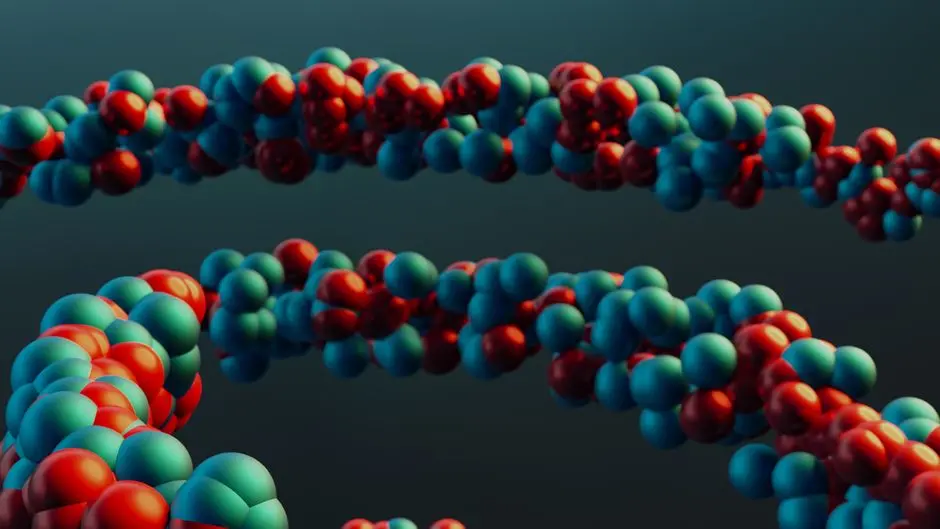
The ultimate value of stored biological information hinges on its faithful transmission and preservation. DNA is not static; it must be accurately copied every time a cell divides, and it faces constant threats from environmental factors and metabolic byproducts. Therefore, robust systems for DNA replication and repair are indispensable for maintaining the integrity of the genetic blueprint across generations.
DNA replication is a semi-conservative process, meaning each new DNA molecule consists of one original strand and one newly synthesized strand. This elegant mechanism ensures high fidelity. Specialized enzymes, most notably DNA polymerase, meticulously 'read' the template strand and synthesize a complementary new strand. DNA polymerase itself possesses proofreading capabilities, correcting most errors immediately as they occur, dramatically reducing the initial error rate.
Despite proofreading, errors can slip through, and DNA is susceptible to damage (e.g., from UV radiation, chemical mutagens). Cells possess an arsenal of DNA repair mechanisms to correct these damages. Examples include mismatch repair, which corrects errors missed by proofreading; nucleotide excision repair, which removes bulky lesions; and base excision repair, which addresses damaged individual bases. These systems identify, excise, and replace damaged or incorrect nucleotides, acting as cellular repair crews working tirelessly to maintain genetic stability. Without these intricate repair pathways, mutations would accumulate rapidly, leading to cellular dysfunction, aging, and an increased risk of diseases like cancer. We optimize life by understanding these critical safeguards.
Key Takeaways
DNA's Fundamental Architecture
DNA stores information through the specific sequence of its four nucleotide bases (A, T, C, G). The double helix structure, with complementary base pairing (A-T, G-C) and an antiparallel sugar-phosphate backbone, provides both informational capacity and structural stability.
The Genetic Code and Protein Synthesis
The genetic code translates DNA sequences into functional proteins. Three-base codons specify particular amino acids, driving protein synthesis via mRNA intermediates (Central Dogma). This universal and degenerate code ensures precise protein production critical for all cellular functions.
Genomic Packaging and Regulation
To fit immense lengths into microscopic spaces, DNA is intricately packaged around histones into nucleosomes and higher-order chromatin structures. This organization is not just for compaction but also dynamically regulates gene expression, determining which genes are accessible and active (euchromatin) versus inactive (heterochromatin).
Maintaining Genetic Integrity
Accurate DNA replication (semi-conservative) and robust DNA repair mechanisms are vital for safeguarding biological information. Proofreading by DNA polymerase and specialized repair pathways (e.g., mismatch, excision repair) detect and correct errors, preventing mutations and ensuring the fidelity of the genetic blueprint across generations.
FAQ
-
How many types of nucleotides are there in DNA?
There are four types of nucleotides in DNA, each distinguished by its nitrogenous base: Adenine (A), Thymine (T), Guanine (G), and Cytosine (C). Each nucleotide also includes a deoxyribose sugar and a phosphate group.
-
What is the Central Dogma of Molecular Biology?
The Central Dogma describes the fundamental flow of genetic information in biological systems: DNA is transcribed into RNA, and then RNA is translated into protein. This unidirectional flow ensures that the genetic blueprint is accurately expressed as functional molecules.
-
Why is DNA replication considered 'semi-conservative'?
DNA replication is semi-conservative because each new DNA molecule produced contains one original 'parent' strand and one newly synthesized 'daughter' strand. This mechanism ensures that genetic information is faithfully passed on while conserving half of the original molecule.
-
How do DNA repair mechanisms prevent mutations?
DNA repair mechanisms act as cellular quality control systems. They identify and correct errors that occur during DNA replication or damage caused by environmental factors. Enzymes detect incorrect bases or structural lesions, excise the faulty section, and then synthesize the correct sequence, thereby restoring the DNA's integrity and preventing potentially harmful mutations.