
> Basic Biology Concepts > DNA and Genetic Information Basics > Master DNA's Double Helix: Genetic Blueprint Explored
Master DNA's Double Helix: Genetic Blueprint Explored
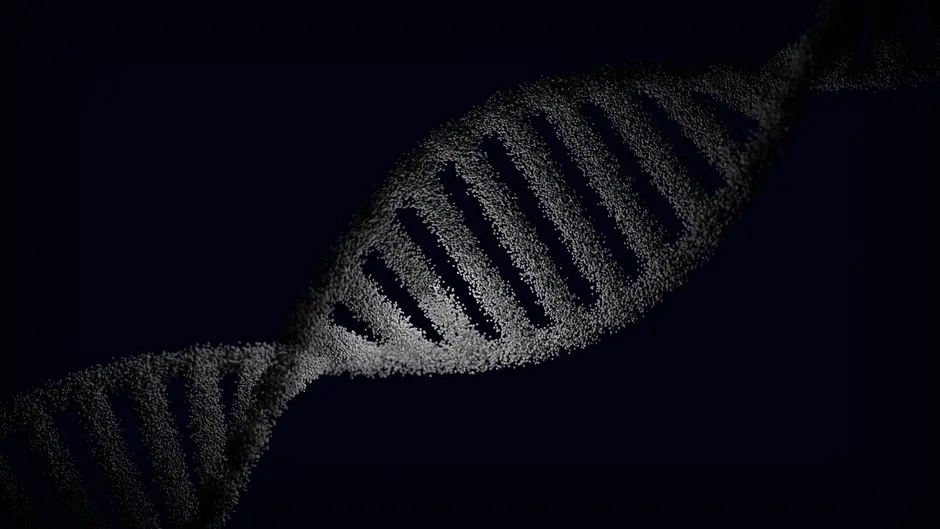
We stand at the precipice of understanding life itself, a journey intricately tied to the fundamental molecule known as DNA. This remarkable macromolecule holds the instructions for every organism, dictating traits, functions, and evolution. But what grants DNA this unparalleled authority? Its elegant yet complex structure, the double helix, is the key. In this deep dive, we forge an understanding of DNA's architectural brilliance, dissecting its components from the ground up and revealing how its unique organization underpins the fundamental principles governing genetic material in living systems. We will explore the atomic bonds that form its backbone, the precise pairing rules that ensure fidelity, and the iconic helical twist that defines its identity. Prepare to unlock the secrets of life's most essential blueprint, transforming abstract concepts into actionable insights for any aspiring biologist or seasoned researcher. This exploration empowers us to navigate the intricate landscape of heredity, disease, and biological innovation with precision and clarity.
Unveiling Life's Blueprint: The Genesis of DNA Structure
Our journey to master DNA's double helix begins by acknowledging its pivotal role as the universal genetic material, the very blueprint of life. For decades, scientists grappled with the question of how hereditary information was stored and transmitted. The breakthrough came in 1953, with James Watson and Francis Crick, leveraging crucial data from Rosalind Franklin's X-ray crystallography and Erwin Chargaff's rules of base composition, proposing the now-iconic double helix model. This discovery didn't just explain how genetic information could be stored; it immediately suggested a mechanism for its replication and transfer across generations, an insight that revolutionized biology.
Understanding this structure is not merely an academic exercise; it is foundational to comprehending all biological processes, from cellular growth and differentiation to disease pathogenesis and evolutionary adaptation. Without DNA, life as we know it simply would not exist. Its architecture ensures genetic stability, yet also allows for the subtle variations that drive evolution. We must recognize that the double helix is not a static entity but a dynamic molecular machine, constantly interacting with proteins to manage the vast repertoire of genetic instructions. This foundational understanding equips us with the insight to decode genetic diseases, engineer new biological solutions, and ultimately, to optimize life itself.
The Foundational Unit: Deconstructing the Nucleotide
To truly grasp the grand architecture of DNA, we must first dissect its fundamental building blocks: the nucleotides. Each nucleotide is a meticulously assembled unit comprising three distinct components. First, a deoxyribose sugar, a five-carbon sugar that gives DNA its name (deoxyribonucleic acid). Second, a phosphate group, a negatively charged moiety crucial for linking nucleotides together and contributing to DNA's overall negative charge. Third, a nitrogenous base, the information-carrying part of the molecule.
There are four types of nitrogenous bases in DNA, classified into two groups based on their chemical structure: purines and pyrimidines. The purines, Adenine (A) and Guanine (G), possess a double-ring structure. The pyrimidines, Cytosine (C) and Thymine (T), feature a single-ring structure. These specific bases are the alphabet of the genetic code, and their sequence defines the unique instructions for every organism. The covalent bond between the deoxyribose sugar and the nitrogenous base forms a nucleoside, and when the phosphate group attaches to the sugar, it completes the nucleotide. This intricate arrangement ensures that each building block is ready to be precisely integrated into the growing DNA strand, forming the backbone of genetic continuity.
Forging the DNA Strand: A Polymer of Directionality
With our understanding of the nucleotide, we now forge the single DNA strand, a polymer of these individual units linked in a specific, directional manner. Nucleotides connect through robust phosphodiester bonds. These covalent bonds form between the phosphate group of one nucleotide and the 3' hydroxyl group of the deoxyribose sugar of the adjacent nucleotide. This repetitive linkage creates the sugar-phosphate backbone, a strong, stable framework that protects the more fragile nitrogenous bases within.
Crucially, this linkage imparts a distinct directionality to each DNA strand. One end, termed the 5' end, terminates with a phosphate group attached to the 5' carbon of the deoxyribose sugar. The opposite end, the 3' end, terminates with a free hydroxyl group attached to the 3' carbon of the deoxyribose sugar. This 5'-to-3' orientation is not merely a chemical detail; it is a fundamental principle that dictates how DNA polymerase enzymes read and synthesize new DNA strands during replication, and how RNA polymerase transcribes genetic information into RNA. Misunderstanding this directionality is a common pitfall; always visualize the phosphate at the 5' end and the hydroxyl at the 3' end. This intrinsic polarity ensures the accurate flow of genetic information, a cornerstone of biological precision.
The Double Helix: An Architectural Masterpiece
The true genius of DNA lies not in a single strand, but in the elegant organization of two such strands into the iconic double helix. This architectural masterpiece is characterized by several critical features. Firstly, the two polynucleotide strands run in antiparallel orientation. This means if one strand runs 5' to 3' in one direction, its complementary partner runs 3' to 5' in the opposite direction. This antiparallel arrangement is vital for the stability and functionality of the helix, particularly during replication.
Secondly, the strands are held together by specific complementary base pairing via hydrogen bonds. Adenine (A) always pairs with Thymine (T) through two hydrogen bonds (A=T), and Guanine (G) always pairs with Cytosine (C) through three hydrogen bonds (G≡C). This strict pairing rule (Chargaff's rules revisited) ensures that the two strands are perfectly complementary, meaning the sequence of one strand dictates the sequence of the other. These hydrogen bonds, while individually weak, collectively provide immense stability to the helix. The purine-pyrimidine pairing also maintains a uniform diameter of approximately 2 nanometers along the entire length of the DNA molecule, preventing bulges or constrictions and ensuring the structural integrity essential for its biological roles.
Dynamics of the Double Helix: Stability and Interaction Sites
While hydrogen bonds between base pairs are critical for holding the two strands together, other forces contribute significantly to the stability and integrity of the double helix. Base stacking interactions play a crucial role. These are weak van der Waals forces that occur between the planar aromatic rings of adjacent bases stacked upon each other within the helix. These interactions are highly significant, contributing more to overall DNA stability than hydrogen bonds alone, particularly in aqueous environments where the hydrophobic bases are shielded from water by the hydrophilic sugar-phosphate backbone.
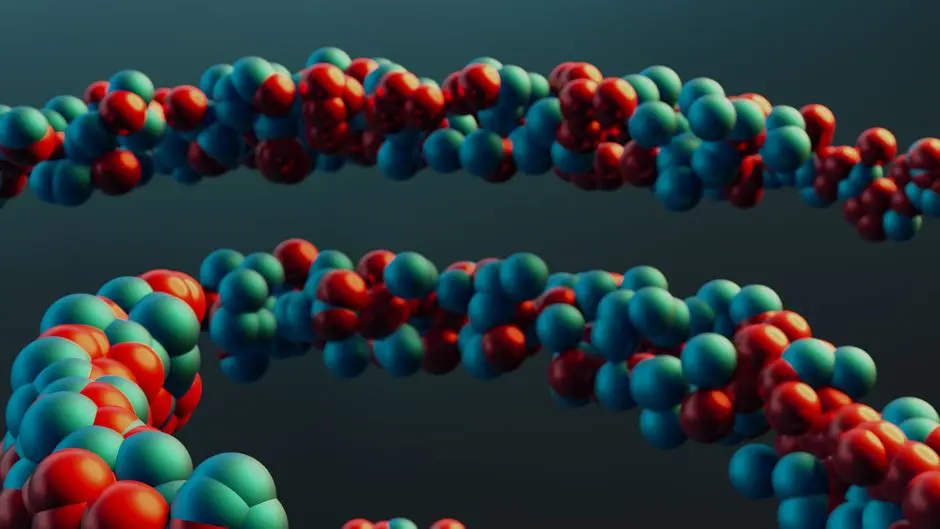
The helical twist of the DNA strands creates distinct structural features on its exterior: the major groove and the minor groove. These grooves are not merely aesthetic; they are critical sites for protein-DNA interactions. Regulatory proteins, such as transcription factors, often recognize and bind to specific DNA sequences primarily within the wider and more accessible major groove. This allows proteins to 'read' the genetic information without unwinding the helix, facilitating precise control over gene expression. The dynamic nature of these interactions, where proteins selectively bind to specific DNA sequences, underscores the double helix as a highly active and interactive molecular scaffold, constantly engaged in regulating cellular processes.
From Helix to Function: Implications for Genetic Processes
The elegant structure of the DNA double helix is no accident; it is perfectly engineered to facilitate its paramount biological functions. Its most profound implication lies in DNA replication. The complementary base pairing rules allow each strand to serve as a template for synthesizing a new complementary strand, ensuring semiconservative replication and accurate inheritance of genetic information from parent to daughter cells. This mechanism guarantees genetic fidelity, a vital aspect for maintaining species integrity.
Furthermore, the double helix's structure is indispensable for gene expression. While DNA itself stores the information, the specific sequences within the helix are transcribed into RNA molecules, which then guide protein synthesis. The ability of certain proteins to unwind sections of the helix and read specific base sequences in the grooves is what enables this precise control over gene activity. Finally, the ability of DNA to compact itself into structures like nucleosomes and chromosomes within the cell nucleus is another direct consequence of its helical organization. This supercoiling allows meters of DNA to fit within the microscopic confines of a cell, making genetic information manageable and accessible when needed. Mastering the structure is thus the first step to truly understanding the dynamic life processes it governs.
Key Takeaways
DNA: The Blueprint of Life
DNA is the fundamental genetic material, its double helix structure discovered by Watson and Crick in 1953, with critical contributions from Franklin and Chargaff. Understanding this structure is essential for all biological processes.
Nucleotide: The Basic Building Block
Each DNA nucleotide has three parts: a deoxyribose sugar, a phosphate group, and a nitrogenous base. Bases are Adenine (A), Guanine (G) – purines; Cytosine (C), Thymine (T) – pyrimidines. These are the genetic alphabet.
DNA Strand: Directional Polymer
Nucleotides link via phosphodiester bonds, forming a sugar-phosphate backbone. Each strand has distinct 5' (phosphate) and 3' (hydroxyl) ends, giving it directionality. This polarity is crucial for DNA replication and transcription.
Double Helix: Antiparallel & Complementary
The DNA molecule is a double helix of two antiparallel strands. They are held together by hydrogen bonds between complementary base pairs: A-T (2 bonds) and G-C (3 bonds). This ensures uniform diameter and genetic fidelity.
Stability and Interaction
DNA stability is enhanced by base stacking interactions. The helical twist creates major and minor grooves, which are vital binding sites for regulatory proteins, enabling specific interactions with DNA sequences.
Structure-Function Nexus
The double helix structure directly supports DNA replication (semiconservative model), gene expression (transcription), and efficient packaging into chromosomes, making it perfectly suited for its role as life's information carrier.
FAQ
-
What are the primary components of a DNA nucleotide?
A DNA nucleotide consists of three main parts: a deoxyribose sugar, a phosphate group, and one of four nitrogenous bases (Adenine, Guanine, Cytosine, or Thymine). -
How are the two strands of the DNA double helix held together?
The two strands are primarily held together by hydrogen bonds formed between complementary nitrogenous base pairs: Adenine pairs with Thymine (A-T) via two hydrogen bonds, and Guanine pairs with Cytosine (G-C) via three hydrogen bonds. -
What does 'antiparallel' mean in the context of DNA structure?
Antiparallel means that the two DNA strands run in opposite directions. If one strand runs from 5' to 3' (referring to the carbon atoms in the deoxyribose sugar), its complementary partner runs from 3' to 5'. -
What is the significance of the major and minor grooves in the DNA double helix?
The major and minor grooves are indentations on the surface of the DNA helix that expose specific sequences of bases. These grooves serve as crucial binding sites for various proteins, such as transcription factors, allowing them to 'read' and interact with the DNA without unwinding it, thereby regulating gene expression. -
Besides hydrogen bonds, what other forces contribute to DNA's stability?
Beyond hydrogen bonds, base stacking interactions (van der Waals forces between adjacent stacked bases) and hydrophobic interactions, which shield the non-polar bases from water, are significant contributors to the overall stability of the DNA double helix.