
> Basic Biology Concepts > DNA and Genetic Information Basics > Genes: Decoding DNA's Blueprint for Life
Genes: Decoding DNA's Blueprint for Life
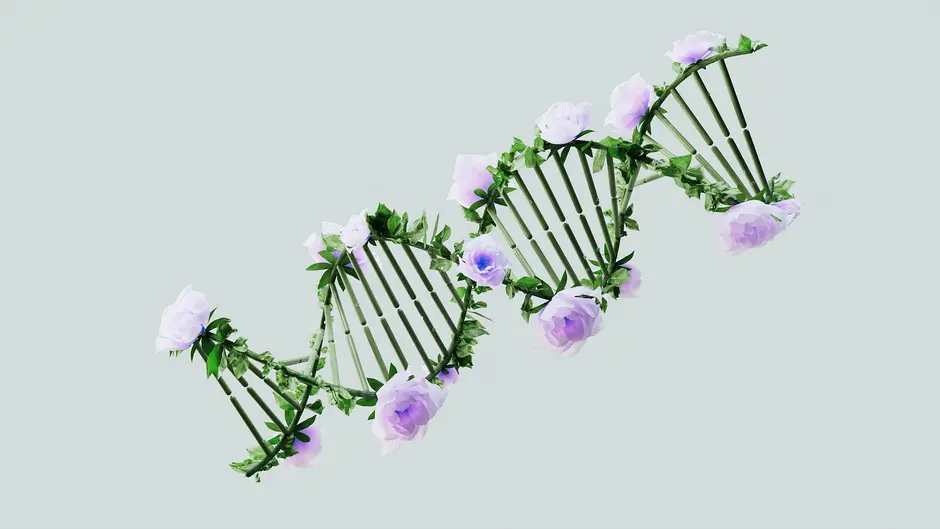
We stand at the precipice of understanding life's most fundamental code. Every living organism, from the simplest bacterium to the most complex human, operates under the directives of an invisible yet immensely powerful entity: the gene. This intricate molecular blueprint dictates everything from our eye color to our predisposition to certain diseases, shaping our very existence. But what precisely is a gene, and how does this microscopic orchestrator wield such profound influence?
In this authoritative exploration, we transcend basic definitions, delving deep into the sophisticated mechanisms by which genes encode, express, and ultimately drive cellular function. We demystify the journey from a DNA sequence to a functional protein, revealing the precision and regulatory layers that ensure life's processes unfold flawlessly. Prepare to unlock the secrets of genetic inheritance and cellular command, strengthening our collective grasp on the foundational principles governing the genetic material within all living systems. We forge ahead, transforming abstract concepts into actionable biological insights.
The Gene Defined: A Molecular Blueprint for Life
At its core, a gene represents a specific segment of deoxyribonucleic acid (DNA) that carries the instructions for building and maintaining an organism. Imagine DNA as an extensive instruction manual; a gene is a particular chapter within that manual, dedicated to a specific task or component. Historically, genes were conceptualized as discrete units of heredity, responsible for transmitting traits from parents to offspring, a concept pioneered by Gregor Mendel. Today, our understanding is far more granular: we define a gene as a sequence of nucleotides within a DNA molecule that encodes for a functional product, typically a protein, but sometimes a functional RNA molecule like ribosomal RNA (rRNA) or transfer RNA (tRNA).
Each gene occupies a specific locus, or position, on a chromosome. The sequence of nucleotide bases (Adenine, Thymine, Guanine, Cytosine) within this segment holds the genetic information. This information is not directly converted into an observable trait; instead, it orchestrates a complex molecular dance known as gene expression. The foundational principle here is the Central Dogma of Molecular Biology: DNA is transcribed into RNA, and RNA is then translated into protein. This unidirectional flow of information is paramount. We initiate this journey by recognizing that every cell in an organism generally carries the same set of genes, yet their differential expression is what gives rise to the vast diversity of cell types and functions.
Understanding this basic definition is the first critical step. A gene is not merely a segment of DNA; it is a dynamic unit of biological information, a blueprint that guides the construction of the molecular machinery essential for all life processes. We leverage this understanding to dissect the subsequent steps of gene functionality, uncovering the intricate layers of control that ensure precise biological outcomes.
Transcription: From DNA Template to Messenger RNA
The journey from a gene to its functional product commences with transcription, a meticulously orchestrated process where the genetic information encoded in DNA is copied into a messenger RNA (mRNA) molecule. We can visualize this as opening the instruction manual (DNA) and making a temporary, portable photocopy (mRNA) of a specific chapter (gene) that the cell needs right now. This step is crucial because DNA, the master blueprint, remains safely housed within the nucleus of eukaryotic cells, protecting its integrity, while mRNA can travel to the cytoplasm where protein synthesis occurs.
The key enzyme facilitating this conversion is RNA polymerase. This molecular machine binds to a specific region on the DNA upstream of the gene, known as the promoter region. The promoter acts as a signal, indicating where transcription should begin and which DNA strand serves as the template. Once bound, RNA polymerase unwinds a segment of the DNA double helix, exposing the nucleotide bases. It then synthesizes an RNA strand by adding complementary RNA nucleotides (Adenine paired with Uracil, Guanine with Cytosine) to the DNA template strand. Unlike DNA, RNA contains Uracil (U) instead of Thymine (T).
Transcription proceeds along the gene until the RNA polymerase encounters a terminator sequence, signaling the end of the gene. In eukaryotes, the nascent mRNA undergoes several post-transcriptional modifications, including splicing (removal of non-coding introns and joining of coding exons), capping at the 5' end, and polyadenylation (addition of a poly-A tail) at the 3' end. These modifications are vital for protecting the mRNA from degradation, facilitating its export from the nucleus, and enhancing its translation efficiency. We optimize this understanding to appreciate the precision required for accurate genetic information transfer.

Translation: From mRNA Code to Functional Protein
Following transcription and subsequent mRNA processing, the genetic information embarks on its second critical transformation: translation. This is the process where the nucleotide sequence of the mRNA molecule is decoded to synthesize a specific sequence of amino acids, forming a polypeptide chain that will eventually fold into a functional protein. We undertake this phase in the cytoplasm, specifically on molecular factories known as ribosomes. These complex cellular machines act as the workbench for protein synthesis.
The mRNA sequence is read in sequential sets of three nucleotides, called codons. Each codon specifies a particular amino acid, or acts as a 'start' or 'stop' signal. This relationship between codons and amino acids constitutes the genetic code, a universal language shared by almost all life forms on Earth. The genetic code is also degenerate, meaning that most amino acids are specified by more than one codon, offering a degree of robustness against certain mutations. As the ribosome moves along the mRNA, specialized adapter molecules called transfer RNAs (tRNAs) play a pivotal role. Each tRNA carries a specific amino acid and possesses an anticodon, a three-nucleotide sequence that is complementary to an mRNA codon.
When a tRNA's anticodon correctly pairs with an mRNA codon within the ribosome, its amino acid is added to the growing polypeptide chain. This process continues, codon by codon, until a 'stop' codon is reached, at which point the polypeptide chain is released. The newly synthesized polypeptide then undergoes intricate folding into its unique three-dimensional structure and may undergo further post-translational modifications, such as glycosylation or phosphorylation, to become a fully functional protein. We meticulously analyze these steps to grasp how a linear genetic message translates into the complex machinery driving cellular life.

Gene Regulation: Orchestrating On and Off Switches
A gene's mere presence does not guarantee its continuous activity. Cells do not indiscriminately express all their genes all the time; such an uncontrolled process would be wasteful and chaotic. Instead, gene expression is meticulously regulated, allowing cells to respond to internal and external cues, specialize their functions, and maintain homeostasis. This orchestration of gene activity is known as gene regulation, representing one of the most sophisticated control systems in biology. We must recognize that this dynamic control is fundamental to cellular identity and adaptability.
Regulation can occur at multiple levels, from the initiation of transcription to the stability of the final protein. A primary control point is at the transcriptional level. Regions upstream of genes, beyond the promoter, such as enhancers and silencers, bind specific proteins called transcription factors. These factors can either boost or dampen the binding of RNA polymerase, thereby increasing or decreasing the rate of transcription. For example, in bacteria, operons like the lac operon demonstrate intricate regulatory mechanisms that allow cells to metabolize specific sugars only when available.
Beyond transcription factors, a crucial layer of regulation involves epigenetics. This refers to heritable changes in gene expression that occur without altering the underlying DNA sequence. Key epigenetic mechanisms include DNA methylation (adding methyl groups to DNA bases, often silencing genes) and histone modification (altering the proteins around which DNA is wound, affecting chromatin accessibility). Additionally, non-coding RNAs, such as microRNAs (miRNAs) and small interfering RNAs (siRNAs), play vital roles in post-transcriptional gene silencing by targeting specific mRNA molecules for degradation or inhibiting their translation. We unlock these regulatory layers to understand the dynamic nature of gene function, which dictates cellular fate and organismal complexity.
Genetic Variation, Mutations, and Their Impact on Function
While the mechanisms of gene expression are remarkably precise, perfect fidelity is not always maintained. Variations inevitably arise, contributing to the rich tapestry of biological diversity. These variations, whether subtle or significant, are the raw material for evolution and can profoundly impact how a gene functions. We must distinguish between normal genetic variation, which underlies individual differences (polymorphisms), and mutations, which are alterations in the DNA sequence that can lead to disease or altered traits.
A common type of variation is a Single Nucleotide Polymorphism (SNP), where a single nucleotide base is changed. While many SNPs are benign, some can alter a codon, leading to a different amino acid (missense mutation), a premature stop codon (nonsense mutation), or even a silent mutation where the amino acid remains the same due to the degeneracy of the genetic code. More drastic changes include insertions or deletions (indels) of nucleotides. If an indel occurs within a coding region and is not a multiple of three bases, it can cause a frameshift mutation, altering every subsequent codon and often leading to a non-functional protein.
The impact of a mutation depends heavily on its location and the resulting change in the protein. A mutation in a critical active site of an enzyme could abolish its function entirely, leading to a genetic disorder. Conversely, some mutations can confer advantages, driving evolutionary adaptation. Others might be neutral, having no discernible effect on the organism. Understanding these variations and their consequences is vital for fields ranging from personalized medicine to evolutionary biology. We actively explore these dynamics to comprehend how changes at the molecular level translate into phenotypic diversity and disease susceptibility, fortifying our grasp on the intricate interplay between gene integrity and biological outcome.
Key Takeaways
Defining the Gene: Life's Fundamental Instruction
A gene is a specific DNA segment coding for a functional product (protein or RNA). It's the core unit of heredity, residing at a specific locus on a chromosome. The Central Dogma (DNA < RNA < Protein) outlines the information flow.
Transcription: DNA to mRNA Copying
RNA polymerase initiates transcription at a promoter region, creating an mRNA copy from a DNA template. In eukaryotes, mRNA undergoes crucial post-transcriptional modifications (splicing, capping, polyadenylation) for stability and function.
Translation: mRNA to Protein Synthesis
Ribosomes read mRNA codons, with tRNA molecules delivering specific amino acids according to the universal genetic code. This forms a polypeptide chain that folds into a functional protein, driven by precise codon-anticodon pairing.
Gene Regulation: The On/Off Control System
Gene expression is tightly regulated at multiple levels, primarily transcription. Transcription factors, enhancers, silencers, epigenetic mechanisms (DNA methylation, histone modification), and non-coding RNAs all orchestrate when and where genes are active, ensuring cellular specialization and adaptation.
Genetic Variation & Mutations: Impact on Gene Function
Genetic variations (e.g., SNPs) and mutations (e.g., missense, nonsense, frameshift) alter the DNA sequence, potentially impacting protein function and phenotype. These changes are crucial for evolution and can lead to genetic diseases or adaptive traits.
FAQ
-
What is the primary difference between a gene and DNA?
DNA (Deoxyribonucleic Acid) is the entire molecular structure, a long polymer composed of nucleotide units. It contains all the genetic information of an organism. A gene, in contrast, is a specific functional segment of that DNA molecule. Think of DNA as a complete book of instructions, and a gene as a particular chapter or even a specific paragraph within that book that carries the instructions for a single protein or functional RNA molecule. So, genes are discrete units found along the much larger DNA molecule.
-
Can genes be 'turned on' and 'turned off'?
Absolutely. Genes are not static entities; their activity is highly dynamic and tightly regulated. This process, known as gene regulation, allows cells to control which genes are expressed, when, and to what extent. Cells turn genes 'on' (upregulate expression) when their protein product is needed, and 'off' (downregulate expression) when it's not. This control occurs through various mechanisms, including transcription factors binding to DNA, epigenetic modifications, and the action of non-coding RNAs. This precise control is crucial for cell differentiation, development, and adapting to environmental changes.
-
How many genes do humans have?
The precise number of protein-coding genes in humans has been a subject of ongoing research, but current estimates from the Human Genome Project and subsequent studies place it at approximately 20,000 to 25,000 protein-coding genes. It's important to note that this number is far smaller than initially predicted and that the complexity of humans does not solely arise from the number of genes, but rather from the intricate ways these genes are regulated, alternatively spliced, and how their protein products interact within complex networks. Additionally, humans also have many thousands of non-coding RNA genes that play crucial regulatory roles.