
> Basic Biology Concepts > DNA and Genetic Information Basics > Unveil DNA: Dissecting the Double Helix and Its Genetic Secrets
Unveil DNA: Dissecting the Double Helix and Its Genetic Secrets
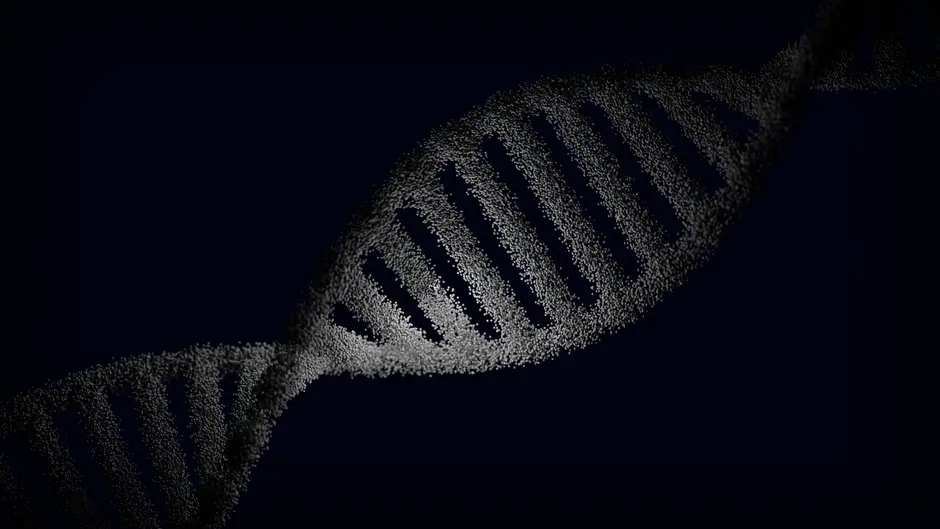
In the intricate tapestry of life, one molecule stands supreme as the ultimate custodian of information: Deoxyribonucleic Acid, or DNA. This molecular marvel orchestrates the development, function, and reproduction of every known living organism, from the simplest bacteria to the most complex human. Its elegant double helix structure, a triumph of biological architecture, holds the keys to heredity, evolution, and ultimately, our very existence. Without a precise understanding of DNA’s fundamental architecture, comprehending the mechanisms of life, disease, and genetic engineering remains an insurmountable challenge.
We embark on an essential expedition to dissect the DNA molecule, revealing its core components and the intricate forces that bind them into a stable, information-rich structure. This article is your foundational blueprint, designed to demystify the complexities of DNA, making its structure accessible and profoundly clear. Forge your understanding of this vital biomolecule as we unveil the secrets of the double helix, empowering you to grasp the fundamental principles of genetic material in living systems. Prepare to unlock the foundational knowledge that underpins all modern biology and genetic innovation. The journey into the heart of life’s code begins now.
Deciphering Life's Code: The Fundamental Role of DNA
Within the heart of every cell lies the ultimate instruction manual for life: Deoxyribonucleic Acid, universally known as DNA. This extraordinary molecule orchestrates the vast symphony of biological processes, dictating everything from eye color and height to cellular metabolism and disease susceptibility. Understanding its structure is not merely an academic exercise; it is the absolute prerequisite for grasping how life functions, evolves, and adapts. We must initiate our exploration by recognizing DNA not just as a complex chemical, but as the master blueprint, the indelible script that defines every living organism.
Historically, the search for the molecule of heredity captivated scientists for decades. Early 20th-century experiments, like those by Oswald Avery, Colin MacLeod, and Maclyn McCarty, pointed towards DNA, but its exact structure remained elusive. Breakthroughs by pioneers such as Rosalind Franklin and Maurice Wilkins in X-ray crystallography provided critical clues. Ultimately, James Watson and Francis Crick, leveraging this data and existing chemical knowledge, famously unveiled the double helix model in 1953, a discovery that fundamentally reshaped our understanding of biology. This revelation wasn't just about a pretty shape; it immediately suggested how genetic information could be stored, replicated, and transmitted across generations, offering the first glimpse into the elegant simplicity underlying life's staggering complexity. Optimizing our comprehension of DNA begins with appreciating its paramount status as the informational bedrock.
Think of DNA as an exceptionally robust and efficient data storage system, far superior in its biological context to any human-engineered equivalent. Unlike fleeting digital information, DNA's code is designed for millennia of transmission, with built-in mechanisms for astonishing fidelity during replication and repair. Every organism's unique characteristics, its very identity, are encoded within the precise sequence of chemical units that compose this molecule. This sequence determines the proteins produced, which in turn dictate cellular function and ultimately, the organism’s traits. Forge this foundational understanding: DNA is the persistent, self-replicating information carrier, essential for cellular growth, repair, and the continuity of species. Grasping its structural basics equips us to decode the intricate language of genetics, unleashing insights into health, disease, and the very future of biological innovation. This structural knowledge empowers us to manipulate, correct, and even rewrite aspects of the genetic code.
Deconstructing the Double Helix: The Nucleotide Building Blocks
To truly grasp the magnificent architecture of DNA, we must first dismantle it to its foundational components. At its core, DNA is a polymer, a large molecule made up of repeating smaller units called monomers. For DNA, these monomers are known as nucleotides. Each nucleotide is a composite structure, ingeniously assembled from three distinct chemical groups: a phosphate group, a deoxyribose sugar, and a nitrogenous base. Understanding these individual pieces is crucial for comprehending how they assemble into the complex and functional double helix.
The phosphate group provides the structural linkage, forming the "backbone" of the DNA strand. It's negatively charged, contributing to DNA's overall anionic nature and its solubility in water. The deoxyribose sugar is a five-carbon sugar that acts as the central hub of the nucleotide, connecting both the phosphate group and the nitrogenous base. Its name "deoxyribose" indicates that it lacks an oxygen atom at the 2' carbon position compared to ribose sugar found in RNA – a subtle but significant chemical difference contributing to DNA's stability.
The informational content of DNA resides within the nitrogenous bases. There are four distinct types of these bases in DNA, categorized into two groups based on their chemical structure: purines and pyrimidines. The purines are adenine (A) and guanine (G), characterized by a double-ring structure. The pyrimidines are cytosine (C) and thymine (T), possessing a single-ring structure. It is the specific sequence of these four bases along the DNA strand that encodes all genetic instructions, much like the letters of an alphabet form words and sentences. Mastering these components is the first logical step towards understanding the genetic language itself.
These nucleotides link together through powerful phosphodiester bonds. Specifically, the phosphate group of one nucleotide forms a covalent bond with the deoxyribose sugar of the next nucleotide, creating a continuous sugar-phosphate backbone. This forms a single strand of DNA with a distinct polarity: a 5' end (where the phosphate group is attached to the 5' carbon of the sugar) and a 3' end (where the hydroxyl group is attached to the 3' carbon of the sugar). This directional aspect is absolutely critical for DNA’s function, as we shall explore further. Unveil these building blocks, and we unlock the fundamental principles of DNA assembly.

Assembling the Helix: Base Pairing, Antiparallel Strands, and the Double Helix
Once we comprehend the individual nucleotide components, the next critical step is to understand how these units interact to form the iconic double helix. The genius of DNA’s structure lies in its specific and predictable pairing rules, known as Chargaff's Rules, and the way two such strands align. Erwin Chargaff discovered that in DNA, the amount of adenine (A) always equals the amount of thymine (T), and the amount of guanine (G) always equals the amount of cytosine (C). This crucial observation was a cornerstone for Watson and Crick's model.
These equalities are not coincidental; they reflect the precise chemical interactions that hold the two strands of the DNA double helix together. Adenine (A) always pairs with thymine (T), forming two weak but collectively strong hydrogen bonds. Guanine (G) always pairs with cytosine (C), forming three hydrogen bonds. This selective pairing, often called complementary base pairing, ensures that the distance between the two sugar-phosphate backbones remains consistent throughout the molecule, contributing to its uniform helical shape. The strength of these hydrogen bonds, particularly the triple bond between G and C, influences the stability of DNA regions, a vital detail in processes like replication and transcription.
Beyond base pairing, the orientation of the two DNA strands is equally fundamental. They are antiparallel, meaning they run in opposite directions. If one strand reads from 5' to 3' (referring to the carbon atoms in the deoxyribose sugar), its complementary partner strand will run from 3' to 5'. This antiparallel arrangement is not arbitrary; it is structurally optimized to facilitate the precise geometry required for base pairing and is absolutely critical for DNA replication and repair mechanisms to function correctly. Without this specific orientation, the enzymes responsible for copying DNA would be unable to operate efficiently.
The sum of these interactions – complementary base pairing, hydrogen bonding, and the antiparallel alignment – naturally twists the two strands into the famous double helix. This helical structure is not uniform; it features characteristic indentations known as the major groove and the minor groove. These grooves are not merely aesthetic; they are vital points of contact where proteins can bind to DNA, recognizing specific base sequences without having to "unzip" the entire helix. This binding specificity allows for precise gene regulation and DNA processing. Unleashing the full potential of genetic understanding requires mastering these structural nuances.

Structural Insights: Stability, Replication Readiness, and Cellular Organization
The double helix is more than just an elegant shape; it is a marvel of bio-engineering designed for both stability and dynamic function. Its inherent stability is paramount for safeguarding the genetic information it carries. Several structural features contribute to this robustness. Firstly, the covalent phosphodiester bonds forming the sugar-phosphate backbone are extremely strong, protecting the integrity of the linear sequence. Secondly, the large number of weak hydrogen bonds between base pairs, while individually fragile, collectively provide immense strength, holding the two strands together like a molecular zipper. Thirdly, the stacking of the hydrophobic nitrogenous bases in the interior of the helix, shielded from the aqueous cellular environment, contributes significant stability through van der Waals forces. This structural optimization ensures that the genetic code remains intact, minimizing spontaneous mutations.
Moreover, the double helical structure is perfectly poised for its primary function: replication. The complementary nature of base pairing means that if one strand is separated from its partner, each individual strand can serve as a precise template for synthesizing a new, complementary strand. This semi-conservative replication mechanism, where each new DNA molecule consists of one original and one newly synthesized strand, ensures high fidelity in genetic transmission. The hydrogen bonds, being weaker than covalent bonds, allow for the "unzipping" of the helix during replication and transcription with relatively low energy input, a crucial feature for efficient cellular processes. Optimize your understanding by recognizing that DNA’s structure directly dictates its ability to be accurately copied, generation after generation.
The sheer length of DNA within a single cell is staggering. For instance, the human genome comprises approximately 3 billion base pairs, which would stretch for about two meters if fully extended. To fit within the microscopic confines of a cell's nucleus, DNA undergoes sophisticated levels of compaction. It wraps around specialized proteins called histones, forming bead-like structures called nucleosomes. These nucleosomes then coil further into chromatin fibers, eventually condensing into visible chromosomes during cell division. This intricate packaging not only allows DNA to fit but also plays a vital role in regulating gene expression, as the degree of compaction influences which genes are accessible for transcription.
A common misconception is that DNA only codes for proteins. While protein-coding genes are critical, a significant portion of DNA consists of non-coding regions, which can include regulatory sequences, structural elements, and sequences with still unknown functions. Another error is perceiving DNA as entirely static; it is constantly interacting with proteins, undergoing repair, and being regulated. Forge an accurate understanding that DNA is a dynamic blueprint, actively managed and protected by complex cellular machinery. This holistic view is essential for truly grasping its biological significance.

Optimizing Our Grasp: Functional Implications and Key Takeaways
Our journey through the fundamental structure of DNA reveals far more than just a molecular arrangement; it uncovers the very operating principles of life. The meticulous design of the double helix, from the covalent backbone to the precise base pairing and antiparallel orientation, directly underpins every vital biological process involving genetic material. Without this specific architecture, the accurate storage, replication, and expression of genetic information—the bedrock of heredity and evolution—would simply not be possible. We now bridge the gap between structure and its profound functional implications.
Consider the process of gene expression, where DNA's information is transcribed into RNA and then translated into proteins. The double helix must locally unwind to allow RNA polymerase access to the template strand. The complementary base pairing ensures that the correct RNA sequence is synthesized. Similarly, DNA repair mechanisms constantly patrol the genome, identifying and correcting errors. These repair enzymes often recognize distortions in the helical structure caused by damage, relying on the predictable geometry of the intact helix to guide their action. This constant surveillance and repair highlight the dynamic nature of DNA within the cell, emphasizing its status as an actively maintained and protected biological asset.
The insights derived from understanding DNA structure have catalyzed entire fields, revolutionizing medicine, biotechnology, and forensics. Genetic engineering, for instance, directly manipulates the DNA sequence, often leveraging the specificity of base pairing to introduce new genes or correct faulty ones. Diagnostic tools rely on identifying specific DNA sequences related to diseases. The human genome project, by sequencing the entire human DNA, unlocked unprecedented opportunities for understanding human health and disease at a molecular level. These advancements underscore the practical, tangible benefits that stem from our foundational knowledge.
As we conclude this foundational exploration, commit these core concepts to memory:
- DNA is a double helix composed of two intertwined polynucleotide strands.
- Each strand is a polymer of nucleotides, each containing a phosphate, a deoxyribose sugar, and a nitrogenous base (A, T, C, G).
- The two strands are held together by hydrogen bonds between complementary base pairs: A pairs with T, and G pairs with C.
- The strands are antiparallel, running in opposite 5' to 3' directions.
- This structure provides immense stability for genetic information storage and is perfectly suited for accurate replication.
Key Takeaways
DNA: The Blueprint of Life
DNA (Deoxyribonucleic Acid) is the fundamental molecule that carries genetic instructions for the development, functioning, growth, and reproduction of all known organisms. Its discovery as a double helix in 1953 by Watson and Crick, building on work by Franklin and Wilkins, revolutionized biology by explaining how genetic information could be stored and passed down.
Nucleotide Building Blocks
DNA is a polymer made of repeating monomer units called nucleotides. Each nucleotide consists of three parts: a phosphate group, a deoxyribose sugar, and one of four nitrogenous bases. These bases are Adenine (A), Thymine (T), Cytosine (C), and Guanine (G). A and G are purines (double-ring), while C and T are pyrimidines (single-ring).
The Double Helix Architecture
Two DNA strands twist around each other to form the double helix. These strands are held together by hydrogen bonds between specific complementary base pairs: A always pairs with T (two hydrogen bonds), and G always pairs with C (three hydrogen bonds). The strands are also antiparallel, meaning they run in opposite 5' to 3' directions, which is critical for DNA's functions. This structure forms distinct major and minor grooves, where proteins can interact with DNA.
Structural Basis for Function
The DNA structure offers remarkable stability due to strong covalent phosphodiester bonds and collective hydrogen bonding. It is perfectly designed for replication, with each strand serving as a template for a new complementary strand (semi-conservative replication). DNA undergoes extensive compaction within the cell, wrapping around histones to form nucleosomes and eventually chromosomes, which also plays a role in gene regulation. DNA is a dynamic, actively managed molecule, not merely a static code.
FAQ
-
What are the three main components of a DNA nucleotide?
Each DNA nucleotide is composed of three essential parts: a phosphate group, a five-carbon deoxyribose sugar, and one of four nitrogenous bases (Adenine, Thymine, Cytosine, or Guanine). These building blocks link together to form the long strands of the DNA molecule.
-
Why is the double helix structure considered 'antiparallel'?
The two strands of the DNA double helix are described as antiparallel because they run in opposite directions. If one strand is oriented in the 5' to 3' direction (referring to the carbon atoms in the deoxyribose sugar), its complementary partner strand will be oriented in the 3' to 5' direction. This specific orientation is crucial for DNA replication and transcription, allowing enzymes to function correctly.
-
What is the significance of complementary base pairing in DNA?
Complementary base pairing (Adenine with Thymine, Guanine with Cytosine) is fundamental to DNA's function. It ensures that the two DNA strands are held together by specific hydrogen bonds, maintaining the consistent width and helical structure of the molecule. This specificity is also vital for accurate DNA replication, where each separated strand serves as a precise template for synthesizing a new complementary strand, ensuring high fidelity in genetic information transfer.