
> Basic Biology Concepts > DNA and Genetic Information Basics > Unlock Genetic Secrets: Double Helix's Blueprint for Heredity
Unlock Genetic Secrets: Double Helix's Blueprint for Heredity
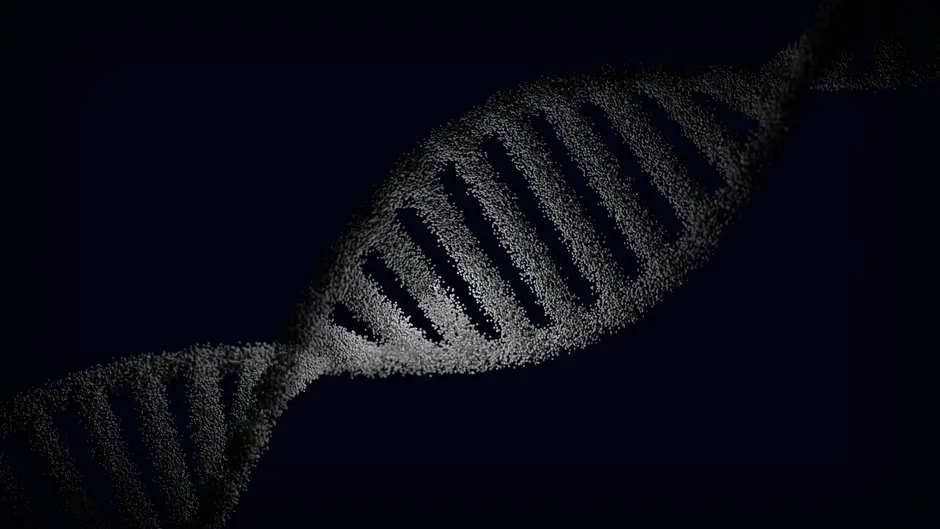
In the sprawling saga of life, few structures command as much fundamental importance as DNA's double helix. This iconic molecular architecture, more than just an elegant shape, stands as the bedrock of heredity, dictating the very blueprint of every organism. Unveiled by Watson and Crick, its revolutionary design unlocked profound secrets, transforming our comprehension of how traits are passed down through generations. We embark on a journey to dissect precisely why this singular structure is not merely incidental but absolutely critical to genetics.
This article will meticulously explore the intricate mechanics by which the double helix ensures faithful genetic replication, safeguards our genomic integrity, and orchestrates the complex symphony of gene expression. Prepare to forge a deeper understanding of the foundational principles of genetic material in living systems, revealing how its unique form empowers life's most essential processes and fuels the relentless engine of evolution. Discover the strategic advantages woven into its very strands, advantages that profoundly influence everything from cellular function to species adaptation. What inherent wisdom is encoded within its twists that makes it the ultimate keeper of genetic information?
Blueprint of Life: Decoding the Double Helix Structure
To truly grasp the double helix's indispensable role in genetics, we must first dissect its remarkable architecture, a triumph of biological engineering unveiled by Watson and Crick in 1953. Visualize a twisted ladder, where the two long sides are formed by alternating deoxyribose sugar and phosphate molecules, creating the robust 'sugar-phosphate backbone'. This resilient framework provides structural integrity, shielding the internal genetic code. The rungs of this ladder consist of pairs of nitrogenous bases: adenine (A) consistently pairs with thymine (T), and guanine (G) invariably pairs with cytosine (C). This fundamental 'base-pairing rule', dictated by precise hydrogen bonds (two for A-T, three for G-C), ensures that the two strands are perfectly complementary, not identical. This complementarity is the lynchpin for DNA's biological functions.
A critical, non-negotiable detail is the antiparallel orientation of these strands. One strand runs in a 5' (five-prime) to 3' (three-prime) direction, while its partner runs 3' to 5'. This directional asymmetry is not arbitrary; it profoundly impacts how crucial enzymes interact with DNA during replication and transcription, dictating their binding, movement, and catalytic activity. Furthermore, the stacking of these planar base pairs within the helix contributes significantly to its overall stability, a phenomenon known as 'base stacking forces'. These forces, combined with the hydrogen bonds, protect the precious genetic information within from environmental assaults and thermal denaturation. This elegant, symmetrical yet directional structure is far more than an aesthetic marvel; it is an engineering triumph that underpins every subsequent genetic function, from inheritance to protein synthesis. We seize upon these structural nuances as direct evidence of evolution's mastery in forging a stable, yet accessible, repository for life's instructions.
The double helix isn't just about base pairing; it's about the optimal configuration for both stability and access. The hydrophobic nitrogenous bases are tucked inside, shielded from the aqueous cellular environment, while the hydrophilic sugar-phosphate backbones face outwards. This arrangement enhances overall stability while presenting a uniform, approachable exterior for necessary protein interactions. Consider the minor and major grooves formed by the helical twist; these are not merely decorative indentations. They serve as highly specific recognition and binding sites for a plethora of regulatory proteins, known as transcription factors. These proteins can 'read' the DNA sequence without unwinding the entire helix, allowing for precise and efficient control over gene expression. This capability represents a testament to the structure's integrated functionality. We prioritize the understanding of these grooves as vital control points within the genomic landscape, crucial for regulating the cell's genetic operations.
Precision Replication: Double Helix as Template
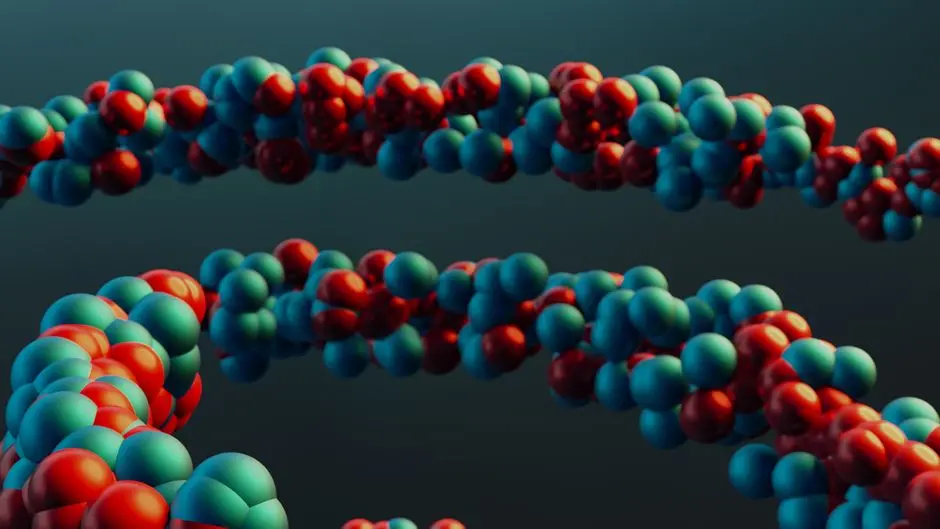
The double helix's structure is a masterclass in self-replication, a cornerstone of heredity. Its complementary nature directly facilitates the semi-conservative replication process, ensuring that genetic information is passed down with astonishing fidelity from one generation of cells to the next. The process initiates when specialized enzymes, like DNA helicase, unwind and separate the two parental strands, effectively 'unzipping' the helix. Each separated strand then acts as a unique template for the synthesis of a new complementary strand. This templating mechanism is critical: a new adenine will only pair with an exposed thymine on the template, and a new guanine with an exposed cytosine. This strict adherence to base-pairing rules minimizes errors and preserves the genetic code.
DNA polymerase enzymes then meticulously move along each template strand, adding nucleotides one by one to form new strands. Because each newly formed DNA molecule consists of one original 'parental' strand and one newly synthesized 'daughter' strand, the replication is termed 'semi-conservative'. This elegant mechanism guarantees that each daughter cell receives an exact copy of the genetic material, crucial for growth, repair, and reproduction. The intrinsic stability of the double helix ensures that the template strands remain intact and accurately guide the synthesis of new partners. Without this structural foundation, the very possibility of precise genetic inheritance would crumble.
Errors during replication, although rare, underscore the importance of the double helix’s structure. While cellular proofreading mechanisms exist, a mismatched base pair, if uncorrected, becomes a permanent mutation in the next generation of cells. The tightly bound nature of the double helix helps to prevent random nucleotides from incorporating incorrectly. The integrity of the hydrogen bonds and base stacking further reinforces the accuracy, making it energetically unfavorable for incorrect pairings to persist. We actively pursue strategies to understand and mitigate these replication errors, as they are direct drivers of disease and evolutionary change. The double helix empowers life to replicate itself, maintaining continuity while subtly allowing for the variation essential for adaptation, a delicate balance engineered into its very core.
Safeguarding Integrity: Stability & Repair
The double helix structure is a formidable guardian of genetic integrity. Its inherent stability is paramount for protecting the immense volume of information encoded within. The hydrogen bonds between base pairs, while individually weak, collectively create a robust force that holds the two strands together. More significantly, the hydrophobic interactions between adjacent stacked base pairs in the interior of the helix provide a major contribution to its stability. These 'base stacking' forces essentially cocoon the delicate genetic sequence within a stable, thermodynamically favorable environment, shielding it from spontaneous chemical reactions and external physical damage that could compromise the genetic code.
Beyond mere physical resilience, the double helix structure is fundamental to cellular DNA repair mechanisms. The presence of two complementary strands means that if one strand is damaged, the intact complementary strand can serve as a template to accurately repair the damaged portion. This 'template-driven' repair is a powerful evolutionary advantage. For instance, in nucleotide excision repair, a segment containing a damaged base is removed from one strand, and the gap is then filled in using the information from the undamaged partner strand. Without the complementary nature of the double helix, such precise repair would be impossible, leading to a rapid accumulation of deleterious mutations and genomic instability.
Consider the cellular vigilance against DNA damage, a constant threat from UV radiation, reactive oxygen species, and chemical mutagens. The double helix's design facilitates these repair processes by making errors conspicuous. A single-strand break or a mismatched base pair disrupts the helix's uniform structure, creating distortions that act as flags for repair enzymes. These enzymes efficiently scan the DNA, identify aberrations in the helical conformation, and initiate corrective action. This sophisticated system of damage detection and repair, intrinsically linked to the double helix's design, is a critical defense against cancer and aging. We proactively investigate how to enhance these natural repair capabilities, recognizing them as key to promoting long-term cellular health and maintaining the flawless execution of genetic instructions across an organism's lifespan.
Information Access: Gene Expression Blueprint
The double helix structure, while stable, must also be accessible to allow for the dynamic process of gene expression. This is where the local unwinding of the helix becomes critical, enabling transcription – the synthesis of RNA from a DNA template. Unlike replication, transcription typically involves only a specific segment of DNA, a gene, and only one of the two DNA strands serves as the template. RNA polymerase enzymes bind to specific promoter regions on the DNA, locally unwinding the helix to expose the nucleotide sequence of the template strand. This temporary unwinding is essential; it provides the 'open reading frame' necessary for RNA polymerase to accurately synthesize a complementary messenger RNA (mRNA) molecule.
The inherent property of the double helix to unwind locally without permanently dissociating is key to gene regulation. Cells precisely control which genes are expressed and when, a process vital for cell differentiation and function. If the DNA were permanently single-stranded, or too rigidly bound, this selective access would be significantly hampered or impossible. The dynamic equilibrium between its helical state and localized unwound state allows for sophisticated control over the genetic code. Furthermore, the major and minor grooves of the double helix act as specific recognition sites for transcription factors and other regulatory proteins. These proteins bind to particular DNA sequences within the grooves, either activating or repressing gene transcription without requiring full denaturation of the DNA molecule.
This controlled accessibility ensures that cellular resources are not wasted on synthesizing unnecessary proteins and that the correct proteins are made at the right time and place. For instance, a liver cell expresses different genes than a nerve cell, despite containing the exact same double helix DNA. This differential gene expression is directly facilitated by the double helix's ability to be locally opened and interacted with by specific regulatory machinery. We champion a deeper understanding of these intricate regulatory mechanisms, recognizing them as the maestros conducting the symphony of life, orchestrating cellular identity and function. The double helix is thus not just a passive repository; it is an active participant in the finely tuned ballet of gene expression, crucial for the development and maintenance of all living organisms.
Evolution's Engine: Variation & Adaptation
While the double helix is lauded for its fidelity in replication and stability, it is also, paradoxically, the wellspring of genetic variation—the raw material for evolution. Though DNA replication is remarkably accurate, it is not flawless. Occasional errors, or mutations, occur during the synthesis of new strands, despite proofreading mechanisms. These subtle changes, like a single base substitution, insertion, or deletion, alter the nucleotide sequence within the double helix. The very structure that ensures replication also permits these infrequent, yet profoundly significant, deviations. Moreover, external factors like radiation or chemical mutagens can induce damage, which, if not perfectly repaired, can lead to permanent changes in the double helix's sequence.
The stability of the double helix ensures that most mutations are passed on to daughter cells and subsequent generations once they occur, rather than being immediately degraded or rectified by chance. This permanence is critical for evolution. If DNA were too fragile, beneficial mutations would be lost as quickly as they appeared. Conversely, if it were too rigid, no new variations would arise. The double helix strikes a masterful balance: stable enough to preserve information across generations, yet flexible enough to permit the occasional, random alteration. These alterations, when they confer a selective advantage, become fixed in a population over time, driving adaptation and species diversification. We identify this delicate balance as a prime example of evolutionary optimization.
The double helix structure also provides the physical substrate for genetic recombination, a process where segments of DNA are exchanged between homologous chromosomes during meiosis. This reshuffling of genetic material creates new combinations of alleles, further increasing genetic diversity within a population. Without the intertwined, yet separable, nature of the double helix, such precise and controlled exchange would be impossible. The specific chemical bonds and the complementary pairing allow for homologous regions to align and exchange segments accurately, preventing catastrophic genetic rearrangements. Thus, the double helix doesn't just hold the code; it enables its dynamic remixing, fueling the engine of natural selection and allowing life to adapt to ever-changing environments. We dissect these mechanisms to understand how life continuously reinvents itself, leveraging the double helix as its core innovation platform.

Clinical Insights: Harnessing the Helix
Our profound understanding of the double helix structure has catalyzed a revolution in medicine and biotechnology. The knowledge that DNA is a double-stranded, complementary molecule with a predictable base-pairing rule is the foundation of countless diagnostic tools and therapeutic interventions. For instance, PCR (Polymerase Chain Reaction) technology, which amplifies specific DNA sequences, relies entirely on the principle of DNA denaturation and primer binding to complementary strands. This technique, made possible by the double helix's structure, is indispensable for disease diagnosis, forensic science, and genetic research.
Furthermore, the ability to manipulate the double helix has opened doors to genetic engineering and gene therapy. Technologies like CRISPR-Cas9, which allows for precise editing of the genome, leverage our understanding of how enzymes can target specific DNA sequences and induce changes. By designing guide RNAs that are complementary to target DNA sequences, scientists can direct the Cas9 enzyme to cut the double helix at exact locations. This targeted cleavage and subsequent repair mechanisms exploit the inherent structure and repair capabilities of DNA, offering unprecedented potential for correcting genetic defects that cause inherited diseases. The double helix is no longer merely an object of study; it is a direct tool for intervention.
The future of medicine is inextricably linked to our continued mastery of the double helix. From developing new antiviral drugs that interfere with viral DNA replication to designing personalized cancer therapies based on tumor genomic profiles, the insights gleaned from its structure are constantly yielding innovative solutions. Understanding the subtle variations in double helix stability, groove dimensions, and base-pairing energetics allows for the design of small molecules that selectively bind to DNA, modulating gene expression or inhibiting pathogen replication. We aggressively pursue these avenues, transforming our foundational knowledge into actionable strategies that optimize human health and combat disease. The double helix, therefore, stands not just as a historical discovery but as the living, dynamic blueprint for modern biological advancement and clinical innovation.
Key Takeaways
Key Takeaways: The Double Helix's Genetic Imperatives
The double helix structure is the foundational architectural marvel underpinning all genetic processes. We distill its critical importance into these core imperatives:
- Precision Replication: Its complementary, antiparallel strands serve as perfect templates for semi-conservative replication, ensuring accurate genetic inheritance across generations.
- Genomic Stability: Hydrogen bonds and base stacking forces provide immense stability, protecting the vital genetic code from damage and degradation. The enclosed hydrophobic bases are shielded from the aqueous environment.
- Template-Driven Repair: The presence of two complementary strands is crucial for DNA repair mechanisms, allowing damaged sections to be accurately restored using the intact partner strand as a template.
- Regulated Gene Expression: Localized unwinding and specific protein binding to its major and minor grooves enable precise control over which genes are transcribed, orchestrating cellular function and differentiation.
- Evolutionary Adaptability: While stable, the structure permits occasional mutations and facilitates genetic recombination, providing the essential variation upon which natural selection acts, driving adaptation and diversification of species.
- Biotechnological Foundation: Its predictable structure is the bedrock for modern biotechnologies, including PCR, gene editing (CRISPR), and diagnostics, transforming medicine and research.
The double helix is not merely a static blueprint but a dynamic, functionally optimized structure that actively enables life's most fundamental processes.
FAQ
-
What would happen if DNA wasn't a double helix?
If DNA lacked its double-helical structure, genetic information transfer would become catastrophically inefficient and unstable. Replication, requiring a complementary template, would be compromised, leading to massive errors or inability to copy at all. Genetic integrity would plummet due to increased susceptibility to damage without the protective internal base stacking and hydrogen bonding. Moreover, the precise regulation of gene expression, which relies on localized unwinding and specific protein binding to grooves, would be impossible. Life as we know it, dependent on stable, replicable, and expressible genetic information, could not exist. The double helix is a non-negotiable architectural requirement for sustained biological function.
-
How do mutations occur given the stability and repair mechanisms of the double helix?
Despite the double helix's inherent stability and sophisticated repair mechanisms, mutations occur through a combination of factors. Replication errors, though rare, can arise when DNA polymerase occasionally inserts an incorrect nucleotide, especially at repetitive sequences. While proofreading mechanisms correct most of these, some escape detection. External mutagens like UV radiation, certain chemicals, or ionizing radiation can induce damage (e.g., base modifications, strand breaks) that, if not perfectly repaired by the cellular machinery, lead to permanent changes in the DNA sequence. Furthermore, spontaneous chemical reactions within the cell can also alter bases. The repair systems are incredibly efficient but not infallible; a certain baseline rate of mutation is an unavoidable consequence of life's complex chemistry and its interaction with the environment. We recognize these events as the fundamental drivers of genetic diversity, both beneficial and detrimental.