
> Basic Biology Concepts > DNA and Genetic Information Basics > Mastering DNA Duplication: The Cell's Replication Blueprint
Mastering DNA Duplication: The Cell's Replication Blueprint
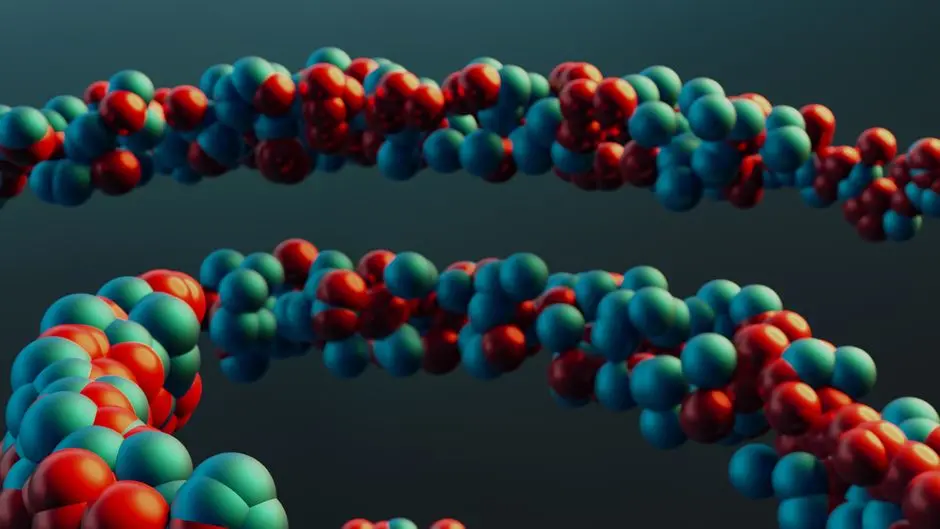
Every cell in every living organism faces a critical challenge: accurately replicating its genetic blueprint before division. This isn't merely a biological process; it's the bedrock of life itself, dictating inheritance, growth, and repair. Understanding the intricate dance of DNA duplication is paramount for anyone seeking to decipher the fundamental mechanics of cellular existence and indeed, the very essence of heredity.
We dive deep into this astonishing molecular ballet, dissecting each stage with surgical precision. From the initial unwinding of the double helix to the meticulous construction of new strands, we uncover the enzymes, proteins, and regulatory mechanisms that orchestrate this vital feat. Ignoring the nuances of DNA replication is to overlook the engine driving all biological perpetuation, a common oversight with profound implications for comprehending genetic integrity and disease.
Join us as we explore the that underpin this miraculous process, providing an actionable, expert-level perspective that moves beyond mere description to empower your understanding. We forge ahead to unravel the cell's strategy for maintaining genetic fidelity, arming you with insights to truly grasp how life replicates itself with astounding accuracy and resilience.
The Imperative of Replication: Why Cells Duplicate Their DNA
We initiate our exploration by establishing the profound necessity of DNA duplication. This isn't an optional cellular activity; it is the absolute prerequisite for life's continuity. Every time a cell divides, each daughter cell must receive a complete, identical copy of the parent cell's genetic material. Failure here precipitates catastrophic consequences, ranging from cell death to unchecked proliferation characteristic of cancer, or the transmission of debilitating genetic disorders. Therefore, understanding this 'why' is our foundational step.
Consider the staggering complexity involved: a human cell contains approximately 3 billion base pairs, and this entire genome must be copied with near-perfect fidelity within a relatively short timeframe – typically a few hours during the S-phase of the cell cycle. The challenge isn't just speed but also precision. For instance, the error rate in human DNA replication is astonishingly low, roughly one mistake per 10^9 base pairs. This level of accuracy is not accidental; it is the culmination of millions of years of evolutionary refinement, yielding robust proofreading and repair mechanisms that we will dissect in subsequent sections.
The strategic implication is clear: without faithful DNA replication, evolution itself would falter. Genetic information, the blueprint for all proteins and cellular structures, could not be reliably passed down through generations. We recognize DNA duplication as the linchpin event ensuring biological continuity, driving species propagation, tissue repair, and the development of multicellular organisms from a single zygote. It’s the ultimate biological imperative, shaping every aspect of life as we know it.
The Molecular Architects: Key Enzymes and Proteins Driving Replication
We now identify the elite molecular architects and construction crews responsible for DNA duplication. This process is far from spontaneous; it relies on a highly coordinated ensemble of specialized enzymes and proteins, each performing a precise, indispensable function. Understanding these players is critical to grasping the mechanics of replication.
At the forefront is DNA Helicase, the enzymatic 'unzipper'. Its role is to unwind the double helix, breaking the hydrogen bonds between complementary base pairs to create a replication fork. Without this initial separation, the DNA strands would remain inaccessible for copying. As helicase progresses, it introduces torsional stress on the DNA molecule ahead of the fork. This stress is expertly relieved by Topoisomerases, which cut, unwind, and re-ligate the DNA strands, preventing supercoiling that would otherwise halt replication.
Next, we encounter Single-Strand Binding Proteins (SSBs). These proteins immediately bind to the separated single DNA strands, preventing them from re-annealing and protecting them from degradation, ensuring they remain available as templates. The star of the show, DNA Polymerase, then takes center stage. This enzyme is the primary builder, synthesizing new DNA strands by adding complementary nucleotides to the growing chain. However, DNA polymerase cannot initiate synthesis de novo; it requires a starting point, a short RNA primer synthesized by Primase. We forge a comprehensive understanding of how these core components synergistically orchestrate the precise construction of new genetic material.
The Replication Mechanism: A Symphony of Leading and Lagging Strands
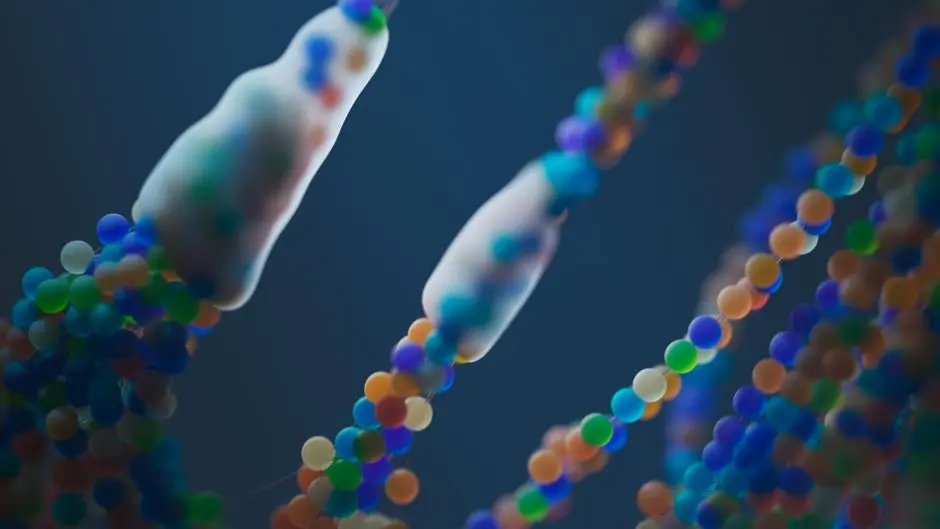
We dissect the core mechanism of DNA replication, a process characterized by its semi-conservative nature and the asymmetric synthesis of new strands. DNA replication proceeds in a 5' to 3' direction, meaning DNA polymerase can only add nucleotides to the 3' end of a growing strand. This fundamental constraint dictates two distinct modes of synthesis at each replication fork: the leading strand and the lagging strand.
The leading strand is the simpler narrative. Once an initial RNA primer is laid down by primase, DNA polymerase III (in prokaryotes, or its eukaryotic equivalent) continuously adds nucleotides in the 5' to 3' direction, moving towards the replication fork. It's a smooth, uninterrupted synthesis, driven by the polymerase's relentless progression along the template strand. This efficiency ensures rapid replication of one half of the DNA.
The lagging strand presents a more intricate challenge. Because its template runs in the 5' to 3' direction relative to the movement of the replication fork, DNA polymerase must synthesize this strand discontinuously, in short segments known as Okazaki fragments. For each fragment, primase synthesizes a new RNA primer. DNA polymerase then extends this primer, adding DNA nucleotides until it encounters the previous Okazaki fragment. Subsequently, RNA primers are removed by specialized enzymes (e.g., DNA Polymerase I in prokaryotes, or RNase H and FEN1 in eukaryotes) and replaced with DNA. Finally, DNA Ligase acts as the molecular 'glue', forming phosphodiester bonds to join these fragments into a continuous strand. We navigate this complex interplay, optimizing our understanding of this crucial, albeit fragmented, synthesis.
Precision and Fidelity: Proofreading, Repair, and Termination
We delve into the sophisticated mechanisms that safeguard the accuracy of DNA replication and bring the process to a controlled close. The sheer volume of genetic information demands extraordinary fidelity, and cells possess powerful internal quality control systems to ensure this. Ignoring these checkpoints is to miss a critical layer of cellular defense.
Firstly, proofreading is an intrinsic function of most DNA polymerases. As the polymerase synthesizes the new strand, it possesses a 3' to 5' exonuclease activity. If an incorrect nucleotide is inserted, the polymerase immediately detects the mismatch, pauses, removes the erroneous base, and then proceeds with the correct one. This 'edit-and-retry' mechanism dramatically reduces the initial error rate by several orders of magnitude, typically making errors one in 10^7 base pairs.
Beyond immediate proofreading, cells employ a battery of DNA repair mechanisms. Mismatch repair (MMR) systems, for example, scan newly synthesized DNA for remaining errors that escaped proofreading. They identify the incorrect base, distinguish the new strand from the old template (often by methylation patterns in prokaryotes or nicks in eukaryotes), excise the erroneous segment, and resynthesize it correctly. The replication process concludes with termination, typically occurring when two replication forks meet, or at specific termination sequences. In eukaryotes, the linear nature of chromosomes poses a unique challenge: the 'end replication problem', where the lagging strand cannot fully replicate the very end of the chromosome. This is solved by specialized structures called telomeres and the enzyme telomerase, which adds repetitive sequences to chromosome ends, protecting vital genetic information. We forge a comprehensive view of how cells maintain genetic integrity from initiation to termination.
Strategic Insights: Regulation, Common Errors, and Optimizing Cellular Health
We culminate our guide with strategic insights into the regulation of DNA duplication, common pitfalls in its process, and actionable knowledge for appreciating its impact on cellular health. Understanding the regulatory layers is paramount for comprehending how cells control growth, division, and differentiation. Replication is not a continuous free-for-all; it is tightly controlled, ensuring that DNA is copied exactly once per cell cycle.
Key regulatory elements include cyclin-dependent kinases (CDKs) and cyclins, which drive the cell cycle forward, ensuring that DNA replication is initiated only after specific checkpoints are met (e.g., sufficient resources, absence of DNA damage). Origin firing, the initiation of replication at multiple origins along eukaryotic chromosomes, is precisely timed and controlled to prevent re-replication within the same cycle. This 'license to replicate' mechanism prevents genomic instability.
Common errors and challenges: While highly efficient, errors can occur. Beyond simple base mismatches, larger deletions, insertions, or translocations can arise, often leading to genetic diseases or cancer. Environmental factors like UV radiation and chemical mutagens can also damage DNA, necessitating robust repair systems. A critical insider tip: many modern cancer therapies target DNA replication or repair pathways, highlighting their vulnerability and importance. We optimize our perspective by recognizing that maintaining a healthy cellular environment, minimizing exposure to mutagens, and supporting cellular repair mechanisms are tangible steps towards bolstering genomic integrity. We equip you with a nuanced understanding of these processes, vital for both theoretical grasp and practical application in biological research and health.
Key Takeaways
The Core Mandate of DNA Duplication
DNA duplication is the absolute biological imperative for cellular life and genetic inheritance. Every dividing cell requires a precise, identical copy of its genome. This process underpins growth, repair, reproduction, and the stable transmission of genetic information across generations. Errors can lead to severe consequences, including disease and genomic instability.
Key Molecular Players and Their Roles
- DNA Helicase: Unwinds the DNA double helix, creating replication forks.
- Topoisomerases: Relieve torsional stress ahead of the replication fork, preventing supercoiling.
- Single-Strand Binding Proteins (SSBs): Stabilize separated DNA strands, preventing re-annealing.
- Primase: Synthesizes short RNA primers to provide a starting point for DNA polymerase.
- DNA Polymerase: Synthesizes new DNA strands by adding complementary nucleotides in the 5' to 3' direction; also performs proofreading.
- DNA Ligase: Joins Okazaki fragments on the lagging strand, forming phosphodiester bonds.
The Mechanics of Leading and Lagging Strands
- Semi-conservative replication: Each new DNA molecule has one old and one new strand.
- Leading Strand: Synthesized continuously in the 5' to 3' direction, towards the replication fork.
- Lagging Strand: Synthesized discontinuously in short segments (Okazaki fragments) in the 5' to 3' direction, away from the replication fork, requiring multiple primers and subsequent ligation.
Ensuring Fidelity: Proofreading, Repair, and Termination
DNA Polymerase's 3' to 5' exonuclease activity acts as an immediate proofreading mechanism, correcting errors during synthesis. Post-replication, Mismatch Repair (MMR) systems fix remaining errors. Replication concludes when forks meet or at specific termination sequences. In eukaryotes, telomeres and telomerase address the end-replication problem, protecting chromosome ends and maintaining genomic integrity.
Strategic Regulation and Clinical Relevance
DNA replication is tightly regulated by cell cycle checkpoints, particularly through CDKs and cyclins, ensuring replication occurs only once per cycle and only with suitable conditions. Understanding these mechanisms is crucial for comprehending genetic disorders and cancer, as many therapies target replication or repair pathways. Maintaining genomic integrity is vital for cellular health and preventing disease.
FAQ
-
What is the primary purpose of DNA duplication?
The primary purpose of DNA duplication, also known as DNA replication, is to ensure that when a cell divides, each of the two new daughter cells receives an identical and complete set of genetic information (DNA) from the parent cell. This process is fundamental for cell growth, repair, and reproduction of organisms.
-
Why is DNA replication considered 'semi-conservative'?
DNA replication is semi-conservative because each newly formed DNA molecule consists of one original (template) strand from the parent DNA and one newly synthesized strand. This mechanism ensures that the genetic information is accurately passed down, as the original strand acts as a precise guide for the synthesis of the new one.
-
What is the role of DNA Polymerase in replication?
DNA Polymerase is the principal enzyme responsible for synthesizing new DNA strands during replication. It moves along the template strand, reading the sequence of bases, and then adds complementary nucleotides (A with T, C with G) to the growing new DNA strand in the 5' to 3' direction. It also has a crucial proofreading function to correct errors.
-
What are Okazaki fragments and why are they necessary?
Okazaki fragments are short segments of newly synthesized DNA that are formed on the lagging strand during DNA replication. They are necessary because DNA polymerase can only synthesize DNA in the 5' to 3' direction, but the lagging strand template runs 5' to 3' relative to the replication fork. This forces discontinuous synthesis in small fragments, which are later joined together by DNA ligase.
-
How do cells ensure the accuracy of DNA replication?
Cells ensure high accuracy through several mechanisms. Firstly, DNA polymerases have a built-in proofreading function that detects and corrects incorrectly paired bases as they are added. Secondly, post-replication mismatch repair systems scan the newly synthesized DNA for any remaining errors and rectify them. These combined systems drastically reduce the error rate to an extremely low level.