
> Basic Biology Concepts > DNA and Genetic Information Basics > Unlock the DNA Code: Genetic Information Encoding
Unlock the DNA Code: Genetic Information Encoding
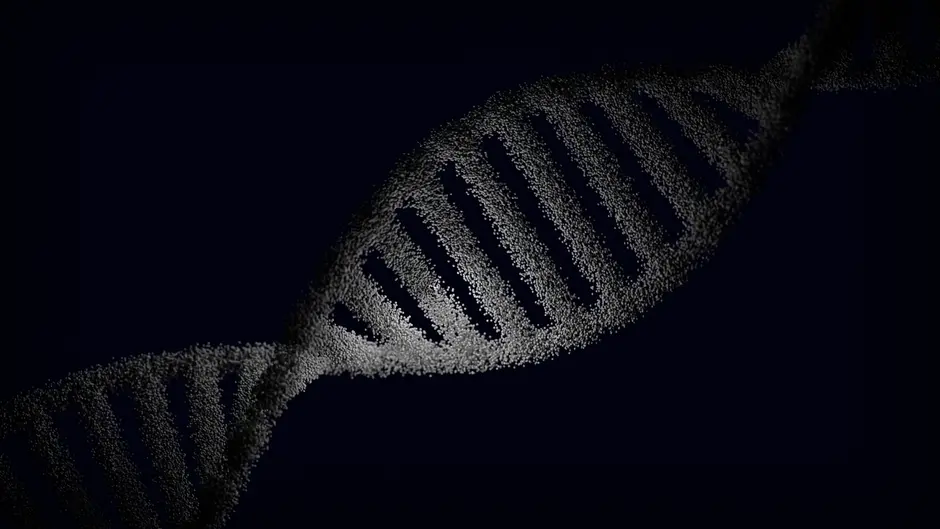
Embark on a profound journey into the very essence of life: the meticulous encoding of genetic information within DNA. We stand at the precipice of understanding how a simple sequence of four molecular letters orchestrates the breathtaking complexity of every living organism. This isn't merely theoretical knowledge; it's the operational manual for existence itself. Grasping this foundational principle empowers us to decode diseases, engineer biotechnologies, and fundamentally reshape our biological future.
In this authoritative guide, we dismantle the intricate mechanisms that allow DNA to store, transmit, and express life's instructions. We explore the granular details of its chemical structure, the universal language of the genetic code, and the dynamic processes that transform silent sequences into functional proteins. Prepare to unlock the secrets behind the blueprint of life, revealing how an elegant molecular design drives all biological phenomena. We forge a comprehensive understanding, building on the fundamental principles of genetic material in living systems to reveal the precision and robustness inherent in genetic encoding. Dive in; the blueprint of life awaits your command.
Decoding DNA's Foundation: The Nucleotide Alphabet
We initiate our exploration by deconstructing DNA, the ultimate information repository. Visualize DNA not as a monolithic entity, but as a sophisticated polymer constructed from repeating monomer units: nucleotides. Each nucleotide is a meticulously crafted molecular module, comprising three indispensable components: a deoxyribose sugar, a phosphate group, and a nitrogenous base. It is within these nitrogenous bases that the revolutionary four-letter alphabet of life resides: Adenine (A), Guanine (G), Cytosine (C), and Thymine (T).
Consider this quartet as the fundamental symbols of genetic communication. The phosphate group and the deoxyribose sugar form the robust, invariant backbone of the DNA strand, creating a stable scaffold. This backbone is linked by strong phosphodiester bonds, forging a durable chain that protects the precious information. We categorize the nitrogenous bases into two types: the larger, double-ringed purines (Adenine and Guanine) and the smaller, single-ringed pyrimidines (Cytosine and Thymine). This structural distinction is not arbitrary; it is absolutely critical for the precise pairing that underpins DNA's double-helical architecture.
Crucially, the sequence of these four bases along this backbone constitutes the explicit instructions. Just as an architect's blueprint uses specific symbols and lines in a precise order, DNA leverages the specific linear arrangement of A, T, C, and G to encode every trait and function. This seemingly simple alphanumeric system belies an astonishing capacity for combinatorial complexity, capable of defining billions of unique organisms. Think of the sheer number of possible sequences for even a relatively short segment of DNA; the combinatorial power is immense. This primary sequence is the first tier of genetic information, dictating everything from protein structure to cellular behavior.
To truly grasp the encoding mechanism, we must internalize this principle: the information is not stored within the individual components in isolation, but in their precise sequential order. We recognize this fundamental organizational principle as the bedrock upon which all subsequent layers of genetic expression are built. Without this precise nucleotide alphabet and its sequential arrangement, the sophisticated language of life would be utterly incoherent, unable to convey its critical directives for growth, development, and survival. We actively forge our understanding of how these simple building blocks orchestrate the breathtaking complexity of biological systems.
Constructing the Double Helix: Complementary Base Pairing and Directionality
From the foundational nucleotide alphabet, we now construct the iconic DNA double helix. This structure is not merely aesthetic; it is intrinsically tied to how genetic information is precisely encoded and reliably transmitted. The double helix forms through a phenomenon known as complementary base pairing, a discovery pivotal to understanding DNA's function. Adenine (A) consistently pairs with Thymine (T) via two hydrogen bonds, while Guanine (G) invariably pairs with Cytosine (C) via three hydrogen bonds. This strict pairing rule, famously elucidated by Erwin Chargaff, ensures that the two strands of the DNA molecule are not identical but rather perfect complements of each other.
This complementarity is the ultimate safeguard for genetic information. If we know the sequence of one strand, we can infallibly deduce the sequence of its partner. This redundancy is a cornerstone of genetic stability, enabling accurate DNA replication and repair mechanisms that protect the integrity of the encoded blueprint. Imagine a crucial instruction set: having a perfect mirror copy significantly reduces the risk of corruption. The specific number of hydrogen bonds (two for A-T, three for G-C) also imparts differential stability to DNA regions; G-C rich segments typically exhibit greater thermal stability, a critical factor in processes like PCR where DNA strands must be separated.
Equally vital to encoding and function is the antiparallel nature of the DNA strands. One strand runs in a 5' (five-prime) to 3' (three-prime) direction, while its complementary partner runs in the opposite, 3' to 5', direction. This directionality arises from how the deoxyribose sugars are linked by phosphate groups. The 5' end has a free phosphate group attached to the 5' carbon of the sugar, while the 3' end has a free hydroxyl group attached to the 3' carbon. This seemingly technical detail profoundly impacts how enzymes, such as DNA polymerase and RNA polymerase, interact with DNA. These molecular machines read the template strand and synthesize new strands exclusively in the 5' to 3' direction, a fundamental constraint that dictates the mechanics of replication and gene expression.
We leverage this intrinsic directionality when manipulating DNA in biotechnology. Understanding which strand is the template and its orientation is paramount for designing primers, sequencing DNA, or constructing gene editing tools. The double-helical structure, reinforced by precise base pairing and defined by antiparallel directionality, creates an exquisitely stable and readable format for the genetic code. We unlock the secrets of life's fundamental encoding by mastering these structural tenets, recognizing them not as static architectural features, but as dynamic enablers of biological information flow.
The Genetic Code: Translating Nucleotides into Life's Instructions
Having established DNA's fundamental structure, we now pivot to its ultimate purpose: dictating the synthesis of proteins, the workhorses of the cell. Genetic information is not merely a sequence of bases; it is a meticulously organized code that translates into functional macromolecules. The cornerstone of this translation is the genetic code, a universal language that bridges the gap between nucleic acid sequences and amino acid sequences. This code operates on a triplet basis: every three consecutive nucleotides, known as a codon, specifies a particular amino acid or a signal for termination.
Consider the mathematical elegance: with four possible bases (A, T, C, G), there are 43, or 64, unique combinations of triplet codons. However, nature primarily uses 20 common amino acids to build proteins. This disparity reveals a critical feature of the genetic code: its degeneracy, or redundancy. Most amino acids are specified by more than one codon, often differing only in the third nucleotide position. For instance, both GGU and GGC code for Glycine. This redundancy acts as a buffer against certain point mutations, often resulting in "silent" mutations where the amino acid sequence remains unchanged, thus preserving protein function.
Beyond specifying amino acids, the genetic code also contains crucial punctuation marks. The codon AUG serves a dual purpose: it specifies the amino acid Methionine and, critically, acts as the start codon, signaling where protein synthesis should begin on an mRNA molecule. Without a clear start signal, the ribosome would not know where to initiate translation, leading to non-functional or truncated proteins. Conversely, three specific codons—UAA, UAG, and UGA—do not code for any amino acid. These are the stop codons, which signal the termination of protein synthesis, ensuring that proteins are produced with the correct, finite length.
A truly astonishing aspect of the genetic code is its near-universality. With very few exceptions (primarily in mitochondrial genomes and certain microorganisms), the same codons specify the same amino acids across all forms of life, from bacteria to plants to humans. This universality is a powerful testament to our shared evolutionary heritage and underpins the field of genetic engineering, allowing us to transfer genes between vastly different species and expect their proper expression. We assert that understanding this universal, degenerate, and precisely punctuated genetic code is paramount to unlocking the very essence of molecular biology and genetic engineering potential.
From DNA to Action: Transcription, Translation, and Information Flow
The genetic information encoded in DNA's nucleotide sequence is inert until it is expressed. The journey from static blueprint to dynamic cellular function involves a meticulously orchestrated sequence of events known as the Central Dogma of Molecular Biology: DNA directs RNA synthesis, and RNA directs protein synthesis. This fundamental pathway, comprising transcription and translation, defines how genetic instructions are converted into the molecular machinery that sustains life.
The first critical step is transcription, where the genetic information from a specific segment of DNA (a gene) is copied into an RNA molecule, primarily messenger RNA (mRNA). We initiate this process with the enzyme RNA polymerase, which binds to a specific promoter region on the DNA. It then unwinds a localized segment of the DNA double helix and synthesizes an RNA strand that is complementary to one of the DNA strands, designated as the template strand. A key distinction in RNA is the substitution of Thymine (T) with Uracil (U). So, where DNA has A, RNA will pair with U; where DNA has C, RNA will pair with G. The non-template strand, often called the coding strand, has a sequence identical to the mRNA (except for U instead of T).
Following transcription, the mRNA molecule carries the genetic message out of the nucleus (in eukaryotes) or directly to ribosomes (in prokaryotes). Here, the second pivotal process, translation, commences. Translation is the synthesis of a protein based on the mRNA sequence. This complex task is performed by ribosomes, intricate molecular machines composed of ribosomal RNA (rRNA) and proteins. The ribosome "reads" the mRNA sequence in successive codons. For each codon, a specific transfer RNA (tRNA) molecule, carrying its cognate amino acid, enters the ribosome. Each tRNA possesses an anticodon, a three-nucleotide sequence that is complementary to the mRNA codon.
As the ribosome moves along the mRNA, tRNA molecules deliver their amino acids, which are then linked together by peptide bonds, forming a growing polypeptide chain. This process continues until a stop codon is encountered, signaling the release of the completed protein. The linear sequence of nucleotides in the DNA—transcribed into mRNA codons—directly dictates the linear sequence of amino acids in the resulting protein. This amino acid sequence, in turn, determines the protein's unique three-dimensional structure and, consequently, its specific biological function. We master the intricate orchestration of these processes to fully comprehend how life's blueprint is brought to vibrant, functional reality, transforming abstract code into tangible biological action.
Safeguarding the Code: Replication Fidelity, Mutations, and Repair Mechanisms
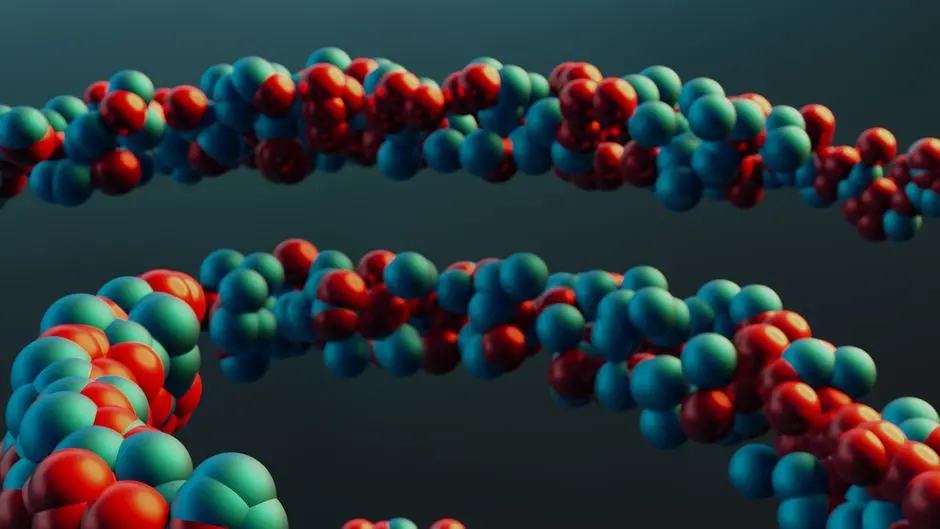
The exquisite precision of genetic information encoding would be futile without robust mechanisms to preserve its integrity across generations. We now delve into the critical processes that ensure the faithful transmission and maintenance of the DNA sequence: replication fidelity, the consequences of deviations, and sophisticated repair systems. At the heart of genetic inheritance lies DNA replication, the semi-conservative process by which a cell duplicates its entire genome before cell division. During replication, the double helix unwinds, and each parental strand serves as a template for synthesizing a new, complementary daughter strand.
The primary enzyme responsible for this remarkable feat is DNA polymerase. This molecular architect not only synthesizes new DNA strands with astonishing speed but also possesses a crucial built-in proofreading activity. As it adds nucleotides, DNA polymerase scrutinizes each addition, and if an incorrect base pair is detected, it immediately removes the mismatched nucleotide using its 3' to 5' exonuclease activity before proceeding. This proofreading capability drastically reduces the error rate during replication, lowering it from approximately one in 10,000 nucleotides to roughly one in 10 million nucleotides. This inherent fidelity is paramount for ensuring the accuracy of the encoded genetic blueprint.
Despite these safeguards, errors can and do occur, leading to changes in the DNA sequence known as mutations. We categorize mutations based on their scope: point mutations involve changes to a single nucleotide pair (e.g., substitutions, insertions, or deletions of one or a few bases). A substitution can lead to a silent mutation (no change in amino acid due to degeneracy), a missense mutation (change in amino acid), or a nonsense mutation (change to a stop codon, resulting in a truncated protein). Insertions or deletions of nucleotides not in multiples of three cause frameshift mutations, which dramatically alter the downstream amino acid sequence and typically lead to non-functional proteins.
To counteract these potentially deleterious changes, cells deploy an arsenal of DNA repair mechanisms. Systems like mismatch repair correct errors that escape DNA polymerase's proofreading, while nucleotide excision repair addresses damage caused by environmental factors like UV radiation. These dynamic repair pathways constantly monitor and restore the DNA sequence, acting as a final line of defense to maintain the integrity of the genetic code. While detrimental mutations can cause disease, we also acknowledge that rare, beneficial mutations are the raw material for evolution, driving genetic diversity and adaptation. We decode these intricate mechanisms, recognizing the vital balance between preserving the inherited code and allowing the subtle shifts that foster biological innovation.
Key Takeaways
DNA's Nucleotide Alphabet: The Foundation of Genetic Encoding
Genetic information is encoded in the linear sequence of four nitrogenous bases: Adenine (A), Guanine (G), Cytosine (C), and Thymine (T). These bases, along with a deoxyribose sugar and a phosphate group, form nucleotides. The order of these nucleotides along the DNA backbone is the core language of life, dictating all biological instructions.
The Double Helix and Complementary Base Pairing
DNA exists as a double helix where two antiparallel strands are held together by complementary base pairing: A always pairs with T (two hydrogen bonds), and G always pairs with C (three hydrogen bonds). This precise pairing and the strands' opposite directionality (5' to 3' vs. 3' to 5') are crucial for DNA's stability, accurate replication, and enzymatic interactions.
The Universal Genetic Code: Triplets to Proteins
The genetic code translates nucleotide sequences into amino acid sequences. It operates on a triplet basis, meaning every three nucleotides (a codon) specifies a particular amino acid. The code is degenerate (most amino acids have multiple codons) and nearly universal across all life. Specific start (AUG) and stop (UAA, UAG, UGA) codons punctuate the instructions for protein synthesis.
Central Dogma: From Gene to Functional Protein
Genetic information flows from DNA to RNA to protein via the Central Dogma. Transcription copies DNA's code into an mRNA molecule (with U replacing T). Subsequently, translation, performed by ribosomes, uses the mRNA sequence and tRNA molecules to assemble amino acids into a polypeptide chain, ultimately forming a functional protein.
Maintaining Genetic Integrity: Replication and Repair
Maintaining the accuracy of genetic information is vital. DNA replication, carried out by DNA polymerase with built-in proofreading, ensures high fidelity copying. Despite this, mutations (changes in DNA sequence) can occur. Cells possess robust DNA repair mechanisms, such as mismatch repair and nucleotide excision repair, to correct errors and protect the integrity of the genetic code, balancing stability with the raw material for evolution.
FAQ
-
What is the primary way genetic information is encoded in DNA?
Genetic information is primarily encoded in the specific linear sequence of the four nitrogenous bases: Adenine (A), Guanine (G), Cytosine (C), and Thymine (T). These bases form a four-letter alphabet, and their arrangement along the DNA strand dictates the instructions for building and maintaining an organism.
-
What is a codon, and what is its role?
A codon is a sequence of three consecutive nucleotides in a DNA or mRNA molecule. Each codon typically specifies a particular amino acid that will be incorporated into a protein, or it can serve as a start or stop signal for protein synthesis. This triplet code is the fundamental unit of genetic instruction.
-
Is the genetic code universal across all life forms?
The genetic code is remarkably universal, meaning that the same codons generally specify the same amino acids in nearly all organisms, from bacteria to humans. This universality is a powerful testament to common ancestry and is foundational for techniques like genetic engineering.
-
How do DNA replication and repair contribute to maintaining genetic information?
DNA replication faithfully copies the genetic information, with enzymes like DNA polymerase including proofreading mechanisms to minimize errors. DNA repair mechanisms continuously monitor and correct errors or damage in the DNA sequence, safeguarding the integrity and stability of the encoded genetic information over time.
-
What happens if there's a mistake in the genetic code (a mutation)?
A mistake in the genetic code is called a mutation. Depending on its type and location, a mutation can have various effects. Some are silent (no change in protein), others can alter the protein's function (missense), lead to a truncated protein (nonsense), or drastically change the entire downstream sequence (frameshift), often resulting in a non-functional protein.