
> Basic Biology Concepts > Cell Structure and Cellular Organization > Forge Cell Theory: Deciphering Life's Foundational Discoveries
Forge Cell Theory: Deciphering Life's Foundational Discoveries
Embark on a riveting expedition through time, where we unravel the monumental breakthroughs that sculpted our comprehension of life itself. Before the advent of sophisticated tools, the very fabric of existence remained largely enigmatic, its fundamental building blocks unseen and unimagined. Yet, the relentless pursuit of knowledge by pioneering minds gradually peeled back these layers of mystery, culminating in one of biology's most unifying principles: the cell theory.
This article charts the definitive historical discoveries that propelled biology from rudimentary observation to a profound understanding of cellular architecture. We shall meticulously reconstruct the pivotal moments, the ingenious innovations, and the visionary scientists whose collective genius forged this indispensable framework. Prepare to discover how individual observations, seemingly disparate, converged into an overarching theory that redefined life’s essence. Our journey will illuminate the logical steps and critical insights, revealing the often-overlooked nuances that shaped this bedrock concept. We empower you to grasp the intricate narrative behind understanding cells as the fundamental units of life, a concept so fundamental it underpins nearly every aspect of modern biological science. Join us as we explore the very genesis of this biological revolution.
The Microscopic Revelation: Early Pioneers and Their Lenses
Before the 17th century, the intricate world beneath the visible spectrum remained entirely unknown, a vast frontier awaiting discovery. Human curiosity, coupled with nascent technological innovation, ignited this biological revolution. Our journey commences with the refinement of the microscope, a tool that irrevocably altered our perception of life.
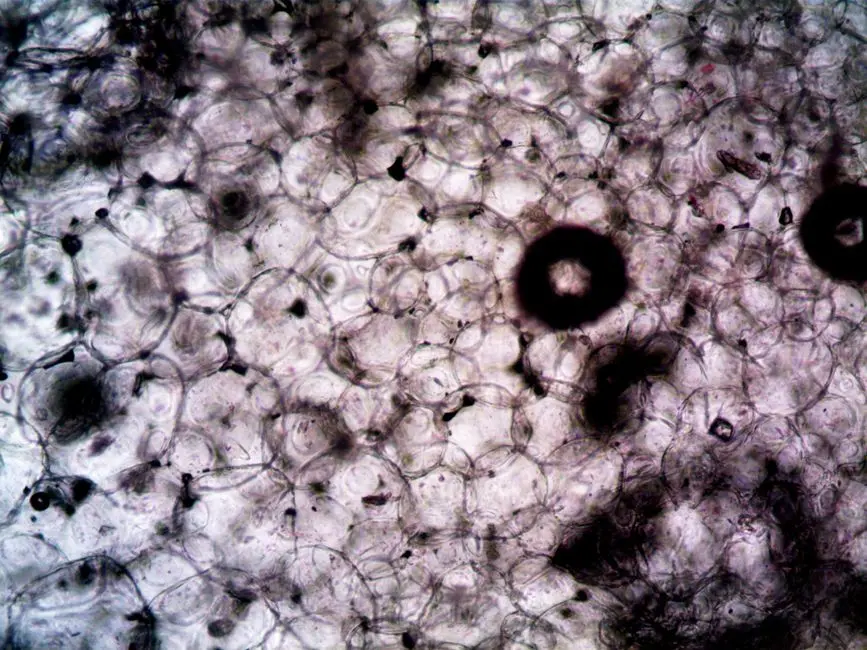
The year 1665 marks a pivotal moment, with Robert Hooke's publication of "Micrographia." An English polymath, Hooke meticulously documented his observations through a compound microscope he designed. While examining thin slices of cork, he observed tiny, box-like compartments, which reminded him of the monastic cells occupied by monks. He coined the term "cells" to describe these structures, a nomenclature that has endured for centuries. Hooke's observations, though limited to dead plant tissue and the cell walls, provided the very first glimpse into the compartmentalized nature of biological entities. His meticulous drawings and descriptive prose captivated the scientific community, laying the groundwork for future microscopic exploration. We recognize Hooke not just for his terminology, but for demonstrating the immense potential of the microscope to reveal hidden biological organization.
A few years later, the Dutch draper and lens grinder, Antonie van Leeuwenhoek, took microscopic observation to an unprecedented level. Possessing a natural gift for crafting incredibly powerful single-lens microscopes – some magnifying up to 270 times – Leeuwenhoek became the first human to witness a staggering array of microscopic life. From 1674 onwards, he dispatched a series of letters to the Royal Society of London, detailing his astounding discoveries. He observed "animalcules" (which we now know as protozoa and single-celled organisms) in pond water, bacteria from dental plaque, blood cells, and even spermatozoa. Leeuwenhoek's observations were not theoretical; they were empirical evidence of a vibrant, unseen world teeming with life, fundamentally challenging the prevailing macroscopic view of existence. His painstaking diligence and remarkable skill with lens-making allowed him to see living, moving entities, providing irrefutable proof that life existed beyond the naked eye's perception. The precision of his descriptions and drawings remains a testament to his observational prowess, pushing the boundaries of what was conceivable. We underscore that these early pioneers, through sheer ingenuity and perseverance, unlocked the door to the cellular realm, setting the stage for the formal articulation of cell theory.
The Unifying Hypothesis: Schleiden, Schwann, and the First Tenets
The individual observations of Hooke and Leeuwenhoek laid fertile ground, but it required a conceptual leap to unify these disparate findings into a cohesive theory. This critical synthesis emerged in the 19th century, driven by the meticulous work of German scientists who dared to generalize from countless specific observations.
Matthias Schleiden, a botanist, dedicated his studies to plant tissues. In 1838, after extensive research and collaboration with other botanists, Schleiden published his conclusion that all plant parts are made of cells. He asserted that the cell is the fundamental structural unit of plants, and that plant growth occurs through the formation of new cells, although his ideas on how new cells formed were later proven incorrect. Schleiden’s insight was revolutionary because it proposed a universal building block for the entire plant kingdom, moving beyond mere descriptive morphology to a unifying principle of organization. We recognize this as a crucial step towards understanding the systemic nature of biological life, rather than seeing each organism as a unique, isolated entity.
Almost immediately, Theodor Schwann, a zoologist and physiologist, extended Schleiden's findings to the animal kingdom. In 1839, after extensive comparative studies of animal tissues, Schwann boldly declared that all animal tissues are composed of cells. He observed striking similarities between the cellular structures of plants and animals, recognizing a common organizational principle. Schwann went further, proposing two key tenets:
The cell is the unit of structure, physiology, and organization in all living things.
The cell retains a dual existence as a distinct entity and a building block in the construction of organisms.
The Crucial Amendment: Virchow and the Origin of Cells
While Schleiden and Schwann established that cells were the universal building blocks of life, their initial theory remained incomplete. A significant conceptual void persisted regarding how new cells came into existence. Early ideas, including those proposed by Schleiden and Schwann themselves, sometimes hinted at a form of spontaneous generation from amorphous material or crystallization. However, rigorous scientific investigation would soon dismantle these speculative notions, replacing them with a more precise and accurate understanding.
The definitive resolution to the question of cell origin arrived with Rudolf Virchow, a prominent German physician and pathologist. In 1855, Virchow famously articulated the principle, "Omnis cellula e cellula," meaning "All cells arise from pre-existing cells." This powerful declaration was not merely a philosophical statement; it was the culmination of meticulous observations, particularly in the field of cellular pathology. Virchow's work highlighted that diseased tissues showed abnormalities at the cellular level, and that these abnormal cells originated from normal cells. He correctly deduced that cellular reproduction, through processes like division, was the exclusive mechanism for generating new cells.
Virchow’s contribution was revolutionary for several reasons. Primarily, it firmly established the third and arguably most crucial tenet of modern cell theory, completing the foundational understanding of cellular life. This principle directly challenged and ultimately helped to disprove the long-held belief in spontaneous generation, which proposed that living organisms could arise spontaneously from non-living matter. By demonstrating that life only arises from pre-existing life at the cellular level, Virchow provided a robust biological foundation against this archaic concept. Furthermore, his work laid the groundwork for modern medicine, shifting the focus of disease from organ-level pathology to cellular-level dysfunction. We recognize Virchow’s amendment as an indispensable refinement, solidifying cell theory as a truly comprehensive and accurate description of life's fundamental processes. His insight transformed our understanding of growth, reproduction, and even the propagation of disease, guiding biological and medical science into a new era of cellular focus. This principle remains a cornerstone, driving research from genetics to developmental biology, fundamentally shaping our understanding of how life perpetuates itself.
The Cell Theory Cemented: Core Principles and Enduring Impact
With Virchow's pivotal amendment, the modern cell theory was firmly established, providing a unifying framework that fundamentally transformed biology. This theory, forged through centuries of observation, experimentation, and critical synthesis, stands as one of the most significant intellectual achievements in the history of science. It distills the complex diversity of life into a few elegant and universal principles.
We can now articulate the three core tenets of the modern cell theory with clarity:
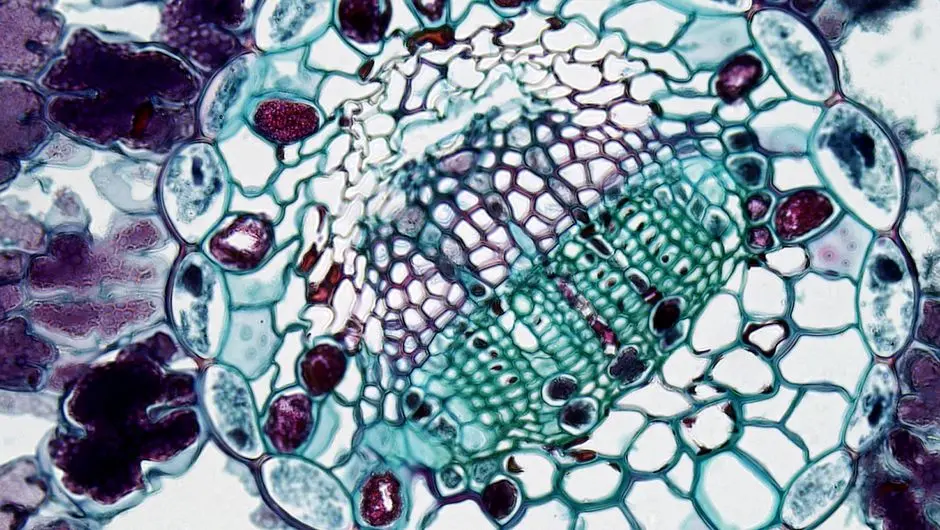
All known living things are made up of one or more cells. This principle underscores the universality of cellular organization across all domains of life, from bacteria to blue whales. It provides a common denominator for studying biological systems, allowing for comparative analyses and the discovery of conserved mechanisms.
The cell is the fundamental unit of structure and function in all living organisms. This means that the cell is the smallest entity capable of carrying out all the processes of life, including metabolism, growth, response to stimuli, and reproduction. Whether an organism is unicellular or multicellular, the cell remains the basic operational module.
All cells arise from pre-existing cells by division. Virchow’s critical insight eradicated the notion of spontaneous generation for living systems. This tenet highlights the continuity of life, emphasizing that every cell on Earth today can trace its lineage back through an unbroken chain of cellular divisions to the very first cells.
The journey from Hooke's "cells" to the comprehensive theory we embrace today is a testament to scientific rigor and collaborative progress. We continue to build upon this foundational understanding, leveraging advanced microscopy and molecular techniques to probe the inner workings of cells with unprecedented resolution. The cell theory, therefore, is not merely a historical artifact; it is a vibrant, living framework that continuously guides our exploration into the mysteries of life, propelling us towards even deeper insights into biological complexity and evolution.
Key Takeaways
The Microscopic Dawn
The invention and improvement of the microscope were paramount. Robert Hooke (1665) first observed 'cells' in cork, and Antonie van Leeuwenhoek (late 1600s) was the first to see living 'animalcules' (bacteria, protozoa) with his powerful single-lens microscopes.
Unifying Principles: Schleiden & Schwann
In the 1830s, Matthias Schleiden concluded all plants are made of cells, and Theodor Schwann extended this to animals. Together, they proposed that the cell is the basic unit of life and all organisms are composed of cells.
Virchow's Crucial Amendment
Rudolf Virchow (1855) added the third essential tenet: 'Omnis cellula e cellula' (All cells arise from pre-existing cells). This refuted spontaneous generation and completed the modern cell theory.
Three Core Tenets of Modern Cell Theory
All known living things are made up of one or more cells.
The cell is the fundamental unit of structure and function in all living organisms.
All cells arise from pre-existing cells by division.
Enduring Impact
Cell theory is a foundational pillar of biology, underpinning our understanding of genetics, embryology, disease, and evolution. It continues to be refined with new discoveries, such as the unique nature of viruses.
FAQ
-
What are the three core tenets of the modern cell theory?
The three core tenets are: 1. All known living things are made up of one or more cells. 2. The cell is the fundamental unit of structure and function in all living organisms. 3. All cells arise from pre-existing cells by division.
-
Who were the primary scientists credited with developing the cell theory?
Key figures include Robert Hooke (coined 'cell'), Antonie van Leeuwenhoek (observed 'animalcules'), Matthias Schleiden (all plants are cells), Theodor Schwann (all animals are cells), and Rudolf Virchow (all cells arise from pre-existing cells).
-
What technological advancement was most crucial for the initial development of cell theory?
The invention and refinement of the light microscope were absolutely critical. Without the ability to visualize structures beyond the naked eye, the existence of cells and microorganisms would have remained unknown.
-
How did the cell theory impact the understanding of spontaneous generation?
Rudolf Virchow's principle, 'Omnis cellula e cellula' (all cells arise from pre-existing cells), directly challenged and ultimately helped to refute the theory of spontaneous generation, which posited that life could arise from non-living matter. The cell theory firmly established that life only arises from existing life at the cellular level.
-
Are viruses considered living organisms under the strict definition of cell theory?
No, viruses are generally not considered living organisms under the strict definition of cell theory because they are acellular (not made of cells) and cannot carry out all life functions independently. They require a host cell to reproduce and metabolize, existing in a gray area between living and non-living.