
> Basic Biology Concepts > Cell Structure and Cellular Organization > Mastering Cell Theory: Deciphering Its Three Core Principles
Mastering Cell Theory: Deciphering Its Three Core Principles
In the vast, intricate tapestry of biology, no concept is more foundational, more universally accepted, than the Cell Theory. It provides the bedrock upon which our entire comprehension of living organisms rests, from the simplest bacteria to the most complex mammals. Without a firm grasp of these core tenets, unraveling the mysteries of life at any level remains an elusive pursuit. This deep dive into the three immutable principles of cell theory is designed to arm you with an expert-level understanding, enabling you to appreciate the microscopic architecture that dictates all biological processes. We shall trace the intellectual journey that led to this monumental scientific breakthrough, explore each principle in detail, and unveil their profound implications for modern biology. Forgeons ensemble this essential knowledge, transforming abstract concepts into tangible insights for understanding cells as the fundamental units of life. Prepare to dissect the very essence of biological organization, illuminating how these simple yet profound ideas underpin every facet of life as we know it.
Unearthing the Foundations: All Organisms Comprise One or More Cells
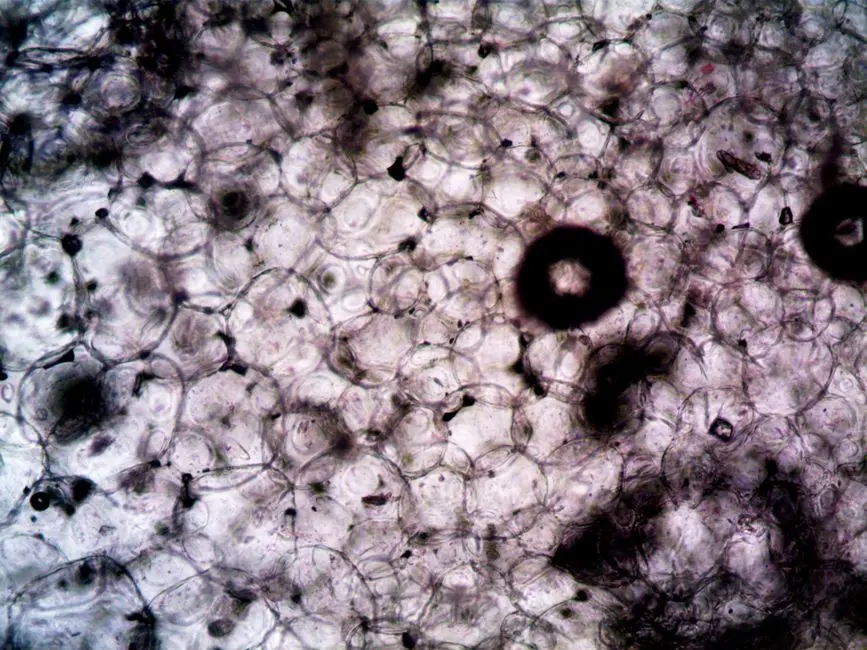
The journey to comprehend the cellular nature of life commenced with pivotal advancements in microscopy. In 1665, Robert Hooke, observing thin slices of cork through his self-designed compound microscope, coined the term 'cellula' (small rooms) for the porous structures he saw. While he was examining dead plant tissue walls, his work laid the groundwork for recognizing discrete biological units. A decade later, Anton van Leeuwenhoek revolutionized observation, becoming the first to describe living single-celled organisms – his 'animalcules' – in remarkable detail, from pond water, blood, and even dental plaque. These early glimpses unveiled a hidden world, hinting at an underlying organizational principle for all life.
Yet, it wasn't until the mid-19th century that these isolated observations coalesced into a unified theory. Matthias Schleiden, a botanist, declared in 1838 that all plant tissues are composed of cells. Theodor Schwann, a zoologist, extended this concept to animal tissues in 1839, recognizing striking similarities between plant and animal cells. Their collaborative insights forged the first pillar of cell theory: all living organisms are composed of one or more cells. This principle is not merely an observation; it is a universal declaration that fundamentally redefines our understanding of biological existence. It posits that whether an organism is a simple yeast cell or a vast sequoia tree, its basic building blocks are always cells. We actively challenge the assumption that larger, more complex entities might transcend this cellular architecture. Instead, we see that complexity arises from the organized interactions and differentiation of these foundational units. This truth guides every inquiry into organismal structure and development, establishing the cell as the irreducible structural component of life.
Pinpointing Life's Core: The Cell as the Fundamental Unit of Structure and Function
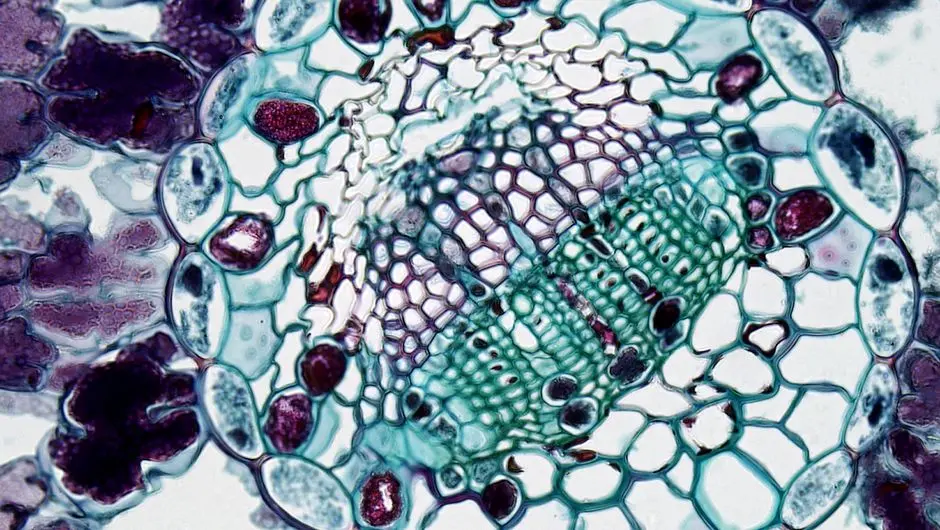
Building upon the recognition that all organisms are cellular, the second principle elevates the cell beyond a mere building block to the very crucible of life itself. It asserts: the cell is the basic unit of structure and function in all living organisms. This powerful declaration emerged directly from the groundbreaking work of Schleiden and Schwann, who not only identified cells as universal components but also recognized their intrinsic operational capabilities.
To dissect this principle, we must understand its dual meaning. Firstly, as the 'unit of structure,' it means that cells are the smallest entities that can be considered alive. Tissues, organs, and organ systems are merely hierarchical organizations of specialized cells, each contributing to the larger whole. There is no lower level of biological organization that independently exhibits the full spectrum of life’s properties – metabolism, growth, reproduction, response to stimuli, and homeostasis. A protein or an organelle, while vital, cannot sustain life in isolation.
Secondly, as the 'unit of function,' this principle reveals that all the fundamental processes that define life occur within the confines of a cell. Every biochemical reaction, from energy conversion through cellular respiration and photosynthesis to the synthesis of complex molecules and the replication of genetic material, is orchestrated inside cells. When we study physiology, we are, in essence, studying the coordinated functions of trillions of cells. Diseases, for instance, are often fundamentally aberrations in cellular function or structure. We consistently find that optimizing health necessitates understanding and supporting cellular integrity and activity. This principle compels us to focus our analysis on the cellular level to truly comprehend the intricate mechanisms governing life, from nutrient uptake to waste excretion, solidifying the cell’s role as the irreducible epicenter of biological activity.
Tracing Life's Lineage: All Cells Originate from Pre-existing Cells
While the first two principles define what a cell is and its pervasive role, the third principle clarifies its lineage, decisively refuting a long-held fallacy: all cells arise from pre-existing cells. For centuries, the concept of 'spontaneous generation' dominated biological thought, suggesting that living organisms could spontaneously emerge from non-living matter – maggots from rotting meat, or mice from grain. This deeply ingrained belief presented a significant obstacle to a complete understanding of life's perpetuation.
The definitive challenge to spontaneous generation came from pioneering experiments, notably those of Louis Pasteur in 1859, which unequivocally demonstrated that microorganisms do not spontaneously appear in sterilized broths but are introduced from pre-existing airborne microbes. Concurrently, building on the observations of others, Rudolf Virchow, a German physician, articulated in 1855 the powerful dictum: 'Omnis cellula e cellula,' meaning 'Every cell from a cell.' This statement was a critical clarification and expansion of Schleiden and Schwann’s original formulations, which had left open the possibility of spontaneous cell formation. Virchow's insight solidified the understanding that cells do not simply materialize from amorphous substances, but rather originate through the division of parent cells.
This principle underpins the entire process of growth, development, tissue repair, and reproduction in all multicellular organisms, and the proliferation of single-celled life. Mitosis, the process by which somatic cells divide, and meiosis, which generates germ cells, are the precise mechanisms ensuring this unbroken chain of cellular continuity. We therefore understand that every cell in our body, and indeed every cell on Earth, can trace its ancestry back through an unbroken line of cell divisions to the very first cell. A common misconception we rigorously address is confusing this principle with the origin of life itself. Cell theory explains the origin of new cells from existing ones, not the initial abiogenesis that formed the very first cell. This distinction is crucial for a precise biological perspective, establishing an elegant, continuous lineage for all cellular life.
Integrating Cellular Insight: Modern Relevance and Overcoming Misconceptions
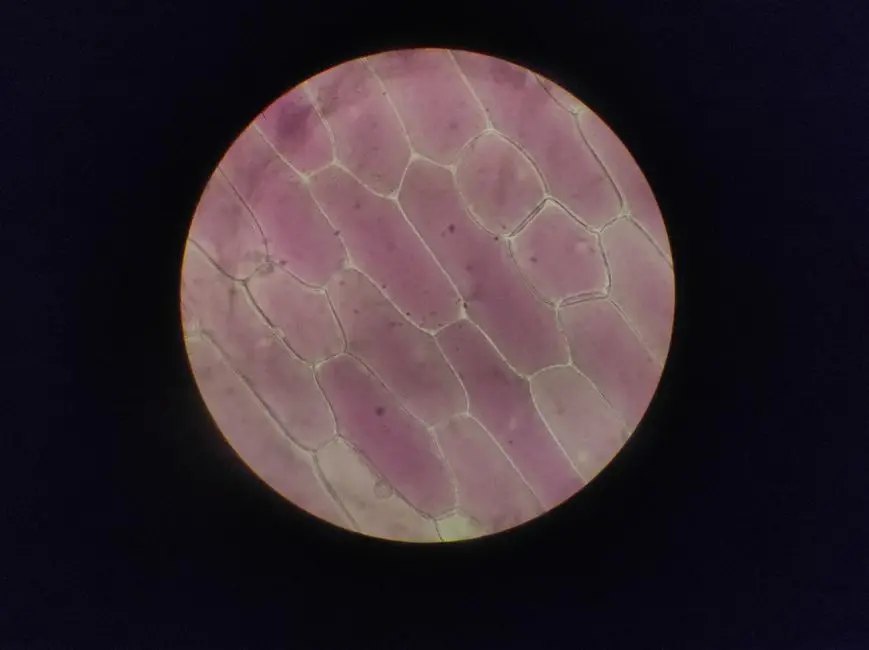
Having meticulously dissected each of the three fundamental principles, we now integrate these insights to fully appreciate their profound and enduring impact on all fields of modern biology. The Cell Theory – 1. All living organisms are composed of one or more cells. 2. The cell is the basic unit of structure and function in all living organisms. 3. All cells arise from pre-existing cells. – is far more than a historical scientific achievement; it is the unwavering axiom that underpins virtually every contemporary biological investigation and technological advancement.
Its relevance permeates disciplines ranging from genetics and molecular biology to immunology, oncology, and developmental biology. When we analyze genetic mutations, we are ultimately examining changes within cellular DNA. When we develop new therapies for diseases like cancer, we target cellular processes such as uncontrolled cell division or specific cellular signaling pathways. Reproductive technologies, tissue engineering, and stem cell research all rely on a sophisticated understanding of cellular behavior and potential. This theory provides a coherent framework for understanding life's astonishing diversity and its fundamental unity.
However, a nuanced understanding requires us to address common challenges and apparent exceptions. One persistent question concerns viruses: Are they alive? While viruses possess genetic material and evolve, they are not composed of cells and cannot replicate independently, relying entirely on host cells. This unique characteristic positions them at the very edge of life, paradoxically reaffirming the centrality of cellular organization for true autonomy. Another critical distinction we must make is that the Cell Theory describes how cells reproduce, not how the first cell originated (abiogenesis). The investigation into life’s primordial beginnings remains a distinct, vibrant area of scientific inquiry. Furthermore, structures like muscle fibers (syncytia) or certain fungal hyphae (coenocytes) are multinucleate and appear as continuous cytoplasmic masses. Yet, even these structures originate from conventional cells and contain all essential cellular components, confirming their cellular basis. We optimize our understanding by recognizing these nuances, ensuring we apply cell theory as a powerful diagnostic lens. This holistic perspective empowers us to continually push the boundaries of biological discovery, grounded in these irrefutable cellular truths.
Key Takeaways
Three Pillars of Life: The Core Principles of Cell Theory
The Cell Theory is a unifying concept in biology, comprised of three fundamental principles that govern our understanding of life:
- First Principle: All Living Organisms are Composed of One or More Cells. This establishes the cell as the universal building block for every form of life, from microscopic bacteria to complex multicellular animals and plants. It highlights the cellular basis of all biological structures.
- Second Principle: The Cell is the Basic Unit of Structure and Function in All Living Organisms. This principle defines the cell as the smallest entity capable of independently performing all life processes, including metabolism, growth, and reproduction. It signifies that all physiological activities originate and occur within cells.
- Third Principle: All Cells Arise from Pre-existing Cells. Articulated as 'Omnis cellula e cellula,' this principle refutes spontaneous generation and confirms that new cells are always produced through the division of existing cells. This ensures an unbroken continuity of life and genetic information across generations.
Collectively, these principles provide the essential framework for all biological inquiry, guiding our understanding of health, disease, development, and evolution by centering life's processes at the cellular level.
FAQ
-
Who were the key scientists instrumental in formulating the Cell Theory?
The Cell Theory is a culmination of observations and insights from several pioneering scientists. Robert Hooke first identified 'cells' in cork in 1665. Anton van Leeuwenhoek was the first to observe living single cells ('animalcules') in the 1670s. However, the core principles were primarily established by Matthias Schleiden (1838) for plants and Theodor Schwann (1839) for animals, who proposed that all organisms are composed of cells and that cells are the basic units of structure and function. Rudolf Virchow (1855) then added the crucial third principle: 'Omnis cellula e cellula' – all cells arise from pre-existing cells. -
Does Cell Theory apply to viruses, and are viruses considered alive?
Viruses do not fully adhere to the Cell Theory. They are not composed of cells, lack cellular organelles, and cannot perform metabolic functions or reproduce independently. Instead, they hijack host cells to replicate. While they possess genetic material and evolve, their obligate parasitic nature means they exist on the border of what we define as 'life.' Their existence highlights the fundamental importance of cellular organization for independent biological function, reinforcing the Cell Theory's tenets by exception. -
How does Cell Theory relate to the concept of abiogenesis?
It is crucial to distinguish between Cell Theory and abiogenesis. Cell Theory, particularly its third principle ('all cells arise from pre-existing cells'), describes the proliferation of existing cells. It explains how new cells are generated from parent cells through processes like mitosis and meiosis, maintaining an unbroken lineage of life. Abiogenesis, conversely, is the scientific hypothesis concerning the very first origin of life from non-living matter billions of years ago. Cell Theory does not explain how the very first cell came into existence, only how all subsequent cells continue to arise. -
What is the practical impact of Cell Theory on modern biology and medicine?
The Cell Theory is the bedrock of modern biology and medicine. In biology, it forms the foundation for understanding genetics, development, physiology, and evolution. In medicine, it's indispensable for comprehending disease mechanisms – whether infectious diseases (targeting bacterial or viral replication within cells), cancers (uncontrolled cell division), or degenerative conditions (cellular dysfunction and death). Pharmaceutical development often targets specific cellular pathways or components. Tissue engineering, stem cell therapies, and reproductive technologies are all direct applications of cellular principles. It provides a universal framework for diagnosis, treatment, and biological research.