
> Laboratory Techniques > PCR and DNA Amplification Methods > Eliminate Non-Specific PCR Bands: A Troubleshooting Guide
Eliminate Non-Specific PCR Bands: A Troubleshooting Guide
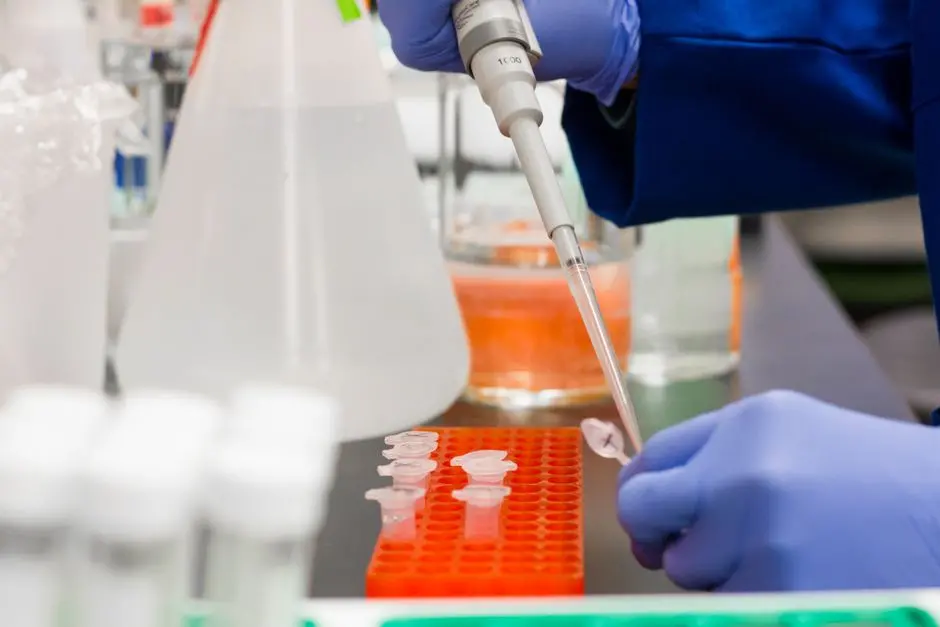
The Polymerase Chain Reaction (PCR) stands as a cornerstone in modern molecular biology, empowering us to amplify specific DNA sequences with unparalleled precision. Yet, even seasoned researchers frequently encounter the vexing challenge of non-specific PCR bands. These unwanted amplicons cloud results, complicate downstream analyses, and can derail entire experimental workflows, leading to wasted reagents, precious time, and considerable frustration. Understanding their root causes is not merely a diagnostic step; it is a fundamental pillar of PCR mastery, transforming ambiguous data into clear, actionable insights.
In this comprehensive resource, we dissect the common culprits behind non-specific amplification, from suboptimal primer design to hidden contaminants, empowering you to forge robust, reliable PCR protocols. We illuminate the strategies to identify, prevent, and decisively eliminate these molecular artifacts, enhancing the fidelity and specificity of your amplification reactions. Master the intricacies of modern PCR techniques for DNA amplification and analysis and elevate your experimental outcomes, ensuring every band on your gel reflects precise biological information.

Primer Design Imperatives: Forging Specificity from the Outset
Primers are the architects of PCR specificity; their design dictates the success or failure of an amplification. Non-specific bands frequently originate from poorly designed primers that bind to unintended genomic regions, form self-dimers, or create inter-primer dimers. We must meticulously analyze primer sequences for potential issues. The ideal primer length typically ranges from 18 to 24 base pairs, striking a balance between specificity and efficient annealing. Aim for a GC content between 40-60% to ensure stable binding without excessive secondary structures, and critically, a melting temperature (Tm) difference between primer pairs of no more than 5°C. A common error involves selecting primers with internal repeats or palindromic sequences, which readily fold into hairpins or form primer-dimers, consuming reaction components and competing with the target.
Employing robust in silico tools like Primer-BLAST or UCSC In-Silico PCR is non-negotiable. These platforms predict potential off-target binding sites within your template genome and identify undesirable secondary structures or dimer formation, providing a crucial preemptive strike against non-specificity. Furthermore, optimize primer concentration; excessively high concentrations (typically >0.5 µM) dramatically increase the likelihood of non-specific binding and primer-dimer formation. Titrating primers to find the lowest effective concentration often yields cleaner results. We forge highly specific amplification by making astute primer design decisions and validating them rigorously.
Optimizing Reaction Chemistry: Balancing the Molecular Ecosystem
The PCR reaction mixture is a delicate molecular ecosystem, and imbalances in its components profoundly impact specificity. The quantity and quality of the DNA template are paramount. Too much template DNA can increase the probability of non-specific annealing, while too little can lead to stochastic amplification or complete failure. Purity is equally critical; contaminants like heme, heparin, or phenol can inhibit the polymerase enzyme, leading to incomplete amplification or requiring higher cycle numbers, which in turn promotes non-specific products. We must ensure DNA extraction methods yield clean, intact DNA.
Magnesium chloride (MgCl<sub>2</sub>) concentration is another critical determinant of specificity. Mg<sup>2+</sup> acts as a cofactor for DNA polymerase and influences primer annealing stringency. Suboptimal Mg<sup>2+</sup> levels – either too low or too high – can lead to mispriming. Too little Mg<sup>2+</sup> reduces enzyme activity, while too much decreases primer specificity by stabilizing non-specific annealing. Typically, the optimal range is 1.5-2.5 mM; a titration experiment is often necessary to pinpoint the precise concentration for a given primer pair. Deoxynucleotide triphosphates (dNTPs), while essential, can also contribute to non-specificity if present in excess, as they can stabilize misprimed complexes. We standardize dNTP concentrations, typically at 200 μM each, and verify their quality and integrity before each run. The choice and concentration of the DNA polymerase itself also play a role; hot-start polymerases, which are inactive at ambient temperatures, significantly reduce non-specific amplification by preventing activity before the annealing step.

Mastering Thermal Cycling Parameters: Engineering Precise Amplification
Thermal cycling conditions are the operational backbone of PCR, directly dictating the stringency and efficiency of DNA amplification. The annealing temperature (Ta) is arguably the most critical parameter influencing specificity. Setting the Ta too low permits primers to bind non-specifically to sequences with imperfect matches, resulting in unwanted bands. Conversely, a Ta that is too high prevents primers from binding effectively to their intended targets, leading to reduced yield or complete reaction failure. We calculate the theoretical Ta based on primer Tm values (often Tm - 5°C) and then empirically optimize it using a gradient PCR machine, systematically testing a range of temperatures around the calculated optimum.
Extension time and temperature are also vital. While 72°C is standard for most Taq polymerases, ensuring complete extension of the target amplicon, an unnecessarily long extension time can provide additional opportunity for non-specific products to form, particularly for shorter targets. We tailor extension times (typically 1 minute per kilobase) to the specific product length. The total number of PCR cycles also profoundly impacts specificity. While increasing cycle numbers enhances sensitivity for low-abundance targets, it also exponentially increases the accumulation of non-specific products and primer-dimers. For robust target amplification, we usually aim for 25-35 cycles. Pushing beyond 40 cycles drastically elevates the risk of false positives and background amplification. We fine-tune each parameter, creating an optimal environment for our desired amplicon to thrive while suppressing aberrant reactions.

Combating Contamination: Upholding Molecular Purity
Contamination represents a silent saboteur of PCR experiments, frequently manifesting as non-specific bands or false positives. The primary culprits are exogenous DNA – typically human genomic DNA from laboratory personnel, or carryover from previous PCR products. Amplified DNA from prior reactions (amplicons) poses a particularly insidious threat due to its high concentration and ease of aerosolization. Even minute amounts can be inadvertently introduced into fresh reactions, leading to robust amplification of the contaminant instead of or in addition to the intended target. We must implement stringent laboratory practices to mitigate this risk.
Dedicated workstations for pre-PCR reagent preparation and post-PCR analysis are essential, preventing cross-contamination. We exclusively use sterile, nuclease-free, filter-barrier pipette tips for all liquid handling, minimizing aerosol transfer. Reagent aliquoting into single-use portions prevents repeated exposure and potential contamination of stock solutions. Regular decontamination of surfaces and equipment with 10% bleach solution, followed by ethanol and UV irradiation, effectively destroys contaminating DNA. Crucially, we always include appropriate controls: a no-template control (NTC) to detect reagent contamination, and a positive control to confirm reaction efficacy. Any amplification in the NTC unequivocally indicates contamination and necessitates immediate investigation and decontamination. The relentless pursuit of molecular purity is a foundational element in achieving specific PCR results.

Advanced Strategies: Proactive Prevention and Decisive Troubleshooting
Beyond optimizing individual parameters, specific advanced strategies proactively prevent non-specific bands and expedite troubleshooting when they occur. Implementing Hot-Start PCR is a highly effective first line of defense. Hot-start polymerases remain inactive at lower temperatures due to chemical modification or antibody binding, preventing polymerase activity and non-specific primer binding during the initial setup phase. This significantly reduces primer-dimer formation and mispriming before the thermal cycling officially begins, ensuring that amplification only commences at elevated, stringent temperatures.
For particularly challenging targets or complex templates, Touchdown PCR offers enhanced specificity. This technique starts with an annealing temperature several degrees above the calculated Tm and incrementally decreases it over subsequent cycles. The initial high stringency preferentially amplifies only the perfectly matched target, while subsequent cycles maintain efficient amplification as the optimal Ta is reached. When troubleshooting, a systematic approach is indispensable. We vary one parameter at a time – MgCl<sub>2</sub> concentration, primer concentration, or annealing temperature – and meticulously observe the outcome. Running products on a high-resolution agarose gel allows for precise visualization and differentiation of bands. If non-specificity persists, consider redesigning primers or exploring alternative polymerases. Employing positive and negative controls in every experiment provides critical diagnostic information, confirming both the functionality of the reaction and the absence of contamination. We embrace these strategies to conquer non-specificity and achieve consistently precise amplification.
Key Takeaways
Primer Design is Paramount for Specificity
Non-specific bands often stem from poor primer design. We meticulously design primers (18-24 bp, 40-60% GC, <5°C Tm difference) to avoid self-dimers, inter-primer dimers, and off-target binding. Utilizing in silico tools like Primer-BLAST is critical to predict and prevent these issues. Optimizing primer concentration (<0.5 μM) also minimizes non-specific interactions.
Reaction Chemistry Requires Precise Balance
The PCR reaction mixture's balance directly impacts specificity. DNA template quality and quantity (avoiding inhibitors, proper concentration) are crucial. MgCl<sub>2</sub> concentration (typically 1.5-2.5 mM) must be titrated for optimal polymerase activity and primer stringency. Excess dNTPs or suboptimal enzyme choice (e.g., not using hot-start polymerase) can also lead to mispriming.
Thermal Cycling Conditions Must Be Rigorously Optimized
Annealing temperature (Ta) is the primary determinant of primer binding specificity; a Ta that is too low causes non-specific binding, while too high reduces yield. We optimize Ta via gradient PCR. Extension time should be appropriate for amplicon length (1 min/kb), and cycle numbers (25-35 cycles) must be kept to a minimum to avoid amplifying non-specific products that accumulate over time.
Contamination Control is Non-Negotiable
Exogenous DNA (genomic or carryover amplicons) is a major source of non-specific bands. We prevent this through strict lab hygiene: dedicated workspaces, filter-barrier tips, aliquoted reagents, and regular decontamination. The consistent inclusion of a no-template control (NTC) is essential to detect and address any reagent contamination promptly.
Employ Advanced Techniques and Systematic Troubleshooting
Proactive strategies like Hot-Start PCR (inactivating polymerase at low temps) and Touchdown PCR (gradually decreasing Ta) significantly enhance specificity. When troubleshooting, we adopt a systematic approach: vary one parameter at a time, use high-resolution gel electrophoresis, and maintain comprehensive controls to diagnose and resolve non-specificity effectively.
FAQ
-
What is a non-specific PCR band and why is it problematic?
A non-specific PCR band is an amplification product that does not correspond to the intended target DNA sequence. It is problematic because it can lead to misinterpretation of results, reduce the yield of the desired product by competing for reagents, and interfere with downstream applications like sequencing or cloning, ultimately wasting time and resources. -
How can I distinguish between a non-specific band and a primer-dimer?
Non-specific bands are typically larger than primer-dimers, usually appearing above 50-100 base pairs on an agarose gel, and their size can vary. Primer-dimers are very short (usually < 50 bp), consistently appear at the very bottom of the gel (or run off), and are formed by primers annealing to each other. Running a no-template control (NTC) can help: primer-dimers often appear strongly in NTCs, while larger non-specific bands might require a template to form. -
Is it always necessary to eliminate all non-specific bands?
While minimizing non-specific amplification is always ideal for clean results, the necessity to eliminate every single faint non-specific band depends on the downstream application. For applications highly sensitive to purity, such as cloning or quantitative PCR (qPCR) where non-specific products can be amplified and quantified, absolute specificity is crucial. For simple presence/absence detection where the specific band is clearly dominant and distinguishable, a faint non-specific band might be tolerable, but we always strive for optimal specificity to ensure data integrity. -
Can annealing temperature optimization alone solve non-specific banding?
Annealing temperature (Ta) optimization is a powerful tool and often a first step in resolving non-specific bands, as it directly controls primer binding stringency. However, it is rarely the sole solution. Non-specificity can arise from a combination of factors, including poor primer design, template contamination, suboptimal MgCl<sub>2</sub> concentration, or excessive cycle numbers. A holistic approach addressing all potential culprits is typically required for complete resolution.