
> Laboratory Techniques > PCR and DNA Amplification Methods > Mastering PCR: Decoding DNA Amplification in the Lab
Mastering PCR: Decoding DNA Amplification in the Lab
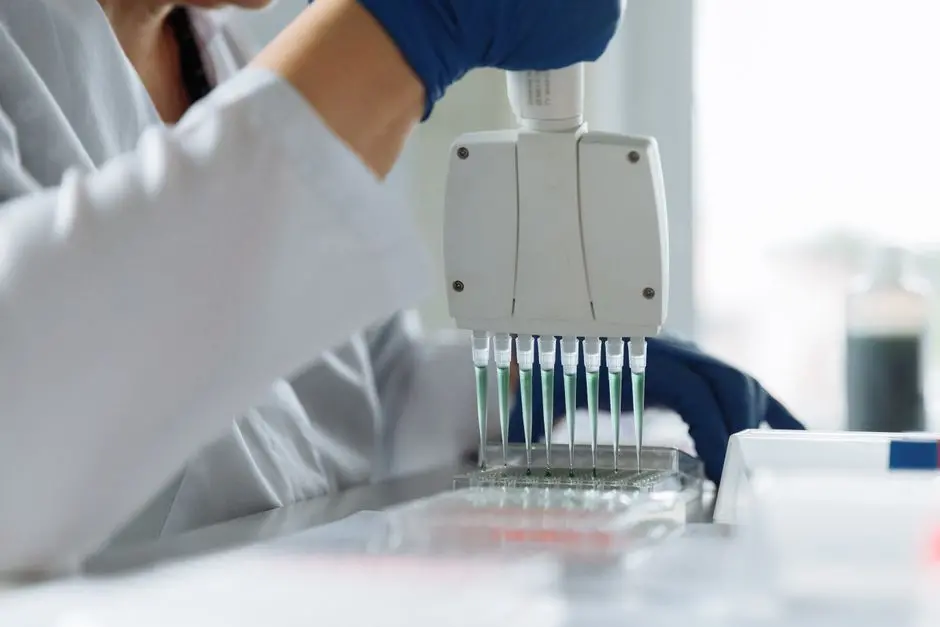
In the vibrant realm of molecular biology, the Polymerase Chain Reaction (PCR) stands as a monumental innovation, a technique that has utterly redefined our capacity to analyze and manipulate genetic material. We wield PCR daily to unlock biological secrets, diagnose diseases, develop therapies, and even solve forensic puzzles. Imagine amplifying a single DNA molecule into billions of copies in just a few hours – this unparalleled power is what PCR delivers, transforming infinitesimal samples into a wealth of detectable data.
This authoritative resource plunges into the intricate, step-by-step mechanics of how PCR operates within the molecular biology laboratory. We forge a comprehensive understanding of each critical phase, dissecting the roles of every reagent, and illuminating the subtle variables that dictate success. From meticulous preparation to the final amplified product, we uncover the precision required and the common pitfalls to avoid. Prepare to elevate your expertise and revolutionize your approach to genetic analysis, paving the way for advanced applications and a deeper appreciation for the bedrock principles of modern PCR techniques for DNA amplification and analysis. We empower you to harness this indispensable tool with surgical accuracy and unwavering confidence.
The Core Principles of PCR and Its Molecular Arsenal
We initiate our journey into PCR by establishing its foundational principles. At its heart, PCR is an enzymatic process, a controlled replication of specific DNA segments in vitro. This revolutionary technique, conceived by Kary Mullis in 1983, mimics the natural DNA replication process but focuses on target sequences rather than the entire genome. Our primary objective is to generate millions to billions of identical copies of a specific DNA region, a process indispensable for countless downstream applications from gene cloning to pathogen detection, often achieving up to 10^9 copies from a minute starting amount within 2-4 hours.
To achieve this remarkable amplification, we assemble a precise molecular arsenal. Each component plays a non-negotiable role. First, we require a DNA template, the source material containing our target sequence. This template can be genomic DNA, cDNA, or plasmid DNA, and its quality significantly impacts reaction efficiency. Next, we introduce oligonucleotide primers. These short, synthetic DNA strands, typically 18-25 nucleotides long, are meticulously designed to be complementary to the 3' ends of our target DNA sequence on both the sense and antisense strands. They define the boundaries of the amplification and provide a starting point for DNA synthesis, making primer design a critical step demanding bioinformatics tools and careful consideration of GC content (40-60% ideal), melting temperature (Tm), and avoidance of secondary structures like hairpins.
Central to the reaction is a thermostable DNA polymerase, most commonly Taq polymerase, isolated from Thermus aquaticus. Its heat-resistant nature is critical, allowing it to remain active through repeated cycles of high-temperature denaturation (up to 95°C). We also supply a balanced mixture of deoxynucleotide triphosphates (dNTPs) – dATP, dCTP, dGTP, and dTTP – which serve as the essential building blocks for new DNA strands. They must be present in equimolar concentrations to prevent errors and preferential incorporation. Finally, a PCR buffer maintains optimal pH and provides the necessary ionic environment, crucially including magnesium ions (Mg²⁺) in concentrations typically ranging from 1.5 mM to 2.5 mM. Mg²⁺ acts as a vital cofactor for the polymerase, impacting enzyme activity and fidelity; suboptimal concentrations can lead to reduced yield or non-specific amplification. Understanding these components is the first step toward forging successful amplification protocols.
Initiating Amplification: Denaturation and Primer Annealing
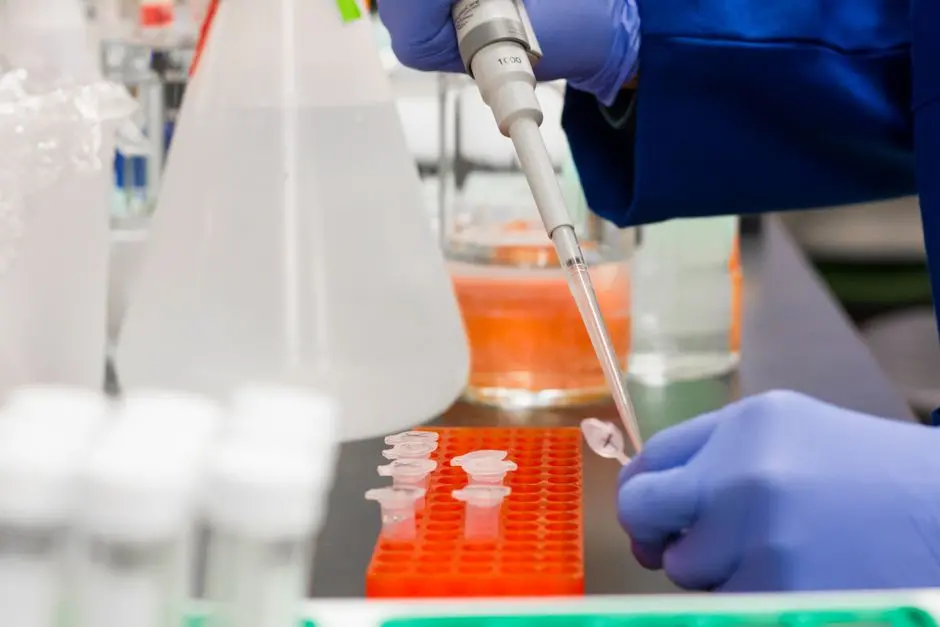
The PCR cycle commences with the initial denaturation step, a crucial preparatory phase typically executed at 94-98°C for 2-5 minutes. This extended initial heating serves a dual purpose: it fully denatures the double-stranded DNA template into single strands, making the target sequence accessible to primers, and it simultaneously activates certain hot-start polymerases, preventing non-specific amplification during reaction setup at lower temperatures. Achieving complete separation without excessive incubation time, which can degrade DNA, is a delicate balance we must master. Failure here means the primers cannot bind, and the reaction cannot proceed.
Following this, the reaction transitions into the repetitive cycling phase, beginning with the denaturation step of each cycle. We elevate the temperature to 94-98°C for a shorter duration, typically 15-30 seconds. This heat reliably separates the newly formed double-stranded DNA products and the original template DNA into single strands. Precise temperature control is paramount; insufficient heat leaves DNA partially double-stranded, while excessive heat can prematurely degrade the polymerase or the DNA itself over many cycles. We aim for efficiency in strand separation to maximize template availability for the next step.
Immediately after denaturation, we rapidly lower the temperature to the annealing phase. This temperature, known as the annealing temperature (Ta), is critically calculated based on the melting temperatures (Tm) of our primers, usually 3-5°C below the lower Tm of the two primers. Typically, this range falls between 50-65°C and lasts for 15-60 seconds. During this period, the forward and reverse primers bind specifically to their complementary sequences on the single-stranded DNA template. Specificity is king here: if the Ta is too low, primers may bind non-specifically, leading to undesired products; if too high, primers may not bind at all, resulting in no amplification. We meticulously optimize Ta to ensure stringent and efficient primer binding, thereby dictating the specificity of our amplified product.
Building the Strands: The Extension Phase and Cycle Progression
With primers now annealed to their specific sites, we advance to the extension phase, the stage where new DNA strands are synthesized. We raise the temperature to the optimal activity range for the thermostable DNA polymerase, typically 70-72°C for Taq polymerase. The polymerase then commences synthesizing a new DNA strand by adding dNTPs, one by one, to the 3' end of each primer, using the single-stranded DNA template as a guide. The extension time is crucial and is generally determined by the length of the target DNA segment we aim to amplify. A common guideline is 1 minute per kilobase (kb) of DNA product; for smaller fragments (e.g., 500 bp), 30 seconds may suffice. Insufficient extension time results in incomplete products, while excessive time offers no benefit and simply prolongs the cycle.
Upon completion of the extension phase, one complete PCR cycle is finalized. The reaction then loops back to the denaturation step, initiating a new cycle. This cyclical process – denaturation, annealing, and extension – is repeated typically 25-40 times. The critical insight here is the exponential amplification of the target DNA. In each subsequent cycle, the newly synthesized DNA strands themselves serve as templates. This means that after N cycles, we theoretically generate 2^N copies of our target sequence. For instance, 30 cycles yield approximately 1 billion copies. However, this ideal efficiency is rarely achieved in practice due to factors like enzyme degradation, dNTP depletion, and primer-dimer formation.
After the final amplification cycle, we incorporate a final extension step, often at 70-72°C for 5-15 minutes. This ensures that any partially synthesized DNA strands from the last cycle are fully extended, contributing to overall product yield and robustness. Moreover, for certain applications, such as TA cloning, this step allows Taq polymerase to add a single adenosine overhang to the 3' end of the PCR products. A subsequent final hold step, typically at 4-10°C, safely stores the amplified product, preventing degradation and ensuring stability until downstream analysis. We meticulously control each timing and temperature parameter to maximize yield and maintain product integrity, steering the amplification towards success.
Optimizing Your PCR Protocol: Precision and Purity
Achieving consistent, high-fidelity PCR results demands meticulous optimization of every variable. We must rigorously control template DNA concentration; too much can lead to non-specific amplification, while too little can result in no product. We typically use 1 ng to 1 µg of genomic DNA or 10 pg to 100 ng of plasmid DNA. Primer concentration is equally critical, usually set between 0.1 µM and 0.5 µM. Imbalances can lead to primer dimers (if too high) or inefficient amplification (if too low). The Mg²⁺ concentration is arguably the most influential variable for specificity and yield, demanding empirical titration (e.g., 1.5 mM, 2.0 mM, 2.5 mM) to find the optimal point for each primer pair and template combination. Optimal dNTP concentration (around 200 µM for each dNTP) ensures sufficient building blocks without inhibiting polymerase activity.
Temperature parameters are not static; we precisely adjust them. Annealing temperature (Ta) optimization is crucial for specificity, often performed using a gradient thermocycler over a range of 5-10°C below the calculated Tm. High-fidelity polymerases, while more expensive, significantly reduce error rates (e.g., Pfu polymerase, which has proofreading activity, error rate < 10^-6 errors/base pair compared to Taq's 10^-4 to 10^-5). We also consider additives like DMSO or betaine (typically 1-10%) when amplifying GC-rich templates or templates with significant secondary structures, as they help to relax DNA structure and improve primer binding efficiency.
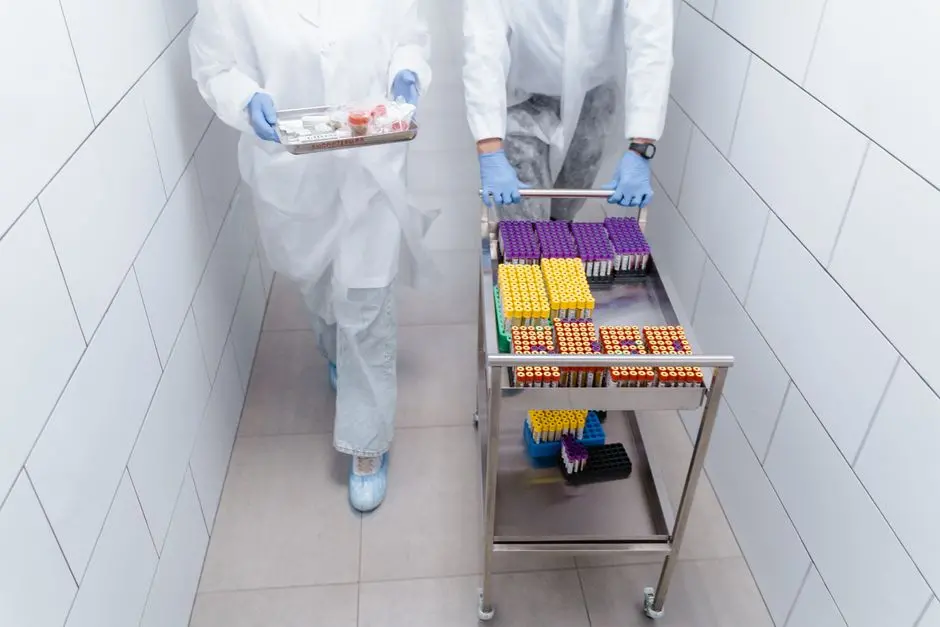
Preventing contamination is paramount in PCR; even a single molecule of contaminating DNA can be amplified, leading to false positives. We implement stringent laboratory practices:
- Physical separation: Dedicate separate areas for reaction setup, amplification, and post-PCR analysis.
- Dedicated equipment: Use separate sets of pipettes, tips, and reagents for pre-PCR and post-PCR work.
- Aerosol-barrier tips: Employ filter tips to prevent cross-contamination between samples and pipettes.
- UV sterilization: Use UV lamps in PCR hoods to decontaminate surfaces and reagents.
- Positive displacement pipettes: For handling highly concentrated DNA samples, to prevent carryover.
Troubleshooting and Advanced PCR Applications
Even with meticulous preparation, PCR reactions can falter. We must adopt a systematic troubleshooting approach to diagnose issues. If we observe no product, common culprits include:
- Incorrect primer design: Primers may not bind effectively or form dimers. Re-evaluate using bioinformatics tools.
- Insufficient template DNA: Increase template amount or ensure its quality (e.g., check via gel electrophoresis).
- Suboptimal annealing temperature: Lower Ta by 2-5°C or run a temperature gradient.
- Inactivated polymerase or dNTPs: Verify reagent integrity, store properly at -20°C.
- Missing Mg²⁺: Confirm Mg²⁺ in buffer and titrate if necessary.
- Too low annealing temperature: Increase Ta by 2-5°C.
- Excessive template DNA or primers: Reduce concentrations.
- Primer dimers: Optimize primer design or reduce primer concentration.
- Insufficient stringency: Add DMSO or switch to a hot-start polymerase.
Beyond its fundamental use, PCR has evolved into a versatile cornerstone of molecular biology, giving rise to numerous advanced applications. Quantitative PCR (qPCR), or real-time PCR, allows us to quantify initial DNA or RNA amounts, revolutionary for gene expression analysis and viral load monitoring. Reverse Transcription PCR (RT-PCR) converts RNA into cDNA before amplification, enabling the study of gene expression from RNA templates. Nested PCR employs two sets of primers in successive reactions to increase sensitivity and specificity. Multiplex PCR amplifies multiple target sequences in a single reaction, saving time and reagents, crucial for diagnostics and genotyping.
We leverage these sophisticated PCR variants to tackle complex biological questions. From SNP detection via allele-specific PCR to the rapid generation of DNA fragments for cloning (e.g., using overlap extension PCR for site-directed mutagenesis), the capabilities are vast. Understanding the basic mechanism is merely the gateway; truly mastering PCR involves appreciating its strategic variants and knowing when and how to deploy them. We continually push the boundaries of this technology, ensuring its enduring impact on scientific discovery and clinical diagnostics, forging new paths in genetic exploration.
Key Takeaways
PCR Essentials: The Molecular Kit
We recognize PCR as an enzymatic process for amplifying specific DNA segments. Its core components are: a DNA template (the target), oligonucleotide primers (short DNA defining amplification boundaries), thermostable DNA polymerase (e.g., Taq, for synthesis at high temperatures), dNTPs (building blocks), and a PCR buffer with Mg²⁺ (optimal environment and cofactor). Precise assembly of these components is the foundation for successful amplification, ensuring specificity and efficiency.
The Three Pillars of Each PCR Cycle
Each PCR cycle consists of three temperature-dependent steps: Denaturation (94-98°C) separates double-stranded DNA into single strands. Annealing (50-65°C) allows primers to bind specifically to their complementary sequences. Extension (70-72°C) enables the DNA polymerase to synthesize new DNA strands from the primers. We repeat these steps 25-40 times, leading to exponential amplification of the target DNA, generating billions of copies.
Mastering Optimization and Preventing Errors
We achieve optimal PCR results by meticulously controlling variables: template and primer concentrations, Mg²⁺ levels, and annealing temperature. High-fidelity polymerases and additives enhance performance. Crucially, preventing contamination is paramount. We implement strict lab practices: dedicated workspaces, separate equipment, aerosol-barrier tips, and UV sterilization. Systematic troubleshooting for issues like "no product" or "non-specific bands" involves adjusting one variable at a time, ensuring robust and reliable outcomes.
FAQ
-
What is the primary role of Mg²⁺ ions in a PCR reaction?
Magnesium ions (Mg²⁺) serve as a crucial cofactor for DNA polymerase, directly influencing its activity and fidelity. We recognize that optimal Mg²⁺ concentration is essential for enzyme function, promoting primer annealing and nucleotide incorporation. However, an excess can lead to non-specific binding and reduced fidelity, while insufficient Mg²⁺ will diminish polymerase activity, resulting in poor or no amplification. We meticulously optimize its concentration to achieve peak performance and specificity.
-
How does primer design impact PCR specificity and efficiency?
Primer design is absolutely critical to PCR success. We carefully craft primers to possess specific characteristics: a suitable length (18-25 bp), balanced GC content (40-60%), and a melting temperature (Tm) that allows for specific annealing without excessive non-specific binding. Poorly designed primers can lead to primer dimers, hairpins, or non-specific amplification, diminishing the yield of our desired product. We validate primer specificity using bioinformatics tools to ensure they bind only to the intended target sequence, thereby forging a highly specific and efficient reaction.
-
What are common causes of non-specific amplification in PCR and how do we address them?
Non-specific amplification, manifesting as multiple bands or smear on a gel, often stems from suboptimal reaction conditions. Common causes include: an annealing temperature that is too low, allowing primers to bind to unintended sites; excessive primer or template concentration; or an unbalanced Mg²⁺ level. We address these by systematically increasing the annealing temperature, reducing primer and/or template concentrations, or re-titrating Mg²⁺. Employing hot-start polymerases or additives like DMSO also proves effective in enhancing specificity and preventing undesired products, ensuring clean and reliable results.