
> Laboratory Techniques > PCR and DNA Amplification Methods > Unleash Innovation: PCR's Real-World Biotech Impact
Unleash Innovation: PCR's Real-World Biotech Impact
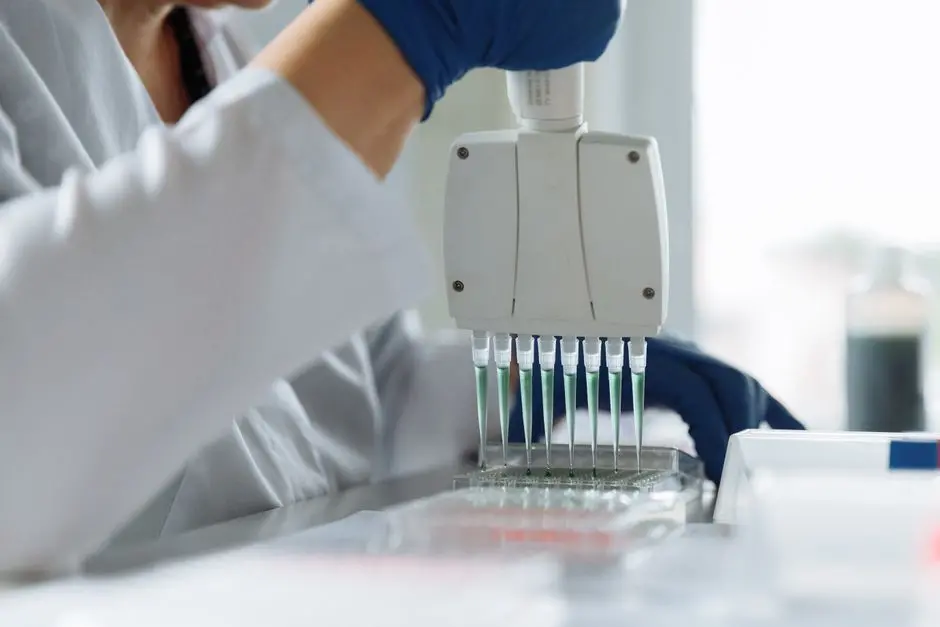
We explore a fundamental pillar of modern biotechnology: the Polymerase Chain Reaction (PCR). This technique has transformed our ability to analyze, manipulate, and understand genetic information, becoming an indispensable tool in countless fields. PCR has transcended the laboratory benchtop to infuse every aspect of scientific research, from clinical medicine to agriculture, forensic science, and environmental monitoring.
This article propels you into the heart of concrete PCR applications, demystifying its power through impactful real-world examples. We decipher how this targeted DNA amplification triggers significant advancements, forging cutting-edge solutions to our era's most pressing challenges. Prepare for a deep dive into the mechanisms that, beyond simple replication, are the engines of the biotechnological revolution. Discover how Modern PCR Techniques for DNA Amplification and Analysis are shaping a future where genetic precision and efficiency are the norm, redefining the boundaries of what's possible and inviting you to master these critically important tools.
Let's forge a surgical understanding of these applications to optimize your strategies and unlock new opportunities. Let's dive together into the era of PCR-driven bio-innovation.
Clinical Diagnostics and Personalized Medicine: Rewriting the Future of Health
PCR has revolutionized clinical diagnostics, offering unparalleled sensitivity and specificity for pathogen detection and genetic marker identification. We no longer rely solely on symptoms; we target the molecular footprint. In microbiology, the early detection of infectious agents, whether viruses like HIV, HCV, or SARS-CoV-2, or multi-drug resistant bacteria, is now a race already won thanks to PCR. A striking example is the management of the COVID-19 pandemic, where millions of PCR tests were performed daily, enabling rapid screening, effective contact tracing, and preventive isolation. Without PCR, the scale and speed of the global response would have been unthinkable.
Beyond infections, PCR is a cornerstone of personalized medicine. We use genetic variants to predict a patient's response to specific treatments (pharmacogenomics), thereby optimizing cancer therapies or treatments for cardiovascular diseases. For hereditary genetic disorders, PCR allows for prenatal or preimplantation screening of conditions such as cystic fibrosis, sickle cell disease, or Down syndrome. We amplify specific regions of fetal or embryonic DNA to identify mutations even before birth, offering crucial genetic counseling options to families. The precise quantification of viral or tumor DNA by RT-qPCR, for instance, guides therapeutic monitoring and drug dosage adjustments, optimizing chances of success. We are thus forging a more targeted, more effective, and fundamentally more human medicine.
Forensics and Human Identification: DNA as a Silent Witness
In the realm of forensics, PCR is not merely a tool; it is the silent master detective. We leverage its ability to amplify minuscule amounts of DNA, transforming a single cell into irrefutable evidence. Whether it's a dried bloodstain, a few skin cells under a fingernail, or a single hair, PCR allows us to generate a complete DNA profile from degraded or limited samples. This profile, based on the analysis of STR (Short Tandem Repeats) markers, is as unique as a fingerprint and is used to identify suspects, link crime scenes together, or exonerate the innocent.
The sequencing and comparison of DNA profiles generated by PCR against global criminal databases (such as CODIS in the United States) have led to the resolution of cold cases spanning decades. PCR is also essential in paternity and maternity investigations, where the comparison of genetic profiles confirms or denies familial relationships with near-absolute precision. We employ it for the identification of victims in mass disaster scenarios, where bodies are often fragmented or decomposed, by comparing the DNA from the remains with that of relatives or antemortem samples. We elicit truth from the invisible, transforming molecular biology into an instrument of justice. The rigor of protocols and constant validation are our safeguards against errors, ensuring that every genetic profile amplified by PCR is of unquestionable reliability.
Agriculture and Food Security: Optimizing Production and Protecting the Consumer
Modern agriculture and food safety are essential application areas for PCR, where it enables us to optimize crops and protect the food chain. We use PCR to detect genetically modified organisms (GMOs) in seeds, crops, and processed food products, ensuring regulatory compliance and transparency for consumers. Within hours, we can determine the presence of specific introduced genes, such as those conferring herbicide or insect resistance, a process far faster and more accurate than traditional methods.
Beyond GMOs, PCR is crucial for the rapid and accurate diagnosis of plant and animal diseases. Whether identifying viruses (e.g., tobacco mosaic virus), bacteria (e.g., Xanthomonas in plants, Salmonella in poultry), or pathogenic fungi, PCR allows farmers and veterinarians to intervene quickly, thereby limiting the spread of diseases and massive economic losses. For example, the early detection of African swine fever virus by PCR has major implications for global livestock farming. In food safety, we use PCR to identify bacterial pathogens (such as E. coli O157:H7, Listeria monocytogenes) in food, production surfaces, and water, thus protecting public health. We are forging a future where crop resilience and food safety are guaranteed by molecular precision.
Fundamental Research and Industrial Biotechnology: The Engine of Innovation
PCR is the quintessential versatile tool in fundamental research, unlocking unexplored frontiers of biology and catalyzing innovation. We use it to clone genes of interest, manipulate them, and insert them into expression vectors for recombinant protein production, a key step in the development of biopharmaceutical drugs like insulin, monoclonal antibodies, or vaccines. Reverse PCR (RT-PCR), in particular, is essential for gene expression analysis, allowing us to quantify messenger RNA (mRNA) levels and understand which genes are active, when, and at what intensity, in specific tissues or under different conditions. This data is fundamental to research on cancer, neurological diseases, and developmental processes.
In industrial biotechnology, PCR allows us to optimize microbial strains for the production of biofuels, industrial enzymes, or metabolites. We create DNA libraries, perform targeted mutations (site-directed mutagenesis) to improve protein properties, and verify the integrity of complex genetic constructs. Digital PCR (dPCR), a major advancement, enables the absolute and ultrasensitive quantification of nucleic acids, opening avenues for the detection of circulating cancer or the analysis of gene copy number variation. We don't just understand life; we reprogram it, triggering biological solutions for industrial and medical challenges. Mastering PCR variants is our leverage to accelerate biotechnological discovery and development.

Environmental Surveillance and Biodiversity: Mapping the Invisible Living
PCR provides us with a molecular lens to explore and monitor the environment, revealing hidden biodiversity and unseen threats. We utilize PCR-based techniques, such as metabarcoding or eDNA (environmental DNA), to identify species present in an ecosystem from traces of DNA left in water, soil, or air. This allows us to detect rare or invasive species before they cause irreversible damage, without disturbing the habitat. For instance, detecting DNA of endangered species in water samples can inform conservation strategies. In ecotoxicology, PCR quantifies the responses of specific genes in organisms exposed to pollutants, enabling us to assess the environmental impact of chemicals. For water resource management, the rapid detection of pathogens (fecal bacteria, viruses) in drinking or recreational water sources by qPCR ensures public health safety. We go beyond macroscopic observation, diving to the molecular level for a surgical understanding of ecosystems. PCR is also an indispensable tool in molecular taxonomy and phylogenetics, helping us classify species and understand their evolutionary relationships. We are forging a new era of proactive environmental monitoring, where genomics reveals the complex dynamics of our planet, enabling more informed management and targeted conservation actions. The precision of PCR is our ally in protecting the world's biological heritage.
Key Takeaways
PCR in Clinical Diagnostics and Personalized Medicine
PCR transforms diagnostics by enabling rapid and sensitive detection of pathogens (viruses, bacteria) and genetic markers for hereditary diseases or cancer. It is essential for pharmacogenomics, tailoring treatments to individual genetic profiles. Its role in pandemic management (e.g., COVID-19) and prenatal screening is crucial, forging a more targeted and preventive medicine.
Impact of PCR in Forensics and Human Identification
PCR is an indispensable tool in forensic science, amplifying minute DNA traces to create unique genetic profiles. This allows for the identification of suspects, the resolution of cold cases, and the establishment of kinship. It is also crucial for the identification of disaster victims, transforming degraded samples into reliable evidence for justice.
Agricultural and Food Safety Applications of PCR
In agriculture, PCR detects GMOs, identifies plant and animal diseases (viruses, bacteria) to prevent epidemics and losses. In food safety, it rapidly screens for pathogens (E. coli, Listeria) in food and water, protecting public health and ensuring regulatory compliance. We optimize production and guarantee the safety of the food chain.
Key Role of PCR in Fundamental Research and Industrial Biotechnology
PCR is the engine of innovation, used for gene cloning, gene expression analysis (RT-PCR), and site-directed mutagenesis. It is fundamental to the development of biopharmaceuticals (insulin, antibodies) and the optimization of industrial microbial strains. Advances like Digital PCR enable ultra-sensitive quantification, accelerating the discovery and development of biological solutions.
Using PCR in Environmental Monitoring and Biodiversity Study
PCR, via metabarcoding and eDNA, reveals invisible biodiversity and detects rare or invasive species in water, soil, and air. It quantifies the impact of pollutants and identifies pathogens in water resources, enabling proactive ecosystem management. This molecular tool is essential for taxonomy and conservation, offering a deep understanding of environmental dynamics.
FAQ
-
What are the main challenges or common mistakes when using PCR in biotechnology?
We identify several major challenges:
- Contamination: The exponential amplification of PCR makes results extremely sensitive to contamination from human DNA, other samples, or previous PCR products. Strict laboratory practices, dedicated workstations, and the use of filter tips are essential.
- Primer Design: Poorly designed primers can lead to non-specific amplification or low amplification efficiency. We must validate each primer pair for its specificity and its ability to form dimers.
- Condition Optimization: Hybridization temperature, magnesium concentration, thermal cycling, and polymerase quality are critical. We optimize each parameter to achieve maximum amplification with high specificity.
- Inhibitors: Substances present in samples (e.g., hemoglobin in blood, humates in soil) can inhibit polymerase activity, requiring rigorous purification steps.
-
How does quantitative PCR (qPCR) differ from conventional PCR in real-world applications?
qPCR, or Real-Time PCR, is a major advancement over conventional PCR, and we use it when quantification is essential. Its key distinction lies in its ability to measure DNA amplification in real-time, as it occurs, using fluorescent probes or intercalating dyes. This allows us to:
- Quantify: Determine the exact initial amount of the target DNA sequence in a sample. This is crucial for viral load (e.g., HIV), gene expression (mRNA), or gene copy number detection.
- Increased Accuracy: Detection occurs during the exponential phase of amplification, before reagents become limiting, offering more reliable quantification.
- Speed: Results are obtained at the end of the reaction without post-PCR steps (like gel electrophoresis), significantly accelerating the process.
- Sensitivity: Often more sensitive than conventional PCR for detecting very small amounts of DNA.
In summary, while conventional PCR tells us 'if' a sequence is present, qPCR tells us 'how much' of it there is, with revolutionary accuracy and speed for diagnostics and research.
-
What are the latest advances in PCR that promise new applications in biotechnology?
The PCR landscape is constantly evolving, and we leverage these advancements to push the boundaries of biotechnology:
- Digital PCR (dPCR): This technology enables us to quantify nucleic acids with absolute precision and extreme sensitivity, even for rare targets. We use it for the detection of circulating cancer, non-invasive prenatal diagnosis, and gene copy number variation analysis.
- Isothermal PCR (e.g., LAMP): Instead of thermal cycling, these methods amplify DNA at a constant temperature. This simplifies the required equipment, paving the way for rapid and portable point-of-care diagnostics in the field or in resource-limited regions.
- High-Resolution Melting (HRM): A post-PCR technique that analyzes the melting curve of amplified DNA to detect polymorphisms (SNPs) or mutations with high specificity, useful for genotyping or screening for known mutations.
- PCR coupled with Next-Generation Sequencing (NGS): We use PCR to prepare DNA libraries for sequencing, allowing the simultaneous analysis of millions of fragments and the identification of novel mutations or methylation profiles at an unprecedented scale.
These innovations propel us towards an era of ultra-personalized diagnostics and high-resolution genomic research.