
> Laboratory Techniques > PCR and DNA Amplification Methods > Optimize PCR Annealing Temperature: Master Specificity & Yield
Optimize PCR Annealing Temperature: Master Specificity & Yield
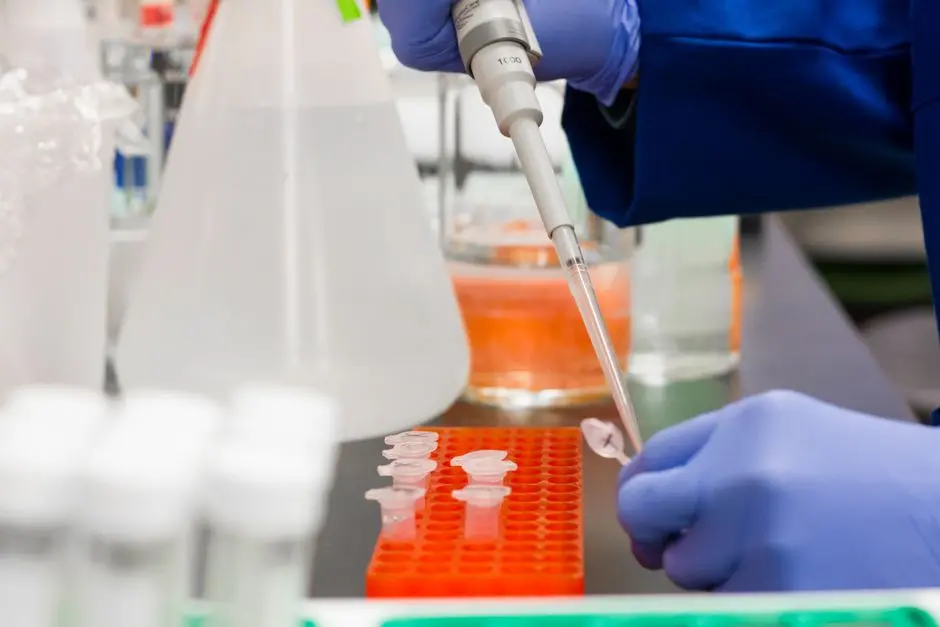
The annealing temperature (Ta) in Polymerase Chain Reaction (PCR) is not merely a technical setting; it is the strategic linchpin dictating the specificity and efficiency of your DNA amplification. A precisely calibrated Ta ensures primers bind accurately and exclusively to their designated target sequences, forging robust and high-fidelity products crucial for downstream applications like gene expression analysis or genotyping. Neglect this critical parameter, and you risk a cascade of issues: non-specific amplification, debilitating primer dimers, ambiguity in your results, wasted reagents, and precious time lost. This article dissects the intricate science behind Ta, providing a tactical roadmap to calculate, optimize, and troubleshoot this pivotal variable with unparalleled precision. Equip yourself with the expertise to transform your PCR experiments from unpredictable ventures into reliable, high-fidelity operations, consistently yielding clean and interpretable data. Master this element, and you will unlock enhanced control over your molecular biology workflows, contributing significantly to a deeper understanding of modern PCR techniques for DNA amplification and analysis.
Decoding the Critical Role of Annealing Temperature in PCR
The annealing phase represents a foundational juncture in the Polymerase Chain Reaction cycle, where the precisely designed oligonucleotide primers attach to complementary sequences on the denatured DNA template. The annealing temperature (Ta) directly governs the stringency of this binding event. Set the Ta too low, and primers will promiscuously bind to partially complementary sites, spawning a multitude of non-specific products and frustrating primer dimers. Conversely, an excessively high Ta diminishes the likelihood of stable primer-template hybridization, drastically reducing or entirely preventing the amplification of your target sequence. This delicate balance between specificity and amplification efficiency underscores Ta's paramount importance. We must conceptualize Ta not as an isolated variable, but as an integral component influencing the fidelity, yield, and overall success of every PCR. Understanding the physicochemical interactions driving primer binding at varying temperatures empowers us to engineer robust and reproducible protocols, ensuring that each amplification cycle contributes meaningfully to our biological insights. Optimal Ta selection is not merely a suggestion; it is a mandate for achieving molecular precision and unlocking reliable data from your experiments.
The melting temperature (Tm) of a primer, defined as the temperature at which half of the DNA duplex dissociates into single strands, serves as our initial beacon for estimating an appropriate Ta. However, Ta is typically set 2-5°C below the lower Tm of the primer pair to facilitate stable binding. This slight reduction ensures adequate primer annealing while minimizing non-specific interactions. Several factors profoundly influence this optimal binding, including primer length, GC content, DNA template concentration, and the ionic strength of the reaction buffer. A higher GC content, indicating more stable G-C hydrogen bonds, typically correlates with a higher Tm and thus a higher Ta. Longer primers generally possess higher Tms due to increased base pairing. We must actively consider these interdependent variables, designing our primers with a keen awareness of their inherent thermodynamic properties to establish a robust foundation for effective amplification. This proactive approach preempts many common PCR challenges, optimizing our experimental yield and analytical clarity from the outset.

Strategic Calculation: Pinpointing Your Optimal Annealing Temperature
Precisely calculating or estimating the melting temperature (Tm) of your primers constitutes the critical first step in determining an appropriate annealing temperature (Ta). While basic formulas offer a quick estimate, we advocate for more sophisticated approaches for high-fidelity applications. The simplest method, often referred to as the Wallace Rule, approximates Tm as 2°C for each A or T nucleotide and 4°C for each G or C nucleotide within the primer. This rule provides a crude but useful starting point for primers between 14-20 bases. For instance, a 20-mer primer with 10 A/T and 10 G/C bases would have an estimated Tm of (10*2) + (10*4) = 60°C. However, this formula overlooks crucial factors like salt concentration and primer concentration, leading to potential inaccuracies.
To achieve greater precision, we leverage more advanced algorithms such as the Nearest Neighbor method. This approach considers the specific sequence of adjacent bases (dinucleotides) and their thermodynamic stability, which more accurately reflects the actual binding dynamics. Numerous online calculators and primer design software integrate the Nearest Neighbor model, providing a more reliable Tm prediction. These tools allow us to input reaction conditions, including monovalent (e.g., K+, Na+) and divalent (e.g., Mg2+) ion concentrations, and even dNTP concentrations, all of which significantly impact Tm. Magnesium ions, in particular, stabilize the DNA duplex, effectively increasing Tm. Our strategy involves utilizing these sophisticated tools to generate the most accurate Tm for both forward and reverse primers. We then select a Ta that is typically 2-5°C below the lower of the two primer Tms. This methodical approach minimizes the risk of primer mismatches and ensures uniform binding efficiency for both primers, driving successful amplification.
Mastering Experimental Optimization: The Gradient PCR Advantage
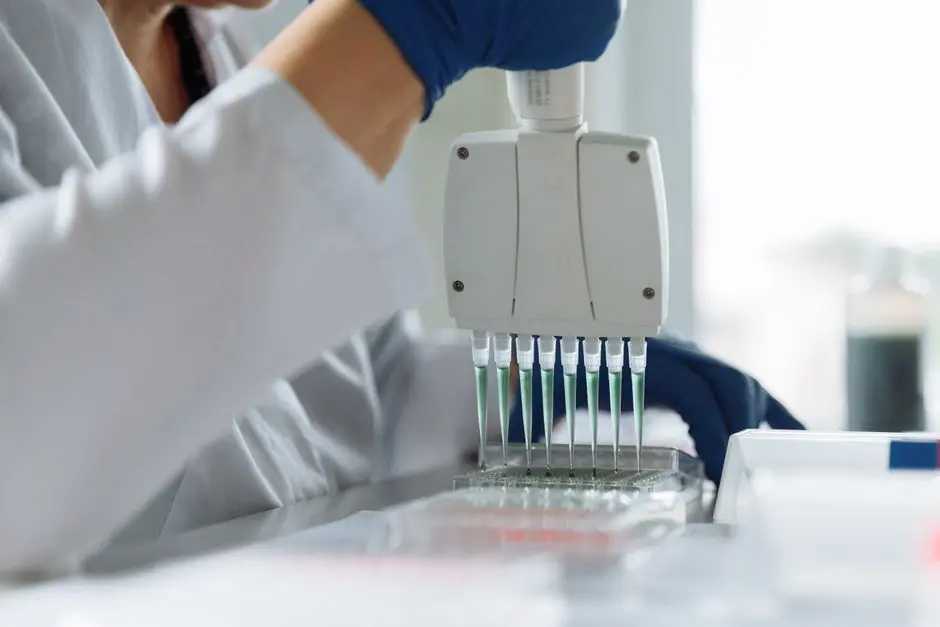
While theoretical calculations provide an essential starting point for annealing temperature (Ta), empirical optimization through gradient PCR is the gold standard for achieving peak performance. A gradient thermocycler allows us to simultaneously test a range of Ta values across a single PCR plate or block, efficiently identifying the optimal temperature for specificity and yield. We strategically design our gradient to span approximately ±5°C around the calculated or estimated Ta. For example, if our calculated Ta is 58°C, we might set a gradient from 53°C to 63°C. This systematic exploration unveils the precise temperature window where our primers bind with maximal fidelity and minimal off-target activity. The initial setup requires careful attention: identical reaction mixes are loaded into multiple wells, with the only variable being the annealing temperature applied to each strip or row. This controlled variability provides direct, visual evidence of Ta's impact.
Interpreting the results of a gradient PCR run requires a keen eye and a nuanced understanding of potential amplification outcomes. Following amplification, we analyze the products via agarose gel electrophoresis. We search for the lane exhibiting a single, crisp, appropriately sized band, devoid of primer dimers (small, fast-migrating bands) or non-specific amplification (smears or additional bands). The Ta corresponding to this ideal lane represents our optimal annealing temperature. If the gradient reveals only primer dimers across all temperatures, it signals a significant issue with primer design, necessitating a re-evaluation of primer sequences or an increase in Ta. Conversely, a complete absence of product may indicate an excessively high Ta, requiring a downward adjustment, or a fundamental problem with template quality or enzyme activity. We commit to this iterative process, refining our Ta until we forge a robust and specific PCR protocol, guaranteeing reproducible and high-quality results for all subsequent experiments. This optimization step is an investment that pays dividends in data reliability and efficiency.
Advanced Strategies and Troubleshooting: Forging PCR Precision
Despite meticulous planning and initial optimization, PCR experiments can still present challenges. Understanding common pitfalls and employing advanced strategies are crucial for consistently achieving high-fidelity amplification. When the annealing temperature (Ta) is too low, we inevitably encounter non-specific amplification and the notorious primer dimers. Non-specific products compete with the desired target for reagents, reducing yield and complicating downstream analysis. Primer dimers, formed by primers annealing to each other, consume primers and polymerase, further impairing target amplification. Our immediate action involves incrementally increasing the Ta in 1-2°C steps or re-running a finer gradient. Conversely, if Ta is excessively high, primers fail to anneal effectively, resulting in low yield or a complete absence of product. Here, we must systematically decrease the Ta, again in small increments, to facilitate stable primer binding.
Beyond direct Ta adjustments, we leverage several powerful advanced strategies. Touchdown PCR offers a robust solution for enhancing specificity. This technique initiates PCR with a high Ta (typically 5-10°C above the calculated Tm) that is progressively lowered by 1°C every few cycles until it reaches a predetermined optimal Ta. The higher initial Ta favors perfect matches, enriching the target sequence in early cycles, while the subsequent lower temperatures allow for more efficient amplification of the now abundant specific product. We also integrate additives like Dimethyl Sulfoxide (DMSO) or Betaine when dealing with challenging templates, particularly those with high GC content or complex secondary structures. DMSO, typically used at 2-10% (v/v), destabilizes DNA double helices, effectively lowering Tm and potentially improving specificity, while Betaine (0.5-2M) equalizes the melting temperature of GC- and AT-rich regions. These chemical interventions offer powerful levers to fine-tune our PCR, overcoming inherent template recalcitrance and forging a pathway to consistent, high-yield amplification, even in the most demanding scenarios.
Key Takeaways
Annealing Temperature (Ta) is PCR's Specificity Regulator
Ta is the temperature at which primers bind to the DNA template. It critically balances specificity and amplification efficiency. Too low, and you get non-specific products and primer dimers. Too high, and primers fail to bind, leading to low or no product. We must set Ta 2-5°C below the lower melting temperature (Tm) of the primer pair, considering factors like primer length, GC content, and buffer composition.
Accurate Tm Calculation is the Starting Point
Begin by calculating the primers' melting temperature (Tm). While the Wallace Rule (2°C for A/T, 4°C for G/C) offers a basic estimate, the Nearest Neighbor method provides greater accuracy by considering dinucleotide stability and reaction conditions (e.g., salt, Mg2+ concentrations). Utilize online calculators and primer design software for precise Tm prediction, especially for critical applications.
Gradient PCR: The Gold Standard for Empirical Optimization
Empirical optimization via gradient PCR is indispensable. Run a gradient spanning ±5°C around your calculated Ta. Analyze the resulting gel for a single, crisp band of the correct size, free from primer dimers or non-specific amplification. This visual assessment unequivocally identifies the optimal Ta, ensuring reproducibility and high-quality results.
Advanced Troubleshooting and Strategy Deployment
Address low Ta issues (non-specificity, primer dimers) by increasing Ta. Counter high Ta problems (low yield) by decreasing it. Deploy Touchdown PCR for enhanced specificity: start with a high Ta and incrementally lower it. For challenging templates (high GC, secondary structures), incorporate additives like DMSO or Betaine to modulate DNA stability and improve amplification success.
FAQ
-
What happens if my annealing temperature (Ta) is too low?
If your Ta is too low, primers bind non-specifically to multiple sites on the DNA template, resulting in non-specific amplification products. You will likely observe multiple bands on an agarose gel, including the target band (if present), and often prominent primer dimer bands. This reduces the yield of your desired product and complicates downstream analysis. We recommend increasing the Ta in 1-2°C increments or performing a gradient PCR to identify a more stringent temperature.
-
Can I use the same annealing temperature for all my primer pairs?
No, we strongly advise against using a universal Ta for all primer pairs. Each primer pair possesses a unique sequence and length, leading to distinct melting temperatures (Tm). The optimal Ta is inherently primer-specific. While a small variation might be tolerated for closely related primer sets, relying on a single Ta can lead to suboptimal amplification, non-specificity, or complete reaction failure for many primers. Always calculate or empirically determine the optimal Ta for each new primer pair.
-
How much does the optimal annealing temperature typically differ from the calculated melting temperature (Tm)?
Typically, the optimal annealing temperature (Ta) is found to be 2-5°C below the melting temperature (Tm) of the primer with the lower Tm in the pair. This range allows for stable primer binding while minimizing non-specific interactions. However, this is a general guideline, and the precise optimal Ta can vary due to factors like buffer composition, Mg2+ concentration, and the complexity of the template DNA. Empirical optimization through gradient PCR remains the most reliable method to pinpoint the exact optimal Ta for your specific reaction conditions.